Kirjojen hintavertailu. Mukana 12 480 886 kirjaa ja 12 kauppaa.

Kirjailija

David Hume

Kirjat ja teokset yhdessä paikassa: 870 kirjaa, julkaisuja vuosilta 1779-2026, suosituimpien joukossa A treatise of human nature . By: David Hume, edited By: Ernest Rhys (Volume 2).: Hector Hugh Munro (18 December 1870 - 14 November 1916), better known. Vertaile teosten hintoja ja tarkista saatavuus suomalaisista kirjakaupoista.

870 kirjaa

Kirjojen julkaisuhaarukka 1779-2026.

An Enquiry Concerning the Principles of Morals
Judging it to be "of all my writings incomparably the best," Hume accurately assessed this groundbreaking classic, which continues to influence philosophical thinking on ethics to this day through the force of its ideas and its clarity of expression. Among the many insights that Hume expounds in this work is that morality is grounded in feelings, not in knowledge. Based on moral sentiment, people naturally value agreeable qualities and shun disagreeable ones. On closer analysis, Hume concludes that the feeling of agreeableness comes from an innate perception of the utility of a particular quality or person to one's self. Anticipating later utilitarian philosophy, he maintains that the virtues that are most highly esteemed are those that have the greatest usefulness to most people. Justice, for example, is greatly prized because it ideally ensures to everyone a fair share of happiness and security. Hume puts special emphasis on altruism, which he says is rooted in the natural feeling that each of us has for our fellow human beings. When surrounded by people in enjoyable circumstances, we tend also to feel the same enjoyment, and when learning of tragedy, even among people on the other side of the world, we tend to feel sad. Out of such natural sympathy and our general moral sentiments, moral distinctions between good and bad arise, and we are motivated to direct our actions toward ideal goals, not only for ourselves but especially for others. In many ways, Hume's thinking about ethics was considered radical in its day. His empirical method of interpreting morality as an outgrowth of innate, human emotions helped to steer later philosophy away from the transcendentalist notions of ethics that had earlier prevailed.
An Enquiry Concerning Human Understanding (Barnes & Noble Library of Essential Reading)
"An Enquiry Concerning Human Understanding" is the thesis of a thinker who was a scientist, psychologist, metaphysician, and skeptic who continues to fascinate contemporary minds. The product of both youthful fire and mature consideration, the "Enquiry", 'contain[s] everything of Consequence relating to the understanding'. In the face of skepticism, the "Enquiry" offered progress based on experience. In a time of dogmatism, the "Enquiry" dissected the basis of religious faith and delivered a still-powerful critique. It endeavors to be nothing less than the construction of an anatomy of human nature.
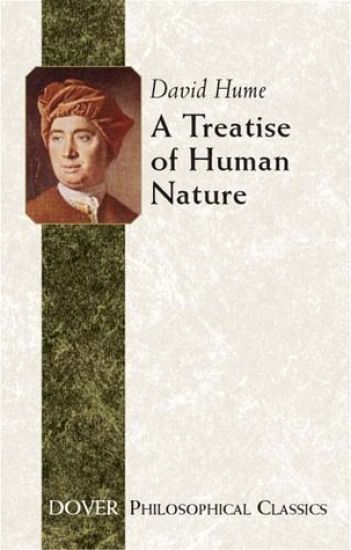
A Treatise of Human Nature

A Treatise of Human Nature

David Hume; T.J. Mccormack

Dover Publications Inc.
2004
nidottu
Hume's comprehensive effort to form an observationally grounded study of human nature employs John Locke's empiric principles to construct a theory of knowledge from which to evaluate metaphysical ideas. A key to modern studies of 18th-century Western philosophy, the Treatise considers numerous classic philosophical issues, including causation, existence, freedom and necessity, and morality.
Om moralen - Avhandling om den mänskliga naturen
Med den tredje delen av Avhandling om den mänskliga naturen avslutar Hume sitt projekt att utveckla en samlad teori om alla viktiga aspekter av mänskligt tänkande och handlande. I början av Om Moralen ger Hume den klassiska formuleringen av en princip som haft och har mycket stort inflytande: man kan aldrig sluta sig till hur någonting bör vara från hur någonting är. Hur gärna vi än vill hitta något i sakernas egen natur som garanterar riktigheten i våra moraliska uppfattningar så finns det ett logiskt gap mellan fakta och värderingar, som enligt Hume bara våra känsla kan överbrygga. Om Moralen innehåller inte bara en allmän teori om vad moral är, utan även många konkreta iakttagelser om olika moraliska och politiska företeelser: om rättvisa, om egendom, om löften, om storsinthet, om godhet och välvilja, och mycket annat.
Om passionerna - Avhandling om den mänskliga naturen
Om passionerna är en bok om drivkrafterna bakom vårt handlande och våra moraliska omdömen. I Om förståndet undersökte Hume människans tänkande och kunskapsförmåga och fann deras räckvidd begränsad. På motsvarande sätt visar han här att förnuftet, även om det kan peka på olika handlingsvägar och deras konsekvenser, inte kan motivera oss för något visst handlande. Endast passionerna, eller med andra ord känslorna och begären, kan göra detta. I en ofta citerad passage i Bok 2 skriver Hume: "Förnuftet är och bör endast vara passionernas slav, och kan aldrig göra anspråk på någon annan ställning än att tjäna och lyda dessa." Humes bok är en filosofisk klassiker, men för att ha utbyte av den behöver man inte vara insatt i det filosofiska sammanhang som den ingår i. Ett sätt att ta till sig boken är att se den som en klarsynt studie i vardagspsykologi, en kunskapsbank för självinsikt och förståelse av andra. Vad är det egentligen som får oss att känna stolthet och skam, kärlek och hat? Hur kommer det sig att vi ser upp till de rika och mäktiga, föraktar de måttligt fattiga, men har medkänsla för svältande och andra verkligt utblottade? Humes svar på dessa och andra frågor är skarpsinniga, djupt tänkvärda och tidlöst aktuella.
Untersuchung über die Prinzipien der Moral

Untersuchung über die Prinzipien der Moral

David Hume

Meiner Felix Verlag GmbH
2002
nidottu
Hume selbst hält diese Schrift (1751), die inhaltlich eine Neufassung des 3. Buches des Traktats (Über Moral) darstellt, in seinen autobiographischen Aufzeichnungen für "unvergleichlich viel besser" als alle seine anderen Schriften. Wohl deshalb, weil er hier vollbringt, was dort nur gefordert wurde: die strikte Loslösung der Ethik von der Anthropologie. Nicht ein zum Wesen des Menschen gehörender "moral sense", sondern die "utility" (Nützlichkeit) einer Tugend oder Eigenschaft - für das Wohl der anderen sowohl als auch des eigenen - wird jetzt von Hume als das eigentliche Kriterium für die Beurteilung moralischer Prinzipien entdeckt und herangezogen.
An Enquiry concerning Human Understanding
about Hume: David Hume (1711-1776) is one of the greatest of philosophers. Today he probably ranks highest of all British philosophers in terms of influence and philosophical standing. His philosophical work ranges across morals, the mind, metaphysics, epistemology, and aesthetics; he had broad interests not only in philosophy as it is now conceived but in history, politics, economics, religion, and the arts. He was a master of English prose. about the Clarendon Hume Edition: The Clarendon Hume will include all of his works except his History of England and minor historical writings; it will be the only thorough critical edition, and will provide a far more extensive scholarly treatment than any previous editions. This edition (which has been in preparation since the 1970s) offers authoritative annotation, bibliographical information, and indexes, and draws upon the major advances in textual scholarship that have been made since the publication of earlier editions--advances both in the understanding of editorial principle and practice and in knowledge of the history of Hume's own texts. General Editors: Professors T. L. Beauchamp (Georgetown University, USA), D. F. Norton (McGill University, Canada), M. A. Stewart (University of Lancaster, England). The Edition will comprise: Vols. 1 and 2: A Treatise of Human Nature, edited by D. F. Norton Vol. 3: An Enquiry concerning Human Understanding, edited by T. L. Beauchamp Vol. 4: An Enquiry concerning the Principles of Morals, edited by T. L. Beauchamp Vol. 5: The Natural History of Religion and the Dissertation on the Passions Vols. 6 and 7: Essays Vol. 8: Dialogues concerning Natural Religion and other posthumous publications, edited by M. A. Stewart
A Treatise of Human Nature

A Treatise of Human Nature

David Hume

Oxford University Press
2000
nidottu
A Treatise of Human Nature (1739-40), David Hume's comprehensive attempt to base philosophy on a new, observationally grounded study of human nature, is one of the most important texts in Western philosophy. It is also the focal point of current attempts to understand 18th-century philosophy. The Treatise first explains how we form such concepts as cause and effect, external existence, and personal identity, and to form compelling but unconfirmable beliefs in the entities represented by these concepts. It then offers a novel account of the passions, explains freedom and necessity as they apply to human choices and actions, and concludes with detailed explanations of how we distinguish between virtue and vice and of the different kinds of virtue. Hume's Abstract of the Treatise, also included in the volume, outlines his 'chief argument' regarding our conception of, and belief in, cause and effect. The texts printed in this volume are those of the critical edition of Hume's philosophical works now being published by the Clarendon Press. The volume includes a substantial introduction explaining the aims of the Treatise as a whole and of each of its ten parts, extensive annotations, a glossary of terms, a comprehensive index, and suggestions for further reading.
Die Naturgeschichte der Religion

Die Naturgeschichte der Religion

David Hume

Meiner Felix Verlag GmbH
2000
nidottu
In der Naturgeschichte der Religion (1757) trägt Hume eine Entwicklungsgeschichte des Religiösen vor und ergänzt damit die systematisch orientierte Fragestellung der Dialoge. Über Aberglaube und Schwärmerei ist ausschließlich religionsphilosophisch orientiert. In Über die Unsterblichleit der Seele und Über Selbstmord systematisiert Hume zunächst die jeweils entgegenstehenden Argumente, entkräftet sie dann und hält so nicht nur ein Plädoyer für die moralische wie politisch-rechtliche Legalität des Selbstmords, sondern erweist auch die Unsterblichkeitslehre als philosophisch unbegründet.
Essais Et Traites Sur Plusieurs Sujets I: Essais Moraux, Politiques Et Litteraires (Premiere Partie)
Essais et traites sur plusieurs sujets, c'est sous ce titre que Hume reunit a partir de 1753 l'ensemble de ses oeuvres philosophiques, dont les fameux Essais esthetiques. Imputer la discrimination du beau et du laid a un sens esthetique qui juge spontanement n'empeche pas de rechercher les qualites des objets qui precisement sollicitent ce sens esthetique. Le sens juge esthetiquement, mais son jugement est cause par telle ou telle qualite de l'objet. Neanmoins, le gout etant une operation de l'ame si delicate, on ne peut determiner les causes de maniere constante et uniforme. C'est bien pourquoi on ne fera jamais une oeuvre d'art en se contentant d'appliquer des regles. L'ensemble du recueil a une incontestable unite de pensee et d'ecriture, en depit de la liberte de style et de la variete d'objet qu'on y trouve. Il est l'expression d'un genre philosophique original auquel le lecteur ne peut rester insensible.
An Enquiry concerning Human Understanding

An Enquiry concerning Human Understanding

David Hume

Oxford University Press
1999
nidottu
Oxford Philosophical Texts Series Editor: John Cottingham The Oxford Philosophical Texts series consists of authoritative teaching editions of canonical texts in the history of philosophy from the ancient world down to modern times. Each volume provides a clear, well laid out text together with a comprehensive introduction by a leading specialist, giving the student detailed critical guidance on the intellectual context of the work and the structure and philosophical importance of the main arguments. Endnotes are supplied which provide further commentary on the arguments and explain unfamiliar references and terminology, and a full bibliography and index are also included. The series aims to build up a definitive corpus of key texts in the Western philosophical tradition, which will form a reliable and enduring resource for students and teachers alike. David Hume's aim in writing An Enquiry concerning Human Understanding (1748) was to introduce his philosophy to a European culture in which many educated people read original works of philosophy. He gives an elegant and accessible presentation of strikingly original and challenging views about the limited powers of human understanding, the attractions of scepticism, the compatibility of free will and determinism, and weaknesses in the foundations of religion. Hume's philosophy was highly controversial in the eighteenth century and remains so today. The text printed in this edition is that of the Clarendon critical edition of Hume's works. A substantial introduction by the editor explains the intellectual background to the work and surveys its main themes. The volume also includes detailed explanatory notes on the text, a glossary of terms, a full list of references, and a section of supplementary readings.
An Enquiry Concerning Human Understanding

An Enquiry Concerning Human Understanding

David Hume

Open Court Publishing Co ,U.S.
1999
pokkari
A superb classroom edition with a detailed introduction and extensive notes by Anthony Flew, author of Hume's Philosophy of Belief. This also includes Hume's autobiography, My Own Life; Hume's An abstract of A Treatise of Human Nature; the key passage Why a Cause is Always Necessary from Hume's Treatise; three letters by Hume, and the famous letter on Hume's death by Adam Smith.
Writings on Religion

Writings on Religion

David Hume

Open Court Publishing Co ,U.S.
1999
pokkari
This is the only complete and up-to-date collection of Hume's writings on religion, in an accessible classroom edition. Includes The Natural History of Religion, Dialogues Concerning Natural Religion, Of the Immortality of the Soul, Of Suicide, Of Superstition and Enthusiasm, A Note on the Profession of Priest, and two revealing letters. "Overall, this book performs two special services. First, it makes readily available the full range of Hume's writings on religion. Second, its thorough notes explain references students are likely to find obscure and points they are likely to find puzzling." ?Ethics
An Enquiry concerning the Principles of Morals
About Hume David Hume (1711-1776) is one of the greatest of philosophers. Today he probably ranks highest of all British philosophers in terms of influence and philosophical standing. His philosophical work ranges across morals, the mind, metaphysics, epistemology, and aesthetics; he had broad interests not only in philosophy as it is now conceived but in history, politics, economics, religion, and the arts. He was a master of English prose. The Clarendon Hume Edition General Editors: Professor T. L. Beauchamp, Georgetown University, USA, Professor D. F. Norton, McGill University, Canada, and Professor M. A. Stewart, University of Lancaster, England The Clarendon Hume will include all of his works except his History of England and minor historical writings; it will be the only thorough critical edition, and will provide a far more extensive scholarly treatment than any previous editions. This edition (which has been in preparation since the 1970s) offers authoritative annotation, bibliographical information, and indexes, and draws upon the major advances in textual scholarship that have been made since the publication of earlier editions--advances both in the understanding of editorial principle and practice and in knowledge of the history of Hume's own texts. The Edition will comprise: Volumes 1 and 2: A Treatise of Human Nature, edited by D. F. Norton Volume 3: An Enquiry concerning Human Understanding, edited by T. L. Beauchamp Volume 4: An Enquiry concerning the Principles of Morals, edited by T. L. Beauchamp Volume 5: The Natural History of Religion and the Dissertation on the Passions Volumes 6 and 7: Essays Volume 8: Dialogues concerning Natural Religion and other posthumous publications, edited by M. A. Stewart About this work An Enquiry concerning the Principles of Morals was Hume's third great philosophical work, first published in 1751. Hume's aim in this elegant and lucid work was to present in an accessible way his theory of the foundation of morality in human nature, which had developed significantly since he first addressed the subject in the Treatise of Human Nature (1739/40). He discusses moral psychology; freedom, necessity, and causation; practical reasoning; justice; virtues and other moral qualities. He considered this Enquiry to be 'of all my writings, historical, philosophical, or literary, incomparably the best'. About this volume The authoritative version of the text, based upon the 1772 edition that was seen through the press by Hume himself, is presented here accurately and clearly. The editor's introduction sets the work in its historical context; the annotation and glossary provide information about Hume's sources, allusions, citations, and meanings, to help readers towards a full understanding of the text. A biographical appendix identifies the many people mentioned by Hume in the Enquiry. Bibliographies list the works cited by Hume and a selection of the secondary literature. Hume's original index is reproduced, together with a new general index by the editor.