Kirjojen hintavertailu. Mukana 12 390 323 kirjaa ja 12 kauppaa.

Kirjailija

David Hume

Kirjat ja teokset yhdessä paikassa: 866 kirjaa, julkaisuja vuosilta 1779-2026, suosituimpien joukossa A treatise of human nature . By: David Hume, edited By: Ernest Rhys (Volume 2).: Hector Hugh Munro (18 December 1870 - 14 November 1916), better known. Vertaile teosten hintoja ja tarkista saatavuus suomalaisista kirjakaupoista.

866 kirjaa

Kirjojen julkaisuhaarukka 1779-2026.

Enquiries

Enquiries

David Hume

Oxford University Press
1971
sidottu
A scholarly edition of a work by David Hume. The edition presents an authoritative text, together with an introduction, commentary notes, and scholarly apparatus.
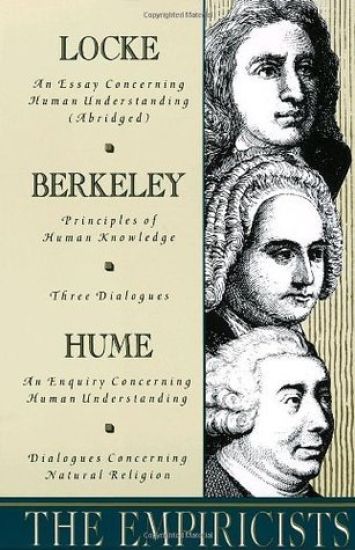
The Empiricists

The Empiricists

John Locke; George Berkeley; David Hume

Bantam Dell Publishing Group, Div of Random House, Inc
1960
pokkari
This volume includes the major works of the British Empiricists, philosophers who sought to derive all knowledge from experience. All essays are complete except that of Locke, which Professor Richard Taylor of Brown University has skillfully abridged.
The Natural History of Religion

The Natural History of Religion

David Hume

Stanford University Press
1957
pokkari
Hume's Natural History of Religion may, with his Dialogues Concerning Natural Religion be held to mark the beginning of the Philosophy of Religion. Not so clearly a text illustrating modern technology—indeed in its own day it was regarded as skeptical and subversive—the Natural History is remarkably illustrative of the development of religious thought and is a brilliant philosophical contribution to the interpretation of religion. The editor of this reprint discusses Hume's purpose in writing the Natural History and assesses its influence at the present day.
A Treatise of Human Nature

A Treatise of Human Nature

David Hume

Binker North
1839
sidottu
A Treatise of Human Nature (1739-40) is a book by Scottish philosopher David Hume, considered by many to be Hume's most important work and one of the most influential works in the history of philosophy. The Treatise is a classic statement of philosophical empiricism, skepticism, and naturalism. In the introduction Hume presents the idea of placing all science and philosophy on a novel foundation: namely, an empirical investigation into human nature. Impressed by Isaac Newton's achievements in the physical sciences, Hume sought to introduce the same experimental method of reasoning into the study of human psychology, with the aim of discovering the "extent and force of human understanding". Against the philosophical rationalists, Hume argues that passion rather than reason governs human behaviour. He introduces the famous problem of induction, arguing that inductive reasoning and our beliefs regarding cause and effect cannot be justified by reason; instead, our faith in induction and causation is the result of mental habit and custom. Hume defends a sentimentalist account of morality, arguing that ethics is based on sentiment and passion rather than reason, and famously declaring that "reason is, and ought only to be the slave to the passions". Hume also offers a skeptical theory of personal identity and a compatibilist account of free will.Contemporary philosophers have written of Hume that "no man has influenced the history of philosophy to a deeper or more disturbing degree", 2] and that Hume's Treatise is "the founding document of cognitive science" 3] and the "most important philosophical work written in English." However, the public in Britain at the time did not agree, nor in the end did Hume himself agree, reworking the material in An Enquiry Concerning Human Understanding (1748) and An Enquiry Concerning the Principles of Morals (1751). In the Author's introduction to the former, Hume wrote: "Most of the principles, and reasonings, contained in this volume, were published in a work in three volumes, called A Treatise of Human Nature: a work which the Author had projected before he left College, and which he wrote and published not long after. But not finding it successful, he was sensible of his error in going to the press too early, and he cast the whole anew in the following pieces, where some negligences in his former reasoning and more in the expression, are, he hopes, corrected. Yet several writers who have honoured the Author's Philosophy with answers, have taken care to direct all their batteries against that juvenile work, which the author never acknowledged, and have affected to triumph in any advantages, which, they imagined, they had obtained over it: A practice very contrary to all rules of candour and fair-dealing, and a strong instance of those polemical artifices which a bigotted zeal thinks itself authorized to employ. Henceforth, the Author desires, that the following Pieces may alone be regarded as containing his philosophical sentiments and principles."
Dialogues Concerning Natural Religion
Dialogues Concerning Natural Religion is a philosophical work by the Scottish philosopher David Hume. Through dialogue, three philosophers named Demea, Philo, and Cleanthes debate the nature of God's existence. Whether or not these names reference specific philosophers, ancient or otherwise, remains a topic of scholarly dispute. While all three agree that a god exists, they differ sharply in opinion on God's nature or attributes and how, or if, humankind can come to knowledge of a deity.In the Dialogues, Hume's characters debate a number of arguments for the existence of God, and arguments whose proponents believe through which we may come to know the nature of God. Such topics debated include the argument from design--for which Hume uses a house--and whether there is more suffering or good in the world (argument from evil).Hume started writing the Dialogues in 1750 but did not complete them until 1776, shortly before his death. They are based partly on Cicero's De Natura Deorum. The Dialogues were published posthumously in 1779, originally with neither the author's nor the publisher's name.Pamphilus is a youth present during the dialogues. In a letter, he reconstructs the conversation of Demea, Philo, and Cleanthes in detail for his friend Hermippus. He serves as the narrator throughout the piece. At the end of the Dialogues he believes that Cleanthes offered the strongest arguments. However, this could be out of loyalty to his teacher, as this does not seem to reflect Hume's own views on the topic. When other pieces on religion by Hume are taken into consideration, it may be noted that they all end with (apparently) ironic statements reaffirming the truth of Christian religious views. While the irony may be less readily evident in the Dialogues, this would suggest a similar reading of this work's ending. 2] Cicero used a similar technique in his Dialogues.Cleanthes is an "experimental theist"--"an exponent of orthodox empiricism" 3]--who bases his beliefs about God's existence and nature upon a version of the teleological argument, which uses evidence of design in the universe to argue for God's existence and resemblance to the human mind. Philo, according to the predominant view among scholars, is the character who presents views most similar to those of Hume. 4] Philo, along with Demea, attacks Cleanthes' views on anthropomorphism and teleology; while not going as far as to deny the existence of God, Philo asserts that human reason is wholly inadequate to make any assumptions about the divine, whether through a priori reasoning or observation of nature. Demea "defends the Cosmological argument and philosophical theism..." He believes that the existence of God should be proven through a priori reasoning and that our beliefs about the nature of God should be based upon revelation and fideism. Demea rejects Cleanthes' "natural religion" for being too anthropomorphic. Demea objects to the abandonment of the a priori arguments by Philo and Cleanthes (both of whom are empiricists) and perceives Philo to be "accepting an extreme form of skepticism.