
Kirjailija
David Hume
Kirjat ja teokset yhdessä paikassa: 872 kirjaa, julkaisuja vuosilta 1779-2026, suosituimpien joukossa A treatise of human nature . By: David Hume, edited By: Ernest Rhys (Volume 2).: Hector Hugh Munro (18 December 1870 - 14 November 1916), better known. Vertaile teosten hintoja ja tarkista saatavuus suomalaisista kirjakaupoista.
872 kirjaa
Kirjojen julkaisuhaarukka 1779-2026.

Reprint of the original, first published in 1856.

Reprint of the original, first published in 1856.
Reproduction of the original. The publishing house Megali specialises in reproducing historical works in large print to make reading easier for people with impaired vision.
Reproduction of the original. The publishing house Megali specialises in reproducing historical works in large print to make reading easier for people with impaired vision.
Reproduction of the original. The publishing house Megali specialises in reproducing historical works in large print to make reading easier for people with impaired vision.
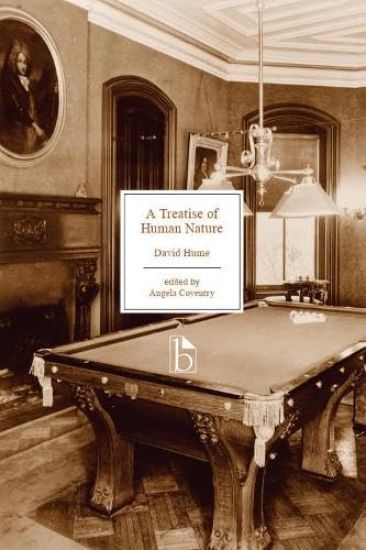
In his autobiography, David Hume famously noted that A Treatise of Human Nature “fell dead-born from the press.” Yet it is now widely regarded as one of the greatest philosophical works written in the English language. Within, Hume offers an empirically informed account of human nature, addressing a range of topics such as space, time, causality, the external world, personal identity, passions, freedom, necessity, virtue, and vice. This edition includes not only the full text of the Treatise but also Hume’s summarizing Abstract, as well as selections drawn from critical book reviews which showcase the work’s reception in Hume’s own time. Angela Coventry’s expert introduction and annotations serve to contextualize the book’s themes and arguments for modern readers.

Sent blind soon after birth David Hume stubbornly refused to live the limited life well-meaning elders and social norms expected. 'I do not wake in the morning and regret I'm blind. No, I wake and look to another win in a busy life.' To date, that encompasses years in a blind institute, two marriages, grieving for two outstanding wives, founding recruiting firms, devising marketing techniques, facing business collapse, sailing ocean races and through much of it, being the lead singer in popular bands. If you enjoy a short biography that inspires, saddens, cheers and sticks in your memory, then don't put aside Blind Without Barriers.This eloquently written memoir is about sheer determination, resilience, and the courage to overcome the odds. It's also about a man who refused to accept that a 'normal life' was beyond his reach.



O'Halloran; or, The Insurgent Chief
James McHenry; Ian Hooper; Angeline King; Stephen Dornan; David Hume; Stephen McCracken; Claire Mitchell
Leschenault Press
2023
sidottu
When Dubliner Edward Barrymore falls into the sea off Ballygally Head in north east Ulster, he thinks his end is nigh. Yet, from the darkness comes help in the form of Henry O'Halloran and his beguiling granddaughter, Ellen. Edward is immediately smitten by the beauty of the fair colleen and is enraptured to find she feels the same, but their happiness and that of their families and their country is threatened. Insurgency and rebellion are approaching and Ellen's grandfather, Edward's life-saver, is at the vanguard of the United men in this part of the country. Were the clouds of war not frightening enough, Ellen is also pursued by a monstrous cad who thinks nothing of having her beloved Edward murdered so he may take her for his own. In the dark of the night, when men with pikes will march against their royal masters, when cowards will skulk away and heroes rise, when neighbour will turn on neighbour and many a good man will fall, can love remain true, will honour repay its debts and what will become of O'Halloran, The Insurgent Chief? With forewords by Stephen Dornan, Ian Hooper, David Hume MBE, Angeline King, Stephen McCracken and Claire Mitchell. A re-publishing of the 1824 classic - a tale of two hearts united as Ireland rips herself apart. Note: The main body text of this work is in the Public Domain.

Philosophical Works, v. 2 (of 4); Including All the Essays, and Exhibiting the More Important Alterations and Corrections in the Successive Editions Published by the Author, a classical book, has been considered essential throughout the human history, and so that this work is never forgotten we at Alpha Editions have made efforts in its preservation by republishing this book in a modern format for present and future generations. This whole book has been reformatted, retyped and designed. These books are not made of scanned copies of their original work and hence the text is clear and readable.
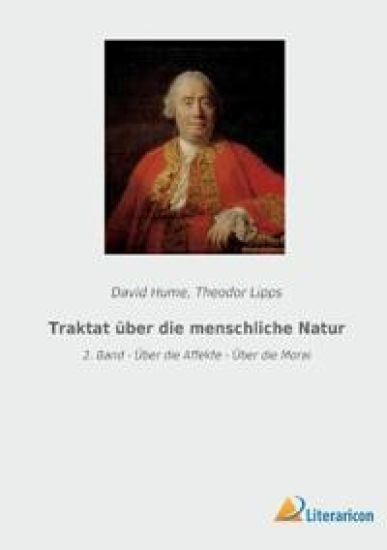
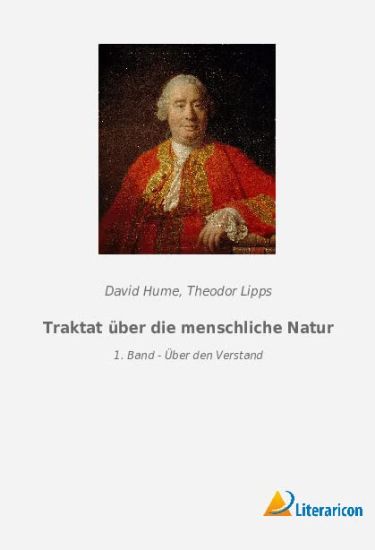
David Hume (1711 - 1776) "war ein schottischer Philosoph, konom und Historiker. Er war einer der bedeutendsten Vertreter der schottischen Aufkl rung und wird der philosophischen Str mung des Empirismus bzw. des Sensualismus zugerechnet. Sein skeptisches und metaphysikfreies Philosophieren regte Immanuel Kant zu dessen Kritik der reinen Vernunft an. Mittelbar wirkte dieser Vordenker der Aufkl rung auf die modernen Richtungen des Positivismus und der analytischen Philosophie. In Bezug auf seine wirtschaftswissenschaftliche Bedeutung kann er zur vorklassischen konomie gez hlt werden. Hume war ein enger Freund von Adam Smith und stand mit ihm in regem intellektuellem Austausch." Sein ber hmter, hier in zwei B nden vorliegender "Traktat ber die menschliche Natur" wurde von dem seinerzeit f hrenden Philosophen Theodor Lipps (1851 - 1914) ins Deutsche bersetzt und mit Anmerkungen und einem Sachregister versehen. Nachdruck der zweiten Auflage aus dem Jahr 1904.
'One of the greatest of all philosophical works, covering knowledge, imagination, emotion, morality, and justice.' David Hume's comprehensive three-volume A Treatise of Human Nature has withstood the test of time and has had enormous impact on subsequent philosophical thought. Hume whom Kant famously credited with having "interrupted my dogmatic slumber and gave my investigations in the field of speculative philosophy a quite new direction" intended this work as an observationally grounded study of human nature. He employed John Locke's empiric principles, constructing a theory of knowledge to serve as a foundation for the evaluation of metaphysical ideas. The Treatise first explains how we form such concepts as cause and effect, external existence, and personal identity, and to form compelling but unconfirmable beliefs in the entities represented by these concepts. The second part surveys the passions, from pride and humility to contempt and respect, analyzing their roles in human choices and actions. The book concludes with a meditation on morals and an in-depth explanation of the perceived distinctions between virtue and vice. One of philosophy's most important works and a key to modern studies of 18th-century Western thought, A Treatise of Human Nature is essential reading for all students of philosophy and history.

A classic work of religious philosophy, Dialogues Concerning Natural Religion is Scottish philosopher David Hume's famous examination of the nature of God. Through dialogue three fictional characters named Demea, Philo, and Cleanthes debate the nature of God's existence. While all three agree that a god exists, they differ sharply in opinion as to God's nature. They also differ as to whether or not humankind can come to knowledge of a deity.
The Enquiry Concerning the Principles of Morals is a refinement of Hume's thinking on morality, in which he views sympathy as the fact of human nature lying at the basis of all social life and personal happiness. Instead of beginning his moral inquiry with questions of how morality ought to operate, he purports to investigate primarily how we actually do make moral judgments. Of The Enquiry Concerning the Principles of Morals Hume said, "of all my writings, historical, philosophical, or literary, incomparably the best." This book has stood the test of time, and has been considered by academicians and scholars of great significance and value to literature. This forms a part of the knowledge base for future generations.