Kirjojen hintavertailu. Mukana 12 390 323 kirjaa ja 12 kauppaa.

Kirjailija

David J. Breeze

Kirjat ja teokset yhdessä paikassa: 30 kirjaa, julkaisuja vuosilta 2000-2024, suosituimpien joukossa A History of the Congress of Roman Frontier Studies 1949-2024. Vertaile teosten hintoja ja tarkista saatavuus suomalaisista kirjakaupoista.

Mukana myös kirjoitusasut: David J Breeze

30 kirjaa

Kirjojen julkaisuhaarukka 2000-2024.

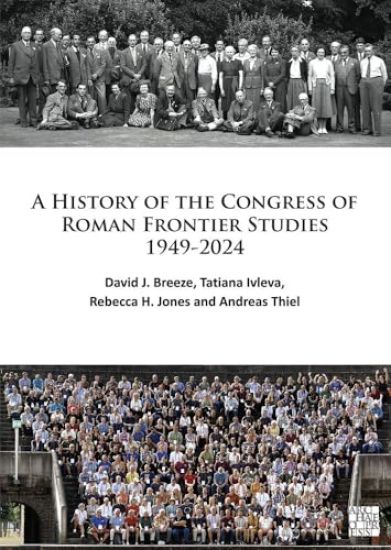
A History of the Congress of Roman Frontier Studies 1949-2024

A History of the Congress of Roman Frontier Studies 1949-2024

David J. Breeze; Tatiana Ivleva; Rebecca H. Jones; Andreas Thiel

Archaeopress
2024
nidottu
In 1949, in the aftermath of a devastating war, Eric Birley organised the First Congress of Roman Frontier Studies. His aim was not only to pursue the study of Roman frontiers but also to take a step towards restoring harmony in international relations within this field of research. The pattern was set early on: the exchange of information, networking and friendship. These three elements remain at the core of the approach of those organising and attending the Congress. They are reinforced by the pattern of the meetings, usually held every three years. The programme includes not only lectures but also visits to the local Roman military sites led by appropriate specialists. Over the 75 years since the First Congress, membership has grown enormously with more lecture theatres and more coaches being required every meeting. This publication marks the twenty-sixth Congress at Batumi in Georgia. It aims to help newer members understand the body they have joined; for those who have been attending for longer, it will be a reminder of friendships made and strengthened; for all, the book hopes to be a spur to continuing investigations and research into Rome’s greatest monument, its frontiers; for the moment of publication, it will be a celebration of the twenty-sixth Congress of Roman Frontier Studies.
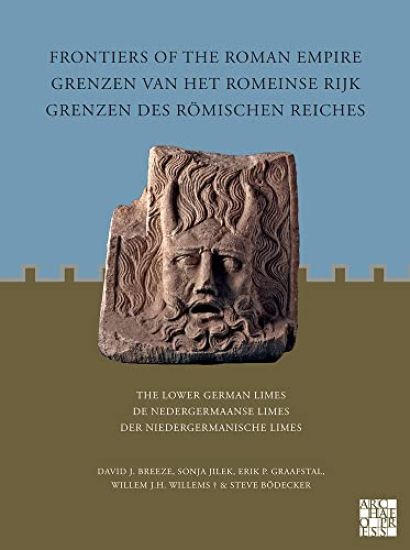
Frontiers of the Roman Empire: The Lower German Limes

Frontiers of the Roman Empire: The Lower German Limes

David J. Breeze; Sonja Jilek; Erik P. Graafstal; Willem J.H. Willems; Steve Bödecker

Archaeopress
2022
nidottu
The frontiers of the Roman empire together form the largest surviving monument of one of the world’s greatest states. They stretch for some 7,500 km through 20 countries which encircle the Mediterranean Sea. The remains of these frontiers have been studied by visitors and later by archaeologists for several centuries. Many of the inscriptions and sculpture, weapons, pottery and artefacts created and used by the soldiers and civilians who lived on the frontier can be seen in museums. Equally evocative of the lost might of Rome are the physical remains of the frontiers themselves. The aim of this series of booklets is not only to inform the interested visitor about the history of the frontiers but to act as a guidebook as well. The frontier in Lower Germany was one of the earliest to be created; surviving into the early 5th century, it illustrates the whole range of Roman military installations. In the Rhine delta, the watery nature of the landscape has ensured incredible survivals in the form of organic remains including ships. Upstream are great military bases created for the army poised to invade Germany, supported by forts and fortlets, all modified over time.
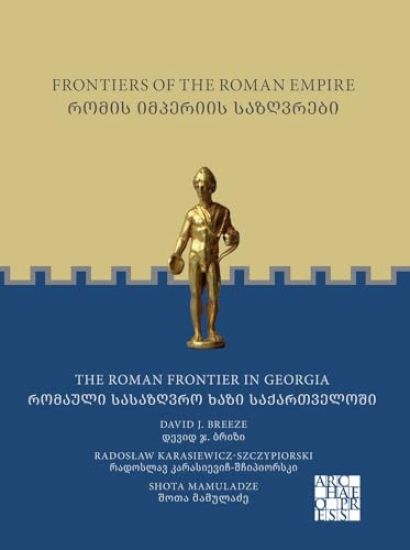
Frontiers of the Roman Empire: The Roman Frontier in Georgia

Frontiers of the Roman Empire: The Roman Frontier in Georgia

Radoslaw Karasiewicz-Szczypiorski; Shota Mamuladze †; David J. Breeze

Archaeopress
2024
nidottu
From the times of Pompeius Magnus to the period of the Persian Wars of Justinian I the Great, Roman military expeditions passed through Colchis and Iberia many times. However, the Roman Empire never permanently conquered the territory of Georgia. For this reason, diplomatic relations were also maintained with the local rulers, especially the kings of Iberia. The first centuries AD were a time of intense cultural exchange (through diplomacy and trade) between the southern Caucasus and the eastern provinces of the Roman Empire. Traces of these relations include valuable artefacts, found in elite burials and deposits, which we can see today in the Batumi Archaeological Museum, among others. This is no coincidence, as local communities living on the Black Sea coast from Trebizond to the Caucasus had particularly close relations with the Romans. These areas were also home to garrisons subordinate to the governor of the Roman province of Cappadocia.
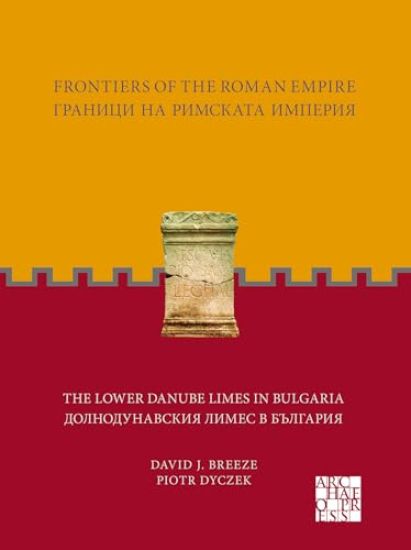
Frontiers of the Roman Empire

Frontiers of the Roman Empire

Piotr Dyczek; David J. Breeze

Archaeopress
2024
pokkari
The inextricability of the connection between the Roman limes and the lands it ran through is easily observed and there is even a regularity to be noted: some modern borders actually follow the line of the ancient defenses. At the same time there are significant differences between particular sections of the limes, resulting primarily from the topography, climate and changing strategic importance. The Bulgarian section of the limes is a perfect illustration. For a considerable distance it follows the Danube, which is at the same time the border between Bulgaria and Romania. The landform the location of major settlements at convenient river crossings, natural barriers separating the region from tribal territories and the relatively hospitable region of the Balkans all contributed to making the region north of the Haemus mons suitable for Roman urban and rural settlement, agriculture and overland commerce. The Danube was always of foremost importance. A major natural obstacle and at the same time a convenient communication route, it was easily defendable and facilitated control of trade routes, permitted quick and easy transport of goods, including army supplies, not to mention the movements of the army itself. The region was also relatively quickly Romanized, the process clearly stimulated by the presence of Roman troops transferred to the provinces mainly for the Dacian wars. Other factors of influence included civilians engaged in trade and agriculture, a rapid pacification of the local tribes and the productive coexistence of different ethnic groups, with a significant cultural input of the Greek colonies and poleis in the Black Sea littoral, which gave in effect a synthesis of different traditions, languages and cultures. Not the least in this process of cementing unity in the region was a common enemy – the Goths, Ostrogoths, Huns, Karpai and Avars to mention just a few.
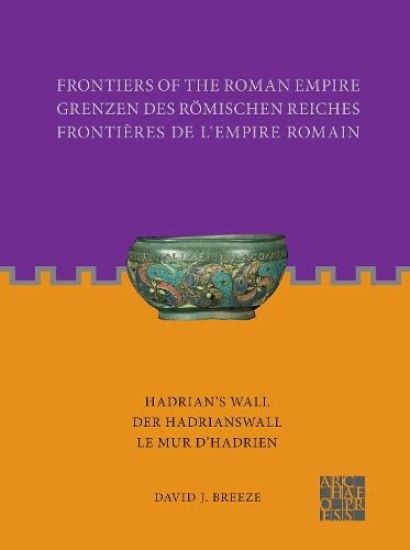
Frontiers of the Roman Empire: Hadrian's Wall
The frontiers of the Roman Empire together form the largest monument of one of the world’s greatest ancient states. They stretch for some 7,500 km through 20 countries which encircle the Mediterranean Sea. The remains of these frontiers have been studied by visitors and later by archaeologists for several centuries. Many of the inscriptions and sculptures, weapons, pottery and artefacts created and used by the soldiers and civilians who lived on the frontier can be seen in museums. Equally evocative of the lost might of Rome are the physical remains of the frontiers themselves. The aim of this series of books is not only to inform the interested visitor about the history of the frontiers but to act as a guidebook as well. Emperor Hadrian ordered the construction of the great Wall which still bears his name ‘to separate the barbarians from the Romans’ (Historia Augusta, Life of Hadrian, 11). The complex of military installations, 117 km long, but with an extension without the linear barrier for about 40 km down the west coast, contained 74 km of stone wall, 43 km of turf rampart, 200 towers, 100 fortlets, 20 forts, took years to construct and was probably still being modified when Hadrian died in July 138. This highly illustrated book offers an accessible summary of Hadrian’s Wall, and an overview of the wider context of the Roman frontiers.
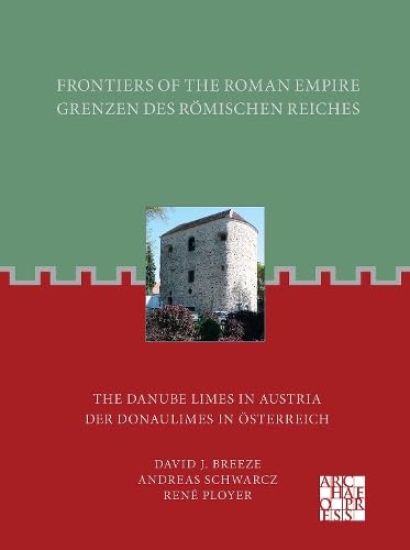
Frontiers of the Roman Empire

Frontiers of the Roman Empire

David J. Breeze; Andreas Schwarcz; René Ployer

Archaeopress
2023
pokkari
The frontiers of the Roman empire together form the largest surviving monument of one of the world´s greatest states. They stretch for some 7,500 km through 20 countries which encircle the Mediterranean Sea. The remains of these frontiers have been studied by visitors and later archaeologists for several centuries. Many of the inscriptions and sculpture, weapons, pottery and artefacts created and used by the soldiers and civilians who lived on the frontier can be seen in museums. Equally evocative of the lost might of Rome are the physical remains of the frontiers themselves. The aim of this series of booklets is not only to inform the interested visitor about the history of the frontiers but to act as a guide-book as well. Austria is particularly fortunate in the survival along the Danube of the remains of many military installations. These include forts and towers, some parts surviving up to two stories high. They are a most remarkable survival and deserve to be better known and more visited. I certainly hope each reader of this book will enjoy learning more about Austria’s Roman heritage. From the Foreword by David J. Breeze.
Frontiers of the Roman Empire: The Hinterland of Hadrian?s Wall
The frontiers of the Roman Empire together form the largest monument of one of the world’s greatest ancient states. They stretch for some 7,500 km through 20 countries which encircle the Mediterranean Sea. The remains of these frontiers have been studied by visitors and later by archaeologists for several centuries. Many of the inscriptions and sculptures, weapons, pottery and artefacts created and used by the soldiers and civilians who lived on the frontier can be seen in museums. Equally evocative of the lost might of Rome are the physical remains of the frontiers themselves. The aim of this series of books is not only to inform the interested visitor about the history of the frontiers but to act as a guidebook as well. In this important and beautifully illustrated book, David Breeze elucidates the context of the most famous frontier, Hadrian’s Wall. The zone to north and south of the Wall was a heavily militarised landscape of roads, bridges, forts, fortlets and towers, but also the towns, settlements and supply infrastructure on which the army depended. As the invaluable gazetteer shows, the area is now rich in superb sites and museums, allowing modern people countless rich insights into the world of the soldiers and civilians of the period.
Edge of Empire, Rome's Scottish Frontier

Edge of Empire, Rome's Scottish Frontier

David J. Breeze

Birlinn Ltd
2023
nidottu
Two thousand years ago, southern Scotland was part of a great empire, the Roman Empire. About AD 140, a Roman army marched north from what is now Northumbria and, 20 years after and over 100 miles further north than Hadrian’s Wall, built a new frontier across the Forth-Clyde isthmus. With reference to contemporary coins and literary sources together with the archaeological remains, inscriptions and sculpture from the Antonine Wall itself, David Breeze explains the historical context for, and the creation of, the fortifications. Stunning photography by David Henrie of Historic Scotland illustrates all aspects of this most northerly Roman frontier. These photographs help us to appreciate the Antonine Wall in its landscape and allow us a visual explanation for its construction almost 2000 years ago.
Frontiers of the Roman Empire: The Saxon Shore and the Maritime Coast

Frontiers of the Roman Empire: The Saxon Shore and the Maritime Coast

Tony Wilmott; Sofie Vanhoutte; Richard Bridgland; David J. Breeze

Archaeopress
2022
nidottu
The economic and political challenges along the maritime borders of the Roman Empire were multiple. The North Sea coasts were the focus of the attention of traders within the framework of commercial exchanges, of the General Staff preparing for the conquest of Britain under Claudius, and for the defence of the coastlines from the time that their protection became required. The design of a defensive system and the establishment of a supportive force followed a long path through five centuries, adapting to each development and changing strategy and evolving military installations. It had to face the threat of Saxon pirates, not to mention the use of the Roman fleet for political purposes as under Carausius. Military systems are complex because they rely upon the combination of various elements, ports, fleets – thus the famous Classis Britannica – forts protecting estuaries and watch-towers. This border represents a page in military maritime history, but its coasts, in Great Britain, the Netherlands, Belgium and France, contain archaeological sites of high heritage value that deserve a large audience.
Frontiers of the Roman Empire: The Roman Frontiers in Wales

Frontiers of the Roman Empire: The Roman Frontiers in Wales

Peter Guest; David J. Breeze

Archaeopress
2022
nidottu
The frontiers of the Roman Empire together form the largest monument of one of the world’s greatest ancient states. They stretch for some 7,500 km through 20 countries which encircle the Mediterranean Sea. The remains of these frontiers have been studied by visitors and later by archaeologists for several centuries. Many of the inscriptions and sculptures, weapons, pottery and artefacts created and used by the soldiers and civilians who lived on the frontier can be seen in museums. Equally evocative of the lost might of Rome are the physical remains of the frontiers themselves. The aim of this series of books is not only to inform the interested visitor about the history of the frontiers but to act as a guidebook as well. The remains of the Roman frontiers in Wales are unique in the Roman Empire. Unlike the well-known defensive linear boundaries such as Hadrian’s Wall and the Antonine Wall in northern Britain, the forts and fortresses in Wales formed a dynamic offensive frontier designed to deal with the fierce natives. More than 60 stone and timber fortresses, forts and fortlets are known, some of which seem to have been occupied for only a few years, while others remained in use for far longer. They tell the story of the long and brutal war against the Celtic tribes and, after their final and complete victory, the army’s policy of ‘occupation-in-depth’ when up to 25,000 legionaries and auxiliaries were stationed in Wales. We hope the readers of this book will enjoy discovering the fascinating story of the Roman conquest of Wales almost 2,000 years ago.
Frontiers of the Roman Empire: The Eastern Frontiers

Frontiers of the Roman Empire: The Eastern Frontiers

David J. Breeze; Fawzi Abudanah; David Braund; Mark Driessen; Simon James; Michaela Konrad; Marinus Polak

Archaeopress
2022
nidottu
The Roman eastern frontier stretched from the north-east shore of the Black Sea to the Red Sea. It faced Rome’s formidable foe, the kingdom of Parthia, and its successor, Sasanian Persia. Rome’s bulwark in antiquity was the area known as Syria or the Levant, roughly modern Syria, Lebanon, Jordan, Israel and Palestine. To the south lay the Nabataean kingdom, annexed by Rome in 106 and formed into the province of Arabia. To the north, the Cappadocian frontier was laid out in one of the most inaccessible and remote parts of Eurasia facing extremes of climate and topography, amid a patchwork of client kingdoms. This hidden and fascinating frontier in Turkey, whose bases mostly lie under reservoirs, is the major omission from this volume and it is hoped that a more in-depth account might appear in due course. The Caucasian forts along the edge of the Black Sea are, however, part of this volume; this is perhaps Rome’s least known frontier archaeologically but the subject of a unique account by Arrian when governor of Cappadocia.
Frontiers of the Roman Empire: The Upper Germanic Limes

Frontiers of the Roman Empire: The Upper Germanic Limes

David J. Breeze; Andreas Thiel; Sarah Roth; Thomas Becker

Archaeopress
2022
nidottu
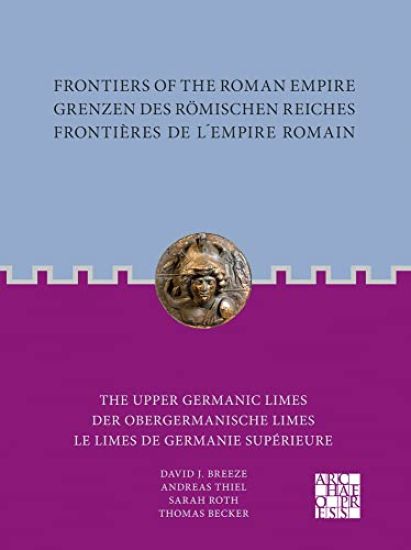
Towards the end of Caesar’s Gallic War, Rome had reached the Rhine. Since the campaigns under Emperor Augustus (15 B.C.), larger troop contingents were stationed along the river, with focal points around Mogontiacum/Mainz and in northern Switzerland. After the Battle of the Teutoburg Forest (9 AD), when the attempt to occupy all of Germania had failed, the Lower Rhine remained the frontier of the empire’s territory until Late Antiquity. East of the Middle and Upper Rhine, however, the Roman sphere of power was pushed forward several times over a period of almost 200 years, and from 90 AD at the latest, the construction of artificial borders was initiated. When the Roman expansion came to an end around 160 AD, the province was secured in its furthest extension by the “Frontal” or “Outer Upper-Germanic Limes”, which existed until the middle of the 3rd century. This book illustrates the historical and archaeological significance of the Upper Germanic Limes and provides an up-to-date overview of its manifold features in the field.
Frontiers of the Roman Empire: The Antonine Wall – A World Heritage Site
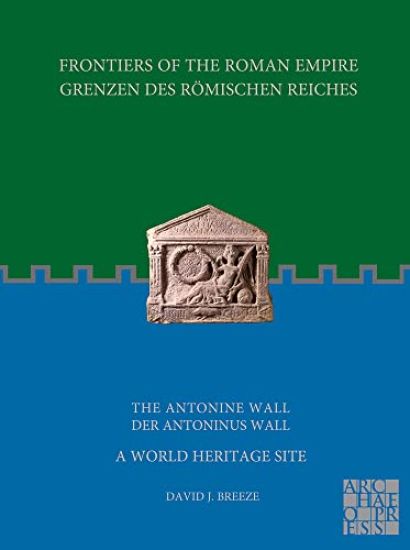
The Antonine Wall lay at the very extremity of the Roman world. For a generation, in the middle of the second century AD, it was the north-west frontier of the Roman empire. Furthermore, it was one of only three “artificial” frontiers along the European boundaries of the empire: the other two are Hadrian’s Wall and the German Limes. Although the Antonine Wall fits into the general pattern of Roman frontiers, in many ways it was the most developed frontier in Europe, with certain distinct characteristics. Perhaps of greatest significance is the survival of the collection of Roman military sculpture, the Distance Slabs. These record the lengths constructed by each legion and their relationship to the labour camps allow further conclusions to be made about the work of constructing the Antonine Wall.
Frontiers of the Roman Empire: The Roman Army and the Limes / The Roman Limes in Hungary
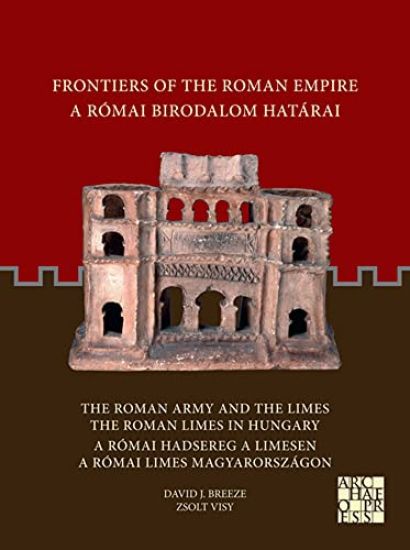
The frontiers of the Roman empire together form the largest surviving monument of one of the world’s greatest states. They stretch for some 7,500 km through 20 countries which encircle the Mediterranean Sea. The remains of these frontiers have been studied by visitors and later by archaeologists for several centuries. Many of the inscriptions and sculpture, weapons, pottery and artefacts created and used by the soldiers and civilians who lived on the frontier can be seen in museums. Equally evocative of the lost might of Rome are the physical remains of the frontiers themselves. The aim of this series of booklets is not only to inform the interested visitor about the history of the frontiers but to act as a guidebook as well. The Roman Empire reached its near full extent during the reign of Emperor Augustus. At that time Europe, Africa, the Middle East and the entire Mediterranean were part of it. The Hungarian part of the Empire had a river frontier that was more precisely called ripa. Pannonia province existed from the occupation during the reign of Emperor Augustus to the 20s and 30s of the 5th century A.D. Its border stretched alongside the Danube and was always one of the most important European frontiers in Roman times, as it is justified by keeping a very strong defence force there, consisting of 4 legions and an average of 30 auxiliary units. Some 420 km long section of the entire Pannonian limes from Klosterneuburg (Austria) to Belgrade (Serbia) belongs to the territory of present-day Hungary.
Frontiers of the Roman Empire: Slovakia

Frontiers of the Roman Empire: Slovakia

David J. Breeze; Sonja Jilek; Branislav Lesák; Margaréta Musilová; Branislav Resutík; Katarína Harmadyová; Ján Rajtár; Jaroslava Schmidtová

Archaeopress
2022
nidottu
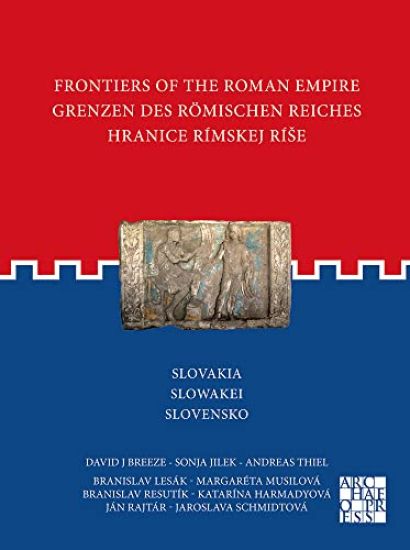
The frontiers of the Roman empire together form the largest monument of one of the world’s greatest states. They stretch for some 7,500km through 20 countries which encircle the Mediterranean Sea. The remains of these frontiers have been studied by visitors and later by archaeologists for several centuries. Many of the inscriptions and sculpture, weapons, pottery and artefacts created and used by the soldiers and civilians who lived on the frontier can be seen in museums. Equally evocative of the lost might of Rome are the physical remains of the frontiers themselves. The aim of this series of books is not only to inform the interested visitor about the history of the frontiers but to act as a guidebook as well. Slovakia was situated at the edge of the classical world but still was a close neighbour of the Roman Empire. The Roman influence left distinct traces not only at the territories along the frontier but also in its broader fore field.
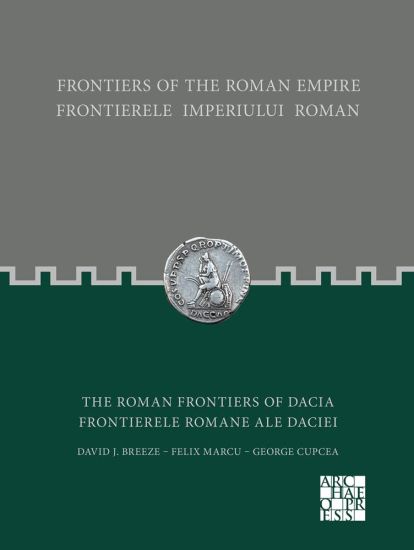
Frontiers of the Roman Empire: The Roman Frontiers of Dacia

Frontiers of the Roman Empire: The Roman Frontiers of Dacia

David J. Breeze; Felix Marcu; George Cupcea

Archaeopress
2022
nidottu
The frontiers of the Roman empire together form the largest monument of one of the world’s greatest states. They stretch for some 7,500km through 20 countries which encircle the Mediterranean Sea. The remains of these frontiers have been studied by visitors and later by archaeologists for several centuries. Many of the inscriptions and sculpture, weapons, pottery and artefacts created and used by the soldiers and civilians who lived on the frontier can be seen in museums. Equally evocative of the lost might of Rome are the physical remains of the frontiers themselves. The aim of this series of books is not only to inform the interested visitor about the history of the frontiers but to act as a guidebook as well. The province of Dacia had a relatively short life being abandoned due to economic and strategic reasons in the 260s. It was heavily militarized and therefore the role of the army was crucial in Its development and life. The Roman frontier In Dacia combined several elements, each relating to the landscape: there were riverain and mountain borders, some supplemented by linear barriers, and all connected by roads. Everywhere, the complex system of the border consisted primarily of a network of watchtowers, smaller or larger forts and artificial earthen ramparts or stone walls.
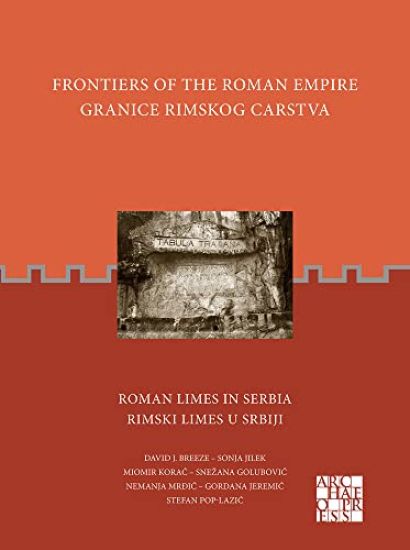
Frontiers of the Roman Empire: Roman Limes in Serbia

Frontiers of the Roman Empire: Roman Limes in Serbia

David J. Breeze; Sonja Jilek; Miomir Korac; Snežana Golubovic; Nemanja Mrdic; Gordana Jeremic; Stefan Pop-Lazic

Archaeopress
2022
nidottu
The frontiers of the Roman empire together form the largest monument of one of the world’s greatest states. They stretch for some 7,500km through 20 countries which encircle the Mediterranean Sea. The remains of these frontiers have been studied by visitors and later by archaeologists for several centuries. Many of the inscriptions and sculpture, weapons, pottery and artefacts created and used by the soldiers and civilians who lived on the frontier can be seen in museums. Equally evocative of the lost might of Rome are the physical remains of the frontiers themselves. The aim of this series of books is not only to inform the interested visitor about the history of the frontiers but to act as a guidebook as well. The aim of this publication is not only to inform about historical and archaeological facts on the Limes in Serbia but also to act as a guidebook as well through the Danubian Limes.
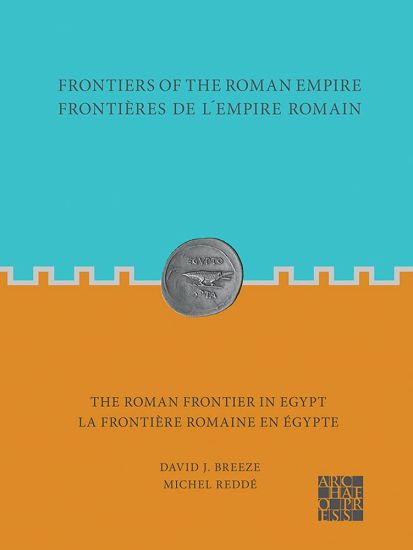
Frontiers of the Roman Empire: The Roman Frontier in Egypt

Frontiers of the Roman Empire: The Roman Frontier in Egypt

David J. Breeze; Michel Reddé

Archaeopress
2021
nidottu
The frontiers of the Roman empire together form the largest monument of one of the world’s greatest states. They stretch for some 7,500km through 20 countries which encircle the Mediterranean Sea. The remains of these frontiers have been studied by visitors and later by archaeologists for several centuries. Many of the inscriptions and sculpture, weapons, pottery and artefacts created and used by the soldiers and civilians who lived on the frontier can be seen in museums. Equally evocative of the lost might of Rome are the physical remains of the frontiers themselves. The aim of this series of books is not only to inform the interested visitor about the history of the frontiers but to act as a guidebook as well. The Roman military remains of Egypt are remarkable in their variety and in their state of preservation. They deserve to be better known. They include forts, quarries under the authority of the army and whose materials were used in the monumental buildings of Rome, as well as the roads which crossed the desert landscape and brought the Mediterranean into con¬tact with the Indian Ocean. It is hoped that each reader of this book will enjoy learning more about the remarkable Roman inheritance of Egypt. The full text is presented side-by-side dual-language in English and French.
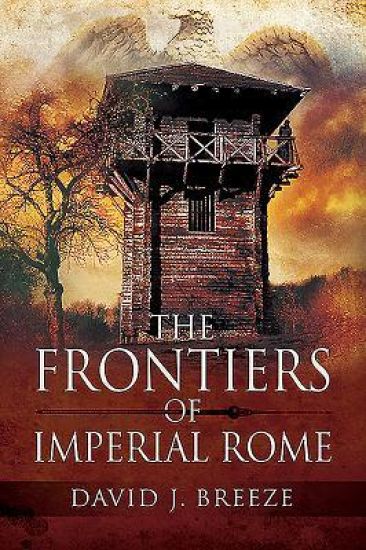
The Frontiers of Imperial Rome

The Frontiers of Imperial Rome

David J Breeze

Pen Sword Military
2019
nidottu
At its height, the Roman Empire was the greatest empire yet seen with borders stretching from the rain-swept highlands of Scotland in the north to the sun-scorched Nubian desert in the south. But how were the vast and varied stretches of frontier defined and defended? Many of Rome's frontier defences have been the subject of detailed and ongoing study and scholarship. Three frontier zones are now UNESCO World Heritage sites (the Antonine Wall having recently been granted this status - the author led the bid), and there is growing interest in their study. This wide-ranging survey will describe the varying frontier systems, describing the extant remains, methods and materials of construction and highlighting the differences between various frontiers. Professor Breeze considers how the frontiers worked, discussing this in relation to the organisation and structure of the Roman army, and also their impact on civilian life along the empire's borders. He then reconsiders the question of whether the frontiers were the product of an overarching Empire-wide grand strategy, questioning Luttwak's seminal hypothesis. This is a detailed and wide-ranging study of the frontier systems of the Roman Empire by a leading expert. Intended for the general reader, it is sure also to be of great value for academics and students in this field. The appendixes will include a brief guide to visiting the sites today.
Hadrian’s Wall: A study in archaeological exploration and interpretation
The lectures on which this publication is based were delivered as the Rhind Lectures to the Society of Antiquaries of Scotland in May 2019. The annual Rhind Lectures commemorate Alexander Henry Rhind (1833-1863), a Fellow of the Society renowned for his excavations (finds from which are now in the National Museum of Scotland) and publications. The 2019 lectures were generously sponsored by AOC Archaeology Group. The first two lectures – chapters in this book – provide the historiographical background to our present understanding of Hadrian’s Wall. They start with John Collingwood Bruce, the leading authority on the Wall, from 1848 until his death in 1892, who gave the Rhind lectures in 1883 and whose influence continues to this day. Research on the Wall in the field and in the study from 1892 to the present day are covered in the second lecture. The third and fourth lectures consider the purpose(s) and operation of Hadrian’s Wall from the first plan drawn up soon after Hadrian became emperor in 117 through to the final days of its existence as a frontier shortly after 400. Five distinct ‘plans’ for the Wall are promulgated. The fifth lecture examines the impact of the frontier on the people living in its shadow and beyond. The last lecture reviews the processes which have brought us to an understanding of Hadrian’s Wall and considers the value of research strategies, with some suggestions for the way forward. The chapters in this book reflect closely the lectures themselves with the main change being the addition of references.