Kirjailija
David M. Robinson
Kirjat ja teokset yhdessä paikassa: 25 kirjaa, julkaisuja vuosilta 1980-2026, suosituimpien joukossa Ming China and its Allies. Vertaile teosten hintoja ja tarkista saatavuus suomalaisista kirjakaupoista.
Mukana myös kirjoitusasut: David M Robinson
25 kirjaa
Kirjojen julkaisuhaarukka 1980-2026.
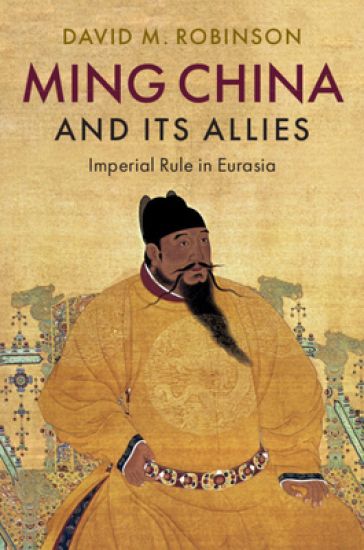
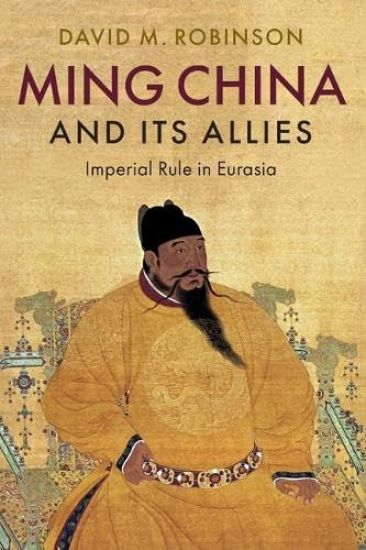
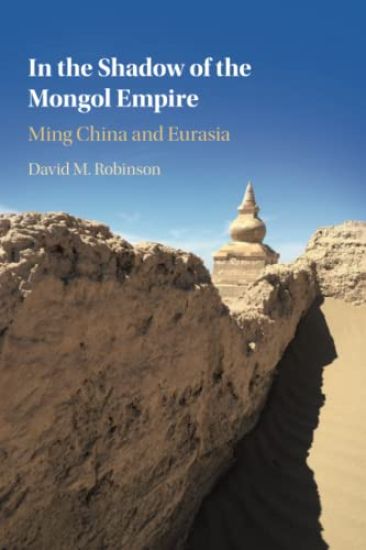
On the eve of the early modern age, Ming emperors ruled around one-quarter of the globe's population, the majority of the world's largest urban centers, the biggest standing army on the planet, and the day's most affluent economy. Far from being isolated, the Ming court was the greatest center of political patronage in East Eurasia, likely the world. Although the Ming throne might trumpet its superiority, it understood its need for allegiance from ruling elites in neighbouring regions. In this major new study, David M. Robinson explores Ming emperors' relations with the single most important category of Eurasian nobles: descendants of Ghengis Khan and their Mongol supporters. Exploring the international dimensions of Chinese rule, this revisionist but accessible account shows that even rulers such as the Ming emperor needed allies and were willing to pay for them.
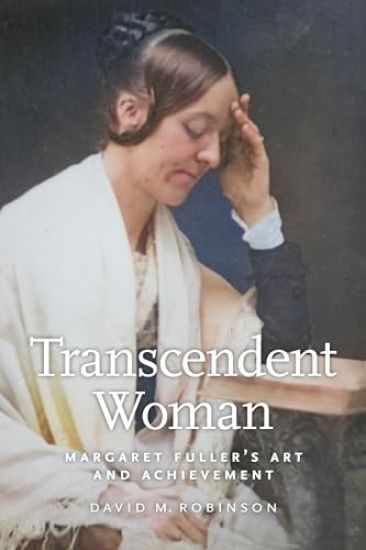
Journalist, editor, critic, translator, and women’s rights advocate, Margaret Fuller was America’s first major female intellectual. Throughout much of the late-19th and 20th centuries, however, critics and scholars largely saw her as a minor figure in the transcendentalist movement with which she is associated, and her work was considered secondary to that of male figures like Emerson and Hawthorne. While her biography—including her marriage to an Italian noble and her dramatic death in a shipwreck—was often the focus, her skill as a writer was generally overlooked, and her intellectual development largely ignored. In the early 1980s, David M. Robinson was one of the first scholars to publish an article that focused on Fuller’s mind and art. Now Transcendent Woman completes and extends this early work. Outlining the development of her philosophy, which Robinson defines as a “purpose-oriented form of thinking, tailored to the commitment and assets of each individual,” he traces Fuller’s intellectual journey, first in relation to her family and the people around her in New England and later in her travels in the midwestern United States and, more importantly, through Europe and her residency in Italy. He focuses first and foremost on what Fuller was reading (Goethe was key), what she was thinking as revealed in her letters and journals, and what she was writing, including seminal works such as Summer on the Lakes and Woman in the Nineteenth Century as well as lesser-known essays, translations, and short stories. Drawing extensively on primary sources, Robinson charts Fuller’s development and achievement as an original thinker and fearless advocate of democracy.
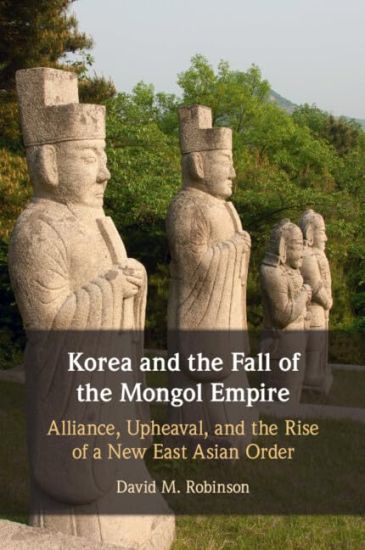
Korea and the Fall of the Mongol Empire explores the experiences of the enigmatic and controversial King Gongmin of Goryeo, Wang Gi, as he navigated the upheavals of the mid-fourteenth century, including the collapse of the Mongol Empire and the rise of its successors in West, Central, and East Asia. Drawing on a wealth of Korean and Chinese sources and integrating East Asian and Western scholarship on the topic, David Robinson considers the single greatest geopolitical transformation of the fourteenth century through the experiences of this one East Asian ruler. He focuses on the motives of Wang Gi, rather than the major contemporary powers, to understand the rise and fall of empire, offering a fresh perspective on this period of history. The result is a more nuanced and accessible appreciation of Korean, Mongolian, and Chinese history, which sharpens our understanding of alliances across Eurasia.
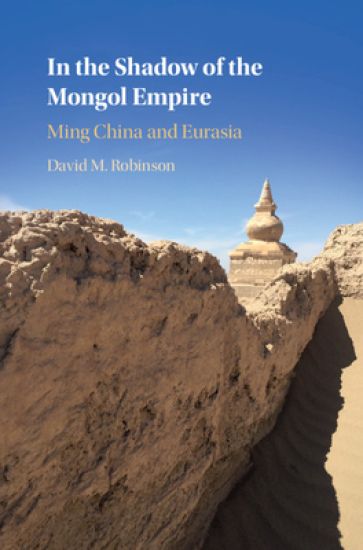
On the eve of the early modern age, Ming emperors ruled around one-quarter of the globe's population, the majority of the world's largest urban centers, the biggest standing army on the planet, and the day's most affluent economy. Far from being isolated, the Ming court was the greatest center of political patronage in East Eurasia, likely the world. Although the Ming throne might trumpet its superiority, it understood its need for allegiance from ruling elites in neighbouring regions. In this major new study, David M. Robinson explores Ming emperors' relations with the single most important category of Eurasian nobles: descendants of Ghengis Khan and their Mongol supporters. Exploring the international dimensions of Chinese rule, this revisionist but accessible account shows that even rulers such as the Ming emperor needed allies and were willing to pay for them.
Tropical Scandal - A Pancho McMartin Legal Thriller
David M Robinson
Bluewaterpress LLC
2023
sidottu
Tropical Scandal: A Pancho McMartin Legal Thriller is a wild ride from start to finish; once you pick it up, you don't want to put it back down.Tropical Scandal is the fifth installment in David Myles Robinson's series of Pancho McMartin legal thrillers. Based somewhat on bizarrely true events, this thrilling sequel is a tale of conspiracy, corruption, and murder. Shortly after the events of Tropical Deception, Pancho is approached by a washed up, alcoholic attorney whom he used to idolize to take over a murder case. The attorney, Isaac Goldblum, has learned that he is dying, and can no longer fulfill his cases. One of those cases, however, is that of his client, Dayton - an innocent man charged with murdering his grandmother. When Pancho takes over the case, he soon realizes that something isn't right and finds himself in the middle of the biggest corruption scandal that Hawaii has ever seen. With a little help from his friends, Pancho must get to the bottom of this case, prove Dayton's innocence, and maintain his finally hopeful love life.With five iterations of the Pancho McMartin series under his belt, it's astounding to see how Robinson is able to consistently bring something new to the table with each sequel. His experience in the legal world provides him with a wealth of stories but Robinson has a way of distilling his inspiration into good old-fashioned, page turning legal drama that can go any number of directions. As you read, you can't help but wonder, "Where is this going to go?" which makes the read that much more exciting; in a way, it's as if knowing he's covered so much ground in the earlier installments of the series enhances the experiences and builds suspense for what will happen next. And Robinson rarely disappoints. The series is full of twists, turns and exciting climatic moments, and Tropical Scandal offers the most spectacular premise yet, largely because there is truth to it.As is often the case with Robinson's legal thrillers, one of the most interesting things about Tropical Scandal is its exciting and accurate depiction of what a trial is like. Robinson is a master at setting the scene, building the tension, and getting you invested. What's more is that, after following Pancho through several cases, you feel like you should be able to predict what he'll say or do, but the hotshot (and sometimes grouchy) attorney always keeps you guessing; and it lands with jaw-dropping satisfaction each time he makes his next big break. Yet, at the same time, there's something very educational about the story. While, perhaps, Robinson aptly turns up the drama in his narratives, he's clearly more interested in the reality of the courtroom than many other writers in his genre, and his own experience in law combined with the input of his close circle uniquely qualifies him to balance the power of story with the intrigue of reality. Tropical Scandal is exciting and rewarding; David Myles Robinson doesn't disappoint - Maincrest Media
Tropical Scandal - A Pancho McMartin Legal Thriller
David M Robinson
Bluewaterpress LLC
2023
pokkari
History of Brighthelmston; or, Brighton as I View it and Others Knew It With a Chronological Table of Local Events
David M Robinson
Alpha Editions
2023
nidottu
Sappho and her influence, a classical book, has been considered important throughout the human history, and so that this work is never forgotten we at Alpha Editions have made efforts in its preservation by republishing this book in a modern format for present and future generations. This whole book has been reformatted, retyped and designed. These books are not made of scanned copies of their original work and hence the text is clear and readable.
During the thirteenth century, the Mongols created the greatest empire in human history. Genghis Khan and his successors brought death and destruction to Eurasia. They obliterated infrastructure, devastated cities, and exterminated peoples. They also created courts in China, Persia, and southern Russia, famed throughout the world as centers of wealth, learning, power, religion, and lavish spectacle. The great Mongol houses established standards by which future rulers in Eurasia would measure themselves for centuries. In this ambitious study, David M. Robinson traces how in the late fourteenth century the newly established Ming dynasty (1368–1644) in China crafted a narrative of the fallen Mongol empire. To shape the perceptions and actions of audiences at home and abroad, the Ming court tailored its narrative of the Mongols to prove that it was the rightful successor to the Mongol empire. This is a story of how politicians exploit historical memory for their own gain.
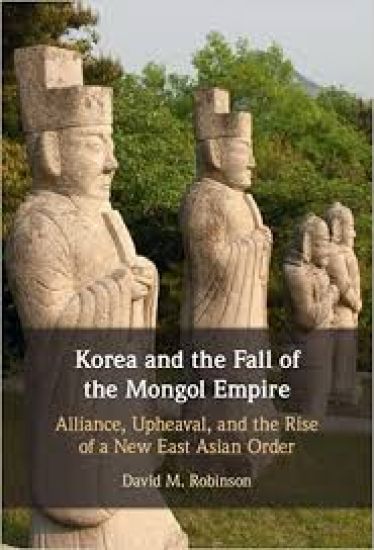
Korea and the Fall of the Mongol Empire explores the experiences of the enigmatic and controversial King Gongmin of Goryeo, Wang Gi, as he navigated the upheavals of the mid-fourteenth century, including the collapse of the Mongol Empire and the rise of its successors in West, Central, and East Asia. Drawing on a wealth of Korean and Chinese sources and integrating East Asian and Western scholarship on the topic, David Robinson considers the single greatest geopolitical transformation of the fourteenth century through the experiences of this one East Asian ruler. He focuses on the motives of Wang Gi, rather than the major contemporary powers, to understand the rise and fall of empire, offering a fresh perspective on this period of history. The result is a more nuanced and accessible appreciation of Korean, Mongolian, and Chinese history, which sharpens our understanding of alliances across Eurasia.
During the thirteenth century, the Mongols created the greatest empire in human history. Genghis Khan and his successors brought death and destruction to Eurasia. They obliterated infrastructure, devastated cities, and exterminated peoples. They also created courts in China, Persia, and southern Russia, famed throughout the world as centers of wealth, learning, power, religion, and lavish spectacle. The great Mongol houses established standards by which future rulers in Eurasia would measure themselves for centuries. In this ambitious study, David M. Robinson traces how in the late fourteenth century the newly established Ming dynasty (1368–1644) in China crafted a narrative of the fallen Mongol empire. To shape the perceptions and actions of audiences at home and abroad, the Ming court tailored its narrative of the Mongols to prove that it was the rightful successor to the Mongol empire. This is a story of how politicians exploit historical memory for their own gain.
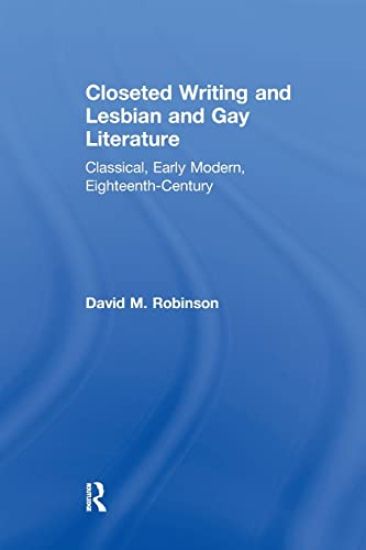
Arguing for renewed attention to covert same-sex-oriented writing (and to authorial intention more generally), this study explores the representation of female and male homosexuality in late sixteenth- through mid-eighteenth-century British and French literature. The author also uncovers and analyzes long-term continuities in the representation of same-sex love, sex, and desire between the classical, early modern, eighteenth-century, and even modern periods. Among the seventeenth- and eighteenth-century authors and texts examined here are Mme de Murat, Les Memoires De Madame La Comtesse De M*** (1697); John Cleland, Memoirs of a Woman of Pleasure (1748-49); Tobias Smollett, The Adventures of Roderick Random (1748); Nicolas Chorier and Jean Nicolas, L'Academie des dames (1680); Delarivier Manley, The New Atalantis (1709); and Isaac de Benserade, Iphis et Iante (1637). Classical texts brought into the discussion include Juvenal's Satires, Lucian's Erotes, and, most importantly, Ovid's Metamorphoses. Casting its net broadly yet exploring deeply-poems, plays, novels, and more; from the serious to the satiric, the polite to the pornographic; well-known and little-known; written in English, French, and Latin; published in early modern and eighteenth-century Britain and France; plus key classical texts-this study engages with the historiography of sexuality as a whole.
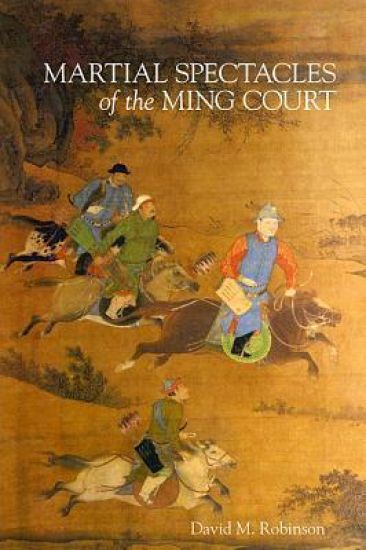
Like most empires, the Ming court sponsored grand displays of dynastic strength and military prowess. Covering the first two centuries of the Ming dynasty (1368–1644), Martial Spectacles of the Ming Court explores how the royal hunt, polo matches, archery contests, equestrian demonstrations, and the imperial menagerie were represented in poetry, prose, and portraiture. This study reveals that martial spectacles were highly charged sites of contestation, where Ming emperors and senior court ministers staked claims about rulership, ruler-minister relations, and the role of the military in the polity. Simultaneously colorful entertainment, prestigious social events, and statements of power, martial spectacles were intended to make manifest the ruler’s personal generosity, keen discernment, and respect for family tradition. They were, however, subject to competing interpretations that were often beyond the emperor’s control or even knowledge. By situating Ming martial spectacles in the wider context of Eurasia, David Robinson brings to light the commensurability of the Ming court with both the Mongols and Manchus but more broadly with other early modern courts such as the Timurids, the Mughals, and the Ottomans.
Sculptured Portraits of Greek Statesmen: With a Special Study of Alexander the Great
Elmer G. Suhr; David M. Robinson
Literary Licensing, LLC
2013
nidottu
American Journal of Archaeology, V38, No. 3, July to September, 1934
David M. Robinson
Literary Licensing, LLC
2012
nidottu
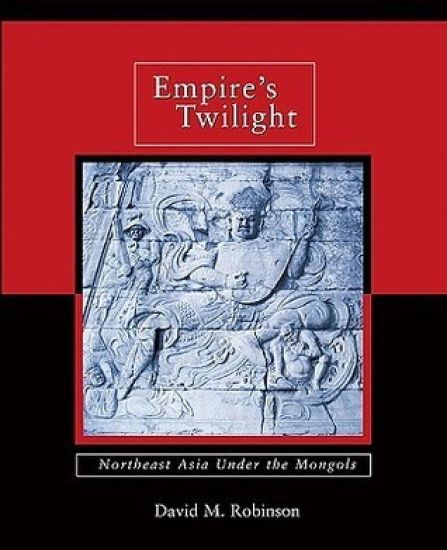
The rise of the Mongol empire transformed world history. Its collapse in the mid-fourteenth century had equally profound consequences. Four themes dominate this study of the late Mongol empire in Northeast Asia during this chaotic era: the need for a regional perspective encompassing all states and ethnic groups in the area; the process and consequences of pan-Asian integration under the Mongols; the tendency for individual and family interests to trump those of dynasty, country, or linguistic affiliation; and finally, the need to see Koryo Korea as part of the wider Mongol empire.Northeast Asia was an important part of the Mongol empire, and developments there are fundamental to understanding both the nature of the Mongol empire and the new post-empire world emerging in the 1350s and 1360s. In Northeast Asia, Jurchen, Mongol, Chinese, Korean, and Japanese interests intersected, and the collapse of the Great Yuan reshaped Northeast Asia dramatically. To understand this transition, or series of transitions, the author argues, one cannot examine states in isolation. The period witnessed intensified interactions among neighboring polities and new regional levels of economic, political, military, and social integration that explain the importance of personal and family interests and of Korea in the Mongol state.
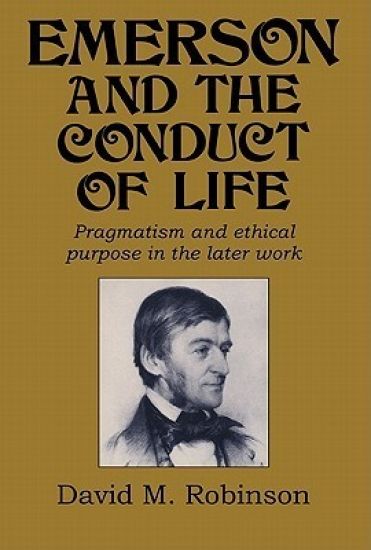
'I like not the man who is thinking how to be good,' Ralph Waldo Emerson wrote, 'but the man thinking how to accomplish his work'. The ethical emphasis on work and activity signals the shift in his thinking that is the subject of Emerson and the Conduct of Life. In this book, David M. Robinson describes Emerson's evolution from mystic to pragmatist and shows the importance of Emerson's undervalued later writing. Emerson's reputation has rested on the addresses and essays of the 1830s and 1840s, in which he propounded a version of transcendental idealism and memorably portrayed moments of mystical insight. But Emerson's later thinking suggests an increasing concern over the elusiveness of mysticism and an increasing emphasis on ethical choice and practical power. Robinson discusses each of Emerson's major later works noting their increasing orientation to a philosophy of the 'conduct of life'. These books represent Emerson's attempt to forge a philosophy based on the centrality of domestic life, vocation and social relations and they reveal Emerson as an ethical philosopher who stressed the spiritual value of human relations, work and social action.