Kirjojen hintavertailu. Mukana 12 595 353 kirjaa ja 12 kauppaa.
Kirjailija
David P. Farrington
Kirjat ja teokset yhdessä paikassa: 34 kirjaa, julkaisuja vuosilta 1998-2025, suosituimpien joukossa School-Based Programs to Reduce Bullying and Victimization. Vertaile teosten hintoja ja tarkista saatavuus suomalaisista kirjakaupoista.
This book aims to advance knowledge about the recidivism of young offenders. It reviews knowledge about risk factors for recidivism and about protective factors that encourage desistance. It then reviews quantitative research on predictors of recidivism versus desistance of young offenders in Buenos Aires, Argentina, based on following up over 100 young offenders during a two-year statutory monitoring period. Numerous factors are identified that predict recidivism: family, educational, social, community, demographic, offence history, substance use history. It then presents qualitative research based on offenders’ narratives, using extensive verbatim quotations, that explain their recidivism versus desistance. Finally, it reviews research on the prevention of recidivism of young offenders and makes recommendations based on the quantitative and qualitative analyses. This book should be of great interest to all academics, researchers, practitioners and policy makers who are interested in juvenile offending and recidivism, including criminologists, psychologists, psychiatrists, social scientists and criminal justice practitioners.
This book aims to advance knowledge about the recidivism of young offenders. It reviews knowledge about risk factors for recidivism and about protective factors that encourage desistance. It then reviews quantitative research on predictors of recidivism versus desistance of young offenders in Buenos Aires, Argentina, based on following up over 100 young offenders during a two-year statutory monitoring period. Numerous factors are identified that predict recidivism: family, educational, social, community, demographic, offence history, substance use history. It then presents qualitative research based on offenders’ narratives, using extensive verbatim quotations, that explain their recidivism versus desistance. Finally, it reviews research on the prevention of recidivism of young offenders and makes recommendations based on the quantitative and qualitative analyses. This book should be of great interest to all academics, researchers, practitioners and policy makers who are interestedin juvenile offending and recidivism, including criminologists, psychologists, psychiatrists, social scientists and criminal justice practitioners.
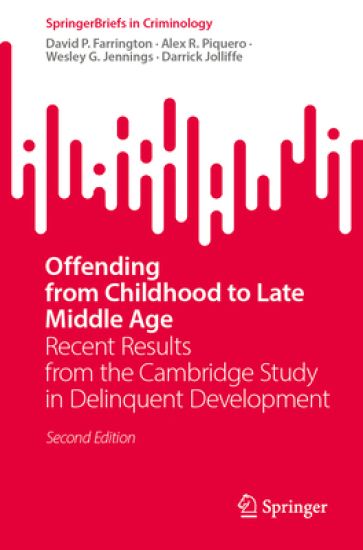
This second edition book advances knowledge about criminal careers throughout life. It presents new results from the Cambridge Study in Delinquent Development (CSDD), which is a unique longitudinal study of the development of offending from age 10 to age 61. Previous results obtained in the CSDD are reviewed, and then new findings from official criminal records up to age 61 are presented: on offending at different ages, continuity in offending, ages of onset, and criminal career duration. The number of offenders and offenses between ages 50 and 61 is noteworthy. The book then presents results on self-reported offending in different age ranges up to 48: on prevalence, frequency, continuity, and comparisons with official records that suggest that official records only capture the tip of the iceberg of offending. It then analyzes different trajectories of official offending up to age 61 and shows to what extent they could be predicted by childhood risk factors. New results from the CSDD in the last 10 years are then presented, followed by a discussion of the relevance of all the findings for criminological theories and public policies such as early intervention. This book should be of great interest not only to academics but also to policy makers and practitioners who are concerned with crime. . . . . . . . . . . . . . . . . .
This brief examines the influence and prestige of scholars and works in the field of criminology and criminal justice, as well as changes in influence and prestige over a period of 35 years, using citation analysis. Based on responses to prior research, most criminologists consider the results both fascinating and thought-provoking, although methods of measuring scholarly influence are also highly controversial. The brief includes 35 years of data (1986 through 2020) on the most-cited scholars and works in major American and international criminology and criminal justice journals, and provides an objective measure of scholarly influence and prestige. Appropriate for graduate students and researchers, it helps to document the intellectual development of criminology and criminal justice as a field of study.
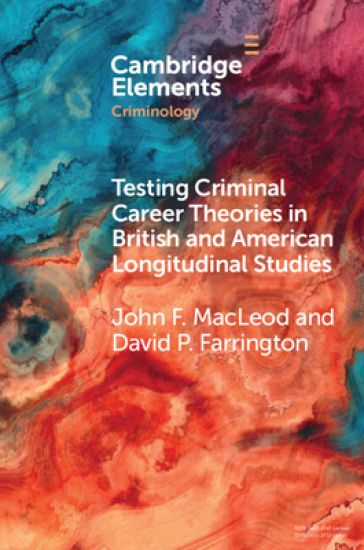
Most criminological theories are not truly scientific, since they do not yield exact quantitative predictions of criminal career features, such as the prevalence and frequency of offending at different ages. This Element aims to make progress towards more scientific criminological theories. A simple theory is described, based on measures of the probability of reoffending and the frequency of offending. Three offender categories are identified: high risk/high rate, high risk/low rate, and low risk/low rate. It is demonstrated that this theory accurately predicts key criminal career features in three datasets: in England the Offenders Index (national data), the Cambridge Study in Delinquent Development (CSDD) and in America the Pittsburgh Youth Study (PYS). The theory is then extended in the CSDD and PYS by identifying early risk factors that predict the three categories. Criminological theorists are encouraged to replicate and build on our research to develop scientific theories that yield quantitative predictions.
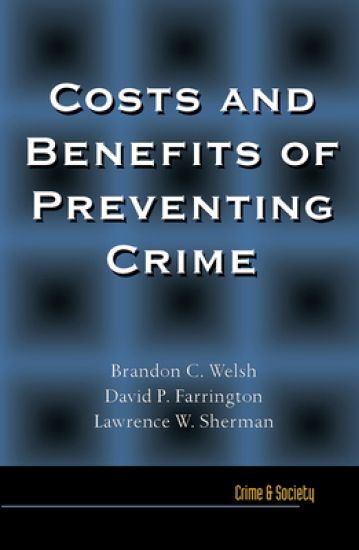
What are the cost savings from preventing a typical burglary, robbery, assault, or even a criminal career? Who benefits from these savings? How often do the benefits from preventing crime or criminal behavior exceed the resources spent on preventing or controlling crime? Is it more cost-effective to invest in early childhood programs or juvenile boot camps to reduce criminal offending? These are some of the important questions that face policymakers in crime and justice today. Answering them is no easy task. Nevertheless, it is important to provide answers in order to ensure that the dollars devoted to crime reduction are spent as efficiently as possible. The principle aim of Costs and Benefits of Preventing Crime is to report on and assess the present state of knowledge on the monetary costs and benefits of crime prevention programs. Remarkably, this crucial topic has rarely been studied up to the present time. This book examines key methodological issues, reports on the most up-to-date research findings, discusses international policy perspectives, and presents an agenda for future research and policy development on the economic analysis of crime prevention. Throughout, it addresses the important question of how governments should be allocating scarce resources to make crime prevention policy and practice more effective and to produce the greatest economic benefits to society. The book brings together research and perspectives from across North America, Europe, and Australia.
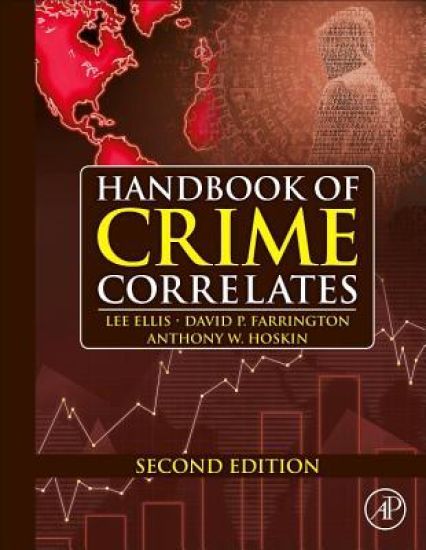
The Handbook of Crime Correlates, Second Edition summarizes more than a century of worldwide research on traits and social conditions associated with criminality and antisocial behavior. Findings are provided in tabular form, enabling readers to determine at a glance the nature of each association. Within each table, results are listed by country, type of crime (or other forms of antisocial behavior), and whether each variable is positively, negatively, or insignificantly associated with offending behavior. Criminal behavior is broken down according to major categories, including violent crime, property crime, drug offenses, sex offenses, delinquency, and recidivism. This book provides a resource for practitioners and academics who are interested in criminal and antisocial behavior. It is relevant to the fields of criminology/criminal justice, sociology, and psychology. No other publication provides as much information about how a wide range of variables—e.g., gender, religion, personality traits, weapons access, alcohol and drug use, social status, geography, and seasonality—correlate with offending behavior.
This book reviews research on psychology and crime in Japan, and compares the findings with similar research conducted in Western industrialised countries. It examines explanations for crime and antisocial behaviour in Japan using research and theories from a psychological perspective. Topics covered include cultural explanations, developmental and life-course criminology, family violence and family risk factors, youth crime and early prevention, school factors and bullying, mental disorders, biosocial factors, psychopathy and sexual offending. In some parts, it challenges and refines the prevailing belief that Japan is a society characterised by low crime and little antisocial behaviour. This original project is the most up-to-date work on crime in Japan, and advances the important field of psychological criminology.
Scholars and policymakers increasingly call for evidence-based, prevention-oriented, and community-driven approaches to improve public health and reduce youth crime, substance use, and related problems. However, few functional models exist. In Communities that Care, four leading experts on prevention describe one such system to illustrate how communities effectively engage in prevention activities. Communities That Care (CTC) is a coalition-based prevention system implemented successfully in dozens of communities across the world that promotes healthy development and reduces crime rates for youth. Drawing on literature from criminology, community psychology, and prevention science this book describes the conditions and actions necessary for effective community-based prevention. The authors illustrate how effective community-based prevention can be undertaken by describing how the CTC prevention system has been developed, implemented, evaluated, and disseminated across the U.S. and internationally. Communities that Care shares invaluable lessons about the implementation and evaluation of community-level interventions and establishes a set of best practices for anyone seeking to engage in and/or evaluate effective prevention efforts.
Scholars and policymakers increasingly call for evidence-based, prevention-oriented, and community-driven approaches to improve public health and reduce youth crime, substance use, and related problems. However, few functional models exist. In Communities that Care, four leading experts on prevention describe one such system to illustrate how communities effectively engage in prevention activities. Communities That Care (CTC) is a coalition-based prevention system implemented successfully in dozens of communities across the world that promotes healthy development and reduces crime rates for youth. Drawing on literature from criminology, community psychology, and prevention science this book describes the conditions and actions necessary for effective community-based prevention. The authors illustrate how effective community-based prevention can be undertaken by describing how the CTC prevention system has been developed, implemented, evaluated, and disseminated across the U.S. and internationally. Communities that Care shares invaluable lessons about the implementation and evaluation of community-level interventions and establishes a set of best practices for anyone seeking to engage in and/or evaluate effective prevention efforts.
This compact resource synthesizes current research on bullying in the schools while presenting strengths-based approaches to curbing this growing epidemic. Its international review of cross-sectional and longitudinal studies unravels the complex dynamics of bullying and provides depth on the range of negative outcomes for bullies, victims, enablers, and victims who bully. Chapters on protective factors against bullying identify personal competencies, such as empathy development, and keys to a positive school environment, featuring findings on successful school-based prevention programs in different countries. Throughout, the authors clearly define bullying as a public health/mental health issue, and prevention as a deterrent for future antisocial and criminal behavior. Included in the coverage: · School bullying in different countries: prevalence, risk factors, and short-term outcomes. · Personal protective factors against bullying: emotional, social, and moral competencies. · Contextual protective factors against bullying: school-wide climate. · Protecting children through anti-bullying interventions. · Protecting bullies and victims from long-term undesirable outcomes. · Future directions for research, practice, and policy. With its wealth of answers to a global concern, Protecting Children against Bullying and Its Consequences is a definitive reference and idea book for the international community of scholars in criminology and developmental psychology interested in bullying and youth violence, as well as practitioners and policymakers.
This Brief fills a gap in criminological literature, as there are few empirically-based studies on delinquency of adolescent girls. It provides results of a longitudinal study, The Pittsburgh Girls Study (PGS), which includes 2,451 girls, followed annually from age 10-19, the ages when criminal behavior tends to emerge. This study provides the most extensive and comprehensive investigation into the criminal offending and self-reported trajectories of offending of PGS participants, along with an in-depth examination of other criminal career dimensions.In five chapters, this short volume reviews the limited extent of girls' delinquency literature, presents data on girls' offending patterns (onset, persistence, specialization, and desistence), provides insights on gender differences by comparison with the Pittsburgh Youth Study, which focused on male offenders, and explores the theoretical and practical implications of the results.By understanding the origins and onset of criminal behavior in girls, researchers can begin to understand effective interventions and crime prevention. This Brief will be of interest to researchers in criminology and criminal justice, as well as related fields such as sociology, public policy, and psychology.
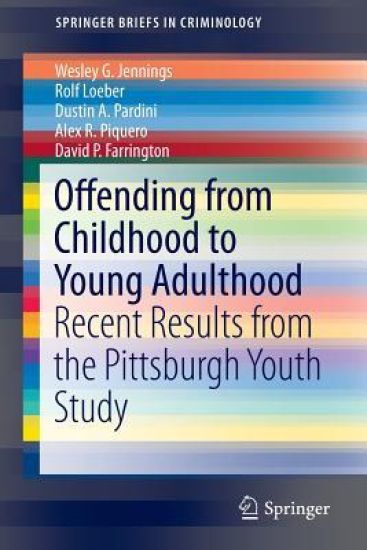
This Brief examines criminal careers by providing the most extensive and comprehensive investigation to date on the official offending, self-reported offending, and trajectories of offending of the Pittsburgh Youth Study (PYS) participants. The PYS is a longitudinal study, which was initiated in 1987, and involves repeated follow-ups on several community cohorts (starting in grades 1, 4, and 7) of inner-city boys in Pittsburgh, Pennsylvania. This Brief covers the Youngest and Oldest PYS cohorts (which had the most follow-up and most data available) from ages 10-30. It provides the most complete descriptive analyses of the criminal careers of these males to date. The three cohorts are commonly referred to as the Youngest, Middle, and Oldest cohorts, respectively. Consistent with several prior publications with the PYS data (Loeber et al., 2008), this book focuses only on data from the Youngest and Oldest cohorts as these cohorts were followedup the most frequently and have the longest time window of data available. It will be of interest to researchers in Criminology and Criminal Justice, as well as related fields like Sociology, Developmental Psychology, Social Policy, and Education.
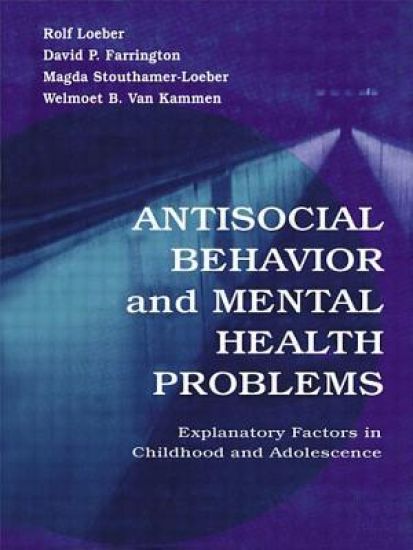
Epidemiological surveys have provided key information about the prevalence and degree of seriousness at different ages of a wide array of problem behaviors such as delinquency, substance use, early sexual involvement, and mental health disorders. Knowledge of the extent of these problems and changes in their course over time is important. In its absence, interventions and health planning in general can be difficult. Understanding which risk and protective factors are relevant to which problem behaviors is also essential for the formulation of theories that constitute the basis of intervention. This book draws on the results of the major Pittsburgh Youth Study complemented by follow-up tracking of juvenile court records for more than six years, to address the following questions: *What is the prevalence and age of onset of delinquency, substance use, and early sexual behavior for three samples of boys age 8, 11, and 14? What are the average mental health problems for these ages? How strong are the relationships among these problem behaviors in each of the samples? *Which variables best explain individual differences among the boys in their manifestations of delinquency, substance use, early sexual behavior, and mental health problems? To what extent do explanatory factors vary with age? How accurately can boys with different outcomes be identified by risk scores based on hierarchical multiple regressions? *To what extent are explanatory factors associated with one outcome that are also associated with other outcomes? Are explanatory factors that are especially characteristic of a multiproblem group of boys--who display many different problem behaviors--different from explanatory factors associated with boys with few problems? *Do the results fit a general theory of juvenile problem behaviors, or is a differentiated theory more applicable?
How can a society prevent-not deter, not punish-but prevent crime? Criminal justice prevention, commonly called crime control, aims to prevent crime after an initial offence has been commited through anything from an arrest to a death penalty sentence. These traditional means have been frequently examined and their efficacy just as frequently questioned. Promising new forms of crime prevention have emerged and expanded as important components of an overall strategy to reduce crime. Crime prevention today has developed along three lines: interventions to improve the life chances of children and prevent them from embarking on a life of crime; programs and policies designed to ameliorate the social conditions and institutions that influence offending; and the modification or manipulation of the physical environment, products, or systems to reduce everyday opportunities for crime. Each strategy aims at preventing crime or criminal offending in the first instance - before the act has been committed. Each, importantly, takes place outside of the formal criminal justice system, representing an alternative, perhaps even socially progressive way to reduce crime. The Oxford Handbook of Crime Prevention is a comprehensive, up-to-date, and authoritative review of research on crime prevention. Bringing together top scholars in criminology, public policy, psychology, and sociology, this Handbook includes critical reviews of the main theories that form the basis of crime prevention, evidence-based assessments of the effectiveness of the most important interventions, and cross-cutting essays that examine implementation, evaluation methodology, and public policy. Covering the three major crime prevention strategies active today-developmental, community, and situational-this definitive volume addresses seriously and critically the ways in which the United States and the Western world have attempted, and should continue to strive for the of crime.
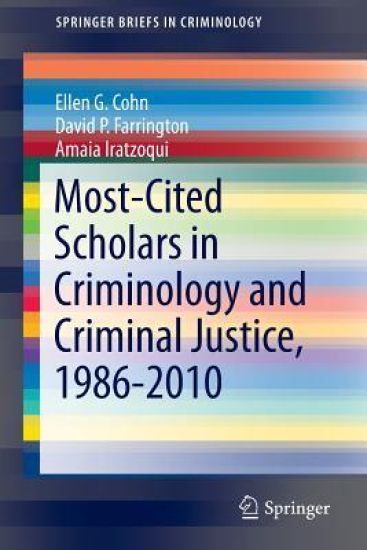
?? ?This brief examines the influence and prestige of scholars and works in the field of Criminology and Criminal Justice, as well as changes in influence and prestige over a period of 25 years, based on citation analysis. Methods of measuring scholarly influence can be highly controversial, but the authors of this work clearly outline their methodology, developed over years of experience working with this area of study. Through their expertise in Criminology and Criminal Justice, they are able to solve problems that affect or confound many traditional forms of citation analysis, such as irregularly cited references or self-citations. It includes 25 years of data (1986 through 2010) on the most-cited scholars and works in major American and international Criminology and Criminal Justice journals, and provides an objective measure of influence and prestige. Through an analysis of the data, the authors also document the intellectual development of criminology and criminal justice as a field of study since 1986. They highlight the development of research trends and indicate areas for future research. This book is designed for use by scholars and academics in the fields of Criminology and Criminal Justice, and the methodology will be of interest to researchers in related disciplines, including Sociology and Social Psychology. --Cohn, Farrington, and Iratzoqui provide an invaluable service in unpacking the criminological enterprise. Using systematic citational analysis, they illuminate the core patterns of scholarly influence that have shaped the field’s development. This volume is an essential resource for all those wishing to understand which scholars and writings have done most—within and across time periods—to affect thinking about crime and justice. Francis T. CullenDistinguished Research ProfessorUniversity of Cincinnati-Citation analyses have becomeone of the most significant measures of scholarly influence. They are especially useful for revealing major trends over time regarding authors and the topics of interest to the wider field. Cohn, Farrington, and Iratzoqui's Most Cited Scholars in Criminology and Criminal Justice, 1986-2010 provides the most up-to-date, comprehensive, and longitudinal investigation of scholarly influence in criminology/criminal justice. This resource is a most interesting read, one that supplies not a mere counting of citations but clear ideas about where the field has been centered and where it is trending into the future.Alex R. PiqueroAshbel Smith Professor of CriminologyUniversity of Texas at Dallas
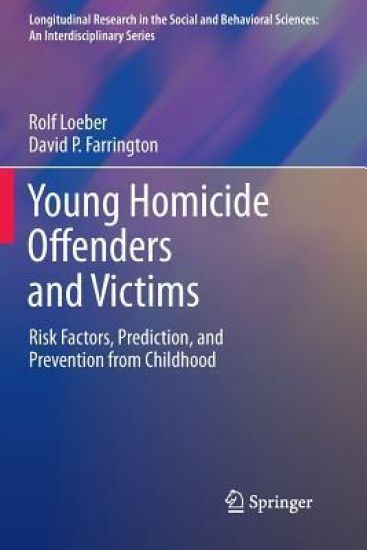
The first decade of the new century proved to be a deadly one for many children and young people in the United States. Despite increased policing on the streets, higher rates of incarceration, harsher sentencing, stricter control of illegal drugs, and attempts to reduce access to firearms, FBI reports show that more than 7,300 young people between the ages of 15 and 29 were murdered in 2008 alone. It’s clear that traditional crime reduction strategies have not stemmed the rising tide of homicides perpetrated by and upon one of society’s most vulnerable populations. Innovative, practicable solutions are needed to staunch this lethal trend.Based on the findings of a unique longitudinal study, Young Homicide Offenders and Victims: Risk Factors, Prediction, and Prevention from Childhood now provides experts with unprecedented analysis of prospectively collected data on 1,517 boys and young men who grew up in Pittsburgh, Pennsylvania. Following these males from childhood into early adulthood, examining their lives and the conditions under which they grew up in a representative mid-sized American city, the study forms the basis of this unique volume designed to stimulate debate on key questions of prevention and intervention as well as dispel popular myths about the childhood and adolescent features of homicide offenders and homicide victims. Key areas of coverage include:Early childhood risk factors of young homicide offenders and victims. Insights into homicide offenders’ lives as told in their own words.The effectiveness of screening for at-risk youth. Risk factor–based prevention and intervention strategies.The impact of interventions on homicide rates.Policy implications at the local, state, and national levels.Young Homicide Offenders and Victims: Risk Factors, Prediction, and Prevention from Childhood is essential reading for researchers,practitioners, and policy makers across the fields of juvenile justice and criminology, developmental psychology, sociology, psychiatry, public health, and policy making.-------“This book changes the game in violence research … The analysis is masterful, the prose is readable, and the achievement is nothing short of stunning.”Richard Rosenfeld, Ph.D. / Curators Professor of Criminology and Criminal Justice, University of Missouri-St. Louis“This book will stand the test of time as a landmark homicide study.”James C. Howell, Ph.D. / Senior Research Associate, National Gang Center“This is a fascinating, pioneering book … The authors’ sophisticated analyses demonstrate convincingly the considerable value of prospective longitudinal data for enhancing our understanding of the etiology and control of lethal violence.”Steven F. Messner, Ph.D. / Distinguished Teacher Professor, Department of Sociology, University at Albany, SUNY / President, American Society of Criminology
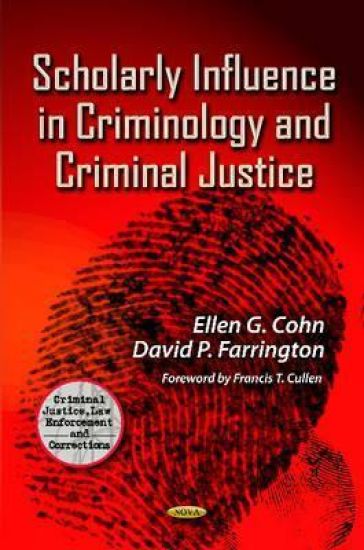
This is the first book to trace scholarly influence in criminology and criminal justice over a twenty-year time period. It is based primarily on the analysis of citations in major journals, but it also includes studies of publication productivity. This book shows that, over a twenty-year time period, the most influential topics in major criminology and criminal justice journals were either concerned with developmental/life course or longitudinal/criminal career research, or were expositions of major theories. Because of its identification of the most-cited scholars, the most-cited books and articles, and the most prolific publishers, this book will be of interest to all scholars and students in criminology and criminal justice and allied fields. In addition, its conclusions about the most influential theories and research should be of interest to policy makers, practitioners, and funding agencies.