Kirjojen hintavertailu. Mukana 12 595 353 kirjaa ja 12 kauppaa.

Kirjailija

David Pearce

Kirjat ja teokset yhdessä paikassa: 31 kirjaa, julkaisuja vuosilta 1989-2023, suosituimpien joukossa The Valuation of Social Cost (Routledge Revivals). Vertaile teosten hintoja ja tarkista saatavuus suomalaisista kirjakaupoista.

31 kirjaa

Kirjojen julkaisuhaarukka 1989-2023.

Peak Success

Peak Success

David Pearce

Advantage Media Group
2023
pokkari
Dr. Pearce's coaching methodology is a testament to his unwavering life philosophy, which centers around assisting his dental clients in successfully transitioning their practices to offer more comprehensive care. His approach is transformative, leading to a significant increase in patient acceptance of full mouth treatment while simultaneously reducing the number of working hours they must engage in. This remarkable shift ultimately yields increasingly greater financial rewards for his clients, as well as offering the best dental care possible for their patients.Through Dr. Pearce's coaching, practitioners discover a newfound ability to navigate the complexities of their profession with confidence and ease. By adopting his proven strategies, they become adept at effectively communicating the value and benefits of comprehensive care to their patients. As a result, more patients are inclined to accept the full mouth treatment, allowing dental practitioners to provide comprehensive care to a broader range of individuals. This not only enhances the overall health and well-being of dental patients but also significantly boosts the financial success of the practice.However, Dr. Pearce's coaching goes beyond mere financial gains. It involves a fundamental paradigm shift from a traditional "doctor/owner-led business" to a collaborative "doctor/leader and team-driven business." With Dr. Pearce's guidance, practitioners learn to create an environment where team members are actively engaged and motivated to contribute to their own success as well as the overall success of the practice.In this new model, team members are empowered to take ownership of their roles and responsibilities. They are encouraged to bring their unique talents and perspectives to the table, fostering a sense of ownership and accountability. Dr. Pearce emphasizes the importance of cultivating a culture of collaboration and mutual support within the practice. By doing so, practitioners experience the extraordinary benefits of harnessing the collective expertise and passion of their team members.As the team becomes more engaged and motivated, the practice thrives. Dentists will find themselves working smarter, not harder, as the burden of responsibilities is distributed among the team. This redistribution of tasks allows the practitioners to focus on their core competencies, delivering exceptional care to their patients while also having the chance to dedicate more time to their personal lives.Through Dr. Pearce's coaching approach, practitioners are able witness a remarkable transformation in their professional and financial lives. They not only achieve a much greater income through increased patient acceptance of comprehensive care, but they also cultivate a fulfilling and harmonious work environment where every team member contributes to the collective success. Dr. Pearce's coaching transcends conventional business strategies, creating a sustainable framework that enables practitioners to thrive personally, professionally, and financially.
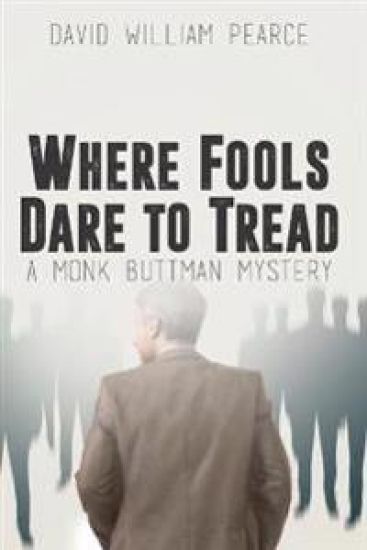
Where Fools Dare to Tread

Where Fools Dare to Tread

David Pearce

Black Rose Writing
2019
pokkari
It's easy to be a nobody when you've got nothing to lose, but with his life and potential redemption on the line, can Monk be a somebody people will remember?A dead man's money is just waiting to be had. A band of fools and a nobody named Monk Buttman unwittingly find themselves caught in a web of murder and revenge between two unseen factions using them as bait. After a good day ends in murder, Monk is tasked with finding the killer. Why him? He's a nobody Stuck between powerful forces he can neither control or understand, Monk must survive both the fools and those pulling the strings while also dealing with the affections of two very different women, the troubled Agnes and the disaffected Judith, not to mention the irritation of his erstwhile partner, Mr. Jones. A beating forces Monk to question his own motives and to confront the past that led him to hide in LA. With love and life on the line, Monk must use his wits and guile for all of them to survive.
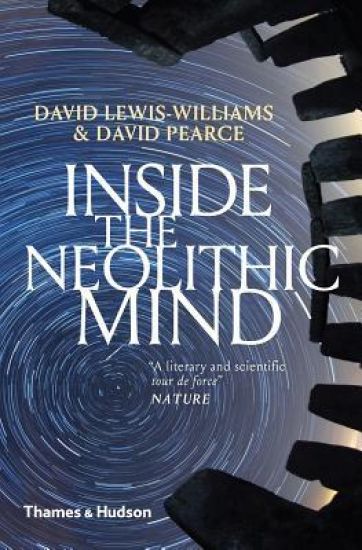
Inside the Neolithic Mind

Inside the Neolithic Mind

David Lewis-Williams; David Pearce

Thames Hudson Ltd
2018
nidottu
This fascinating book continues the story begun in the bestselling and critically acclaimed book The Mind in the Cave. Drawing on the latest research and recent discoveries, the authors skilfully link material on human consciousness, imagery and belief systems to propose provocative new theories about the causes of an ancient revolution in cosmology, the origins of social complexity and even the drive behind the domestication of plants and animals. In doing so they create a fascinating neurological bridge to the mysterious thought-lives of the past and reveal the essence of a momentous period in human history.
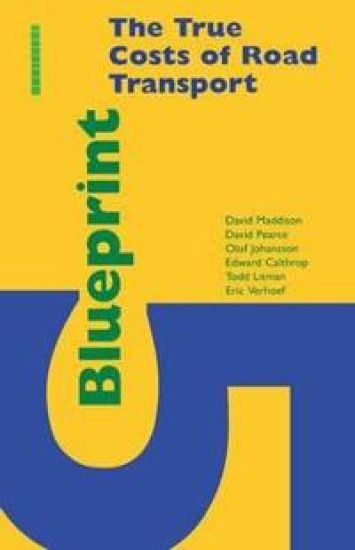
Blueprint 5

Blueprint 5

Olof Johansson; David Pearce; David Maddison

Routledge
2017
sidottu
Evidence has come to light regarding the impact of benzene emissions from road transport, the incidence of asthmatic attacks and the possible toll of particulate matter from diesel engines on human health. This book examines the issues and argues that, without a fundamental change in policy, it is inevitable that the transport sector will continue to impose increasing costs on the natural environment, human health and the economy. It also quantifies the external costs of road transport and suggests new measures, such as road pricing and financial incentives, to pave the way to a sustainable transport system.
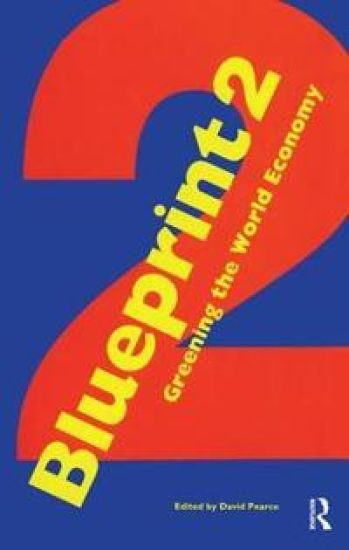
Blueprint 2

Blueprint 2

David Pearce

Routledge
2017
sidottu
Following 'Blueprint for a Green Economy' (the Pearce Report), David Pearce and his team have turned their attention to global environmental threats. If it makes sense to apply economic analysis to national environmental problems, then it makes even more sense to apply it to world-wide dangers. The authors start by describing the reasons for using economic approaches to common resources like climate, ozone and biodiversity. They then take a detailed look at the economic ways of tackling the issues involved in global warming, ozone layer depletion, environmental degradation in the Third World, population, rain forests, aid, equity, international environmental co-operation and what might amount to green foreign policies. They show not only how to take all these things into account in economic theory, but also the economic price of failing to do so. Blueprint 2 is an agenda for international and governmental economic action.
The Economic Value of Biodiversity

The Economic Value of Biodiversity

David Pearce; Dominic Moran

Routledge
2017
sidottu
Biodiversity loss is one of the major resource problems facing the world, and the policy options available are restricted by inappropriate economic tools which fail to capture the value of species and their variety. This study describes in non-technical terms how cost-benefit analysis techniques can be applied to species and species loss, and how they provide a measure of the efficiency of conservation measures. Only when conservation can be shown to pass such a basic economic test, the authors claim, will it be incorporated into policies.;David Pearce has also written Blueprint for a Green Economy.
Blueprint 3

Blueprint 3

David Pearce

Routledge
2017
sidottu
Blueprint 3 is the direct sequel to the ground-breaking Blueprint for a Green Economy. Taking the argument much further, David Pearce and his colleagues show how progress towards sustainability in the UK can be measured. They set out the conditions for sustainable development and the measures of economic progress these imply, before looking in detail at all the main areas of economic activity to which the measures are applicable. The result is a wide-ranging and cogent critique of existing policies which also offers new options - options which will require far-reaching reform of this country's existing political and institutional structure. Blueprint 3 will be a touchstone for future discussions of all the major policy areas.
Blueprint 1

Blueprint 1

David Pearce; Anil Markandya; Edward Barbier

Routledge
2016
sidottu
This report has been prepared by the London Environmental Economics Centre (LEEC). LEEC is a joint venture, established in 1988, by the International Institute for Environment and Development (IIED) and the department of Economics of University College London (UCL). Popularly known as The Pearce Report, this book is a report prepared for the Department of the Environment. It demonstrates the ways in which elements in our environment at present under threat from many forms of pollution can be costed. The book goes on to show ways in which governments are able, as a consequence of this analysis, to construct systems of taxation which would both reduce pollution by making it too costly and generate revenue for cleaning up much of the damage. The book ends with a series of skeleton programmes for progress.
The Valuation of Social Cost (Routledge Revivals)
First published in 1978, The Valuation of Social Cost is concerned both with the idea, and with the practical problems, of placing monetary values on ‘intangible’, non-marketed goods, such as pollution, noise nuisance, personal injury, or the loss of home, neighbours or recreational benefit. A diverse range of contributors critically assess both the theoretical issues and the practical attempts made by economists and others to ‘monetise’ items which cannot be bought or sold. Each section contains a comprehensive literature review and a detailed critical appraisal. Despite being written in the late 70s, this book discusses issues which retain significant importance today.
The Life and Times of Edgar Williams

The Life and Times of Edgar Williams

David Pearce

Createspace Independent Publishing Platform
2014
nidottu
Follow in the footsteps of the new Victorian adventurer, Edgar Williams, in this collection of four thrilling stories which trace his travels around the world. In 'The Quest for the Lion's Whisker', Williams ventures forth from his comfortable life in England to explore darkest Africa and experiences dangers he never thought possible, in a world he never knew existed. Set several years later, 'A Rage in Siam' finds Williams a much changed man, as he is hired to assassinate a gun-runner in the steamy jungles of Asia, while 'The Secretive Serpent of Storjord' sees him pitted against a deadly mythical foe in the frozen wastes of Norway. Finally, 'The Bandits of Honour' finds him on the seemingly peaceful island of Corsica, but where an age-old blood feud between rival families is about to reach an explosive climax, with Williams caught in the middle.
The Valuation of Social Cost (Routledge Revivals)
First published in 1978, The Valuation of Social Cost is concerned both with the idea, and with the practical problems, of placing monetary values on ‘intangible’, non-marketed goods, such as pollution, noise nuisance, personal injury, or the loss of home, neighbours or recreational benefit. A diverse range of contributors critically assess both the theoretical issues and the practical attempts made by economists and others to ‘monetise’ items which cannot be bought or sold. Each section contains a comprehensive literature review and a detailed critical appraisal. Despite being written in the late 70s, this book discusses issues which retain significant importance today.
Working with Rock Art

Working with Rock Art

Agnew Neville; Christopher Chippindale; Deacon Janette; Helskog Knut; Anne-Sophie Hygen; Jolly Pieter; Gitte Kjeldsen; Antti Lahelma; Tilman Lenssen-Erz; Trond Lødøen; Dipuo W. Mokokwe; David Morris; Catherine Namono; Ndlovu Ndukuyakhe; Terje Norsted; David Pearce; Juha Pentikäinen; Alexey E. Rogozhinskiy; Andrzej Rozwadowski; Thembi Russell; Paul Taçon; Weiss Lindsay; Whitley David S.; Leslie Zubieta

Wits University Press
2012
nidottu
This volume contains cutting edge contributions that consider new approaches to three areas: the documentation of rock art; its interpretation using indigenous knowledge; and the presentation of rock art. Working with Rock Art is the first edited volume to consider each of these areas in a theoretical rather than a technical fashion, and it therefore makes a significant contribution to the discipline. The volume aims to promote the sharing of new experiences between leading researchers in the field. While the geographic focus is truly global, there is a dominant north-south axis with strong representation from researchers in southern Africa and northern Europe, two leading centres for new approaches in rock art research. Working with Rock Art opens up a long overdue dialogue about shared experiences between these two centres, and a number of the chapters are the first published results of new collaborative research. Since this volume covers the recording, interpretation and presentation of rock art, it will attract a wide audience of researchers, heritage managers and students, as well as anyone interested in the field of rock art studies.
The Price of Virtue

The Price of Virtue

Vivien Foster; Susana Mourato; David Pearce; Ece Özdemiroglu

Edward Elgar Publishing Ltd
2001
sidottu
It is well known that the voluntary sector in modern society is large in terms of economic activity - but how large? The authors of this pioneering book attempt to address this problem by utilizing survey techniques, originally developed in environmental economics, to place an economic value on the benefits provided by the voluntary sector in the UK. The authors comprehensively detail the analytical foundations of their survey methodology, a stated preference approach, and the results which were achieved. The economic value of the voluntary sector is elicited by discovering the general public's willingness to pay, to maintain charitable services that are at a hypothetical risk of closure. This willingness to pay is shown to be an important element of the economic value of the voluntary sector. The authors move on to investigate the benefits provided by the charitable sector in general and by housing and homelessness charities in particular.The book considers how, if people are willing to pay more for charities than they actually do, this economic surplus can be captured and turned into flows of income for the charities themselves. Fiscal incentives, the efficacy of various fund-raising methods and the benefits of population targeting are all examined as a means to this end. The book also discusses whether the value of charities can be defined in a wider context in terms of social capital.This highly innovative book will be of great interest to social economists, social scientists and all organizations working within and connected to the voluntary sector.
Economics and Environment

Economics and Environment

David Pearce

Edward Elgar Publishing Ltd
2000
nidottu
David Pearce has a long-established international reputation in environmental economics. This book presents a selection of his recent essays, some of which are published here for the first time.The book begins with an introduction which gives an insight into the development of David Pearce's career in environmental economics. It is also an accessible guide to the role that environmental economics can play in policy making and a forceful defence of his own position vis-a-vis different schools of thought.The essays cover four broad themes: ethics and ecological economics, sustainable development, applied environmental economics and global environmental change. Specific subject areas include: environmental valuation, forestry, wildlife conservation, risk assessment, global warming and the role of carbon taxes. David Pearce writes in a lucid and clear style which will appeal to students and scholars of environmental economics as well as political scientists, environmental managers and policymakers.
Sustainable Development

Sustainable Development

David Pearce; Edward Barbier; Anil Markandya

Earthscan Ltd
2000
nidottu
Blueprint for a Green Economy put the economics of the environment onto the public agenda. Its authors have now widened the issue by applying the principles of their earlier, ground-breaking work to the tangled issue of sustainable Third World development. They offer a definition of sustainable development in terms of not depleting natural resources and then examine its economic implications. The bulk of the book contains six lively case-studies of major developmental issues, from the watersheds of Java to the drylands of the Sudan; from Amazonia to Africa, all of which show the crucial importance of incorporating the economics of sustainable development into our thinking.
Blueprint 6

Blueprint 6

David Pearce; Edward B. Barbier

Earthscan Ltd
2000
nidottu
Ten years ago, Blueprint for a Green Economy made front-page news. Its central message, that environmental problems have their roots in economic 'failures', served to change the direction of environmental policy. The goal of sustainable development was seen to be illusory unless an economic perspective was brought to bear on the issue. A decade on, two of the original authors, David Pearce and Ed Barbier, return to the original theme to see what has changed. They find that the picture has improved, with governments worldwide now talking the language of environmental economics and making steps towards an economics-based environmental policy. However, there is a long way to go and Blueprint for a Sustainable Economy maps out the agenda again, with special reference this time to developing country problems where the neglect of environmental quality is costing nations dear. The authors show that their original formulation of the meaning of sustainable development has flourished into whole theories of how to achieve sustainability and how to measure a sustainable path for modern economies. They also show that all the principles applicable to a nation, or to the world as a whole, are equally applicable to corporations. Here is a blueprint for the start of the century.