

Kirjailija
David Scott
Kirjat ja teokset yhdessä paikassa: 168 kirjaa, julkaisuja vuosilta 1992-2026, suosituimpien joukossa The 51st State. Vertaile teosten hintoja ja tarkista saatavuus suomalaisista kirjakaupoista.
168 kirjaa
Kirjojen julkaisuhaarukka 1992-2026.
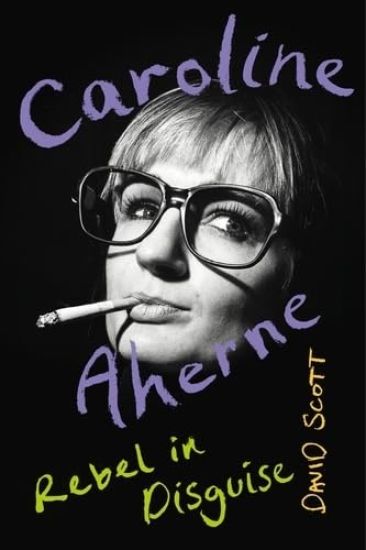
A thoughtful exploration of the work of this unique comedian and writer. Caroline Aherne was one of the most influential and beloved of British comedians. In this book David Scott explores Aherne’s comedic artistry and creative legacy, focusing on her iconic characters and ground-breaking TV shows. Scott dives into Aherne’s most beloved creations, from the sharp-tongued Mrs Merton to the quietly revolutionary The Royle Family. Drawing on the tales of collaborators and telling behind-the-scenes stories, he provides an intimate glimpse into the creative processes that brought these iconic works to life. At the same time, he examines the social and cultural influences that shaped Aherne’s work, from the rich traditions of Northern working-class humour to the experiences of Irish migrants. Aherne’s work is celebrated for its sharp wit, warmth and ability to find comedy in adversity. This book offers an exploration and celebration of one of comedy’s most inventive minds, revealing how she reshaped the British comedy landscape.

20 Ways and Ideas to Save Your Marriage Now!
David Scott
Purple Chair Books and Educational Products, LLC
2026
pokkari
A Decolonial Curriculum
David Scott; Sandra Leaton Gray; Rita Chawla-Duggan
TAYLOR FRANCIS LTD
2026
sidottu
A Decolonial Curriculum advances the claim that a decolonial and transcolonial curriculum must be grounded in a substantive account of what human beings do, have done, and might yet do. It proposes twelve fundamental domains of human life - knowing, communicating, genealogising, positioning, cognising, understanding, enhancing, philosophising, acting in the world, valuing, embodying, and creating - as generative elements for curriculum design. Taken together, these domains offer a non-reductive framework that resists the false dichotomy between ‘colonial’ epistemologies and ‘indigenous’ ways of knowing and being. Rather than opposing knowledge traditions, the book argues for a pedagogy that is dialogical, embodied, and reflexive, while recognising the limits of decolonial critique alone. It therefore advances a transcolonial pedagogy oriented towards hybrid, relational, and productive epistemic formations, capable of preparing learners for materially and historically interconnected futures. It is an essential read for academics, educators, policymakers, and anyone engaged in designing, developing, and rethinking curriculum.



The Essential Traits of a Happy and Godly Wife
David Scott
Purple Chair Books and Educational Products, LLC.
2025
pokkari
Colonising and Decolonising
David Scott; Sandra Leaton Gray; Rita Chawla-Duggan
TAYLOR FRANCIS LTD
2025
sidottu
Colonising and Decolonising argues for a decolonised and ethicised curriculum. Grounded in an interdisciplinary approach, it draws upon the fields of history, sociology, education, anthropology, philosophy, indigenous studies, and more, to allow a nuanced and multifaceted exploration of the subject matter. Focusing on the concepts and practices of coloniality and decoloniality, it uses this focus as a framework for positioning concepts as acquired dispositions in the way we live. Philosophical topics addressed include: concepts and descriptors, knowledge, facts and values, free will and volition, coloniality, decoloniality, curriculum, sapience, strong normative evaluations, pedagogy, rationality, freedom, ethics, learning practices, thinking, ecology, imaginative possibility, and inclusion. A robust and erudite exploration of the imperative of decolonisation, this volume will appeal to scholars and researchers across a broad range of disciplines including specialist fields of education research, decolonial theory, sociology, epistemology, and philosophy of education. The Open Access version of this book, available at http://www.taylorfrancis.com, has been made available under a Creative Commons [Attribution-Non Commercial-No Derivatives (CC BY-NC-ND)] 4.0 license.
Sarcopenia and Frailty
David Scott; Elsa Dent; Robin M. Daly
ELSEVIER SCIENCE TECHNOLOGY
2025
nidottu
Sarcopenia describes the age-related decline in skeletal muscle mass and function which leads to increased disability and loss of independence in older adults, and can be considered a component of frailty, which is similarly an age-related syndrome characterized by declines in multiple physical and psychosocial factors that result in reduced resilience to stressors.Sarcopenia and Frailty: A Guide to Screening, Diagnosis, Prevention and Treatment is a handbook that provides readers with an understanding of the current operational definitions of sarcopenia and frailty, and easy-to-follow instructions for performing and interpreting the necessary assessments to screen and diagnose both conditions. It also provides advice on the latest evidence related to treatment strategies for patients diagnosed with (or at increased risk of) sarcopenia and/or frailty, with a focus on prescribing exercise and nutrition interventions.This book is a valuable resource for researchers and clinicians who need to understand more the standardized approaches to performing and interpreting screenings and diagnosing and treating sarcopenia and frailty in older individuals.
Examining the idea of intelligence in its diverse sociological and philosophical formations, Intelligence, Sapience and Learning explores the multiple and often complex meanings associated with the concept of intelligence, and its relationships with learning, curriculum and sapience. Scott and Leaton Gray explain a series of key concepts central to understanding the meta-concepts and practices of intelligence, learning and curriculum. These concepts include epistemology, free will and volition, hermeneutics, pragmatism, strong normative evaluations and pedagogy, amongst others. Focusing on six praxes that form a genealogy of the concept of intelligence, Scott and Leaton Gray argue for a re-framing of the concept and practice of intelligence, with profound consequences for how modern societies should be organised and how people should live their lives. This book is a follow-up to Women Curriculum Theorists: Power, Knowledge and Subjectivity, and takes a fresh look at the concept and practice of intelligence. It will appeal to curriculum theorists and those with an interest in curriculum and learning matters, as well as those working in the philosophy and sociology of education.
The DNA of a Godly Husband
David Scott
Purple Chair Books and Educational Products, LLC.
2025
pokkari


Plain Answers and Explanations about Being a Christian & Some Other Important Churchy Stuff
David Scott
Purple Chair Books and Educational Products, LLC
2025
pokkari

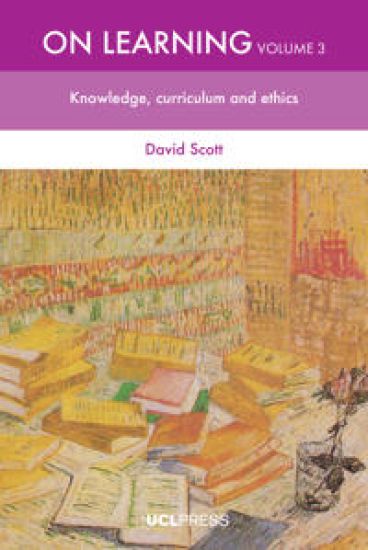

Most published bodies of work relating to curriculum theory focus exclusively, or almost exclusively, on the contributions of men. This is not representative of influences on educational practices as a whole, and it is certainly not representative of educational theory generally, as women have played a significant role in framing the theory and practice of education in the past. Their contribution is at least equal to that of men, even though it may not immediately appear as visible on library shelves or lecture lists. This book addresses this egregious deficit by asking readers to engage in an intellectual conversation about the nature of women’s curriculum theory, as well as its impact on society and thought in general. It does this by examining the work of twelve women curriculum theorists: Maxine Greene, Susan Haack, Julia Kristeva, Martha Nussbaum, Nel Noddings, Jane Roland Martin, Marie Battiste, Dorothea Beale, Susan Isaacs, Maria Montessori, Mary Warnock and Lucy Diggs Slowe.The book is not an encyclopaedia, nor is it a history book. It aims to bring to the reader’s attention, through a semantic rendition of the world, those seminal relationships that exist between the three meta-concepts that are addressed in the work, feminism, learning and curriculum. It will appeal to scholars and researchers with interests in curriculum, and the philosophy and sociology of education.
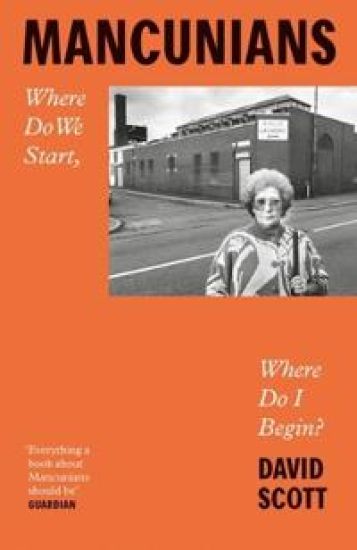
In the late 1990s, Manchester was a city in upheaval. The devastation of the IRA bomb and the closure of the notorious Haçienda nightclub were seismic events that rocked the city’s confidence at a time when identikit bands were flooding its clubs and bars, fuelled on anthemic guitar rock and swagger. Stereotypes were everywhere, while the spirit of Manchester was silently suffocating.Mancunians: Where do we start, where do I begin? is the story of those who didn’t fit the typecast: the musicians of colour, the football fans alienated by rampant commercialism, frustrated public figures, optimistic developers and ambitious artists.Through a mixture of memoir and interviews with well-known Mancunians such as Guy Garvey, Tunde Babalola, Sylvia Tella, Badly Drawn Boy and Stan Chow, David Scott portrays the city at the turn of the century in a way never seen before.
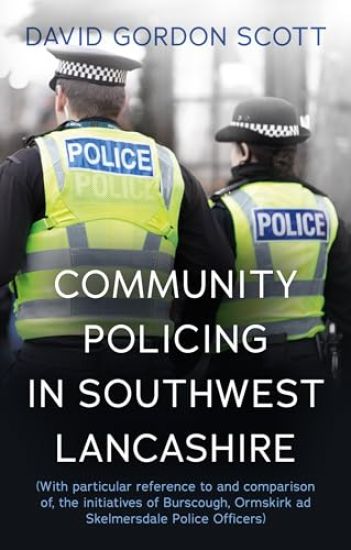
The intentions of 'community policing' are extensively contested. Is it about state surveillance, responding to the needs of community, or mystifying and providing a cloak of legitimacy for more coercive police practices? Through ethnographic research this book aims to shine a spotlight on these contested interpretations. The research in Burscough, Ormskirk and Skelmersdale is an attempt to clarify the issues and determine the success, or failure, of this approach to policing in terms of image, effectiveness, and responsiveness to the needs of diverse communities. The study includes the perceptions of contemporary policing practices from three hundred members of the public, one hundred from each of the areas specified above. The investigation incorporates extensive interviews with six officers, whose responses are utilised in the body of the text so that an in-depth perspective of the police interpretation of community policing can be analysed. Both aspects are combined so that a capacious impression of current opinions can be attained and thus develop an understanding of the way the police in Southwest Lancashire can be considered as community responsive. Community Policing in Southwest Lancashire reflects on how community policing can be reimagined to avert greater recourse to coercive policing.