Kirjojen hintavertailu. Mukana 12 152 606 kirjaa ja 12 kauppaa.

Kirjailija

David Thomson

Kirjat ja teokset yhdessä paikassa: 69 kirjaa, julkaisuja vuosilta 1988-2026, suosituimpien joukossa Liberties Journal of Culture and Politics. Vertaile teosten hintoja ja tarkista saatavuus suomalaisista kirjakaupoista.

69 kirjaa

Kirjojen julkaisuhaarukka 1988-2026.

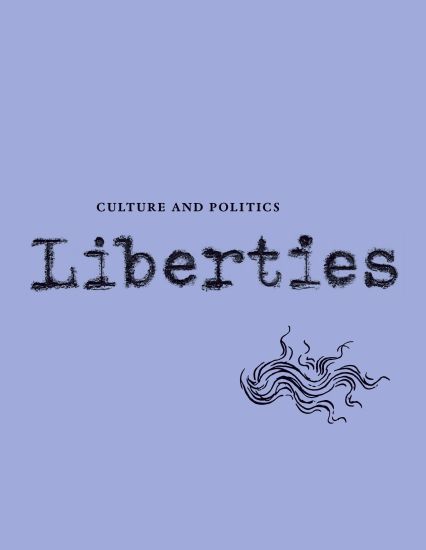
Liberties Journal of Culture and Politics

Liberties Journal of Culture and Politics

Giles Kepel; Ingrid Rowland; Vladimir Kara-Murza; Enrique Krauze; Paul Muldoon; Mitchell Abidor; Agnes Callard; Henri Cole; William Deresiewicz; Benjamin Moser; David Nirenberg; Peter Phillips; Becca Rothfeld; Paul Starr; David Thomson; Chaim Nacham Bialik

Liberties Journal Foundation
2021
pokkari
“A Meteor of Intelligent Substance” “Something was Missing in our Culture, and Here It Is” “Liberties sure is needed in these times.”In a short time since its launch, Liberties - A Journal of Culture and Politics, a quarterly, has become essential reading for those engaged in the cultural and political issues and causes of our time. The writers in Liberties offer deep experience from across borders, national identities, political affiliations and artistic achievements. As the introductory essay in the inaugural edition noted, “At this journal we are betting on what used to be called the common reader, who would rather reflect than belong and asks of our intellectual life more than a choice between orthodoxies.” Each issue of Liberties features original in-depth essays and compelling new poetry from some of the world's most significant writers, artists, and scholars, as well as introducing new talent, to inspire and impact the intellectual and creative lifeblood of today’s culture and politics. This spring issue of Liberties includes: Giles Kepel on the Murder of Samuel Paty; Ingrid Rowland’s Long Live the Classics!; Vladimir Kara-Murza Surviving Putin’s Poisons; Paul Starr on Reckoning with National Failure from Covid; Becca Rothfeld on Today's Sanctimony Literature; Enrique Krauze explores What is Latin America?; William Deresiewicz on Why Great Visual Art Forces Us to Think; Benjamin Moser on Rediscovering Frans Hals; David Nirenberg on What We Can Learn from Earlier Plagues; Agnes Callard’s view of Romance without Love, Love without Romance; Mitchell Abidor looks back to “Social Media” in 1895 to Understand a Crowd’s “Wisdom”; The Tallis Scholars' Peter Phillips on the Secrets of Josquin; David Thomson on Movies’ Poetic Desire; Poetry from Henri Cole, Chaim Nachman Bialik, and Paul Muldoon; and, Leon Wieseltier (editor) asks "Where Are the Americans?” and Celeste Marcus (managing editor) writes for a Pluralistic Heart.
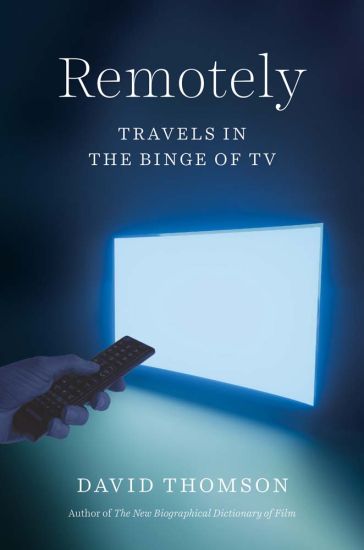
Remotely

Remotely

David Thomson

YALE UNIVERSITY PRESS
2024
sidottu
A leading film critic on the evolving world of streaming media and its impact on society The city at night under lockdown, a time of plague and anxiety. It is an exciting new age of television, the light that flutters in every cell in the city. But no one seems to be asking: What is the endless stream doing to us? In Remotely, the most innovative writer on film and screens asks what happened to us as we sought consolation under lockdown by becoming a society of bingeing creatures. From Candid Camera and I Love Lucy to Ozark, Succession, and Chernobyl, David Thomson and his wife, Lucy Gray, wander through shows old and new, trying to pin down the nature and justification for what we call “entertainment.” Funny, mysterious, and warm, at last here is a book that grasps the extent to which television is not just a collection of particular shows—hits and misses—but a weather system in which we are lost pilgrims searching for answers.
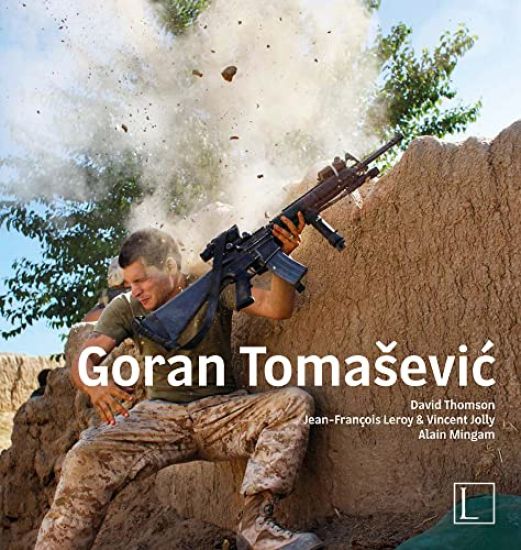
Goran Tomaševic´

Goran Tomaševic´

David Thomson; Jean-François Leroy; Vincent Jolly Alain Mingam

Edition Lammerhuber
2023
sidottu
"This monograph offers vivid explanatory captions, but there is little additional text to distract from the powerful images that put a human face on conflict." — Communication Arts “Tomasevic’s images sear themselves into your consciousness. I have never seen such powerful imagery that not only captures the horror of war itself but also its heartrending impact on innocent civilians, on our sense of our own humanity. But they do much more than that. They have an iconic quality as if created with a painter’s eye for detail, composition and contrast.” - John Green, Morning Star “This powerful, terrible book conveys a Dantesque vision of our humanity. Admiration for Goran Tomaševic, a wonderful Caravaggio of photography!” - Francis Kochert, Académie nationale de Metz Goran Tomas?evic´ is a living legend. Not only has he survived for 30 years in crisis zones, but he has mastered the supreme art of photography, interpreting the world in a humanistic way, following in the footsteps of Robert Capa and James Nachtwey. This powerful, terrifying book conveys a Dantesque vision of our humanity. Current circumstances lead us to believe that this madness will go on and on. Goran is just 13 years old when his father gives him his first camera - an ancient FED 5V. And with it, his life begins to become a constant adventure, described in the 444 pages of this book. The quality of his reportage and the power of his images enabled him to join the Reuters agency in 1996 and, over the next 20 years, to become one of the most awarded photographers in the world. His œuvre can be called a photographic synthesis of the arts, an eminent contribution to the great path of photo reportage and an indispensable history of the last 30 years. Goran Tomaševic's credo: "If you want to present the facts authentically, you have to be where they are. That's the challenge." ? Text in English, German, and French.
Liberties Journal of Culture and Politics

Liberties Journal of Culture and Politics

Michael Ignatieff; Laura Kipnis; David Grossman; Ramachandra Guha; Thomas Chatterton Williams; Hannah Sullivan; Mark Lilla; Helen Vendler; Sean Wilentz; Adam Zagajewski; Louise Glück; James Wolcott; Andrea Marcolongo; Eli Lake; Sally Satel; Moshe Halbertal; Joshua Bennett; David Thomson; Julius Margolin; Clara Collier; Shawn McCreesh

Liberties Journal Foundation
2021
pokkari
Liberties - A Journal of Culture and Politics features new essays and poetry from some of today’s best writers and artists, along with introducing new talent, to inspire and impact the intellectual and creative lifeblood of culture and politics. This inaugural issue of Liberties includes: Michael Ignatieff on liberalism and the environment; Laura Kipnis cheers transgression; David Grossman on literature and peace; Ramachandra Guha on the Indian tragedy; Thomas Chatterton Williams on the real James Baldwin; Mark Lilla on the power of indifference; Helen Vendler on Yeats' The Second Coming; Sean Wilentz on abolition and American origins; Adam Zagajeweski on Gustav Mahler; James Wolcott on America’s modern Jacobins; Andrea Marcolongo on how language defines us; Eli Lake on the birth of American unexceptionalism; Sally Satel on the riddle of addiction; Moshe Halbertal on creating a democratic Jewish state; David Thomson on the wonder of Terrence Malick; Julius Margolin’s memoir confronting hatred; Clara Collier on plague literature; Shawn McCreesh’s personal look at a youthful community of addiction; new poetry from the most recent winner of the Nobel Prize in Literature, Louise Glück, Joshua Bennett, and Hannah Sullivan; and, Leon Wieseltier (editor) and Celeste Marcus (managing editor).
Why Acting Matters

Why Acting Matters

David Thomson

Yale University Press
2016
pokkari
A provocative, highly engaging essay on the art of pretending on the stage, on screen, and in daily life Does acting matter? David Thomson, one of our most respected and insightful writers on movies and theater, answers this question with intelligence and wit. In this fresh and thought-provoking essay, Thomson tackles this most elusive of subjects, examining the allure of the performing arts for both the artist and the audience member while addressing the paradoxes inherent in acting itself. He reflects on the casting process, on stage versus film acting, and on the cult of celebrity. The art and considerable craft of such gifted artists as Meryl Streep, Laurence Olivier, Vivien Leigh, Marlon Brando, Daniel Day-Lewis, and others are scrupulously appraised here, as are notions of “good” and “bad” acting. Thomson’s exploration is at once a meditation on and a celebration of a unique and much beloved, often misunderstood, and occasionally derided art form. He argues that acting not only “matters” but is essential and inescapable, as well as dangerous, chronic, transformative, and exhilarating, be it on the theatrical stage, on the movie screen, or as part of our everyday lives.
'Have You Seen...?'

'Have You Seen...?'

David Thomson

Penguin Books Ltd
2010
pokkari
David Thomson's 'Have You Seen?' - A Personal Introduction to 1,000 Films is a quirky, idiosyncratic and hugely entertaining look at a century of cinema. This is veteran film writer David Thomson's personal, irreverent, hilarious and utterly original take on the 1,000 films he has most loved - and hated - from Abbott and Costello Meet Frankenstein to Zabriskie Point, from esteemed classics to forgotten curiosities, guilty pleasures to noir treats, horror gems to kitsch disasters. The result is probably the most enjoyable film book you will ever read (and you'll never think about The Sound of Music in the same way again). 'Delightful ... it's like having the most film-literate pal you can imagine sitting beside you in a multiplex' Independent 'A joy ... he's incapable of writing a boring sentence' Evening Standard Books of the Year 'This book sets the bar. There isn't a more intelligent, insightful and provocative guide to individual movies in the world' Financial Times 'Every reader's simple instinct will be to plunge into the heart of it' Sunday Times 'A dazzlingly authoritative treat ... crammed with insight and epigram' Observer 'Eccentric, brilliant, scholarly, perverse, witty, egocentric and infuriating, sometimes all at once' Philip French 'He enrages, exasperates, but never leaves one indifferent' The Times Books of the Year David Thomson is, among many other things, author of The New Biographical Dictionary of Film, now in its fourth edition. His recent books include a biography of Nicole Kidman, Fan Tan (a novel written in collaboration with Marlon Brando) and The Whole Equation: A History of Hollywood.
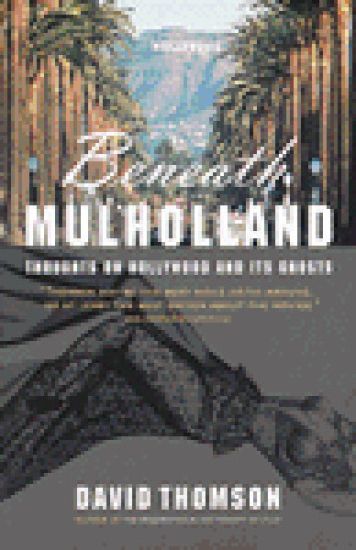
Beneath Mulholland: Thoughts on Hollywood and Its Ghosts
" Thomson is] one of the finest film critics in the English language."--philip lopate, the new york times book review If most film critics write about movies, David Thomson creates their literary counterpart with essays that are as dazzling, haunting, and moving as the pictures they discuss. In this bravura new collection, the Esquire columnist trains his eye on Hollywood's ghosts, exploring their tendency to rise from the grave or descend from the screen to intimately haunt our lives. Thomson conjures up Jimmy Stewart in Vertigo, Jack Nicholson in Chinatown, and Cary Grant in any of the pictures where he makes every scene look like a lucky accident. With equal aplomb, he imagines a James Dean who survived the car crash and a post-Saturday Night Fever Tony Manero. We learn the "20 Things People Like to Forget About Hollywood" (Number 3: "You Are Their Playthings, Not the Other Way Around"). And on every page of Beneath Mulholland, we are educated, entertained, and enlarged by a book as savvy and incisive as any Hollywood reportage and as lyrical as the best fiction. "Not just...one of our sharpest writers-on-film, but...one of our wisest and best writers, period." --film comment
A Sudden Flicker of Light

A Sudden Flicker of Light

David Thomson

PENGUIN BOOKS LTD
2026
sidottu
There are few greater film lovers than David Thomson who, over fifty years, has built a reputation as one of the wisest and most penetrating voices on the art form. But every flicker of light has its shadow. In this profound reckoning, Thomson confronts the dark side of the movies—responsible for creating an alternate reality and fantasyland that has only deepened the isolation and disconnection of our society over the course of a century. Thomson explores the high and low points of film history with his usual brilliant insight—sharp and arresting readings of movies from Metropolis to Rear Window to The Godfather can be found in these pages. But he also shows the ways in which our love of voyeurism and villainy, and the passivity which the movies further engender, have led to a coarsening not just of a medium, but of the larger culture, including our political life. A bracing and polemical book, this is a powerful capstone to a distinguished career.
You read what? Significant Australians reflect on their teenage reading
Embarking on a mission to ignite a passion for reading among his Year 11 English class, a seasoned teacher returns to his alma mater. Disheartened by the lack of enthusiasm for leisure reading, he challenges his students to discover the wisdom in the choices of successful individuals. What ensues is an inspiring project where letters are sent to over 250 accomplished Australians, asking a simple yet profound question: "Which book influenced you most as a teenager and why?" This anthology reveals over 130 heartfelt responses, accompanied by brief biographies. A testament to the enduring impact of literature and the success bred from a love of books.Contributors include: Charles Abbott, Phillip Adams, Patsy Adam-Smith, Claudio Alcorso, Charles Anderson VC, Bob Ansett, Sir Reginald Ansett, Doug Anthony, Julie Anthony, Sir Robert Askin, Sir Garfield Barwick, Marjorie Barnard, John B chervaise, Sir Joh Bjelke-Petersen, Geoffrey Blainey, John Blight, Sir Henry Bolte, Sir Jack Brabham, John Brack, Russell Braddon, Sir Donald Bradman, John Bray, Niall Brennan, Sir Macfarlane Burnet, Jim Cairns, Clive Caldwell, Dame Carmen Callil, Sir Roderick Carnegie, Matt Carroll, Maie Casey, Nancy Cato, Don Charlwood, Manning Clark, Sir Rupert Clarke, Jon Cleary, H.C. "Nugget" Coombs, Sir Zelman Cowen, Finlay Crisp, Paul Cronin, Dymphna Cusack, John Beede Cusack, Sir James Darling, Sir Rohan Delacombe, Viscount De Lisle VC, Stuart Devlin, Brian Dixon, Rosemary Dobson, Sir Edward "Weary" Dunlop, Dame Mary Durack, Geoffrey Dutton, Hughie Edwards VC, Tony Eggleton, Herb Elliott, Sumner Locke Elliott, Noel Ferrier, Joan Fitzhardinge, Malcolm Fraser, Frank Galbally, Ken Hall, Rodney Hall, Dame Joan Hammond, Lang Hancock, Sir Keith Hancock, Pro Hart, Sir Laurence Hartnett, Sir Paul Hasluck, Stanley Hawes, Bob Hawke, Bishop John Hazlewood, Sir Robert Helpmann, Angas Holmes, A.D. Hope, Peter Howson, Barry Humphries, Robert Ingpen, Peter Isaacson, Kenneth Jack, Sir Robert Jackson, Sir Asher Joel, Ian Johnson, Barry Jones, Marilyn Jones, Louis Kahan, Peter Karmel, Nancy Keesing, Michael Kirby, Sir Richard Kirby, Leonie Kramer, Stanley Kurrle, John La Nauze, Don Lane, Clifford Last, Sir Condor Laucke, Phillip Law, Ray Lawler, Joan Lindsay, Archbishop Sir Frank Little, John McCallum, Alan McCulloch, F. Margaret McGuire, Sir William McKell, Sir Charles Mackerras, Ian McLaren, Sir William McMahon, Leonard Mann, Alan Marshall, Bert Newton, Gerald O'Collins, Andrew Peacock, Stuart Sayers, Sir Billy Snedden, Peter Sculthorpe, Dame Joan Sutherland, Colin Thiele, Lindsay Thompson, Archbishop Sir Frank Woods, Sir John YoungDAVID THOMSON was born in Melbourne and educated at Monash, Cambridge and Harvard Universities. After a compulsory stint of National Service in the RAAF, he became a teacher, eventually returning to his old school where he taught English and Legal Studies for 37 years. He has written for many publications in Australia, the UK and the USA and was awarded the Medal of the Order of Australia in 2018 for service to education.
The Fatal Alliance

The Fatal Alliance

David Thomson

HARPERCOLLINS PUBLISHERS INC
2024
sidottu
“A marvelous bombshell of a book, by one of our most formidably knowledgeable and insightful writers on film, it is filled with surprises and witty asides. Though Thomson is quick to pounce on the hypocrisies and historical omissions of some of these war movies, there is nothing compromised about his own daredevil judgments. We are in the hands of a master critic/essayist.”—Phillip LopateFrom one of the greatest living writers on film, a magisterial look at a century of battle depicted on screen, and a meditation on the twisted relationship between war and the movies.In The Fatal Alliance the acclaimed film critic David Thomson offers us one of his most provocative books yet—a rich, arresting, and troubling study of that most beloved genre: the war movie. It is not a standard history or survey of war films, although Thomson turns his typically piercing eye to many favorites—from All Quiet on the Western Front to The Bridge on the River Kwai to Saving Private Ryan. But The Fatal Alliance does much more, exploring how war and cinema in the twentieth century became inextricably linked. Movies had only begun to exist by the beginning of World War I, yet in less than a century, had transformed civilian experience of war—and history itself—for millions around the globe. This reality is the moral conundrum at the heart of Thomson’s book. War movies bring both prestige and are so often box office blockbusters; but is there something problematic at how much moviegoers enjoy depictions of violence on a grand scale, such as Apocalypse Now, Black Hawk Down, or even Star Wars? And what does this truth say about us, our culture, and our changing sense of warfare and the past?
Connecticut

Connecticut

David Thomson

OLDCASTLE BOOKS LTD
2023
pokkari
The third novel in David Thomson's series inspired by movie genres - an enchanting yet haunting celebration of screwball romantic comedies. In 1985, with the acclaimed Suspects, and then in 1990 with the exhilarating Silver Light, David Thomson delivered unprecedented fictions in which the characters were figures from film noir and the Western. Now a trilogy is completed with Connecticut. Why Connecticut? Because that lovely, liberal state has been set aside as the resting place for every disturbed person in the nation! At first, this seems like an opportunity for meeting up with the merry ghosts of Cary Grant, Katharine Hepburn, Carole Lombard, William Powell and Margaret Sullavan. We get glimpses of Bringing Up Baby, My Man Godfrey and The Lady Eve. But then the wild comedy darkens as we realize that Connecticut itself is on the edge of a demented and cruel war that challenges all its inmates to keep seeing the comic side of mishap and madness. The trilogy is revealed not just as a set of dazzling stories. But a commentary on how far we have all been steered towards delightful but dangerous fantasies by the movies. Aren't we all screwball now? Is Connecticut safe to visit?
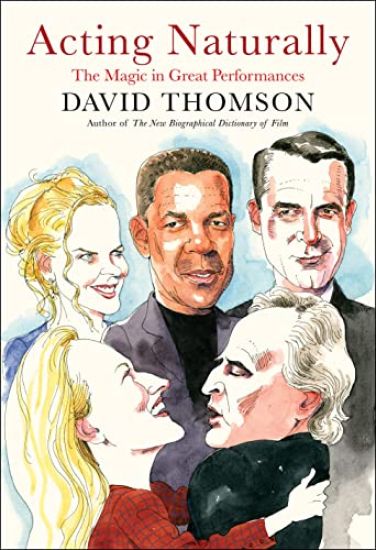
Acting Naturally: The Magic in Great Performances

Acting Naturally: The Magic in Great Performances

David Thomson

Knopf Publishing Group
2023
sidottu
From the celebrated film critic and author of The New Biographical Dictionary of Film, a fascinating look at some of the cinema's finest actors and how they approach their craft "Open to any page and you'll become enthralled by the...tales of forgotten film lore, childhood memories, sexy gossip."--Philip Kaufman, director Meryl Streep, Marlon Brando, Anthony Hopkins, Carey Mulligan. When we watch these remarkable actors in a performance, we see only Sophie, Stanley Kowalski, Hannibal Lecter, or Cassie from Promising Young Woman. How are they able to transform our world in this way? How and why do they do what they do? In Acting Naturally, David Thomson sheds light on the actors who have shaped the film industry. He shrewdly analyzes these stars--among them, James Dean, Nicole Kidman, Denzel Washington, Louise Brooks, Riz Ahmed, Sir Laurence Olivier, Viola Davis, and Jean Seberg--revealing how a sly smile, an extra-long pause, even a small gesture of the hand can draw in an audience. And he takes us behind the scenes to examine casting and all the other moments leading up to "Action " Through intimate anecdote, humor, and the insight born of a lifetime watching and analyzing film, Thomson explores the real reasons why we go to the movies and looks at how they influence our lives. This book is not only necessary reading for an insider's view of the industry but also a surprising investigation of the relationship between acting and living.