Kirjojen hintavertailu. Mukana 12 276 211 kirjaa ja 12 kauppaa.
Kirjailija
David Williams
Kirjat ja teokset yhdessä paikassa: 215 kirjaa, julkaisuja vuosilta 1966-2026, suosituimpien joukossa The Bible, Teetotalism, and Dr. Lees [A Reply to Teetotalism Plainly Taught in the Bible]. Vertaile teosten hintoja ja tarkista saatavuus suomalaisista kirjakaupoista.
Manufacturing in Europe is under great pressure from structural changes in the global economy. The high technical, social and cultural standards in Europe mean that our manufacturing enterprises lead the world but inevitably production and consumption continues to migrate to regions that allow higher profitability from lower costs of production with the promise of new markets. Structural changes in European industries will influence employment and welfare. However, there are signs of a new High-Adding-Value industrial revolution. This book has the answers that will allow us to avoid the negative consequences of this migration. A new model of future manufacturing – ManuFuture - has been forged in discussion with the world’s leading scientists in manufacturing and many experts from research, industry and economic policy. The results of this, the road to competitive and sustainable manufacturing, are captured in this fundamental book. The generic Model of ManuFuture, a Vision 2020 and a Strategic Research Agenda and the proactive initiatives required are presented here. They show the approach to manufacturing in the age of knowledge and the actions that must be taken.

In the 1990s the World Bank changed its policy to take the position that the problems of poverty and governance are inextricably linked, and improving the governance of its borrower countries became increasingly accepted as a legitimate and important part of the World Bank’s development activities. This book examines why the World Bank came to see good governance as important and evaluate what the World Bank is doing to improve the governance of its borrower countries. David Williams examines changing World Bank policy since the late 1970s to show how a concern with good governance grew out of the problems the World Bank was experiencing with structural adjustment lending, particularly in Sub-Saharan Africa. The book provides an account of the early years of the World Bank and traces the increasing acceptance of the idea of good governance within the Bank through the 1990s, while systematically relating the policies of good governance to liberalism. The author provides a detailed case study of World Bank lending to Ghana to demonstrate what the attempt to improve ‘governance’ looks like in practice. Williams assesses whether the World Bank has been successful in its attempts to improve governance, and draws out some of the implications of the argument for how we should think about sovereignty, for how we should understand the connections between liberalism and international politics.This book will be of interest to students and scholars of international relations, politics, economics, development and African studies.
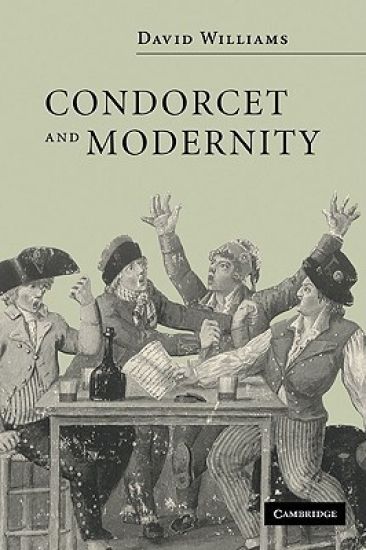
The Marquis de Condorcet was one of the few Enlightenment ideologists to witness the French Revolution and participate as an elected politician at the centre of events during France's transition from monarchy to republic. Condorcet and Modernity explores the interaction between Condorcet's political theory, legislative pragmatism, public policy proposals and the management of change. David Williams examines key topics including rights, the civil order, the Church, the slave trade, women's civil rights, judicial reform, voting and representation, economics, monarchy, power and revolution. He explores the complex links between Condorcet as the visionary ideologist and Condorcet as the pragmatic legislator, and between Condorcet's concept of modernity - the application of 'social arithmetic' to government policies. Based on an extensive array of both printed and manuscript sources, this major contribution to enlightenment studies is a full treatment of Condorcet's politics.
Smith's Law of Theft has long been established as the definitive work on the subject and is frequently cited in the appellate courts. Now in its ninth edition, the book provides a detailed and critical account of the law of theft and related dishonesty offences. It contains the full, amended text of relevant legislation (notably, the Theft Acts 1968, 1978, and 1996) together with a detailed analysis of the provisions of the statutes and the extensive case law which has grown up around them. This new edition has been comprehensively rewritten and updated to take full account of the Fraud Act 2006, which has replaced the deception offences with new fraud offences. There have been major changes in other areas of law besides fraud, and the authors offer expert analysis of case law developments such as Hinks in the House of Lords on theft and gift, jurisdictional issues arising from Smith; and of procedural changes introduced by the fraud protocol and the imminent introduction of judge only trials. A whole new chapter on conspiracy to defraud is included in the new edition, and the full text of the Fraud Act and the fraud protocol are included in the appendices.
Provides a view of how graduate recruitment works, based on the observations of independent observers. This book reveals: how graduate recruitment really works; what you can do to work out where the jobs really are; what criteria employers use to deselect CVs and application forms; how to convince employers to offer an interview; and more.
"Scott and David have done a fantastic job getting into the psyche of these very young players. What I really love is their emphasis on FUN, and that kids learn by DOING. This book will make a great extra assistant as you prepare for your season."—Bobby Clark, Head Soccer Coach, University of Notre Dame; author of the best-selling Coaching Youth Soccer: The Baffled Parent's GuideCoach. You're the new coach of your child's soccer team, and you're not sure how to teach your players the fundamentals of soccer while also ensuring they have fun. Don't panic—Coaching 6-and-Under Soccer is here to help.Coaching 6-and-Under Soccer offers straightforward advice, tips, and techniques, including reward-based games and drills; your first six practices in an easy-to-photocopy format; and how to teach soccer basics to 4-, 5-, and 6-year-olds in ways that are fun for you and your players. This complete tool kit for a new coach includes:The twelve easy-to-run drills that work best with young soccer playersHow to keep your young players happy and active while they learnHow to make parents your best assistants and supportersHow to keep the focus where it belongs—not on winning or losing, but on having funHow to have a terrific time coaching young players"Coaching 6-and-Under Soccer shows you how to teach your young players the right way—through lively games that encourage kids to use their creativity and self-expression when playing."—Brandi Chastain, Olympic and World Cup Soccer Champion; author of It's Not About the Bra: Play Hard, Play Fair, and Put the Fun Back into Competitive Sports"I have no doubt that young players will come to love the game of soccer if their coaches follow the simple, straightforward advice in this book."—Anson Dorrance, Head Women's Soccer Coach, University of North Carolina; author of The Vision of a Champion: Advice and Inspiration from the World's Most Successful Women's Soccer Coach"I highly recommend this terrific book to coaches who want to instill good sportsmanship and the love of the game in their young players while building a solid foundation in basic soccer skills and teamwork."—Jeremy Gunn, Head Men's Soccer Coach, Fort Lewis College
The contemporary reader of Chaucer's poems is often surprised to discover how bawdy they are. A superficial veneer of Christian culture seems to give way easily in Chaucer to the celebration of a light-hearted hedonism. In this readable study, written for students and experts alike, the eminent literary scholar David Williams guides the reader carefully through Chaucer's Troilus and Criseyde and Canterbury Tales. He shows that below the surface Chaucer's narrative reveals an author attuned to the Christian story of creation, fall, and redemption. His characters expose the sophistries, spiritual and intellectual, that Chaucer seeks to mend.
This book puts forward a revisionist view of Japanese wartime thinking. It seeks to explore why Japanese intellectuals, historians and philosophers of the time insisted that Japan had to turn its back on the West and attack the United States and the British Empire. Based on a close reading of the texts written by members of the highly influential Kyoto School, and revisiting the dialogue between the Kyoto School and the German philosopher Heidegger, it argues that the work of Kyoto thinkers cannot be dismissed as mere fascist propaganda, and that this work, in which race is a key theme, constitutes a reasoned case for a post-White world. The author also argues that this theme is increasingly relevant at present, as demographic changes are set to transform the political and social landscape of North America and Western Europe over the next fifty years.
The Marquis de Condorcet was one of the few Enlightenment ideologists to witness the French Revolution and participate as an elected politician at the centre of events during France’s transition from monarchy to republic. Condorcet and Modernity explores the interaction between Condorcet’s political theory, legislative pragmatism, public policy proposals and the management of change. David Williams examines key topics including rights, the civil order, the church, the slave trade, women’s civil rights, judicial reform, voting and representation, economics, monarchy, power and revolution. He explores the complex links between Condorcet as the visionary ideologist and Condorcet as the pragmatic legislator, and between Condorcet’s concept of modernity - the application of ‘social arithmetic’ to government policies. Based on an extensive array of both printed and manuscript sources, this major contribution to enlightenment studies is the first full treatment of Condorcet’s politics to appear in English for a generation.
This book puts forward a revisionist view of Japanese wartime thinking. It seeks to explore why Japanese intellectuals, historians and philosophers of the time insisted that Japan had to turn its back on the West and attack the United States and the British Empire. Based on a close reading of the texts written by members of the highly influential Kyoto School, and revisiting the dialogue between the Kyoto School and the German philosopher Heidegger, it argues that the work of Kyoto thinkers cannot be dismissed as mere fascist propaganda, and that this work, in which race is a key theme, constitutes a reasoned case for a post-White world. The author also argues that this theme is increasingly relevant at present, as demographic changes are set to transform the political and social landscape of North America and Western Europe over the next fifty years.
Published on the occasion of his retirement in honour of his outstanding contribution to French Enlightenment studies, this volume explores those areas of research in which David Williams has excelled and continues to excel: literary criticism, particularly Voltaire, the history of ideas, women and Enlightenment, colonial practices and revolutionary politics. It brings together a collection of essays from some of the most prestigious international names in the field and tackles subjects which expose in all their splendid diversity the enterprise - both innovation and undertaking - of the Siecle des Lumieres."
An in-depth look at the effects of change in modes of communication on imagined forms of political community through an examination of a series of Canadian novels and film adaptations.
Statistics do not lie, nor is probability paradoxical. You just have to have the right intuition. In this lively look at both subjects, David Williams convinces mathematics students of the intrinsic interest of statistics and probability, and statistics students that the language of mathematics can bring real insight and clarity to their subject. He helps students build the intuition needed, in a presentation enriched with examples drawn from all manner of applications, e.g., genetics, filtering, the Black–Scholes option-pricing formula, quantum probability and computing, and classical and modern statistical models. Statistics chapters present both the Frequentist and Bayesian approaches, emphasising Confidence Intervals rather than Hypothesis Test, and include Gibbs-sampling techniques for the practical implementation of Bayesian methods. A central chapter gives the theory of Linear Regression and ANOVA, and explains how MCMC methods allow greater flexibility in modelling. C or WinBUGS code is provided for computational examples and simulations. Many exercises are included; hints or solutions are often provided.
Intended as a first year text, no prior knowledge of perfumery is assumed, and the authors provide integrated coverage of topics from raw materials to supermarket shelves, from science to creation and through to marketing and business policy.
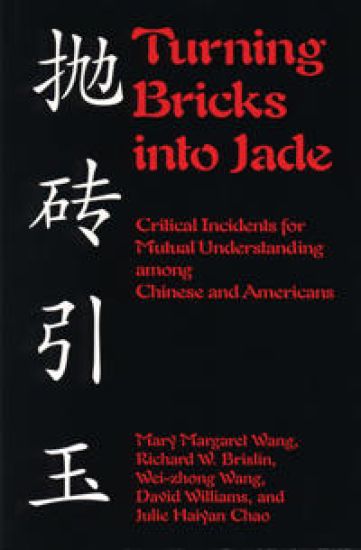
The Chinese are fond of using four-character phrases, known as cheng yu, to improve their writing style. The Chinese characters on the cover spell out one such idiom: pao zhuan yin yu. Translated literally, this would be "throw bricks attract jade." It can also express the idea of throwing out something of little value to induce a potential business partner to offer something more valuable. The authors of Turning Bricks into Jade, a more idiomatic rendering of pao zhuan yin yu, like to think of each critical incident in this collection as a brick, which, when combined with similar bricks, good sense and effort, can be used to construct relationships more valuable even than jade. A critical incident is a story about cross-cultural conflict or misunderstanding. Many of the forty-one incidents are based on actual events that involved one or more of the authors or their acquaintances. Some are a composite of several authors' experiences. You choose one of four or five possible alternatives that explain the misunderstanding. Following each incident is a discussion of possible solutions, based on the authors' experiences and grounded in current research. Misunderstandings between Chinese and American interactants are complicated; there is almost never just one thing going on. One result of this complexity is that many of the incidents have more than one correct explanation. Forty-one Americans and Chinese with considerable experience in both cultures read the collection of incidents for validation. As you work through the incidents, you may feel the need for a more detailed explanation or definition of certain recurring themes. A section on key theoretical concepts in Chinese-American interactions provides such detail. Included are individualism and collectivism, guanxi (interpersonal connections), hierarchies, gender relations in the workplace, regulations, deference to authority, work incentives and ownership. The Index of Incidents According to Themes and Concepts is also helpful.