
Kirjailija
Devdutt Pattanaik
Kirjat ja teokset yhdessä paikassa: 65 kirjaa, julkaisuja vuosilta 2000-2026, suosituimpien joukossa Sita Ke Paanch Nirnay. Vertaile teosten hintoja ja tarkista saatavuus suomalaisista kirjakaupoista.
65 kirjaa
Kirjojen julkaisuhaarukka 2000-2026.
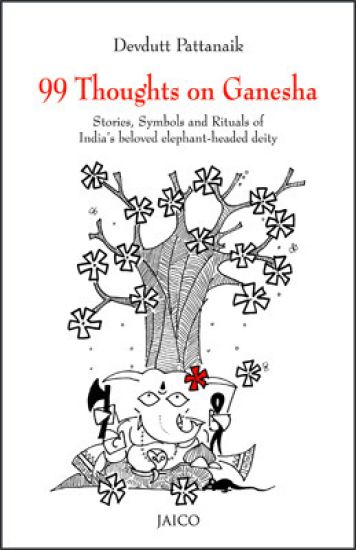
Fear and uncertainty envelope him; between him and his achievement stand hurdles, both real and imaginary: a possible spin from the bowler can overwhelm him, his own anxiety can paralyze him, cheering fans can distract him. He needs divine intervention then. He needs to focus, get rid of all hurdles, perform, get the final run, and achieve what he so longs for. In other words, he needs to think of Ganapati. This book brings together 99 meditations to better understand the stories, symbols and rituals of that ador-able elephant-headed Hindu god who removes hurdles and brings prosperity and peace. Known variously as Ganapati, Gajanana, Vinayaka or Pillayar, he can help all of us score a century in the game called life...
In Meri Gita, acclaimed mythologist Devdutt Pattanaik demystifes The Bhagavad Gita for the contemporary reader. His unique approach-thematic rather than verse-by-verse-makes the ancient treatise eminently accessible, combined as it is with his trademark illustrations and simple diagrams. In a world that seems spellbound by argument over dialogue, vi-vaad over sam-vaad, Devdutt highlights how Krishna nudges Arjuna to understand rather than judge his relationships. This becomes relevant today when we are increasingly indulging and isolating the self (self-improvement, self-actualization, self-realization-even selfes ).We forget that we live in an ecosystem of others, where we can nourish each other with food, love and meaning, even when we fght. So let My Gita inform your Gita

· Olympus is the home of the Greek gods, much like Amravati of the Hindu devas. · Zeus, leader of Olympians, wields a thunderbolt like Indra, and rides an eagle like Vishnu. · The feats of the Greek hero Heracles, known to Romans as Hercules, reminded many of Krishna, as did his name, 'Hari-kula-esha' or lord of the Hari clan. · The Greek epic of a husband sailing across the sea with a thousand ships to bring his wife, Helen, back from Troy seems strikingly similar to the story of Ram rescuing Sita from Lanka. Is there a connection between Greek and Hindu mythology then? Does it have something to do with a common Indo-European root? Or maybe an exchange of ideas in the centuries that followed the arrival of Alexander the Great, when Greek emissaries travelled to the kingdoms of Mathura and Magadha? In this book, mythologist Devdutt Pattanaik turns his attention to ancient Greek tales, and explores a new world of stories. Long have Europeans and Americans retold Indic mythologies. It is time for Indians to reverse the gaze.
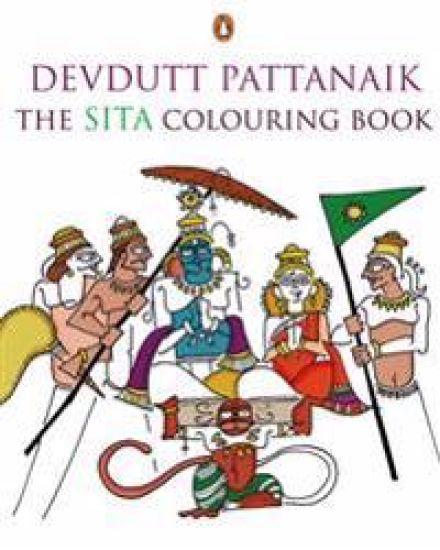
Relive the fabulous story of the Ramayana through 108 illustrations to be coloured in. The Sita Colouring Book, based on Devdutt Pattanaik's bestselling retelling of the Ramayana, is a fascinating colouring journey for you to embark on. From the very beginning of the great epic, the birth of Dashratha's four sons, to the passing of Lakshman and Ram at the very end, the remarkably simple yet multilayered story of the Ramayana comes alive through Devdutt's wonderful illustrations. Rediscover some of the most dramatic moments of the great Indian epic, from Ram's breaking of the great bow to the abduction of Sita, from the sacking of Lanka to the building of the bridge across the sea, from the slaying of Ravana to Sita's trial by fire. Imagine the way the Dandaka forest, Kishkindha, Lanka and Ayodhya might have looked, and colour them in all their glory, along with portraits of unforgettable personages like Hanuman, Jambuvan, Jatayu, Surpanakha, Kumbhakarna and Ravana. This is a great colouring adventure that readers of all ages will thoroughly enjoy.

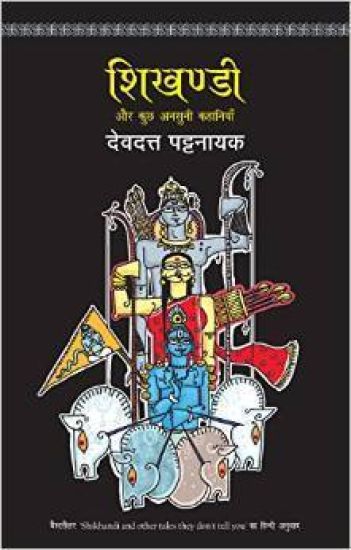
Patriarchy asserts that men are superior to women, feminism clarifies that women and men are equal, and queerness questions what constitutes male and female. One of the few people to talk frankly and sensitively about queerness and religion, celebrated Indian mythologist Devdutt Pattanaik explains that queerness isn't only modern, Western, or sexual. Rather, by looking at the vast written and oral traditions of Hinduism, he finds many overlooked tales with queerness at their center, some over two thousand years old. There's Shikhandi, who became a man to satisfy her wife; Mahadeva, who became a woman to deliver her devotee's child; Chudala, who became a man to enlighten her husband; Samavan, who became the wife of his male friend--and many, many more. In Shikhandi, and Other Tales They Don't Tell You, Pattanaik recounts these stories and explores the importance of mythologies in understanding the modern Indian mindset. Playful, touching, and sometimes disturbing, when Shikhandi's stories are compared with their Mesopotamian, Greek, Chinese, and Biblical counterparts, they reveal the unique Indian way of making sense of queerness. "Pattanaik is a master storyteller" --Bibek Debroy, translator of The Bhagavad Gita
the success sutra is packed with unique and profound insights into how individuals can create wealth and achieve success in life by following indian principles of strategic thinking and decision-making. most human beings hunger after riches and success. there are any number of management books which provide theories and techniques on how to become rich and successful. all of them advise us to chase lakshmi, the goddess of wealth, in order to make her our own. but the indian approach to prosperity and fulfilment warns against the relentless pursuit of the goddess, writes noted thinker and mythologist devdutt pattanaik, as it will result in conflict. rather, we have to give in order to get, we have to satisfy the hunger of others in order to satisfy our own. if we learn and practise this fundamental truth, lakshmi will enter our homes and our lives. derived from his acclaimed bestseller business sutra, this book is filled with lessons and insights into management, business and the creation of wealth and success.
In this landmark book, bestselling author, leadership coach and mythologist Devdutt Pattanaik shows how, despite its veneer of objectivity, modern management is rooted in Western beliefs and obsessed with accomplishing rigid objectives and increasing shareholder value. By contrast, the Indian way of doing business, as apparent in Indian mythology but no longer seen in practice accommodates subjectivity and diversity and offers an inclusive, more empathetic way of achieving success. Great value is placed on darshan, that is, on how we see the world and our relationship with Lakshmi, the goddess of wealth. Business Sutra uses stories, symbols and rituals drawn from Hindu, Jain and Buddhist mythology to understand a wide variety of business situations that range from running a successful tea stall to nurturing talent in a large multinational corporation. At the heart of the book is a compelling premise: if we believe that wealth needs to be chased, the workplace becomes a rana-bhoomi - a battleground of investors, regulators, employers, employees, vendors, competitors and customers, if we believe that wealth needs to be attracted, the workplace becomes a ranga-bhoomi - a playground where everyone is happy.
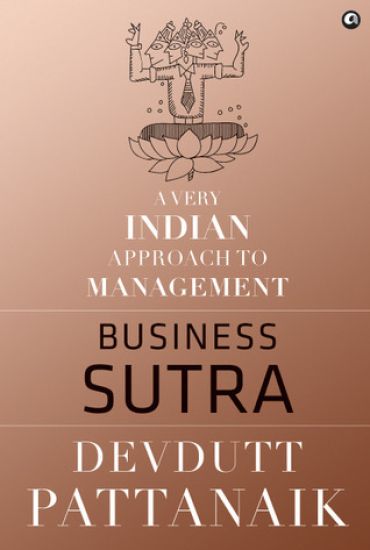
Business Sutra: A very Indian Approach to Management is a radical, nuanced approach to management, business and leadership in a progressively polarized world. In this landmark book, bestselling author, leadership coach and mythologist Devdutt Pattanaik shows how, despite its veneer of objectivity, modern management is rooted in Western beliefs and obsessed with accomplishing rigid objectives and increasing shareholder value. By contrast, the Indian way of doing business, as apparent in Indian mythology but no longer seen in practice accommodates subjectivity and diversity, and offers an inclusive, more empathetic way of achieving success. Great value is placed on darshan, that is, on how we see the world and our relationship with Lakshmi, the goddess of wealth. Business Sutra uses stories, symbols and rituals drawn from Hindu, Jain and Buddhist mythology to understand a wide variety of business situations that range from running a successful tea stall to nurturing talent in a large multinational corporation. At the heart of the book is a compelling premise: if we believe that wealth needs to be chased, the workplace becomes a rana-bhoomi - a battleground of investors, regulators, employers, employees, vendors, competitors and customers; if we believe that wealth needs to be attracted, the workplace becomes a ranga-bhoomi - a playground where everyone is happy
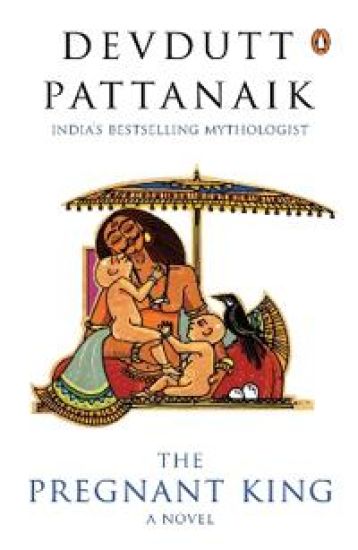
'I am not sure that I am a man,' said Yuvanashva. 'I have created life outside me as men do. But I have also created life inside me, as women do. What does that make me? Will a body such as mine fetter or free me?' Among the many hundreds of characters who inhabit the Mahabharata, perhaps the world's greatest epic and certainly one of the oldest, is Yuvanashva, a childless king, who accidentally drinks a magic potion meant to make his queens pregnant and gives birth to a son. This extraordinary novel is his story. It is also the story of his mother Shilavati, who cannot be king because she is a woman; of young Somvat, who surrenders his genitals to become a wife; of Shikhandi, a daughter brought up as a son, who fathers a child with a borrowed penis; of Arjuna, the great warrior with many wives, who is forced to masquerade as a woman after being castrated by a nymph; of Ileshwara, a god on full-moon days and a goddess on new-moon nights; and of Adi-natha, the teacher of teachers, worshipped as a hermit by some and as an enchantress by others. Building on Hinduism's rich and complex mythology-but driven by a very contemporary sensibility-Devdutt Pattanaik creates a lush and fecund work of fiction in which the lines are continually blurred between men and women, sons and daughters, husbands and wives, fathers and mothers. Confronted with such fluidity the reader is drawn into Yuvanashva's struggle to be fair to all-those here, those there and all those in between.