Kirjailija
Douglas Brinkley
Kirjat ja teokset yhdessä paikassa: 29 kirjaa, julkaisuja vuosilta 1994-2025, suosituimpien joukossa Dean Acheson. Vertaile teosten hintoja ja tarkista saatavuus suomalaisista kirjakaupoista.
29 kirjaa
Kirjojen julkaisuhaarukka 1994-2025.
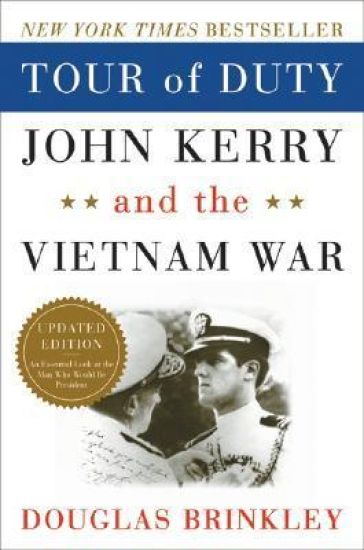
One of our most acclaimed historians explores the decorated military service of one of America's most intriguing politicians--the leading Democratic presidential candidate for 2004--and its profound effects on his career and life In Tour of Duty, Brinkley explores Senator John Kerry's career and deftly deals with such explosive issues as U.S. atrocities in Vietnam and the bombing of Cambodia. Using new information acquired from the recently released Nixon tapes, Brinkley reveals how White House aides Charles Colson and H.R. Haldeman tried to discredit Kerry. Refusing to be intimidated, Kerry started running for public office, eventually becoming a U.S. Senator from Massachusetts. Covering more than four decades, this is the first full-scale definitive account of Kerry's journey from war to peace. In writing this riveting, action-packed narrative, Brinkley has drawn on extensive interviews with virtually everyone who knew Kerry well in Vietnam. Kerry also relegated to Brinkley his letters home from Vietnam and his voluminous “war notes” journals, notebooks, and personal reminiscences written during and shortly after the war. This material was provided without restriction, to be used at Brinkley's discretion, and has never before been published.
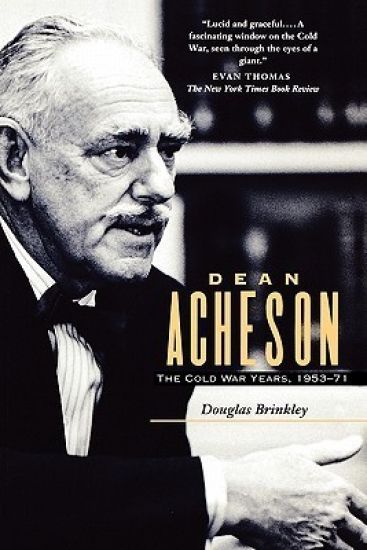
Dean Acheson is best remembered as President Harry Truman's powerful secretary of state, the American father of NATO, and a major architect of U.S. foreign policy in the decade following the Second World War. But Acheson also played a major role in politics and foreign affairs after his tenure in the Truman administration, as an important Democratic Party activist and theorist during the Eisenhower presidency and as a valued adviser during the Kennedy, Johnson, and Nixon administrations. This engrossing book, the first to chronicle Acheson's postsecretarial career, paints a portrait of a brilliant, irascible, and powerful man acting during a turbulent period in American history.Drawing on the recently opened Acheson papers as well as on interviews with Acheson's family and with leading public figures of the era, Douglas Brinkley tells an intriguing tale that is part biography, part diplomatic history, and part politics. Brinkley considers Acheson's role in numerous NATO-related debates and task forces, the Berlin and Cuban missile crises, Vietnam War decision-making, the Cyprus dispute of 1964, the anti-de Gaulle initiative of the 1960s, and U.S.-African policy. He describes Acheson as a staunch anticommunist with a persistent Eurocentric focus, a man who was intolerant of American leaders such as George Kennan, J. William Fulbright, and Walter Lippmann for opposing his views, and who often feuded with JFK, LBJ, Robert McNamara, and Dean Rusk. Finally, angered at the activities of anti-Vietnam War liberal Democrats, Acheson found himself in 1969 serving as one of Nixon's most important unofficial foreign policy advisers. Throughout this time, Acheson stayed in the public eye, helped by the six books he wrote after he left office (including the Pulitzer Prize-winning Present at the Creation), his television appearances, lectures, testimony before Congress, and correspondence with European statesmen. Brinkley's book illuminates Acheson as elder statesman and reveals how a unique individual was able to influence policy-making and public opinion without the official trappings of office.
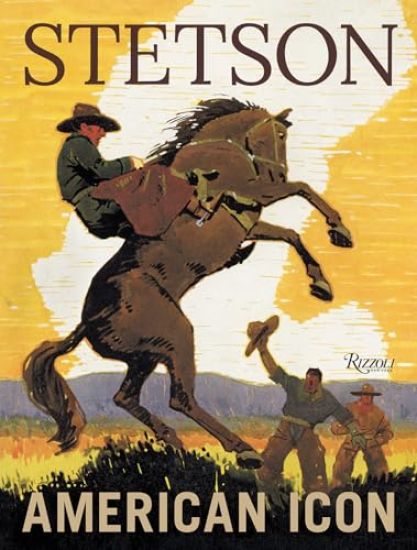
Nothing symbolizes the dream of the American West, from its rugged, dramatic landscapes to its cowboy culture, like Stetson. It was founded in 1865 by John B. Stetson, an explorer and adventurer who, during a long Western expedition, fashioned a hat with a high crown and a wide flat brim that could withstand the elements. It worked so well that he decided to mass-produce it. Renowned for its handmade, high-quality hats, Stetson soon came to represent quintessential American values: innovation, resilience, and trailblazing independence. This book celebrates the profound impact and influence of Stetson, and the cowboy aesthetic, on American culture. In sections including Stetson in Song and Stetson on Screen, stunning photographs show a diverse range of musicians who lay claim to the Stetson as part of their image, from Gene Autry and Loretta Lynn to Bob Dylan and Willie Nelson to Beyonce and a who s who of American movie stars from Robert Redford and Clint Eastwood to Jane Fonda and John Travolta up through Margot Robbie and Ryan Gosling in Barbie showing the many different ways to look good in a Stetson. A throughline of iconic style runs through the book, with images of such American icons as Georgia O Keeffe, Patti Smith, and Lyndon Johnson depicting the timeless look of the Stetson. Heirloom objects, these hats are still handcrafted, and the book explores the couture-like way they re created, including the many ways they can be customized and individually shaped. With evocative archival imagery and glamorous advertisements tracing the history of the brand and highlighting key moments and trends in American history and culture along the way, and with essays by cultural historians contextualizing the significance of Stetson in American culture, this book is an exciting and stunning look at America s most important heritage brand.
Silent Spring Revolution: John F. Kennedy, Rachel Carson, Lyndon Johnson, Richard Nixon, and the Great Environmental Awakening
Douglas Brinkley
HARPER PERENNIAL
2024
nidottu
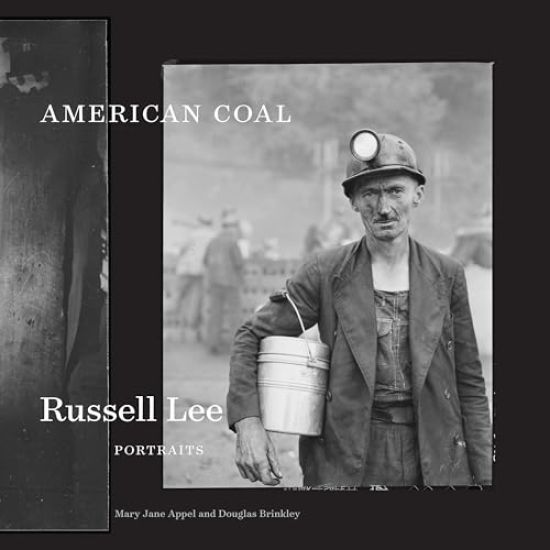
More than 100 powerful images by noted photographer Russell Lee that document the working conditions and lives of coal mining communities in the postwar United States; publication coincides with an exhibition at the National Archives in Washington, DC. In 1946 the Truman administration made a promise to striking coal miners: as part of a deal to resume work, the government would sponsor a nationwide survey of health and labor conditions in mining camps. One instrumental member of the survey team was photographer Russell Lee. Lee had made his name during the Depression, when, alongside Dorothea Lange and Walker Evans, he used his camera to document agrarian life for the Farm Security Administration (FSA). Now he trained his lens on miners and their families to show their difficult circumstances despite their essential contributions to the nation's first wave of postwar growth. American Coal draws from the thousands of photographs that Lee made for the survey-also on view in the US National Archives and Records Administration’s exhibition Power & Light-and includes his original, detailed captions as well as an essay by biographer Mary Jane Appel and historian Douglas Brinkley. They place his work in context and illuminate how Lee helped win improved conditions for his subjects through vivid images that captured an array of miners and their communities at work and at play, at church and in school, in moments of joy and struggle, ultimately revealing to their fellow Americans the humanity and resilience of these underrecognized workers.
The Codex of the Endangered Species Act
Lowell E. Baier; Douglas Brinkley
BLOOMSBURY PUBLISHING PLC
2023
sidottu
The Endangered Species Act of 1973 (ESA) is one of the most cherished and reviled laws ever passed. It mandates protection and preservation of all the nation’s species and biodiversity, whatever the cost. It has been a lightning rod for controversy and conflicts between industry/business and environmentalists.The year 2023 marks the 50th anniversary of this law, and provides an opportunity for a measured and thorough evaluation thereof. We cannot know today’s challenges and opportunities without understanding their histories. This book is the most comprehensive history of the ESA ever published, and the first to consider the entire history of the law from all angles in a single volume.The history of the ESA has been one of increasing impact, complexity, and controversy. In 1978, the Supreme Court declared that Congress intended for the U.S. government to save all species at any cost, and thereafter application of the ESA became steadily more controversial, as seen in the example of the northern spotted owl and the timber wars in the Pacific Northwest in the late 1980s and early 90s, and then everywhere as the ESA became a political football in the highly partisan environment of the late 1990s and amendments to the law ceased.This book is not only a history, but a call to action. It will take more conservation, more funding, and more innovative solutions if we are to save our wildlife and biodiversity. It will take the engagement to every American to muster the collective will to meet this challenge. The hope of this book is that we will be able to look back and say that we accomplished more in the second 50 years of the ESA than we did in the first.
Silent Spring Revolution CD: John F. Kennedy, Rachel Carson, Lyndon Johnson, Richard Nixon, and the Great Environmental Awakening
Douglas Brinkley
HarperAudio
2022
cd
New York Times bestselling author and acclaimed presidential historian Douglas Brinkley chronicles the rise of environmental activism during the Long Sixties (1960-1973), telling the story of an indomitable generation that saved the natural world under the leadership of John F. Kennedy, Lyndon Johnson, and Richard Nixon.With the detonation of the Trinity explosion in the New Mexico desert in 1945, the United States took control of Earth's destiny for the first time. After the Truman administration dropped atomic bombs on Japan to end World War II, a grim new epoch had arrived. During the early Cold War years, the federal government routinely detonated nuclear devices in the Nevada desert and the Marshall Islands. Not only was nuclear fallout a public health menace, but entire ecosystems were contaminated with radioactive materials. During the 1950s, an unprecedented postwar economic boom took hold, with America becoming the world's leading hyperindustrial and military giant. But with this historic prosperity came a heavy cost: oceans began to die, wilderness vanished, the insecticide DDT poisoned ecosystems, wildlife perished, and chronic smog blighted major cities.In Silent Spring Revolution, Douglas Brinkley pays tribute to those who combated the mauling of the natural world in the Long Sixties: Rachel Carson (a marine biologist and author), David Brower (director of the Sierra Club), Barry Commoner (an environmental justice advocate), Coretta Scott King (an antinuclear activist), Stewart Udall (the secretary of the interior), William O. Douglas (Supreme Court justice), Cesar Chavez (a labor organizer), and other crusaders are profiled with verve and insight.Carson's book Silent Spring, published in 1962, depicted how detrimental DDT was to living creatures. The expos launched an ecological revolution that inspired such landmark legislation as the Wilderness Act (1964), the Clean Air Acts (1963 and 1970), and the Endangered Species Acts (1966, 1969, and 1973). In intimate detail, Brinkley extrapolates on such epic events as the Donora (Pennsylvania) smog incident, JFK's Limited Nuclear Test Ban Treaty, Great Lakes preservation, the Santa Barbara oil spill, and the first Earth Day.With the United States grappling with climate change and resource exhaustion, Douglas Brinkley's meticulously researched and deftly written Silent Spring Revolution reminds us that a new generation of twenty-first-century environmentalists can save the planet from ruin.Supplemental enhancement PDF accompanies the audiobook.
Silent Spring Revolution: John F. Kennedy, Rachel Carson, Lyndon Johnson, Richard Nixon, and the Great Environmental Awakening
Douglas Brinkley
Harper
2022
sidottu
New York Times bestselling author and acclaimed presidential historian Douglas Brinkley chronicles the rise of environmental activism during the Long Sixties (1960-1973), telling the story of an indomitable generation that saved the natural world under the leadership of John F. Kennedy, Lyndon Johnson, and Richard Nixon.With the detonation of the Trinity explosion in the New Mexico desert in 1945, the United States took control of Earth's destiny for the first time. After the Truman administration dropped atomic bombs on Japan to end World War II, a grim new epoch had arrived. During the early Cold War years, the federal government routinely detonated nuclear devices in the Nevada desert and the Marshall Islands. Not only was nuclear fallout a public health menace, but entire ecosystems were contaminated with radioactive materials. During the 1950s, an unprecedented postwar economic boom took hold, with America becoming the world's leading hyperindustrial and military giant. But with this historic prosperity came a heavy cost: oceans began to die, wilderness vanished, the insecticide DDT poisoned ecosystems, wildlife perished, and chronic smog blighted major cities. In Silent Spring Revolution, Douglas Brinkley pays tribute to those who combated the mauling of the natural world in the Long Sixties: Rachel Carson (a marine biologist and author), David Brower (director of the Sierra Club), Barry Commoner (an environmental justice advocate), Coretta Scott King (an antinuclear activist), Stewart Udall (the secretary of the interior), William O. Douglas (Supreme Court justice), Cesar Chavez (a labor organizer), and other crusaders are profiled with verve and insight. Carson's book Silent Spring, published in 1962, depicted how detrimental DDT was to living creatures. The expos launched an ecological revolution that inspired such landmark legislation as the Wilderness Act (1964), the Clean Air Acts (1963 and 1970), and the Endangered Species Acts (1966, 1969, and 1973). In intimate detail, Brinkley extrapolates on such epic events as the Donora (Pennsylvania) smog incident, JFK's Limited Nuclear Test Ban Treaty, Great Lakes preservation, the Santa Barbara oil spill, and the first Earth Day.With the United States grappling with climate change and resource exhaustion, Douglas Brinkley's meticulously researched and deftly written Silent Spring Revolution reminds us that a new generation of twenty-first-century environmentalists can save the planet from ruin.Silent Spring Revolution features two 8-page color photo inserts.
American Moonshot Low Price CD: John F. Kennedy and the Great Space Race
Douglas Brinkley
HarperAudio
2020
cd
2020 Audie Winner - History/BiographyAs the fiftieth anniversary of the first lunar landing approaches, the award winning historian and perennial New York Times bestselling author takes a fresh look at the space program, President John F. Kennedy's inspiring challenge, and America's race to the moon."We choose to go to the Moon in this decade and do the other things, not because they are easy, but because they are hard; because that goal will serve to organize and measure the best of our energies and skills, because that challenge is one that we are willing to accept, one we are unwilling to postpone, and one we intend to win."--President John F. KennedyOn May 25, 1961, JFK made an astonishing announcement: his goal of putting a man on the moon by the end of the decade. In this engrossing, fast-paced epic, Douglas Brinkley returns to the 1960s to recreate one of the most exciting and ambitious achievements in the history of humankind. American Moonshot brings together the extraordinary political, cultural, and scientific factors that fueled the birth and development of NASA and the Mercury, Gemini and Apollo projects, which shot the United States to victory in the space race against the Soviet Union at the height of the Cold War. Drawing on new primary source material and major interviews with many of the surviving figures who were key to America's success, Brinkley brings this fascinating history to life as never before. American Moonshot is a portrait of the brilliant men and women who made this giant leap possible, the technology that enabled us to propel men beyond earth's orbit to the moon and return them safely, and the geopolitical tensions that spurred Kennedy to commit himself fully to this audacious dream. Brinkley's ensemble cast of New Frontier characters include rocketeer Wernher von Braun, astronaut John Glenn and space booster Lyndon Johnson.A vivid and enthralling chronicle of one of the most thrilling, hopeful, and turbulent eras in the nation's history, American Moonshot is an homage to scientific ingenuity, human curiosity, and the boundless American spirit.
American Moonshot Young Readers' Edition: John F. Kennedy and the Great Space Race
Douglas Brinkley
Harpercollins
2020
nidottu
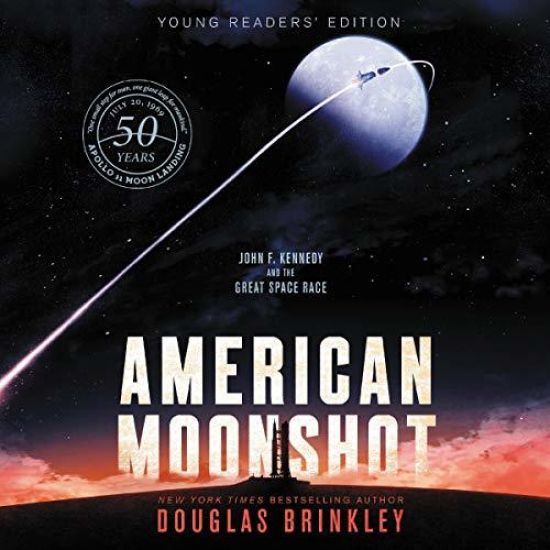
In anticipation of the 50th anniversary of the first moon landing, New York Times bestselling author and historian Douglas Brinkley delivers a young readers' edition of a story rooted in heroism, bravery, and patriotism: America's race to the moon. July 20, 1969. It's a day that has earned a spot in history. It's the day that America was the first nation to succeed in sending two astronauts--Buzz Aldrin and Neil Armstrong--to the moon.But what led to this unforgettable event? What were the stakes riding on the Apollo 11's safe landing? In acclaimed author Douglas Brinkley's first young readers' edition, space fans will get the riveting and factual backstory of arguably the most significant achievement of the 20th century.
American Moonshot: John F. Kennedy and the Great Space Race
Douglas Brinkley
HARPER PERENNIAL
2020
nidottu
Now in paperback, an award-winning historian and perennial New York Times bestselling author takes a fresh look at the space program, President John F. Kennedy's inspiring challenge, and America's race to the moon."We choose to go to the Moon in this decade and do the other things, not because they are easy, but because they are hard; because that goal will serve to organize and measure the best of our energies and skills, because that challenge is one that we are willing to accept, one we are unwilling to postpone, and one we intend to win."--President John F. KennedyOn May 25, 1961, JFK made an astonishing announcement: his goal of putting a man on the moon by the end of the decade. In this engrossing, fast-paced epic, Douglas Brinkley returns to the 1960s to recreate one of the most exciting and ambitious achievements in the history of humankind. American Moonshot brings together the extraordinary political, cultural, and scientific factors that fueled the birth and development of NASA and the Mercury, Gemini and Apollo projects, which shot the United States to victory in the space race against the Soviet Union at the height of the Cold War. Drawing on new primary source material and major interviews with many of the surviving figures who were key to America's success, Brinkley brings this fascinating history to life as never before. American Moonshot is a portrait of the brilliant men and women who made this giant leap possible, the technology that enabled us to propel men beyond earth's orbit to the moon and return them safely, and the geopolitical tensions that spurred Kennedy to commit himself fully to this audacious dream. Brinkley's ensemble cast of New Frontier characters include rocketeer Wernher von Braun, astronaut John Glenn and space booster Lyndon Johnson.A vivid and enthralling chronicle of one of the most thrilling, hopeful, and turbulent eras in the nation's history, American Moonshot is an homage to scientific ingenuity, human curiosity, and the boundless American spirit.
Newsweek, Lit Hub, The Philadelphia Inquirer, and The Atlanta Journal Constitution pick Race Man by Julian Bond as one of their Most-Anticipated Books of 2020!"This compilation of works by social activist and civil rights leader Julian Bond should be required reading in 2020."—Juliana Rose Pignataro, Newsweek"Bond's essays, speeches and interviews were powerful weapons in his lifelong fight for civil rights."—The New York Times"Justice and equality was the mission that spanned his life. Julian Bond helped change this country for the better. And what better way to be remembered than that."—President Barack ObamaAn inspiring, historic collection of writings from one of America's most important civil rights leaders.No one in the United States did more to advance the legacy of Martin Luther King Jr. than Julian Bond. Race Man—a collection of his speeches, articles, interviews, and letters—constitutes an unrivaled history of the life and times of one of America’s most trusted freedom fighters, offering unfiltered access to his prophetic voice on a wide variety of social issues, including police brutality, abortion, and same-sex marriage.A man who broke race barriers and set precedents throughout his life in politics; co-founder of the Southern Poverty Law Center and long-time chair of the NAACP; Julian Bond was a leader and a visionary who built bridges between the black civil rights movement and other freedom movements—especially for LGBTQ and women's rights. As we enter the third decade of the twenty-first century, there is no better time to return to Bond's works and words, many of them published here for the first time."Endlessly grateful for this collection of work that shows the expansive nature of Julian Bond's ideas of black liberation, and how those ideas are woven into the fabric of both resistance and uplift. Race Man is the map of a journey that was not only struggle and not only triumph."—Hanif Abdurraqib, author of They Can't Kill Us Until They Kill Us: Essays "Race Man is the essential collection of Julian Bond's wisdom—and required reading for the organizers and leaders who follow in his footsteps today."—Marian Wright Edelman, President Emerita, Children's Defense Fund"Race Man is a staggering collection that offers a genealogy of Bond's freedom-oriented politics and soul work as captured in his written words. Race Man is a book that looks back and speaks forward. It is a timely example of what movement building can look like when servant leaders refuse to leave the most vulnerable out of their visions for Black freedom. We need that reminder, like never before, today."—Darnell L. Moore, author of No Ashes in the Fire: Coming of Age Black & Free in America" [An] essential volume that will appeal to a broad audience of readers interested in the civil rights movement and human rights overall . . ."—Library Journal, Starred Review"Bond's years as an activist also offer a guide through the intellectual and political history of the left in the second half of the 20th century . . . Bond's essays capture the intellectual world that inspired him and that he helped inspire in turn."—Robert Greene II, The Nation
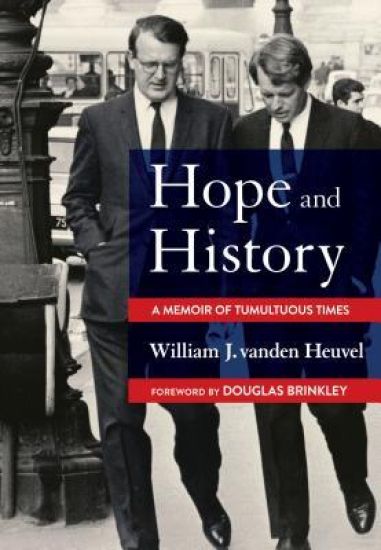
Hope and History is both a memoir and a call-to-action for the renewal of faith in democracy and America. US Ambassador William J. vanden Heuvel presents his most important public speeches and writings, compiled and presented over eight decades of adventure and public service, woven together with anecdotes of his colorful life as a second-generation American, a soldier, a lawyer, a political activist, and a diplomat. He touches upon themes that resonate as much today as they did when he first encountered them: the impact of heroes and mentors; the tragedy of the Vietnam War; the problems of racism and desegregation in America; tackling the crisis in America's prisons; America and the Holocaust; and the plight and promise of the United Nations. Along the way, he allows us to share his journey with some of the great characters of American history: Eleanor Roosevelt, William J. "Wild Bill" Donovan, President John F. Kennedy and RFK, Harry S. Truman, and Jimmy Carter. Throughout, vanden Heuvel persuades us that there is still room for optimism in public life. He shows how individuals, himself among them, have tackled some of America's most intractable domestic and foreign policy issues with ingenuity and goodwill, particularly under the leadership of President Franklin D. Roosevelt and those who sought and still seek to follow in his footsteps. He is not afraid to challenge the hatred and bigotry that are an unfortunate but undeniable part of the American fabric. He exhorts us to embrace all the challenges and opportunities that life in the United States can offer.
American Moonshot: John F. Kennedy and the Great Space Race
Douglas Brinkley; Winifred Conkling
Harpercollins
2019
cd
In anticipation of the 50th anniversary of the first moon landing, New York Times bestselling author and historian Douglas Brinkley delivers a young readers' edition of a story rooted in heroism, bravery, and patriotism: America's race to the moon.July 20, 1969. It's a day that has earned a spot in history. It's the day that America was the first nation to succeed in sending two astronauts--Buzz Aldrin and Neil Armstrong--to the moon.But what led to this unforgettable event? What were the stakes riding on the Apollo 11's safe landing? In acclaimed author Douglas Brinkley's first young readers' edition, space fans will get the riveting and factual backstory of arguably the most significant achievement of the 20th century.
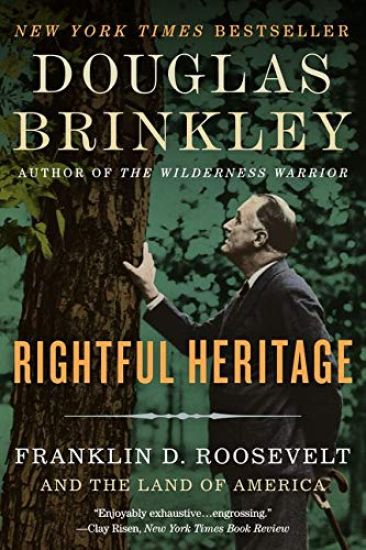
Franklin D. Roosevelt and the Land Of America
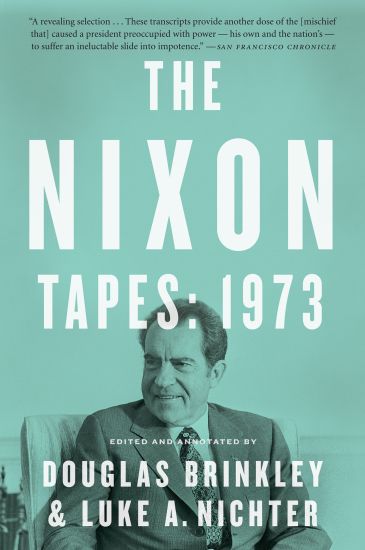
"A revealing selection . . . a] heroic service." -- New York Times Book Review "Endlessly fascinating . . . Essential for students of late-twentieth-century history and the American presidency." -- Kirkus Reviews " A] monumental effort . . . Astonishing." -- Austin American-Statesman Between 1971 and 1973, President Richard Nixon's voice-activated tape recorders captured 3,700 hours of conversations. Douglas Brinkley and Luke Nichter's intrepid two-volume transcription and annotation of the highlights of this essential archive provides an unprecedented and fascinating window into the inner workings of a momentous presidency. The Nixon Tapes: 1973 tells the concluding chapter of the story, the final year of taping, covering such events as the Vietnam cease-fire, the Wounded Knee standoff, and, of course, the Watergate investigation. Once again, there are revelations on every page. With Nixon's landslide 1972 reelection victory receding into the background and the scandal that would scuttle the administration looming, The Nixon Tapes: 1973 reveals the inside story of the tragedy that followed the triumph. "A priceless . . . historical document . . . Readers will enjoy the editors' insightful introductions." -- Publishers Weekly
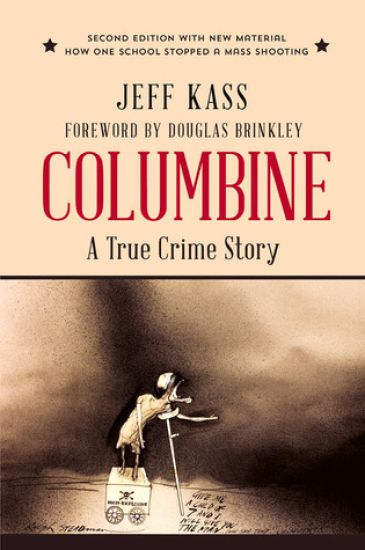
Ten years after Eric Harris and Dylan Klebold killed twelve classmates and a teacher, Columbine remains the world's most iconic school shooting. Columbine: A True Crime Story, a victim, the killers and the nation's search for answers is the first book of investigative journalism to tell the complete story of that day, the far-reaching consequences, and the common denominators among school shooters across the country. Jeff Kass was one of the first reporters on the scene and has continued to cover the story as a staff writer for Denver's Rocky Mountain News. He has broken national stories on the shootings such as leaked crime scene photos, and the sealed diversion files of the killers. He has also reported the story extensively for the Boston Globe, Christian Science Monitor, Newsday, and U.S. News & World Report. The result of ten years of research and exclusive information, the book reaches into fundamental American themes of violence, racism, parenting and policing. Concluding with the tale of the tattered police investigation and how one of the most controversial victims' families faces down a modern American tragedy as the cameras roll, Columbine: A True Crime Story is a classic in the tradition of In Cold Blood and The Executioner's Song. Foreword by noted historian Douglas Brinkley, exclusive cover art by renowned artist and cultural commentator Ralph Steadman, and photos from the archives of the Rocky Mountain News, which won the Pulitzer for its Columbine photography.
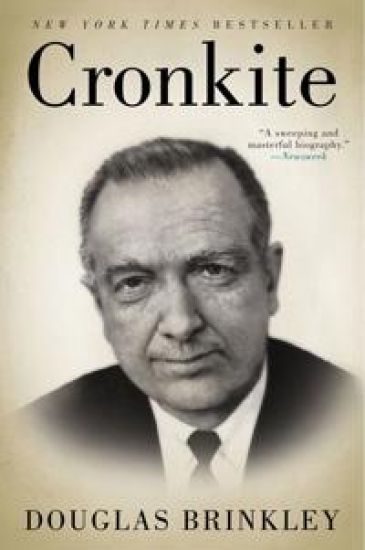
For decades, Walter Cronkite was known as the most trusted man in America. Millions across the nation welcomed him into their homes, first as a print reporter for the United Press on the front lines of World War II, and later, in the emerging medium of television, as a host of numerous documentary programs and as anchor of the CBS Evening News, from 1962 until his retirement in 1981. Yet this very public figure, undoubtedly the twentieth century's most revered journalist, was a remarkably private man; few know the full story of his life. Drawing on unprecedented access to Cronkite's private papers as well as interviews with his family and friends, Douglas Brinkley now brings this American icon into focus as never before. Brinkley traces Cronkite's story from his roots in Missouri and Texas through the Great Depression, during which he began his career, to World War II, when he gained notice reporting with Allied troops from North Africa, D-day, and the Battle of the Bulge. In 1950, Edward R. Murrow recruited him to work for CBS, where he covered presidential elections, the space program, Vietnam, and the first televised broadcasts of the Olympic Games, as both a reporter and later as an anchor for the evening news. Cronkite was also witness to - and the nation's voice for - many of the most profound moments in modern American history, including the Kennedy assassination, Apollos 11 and 13, Watergate, the Vietnam War, and the Iran hostage crisis. Epic, intimate, and masterfully written, Cronkite is the biography of an extraordinary American life, told by one of our most brilliant and respected historians.
"Douglas Brinkley has written a sweeping, blow-by-blow account of the struggle to preserve the last great remnants of American wilderness. An engaging appraisal of the crucial skirmishes in the battle over wild Alaska, The Quiet World is populated not only by the requisite luminaries like John Muir and Ansel Adams, but also by a cast of quirky, unexpected characters. The Quiet World is a fascinating and important read." -- Jon KrakauerIn this follow-up to his New York Times bestseller Wilderness Warrior, acclaimed historian Douglas Brinkley offers a riveting, expansive look at the past and present battle to preserve Alaska's wilderness. Brinkley explores the colorful diversity of Alaska's wildlife, arrays the forces that have wreaked havoc on its primeval arctic refuge--from Klondike Gold Rush prospectors to environmental disasters like the Exxon-Valdez oil spill--and documents environmental heroes from Theodore Roosevelt to Dwight Eisenhower and beyond. Not merely a record of Alaska's past, The Quiet World is a compelling call-to-arms for sustainability, conservationism, and conscientious environmental stewardship--a warning that the land once called Seward's Folly may go down in history as America's Greatest Mistake.