Kirjojen hintavertailu. Mukana 12 390 323 kirjaa ja 12 kauppaa.

Kirjailija

Douglas Robinson

Kirjat ja teokset yhdessä paikassa: 68 kirjaa, julkaisuja vuosilta 1992-2026, suosituimpien joukossa You-Gin One-Gin. Vertaile teosten hintoja ja tarkista saatavuus suomalaisista kirjakaupoista.

68 kirjaa

Kirjojen julkaisuhaarukka 1992-2026.

Translationality

Translationality

Douglas Robinson

Routledge
2017
sidottu
This book defines "translationality" by weaving a number of sub- and interdisciplinary interests through the medical humanities: medicine in literature, the translational history of medical literature, a medical (neuroscience) approach to literary translation and translational hermeneutics, and a humanities (phenomenological/performative) approach to translational medicine. It consists of three long essays: the first on the traditional medicine-in-literature side of the medical humanities, with a close look at a recent novel built around the Capgras delusion and other neurological misidentification disorders; the second beginning with the traditional history-of-medicine side of the medical humanities, but segueing into literary history, translation history, and translation theory; the third on the social neuroscience of translational hermeneutics. The conclusion links the discussion up with a humanistic (performative/phenomenological) take on translational medicine.
Aleksis Kivi and/as World Literature
Aleksis Kivi (1834-1872) is Finland’s greatest writer. His great 1870 novel The Brothers Seven has been translated 59 times into 34 languages. Is he world literature, or not? In Aleksis Kivi and/as World Literature Douglas Robinson uses this question as a wedge for exploring the nature and nurture of world literature, and the contributions made by translators to it. Drawing on Deleuze and Guattari’s notion of major and minor literature, Robinson argues that translators have mainly “majoritized” Kivi—translated him respectfully—and so created images of literary tourism that ill suit recognition as world literature. Far better, he insists, is the impulse to minoritize—to find and celebrate the minor writer in Kivi, who “sends the major language racing.”
Critical Translation Studies

Critical Translation Studies

Douglas Robinson

Routledge
2017
sidottu
This book offers an introduction for Translation Studies (TS) scholars to Critical Translation Studies (CTS), a cultural-studies approach to the study of translation spearheaded by Sakai Naoki and Lydia H. Liu, with an implicit focus on translation as a social practice shaped by power relations in society. The central claim in CTS is that translators help condition what TS scholars take to be the primal scene of translation: two languages, two language communities, with the translator as mediator. According to Sakai, intralingual translation is primal: we are all foreigners to each other, making every address to another "heterolingual", thus a form of translation; and it is the order that these acts of translation bring to communication that begins to generate the "two separate languages" scenario. CTS is dedicated to the historicization of the social relations that create that scenario.In three sets of "Critical Theses on Translation," the book outlines and explains (and partly critiques) the CTS approach; in five interspersed chapters, the book delves more deeply into CTS, with an eye to making it do work that will be useful to TS scholars.
The Deep Ecology of Rhetoric in Mencius and Aristotle

The Deep Ecology of Rhetoric in Mencius and Aristotle

Douglas Robinson

State University of New York Press
2017
pokkari
Discusses philosophers Mencius and Aristotle as socio-ecological thinkers.Mencius (385–303/302 BCE) and Aristotle (384–322 BCE) were contemporaries, but are often understood to represent opposite ends of the philosophical spectrum. Mencius is associated with the ecological, emergent, flowing, and connected; Artistotle with the rational, static, abstract, and binary. Douglas Robinson argues that in their conceptions of rhetoric, at least, Mencius and Aristotle are much more similar than different: both are powerfully socio-ecological, espousing and exploring collectivist thinking about the circulation of energy and social value through groups. The agent performing the actions of pistis, "persuading-and-being-persuaded," in Aristotle and zhi, "governing-and-being-governed," in Mencius is, Robinson demonstrates, not so much the rhetor as an individual as it is the whole group. Robinson tracks this collectivistic thinking through a series of comparative considerations using a theory that draws impetus from Arne Naess's "ecosophical" deep ecology and from work on rhetoric powered by affective ecologies, but with details of the theory drawn equally from Mencius and Aristotle.
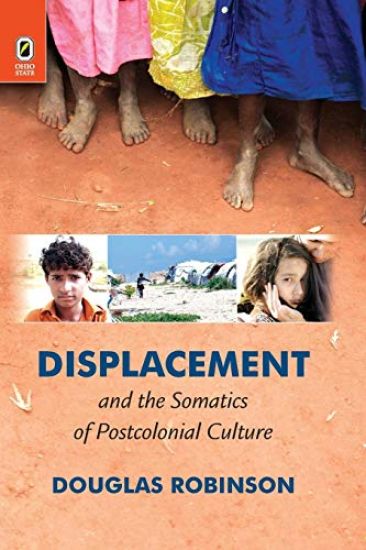
Displacement and the Somatics of Postcolonial Culture

Displacement and the Somatics of Postcolonial Culture

Douglas Robinson

Ohio State University Press
2017
pokkari
Displacement and the Somatics of Postcolonial Culture is Douglas Robinson s study of postcolonial affect specifically, of the breakdown of the normative (regulatory) circulation of affect in the refugee experience and the colonial encounter, the restructuring of that regulatory circulation in colonization, and the persistence of that restructuring in decolonization and intergenerational trauma. Robinson defines somatics as a cultural construction of reality and identity through the regulatory circulation of evaluative affect.This book is divided into three essays covering the refugee experience, colonization and decolonization, and intergenerational trauma. Each essay contains a review of empirical studies of its main topic, a study of literary representations of that topic, and a study of postcolonial theoretical spins. The literary representations in the refugee essay are a novel and short story by the Haitian writer Edwidge Danticat; in the colonization essay a short film by Javier Fesser and a novella by Mahasweta Devi (translated by Gayatri Chakravorty Spivak); and in the intergenerational trauma essay novels by James Welch and Toni Morrison and a short story by Percival Everett. The first essay s theoretical spins include Deleuze and Guattari on nomad thought and Iain Chambers on migrancy; the second s, Nietzsche s Genealogy of Morals and theories of postcolonial affect in Bhabha and Spivak; the third s, work on historical trauma by Cathy Caruth and Dominic LaCapra."
Exorcising Translation

Exorcising Translation

Douglas Robinson

Bloomsbury Academic USA
2016
sidottu
Exorcising Translation, a new volume in Bloomsbury's Literatures, Cultures, Translation series, makes critical contributions to translation as well as to comparative and postcolonial literary studies. The hot-button issue of Eurocentrism in translation studies has roiled the discipline in the past few years, with critiques followed by defenses and defenses followed by enhanced critiques. Douglas Robinson identifies Eurocentrism in translation studies as what Sakai Naoki calls a “civilizational spell.” Exorcising Translation tracks two translation histories. In the first, moving from Friedrich Nietzsche to Harold Bloom, we find ourselves caught, trapped, cursed, haunted by the spell. In the second, focused on English translations and translators of Chinese literature, Robinson explores accusations against American translators not only for their inadequate (or even totally absent) knowledge of Chinese and Daoism, but for their Americanness, their trappedness in individualistic and secular Western thought. A closer look at that history shows that Western thought and Chinese thought are mutually shaped in fascinating ways. Exorcising Translation presents a major re-envisioning of translation studies, and indeed the literary relationship between East and West, by a pioneering scholar in the field.
Exorcising Translation

Exorcising Translation

Douglas Robinson

Bloomsbury Academic USA
2016
nidottu
Exorcising Translation, a new volume in Bloomsbury's Literatures, Cultures, Translation series, makes critical contributions to translation as well as to comparative and postcolonial literary studies. The hot-button issue of Eurocentrism in translation studies has roiled the discipline in the past few years, with critiques followed by defenses and defenses followed by enhanced critiques. Douglas Robinson identifies Eurocentrism in translation studies as what Sakai Naoki calls a “civilizational spell.” Exorcising Translation tracks two translation histories. In the first, moving from Friedrich Nietzsche to Harold Bloom, we find ourselves caught, trapped, cursed, haunted by the spell. In the second, focused on English translations and translators of Chinese literature, Robinson explores accusations against American translators not only for their inadequate (or even totally absent) knowledge of Chinese and Daoism, but for their Americanness, their trappedness in individualistic and secular Western thought. A closer look at that history shows that Western thought and Chinese thought are mutually shaped in fascinating ways. Exorcising Translation presents a major re-envisioning of translation studies, and indeed the literary relationship between East and West, by a pioneering scholar in the field.
The Deep Ecology of Rhetoric in Mencius and Aristotle

The Deep Ecology of Rhetoric in Mencius and Aristotle

Douglas Robinson

State University of New York Press
2016
sidottu
Discusses philosophers Mencius and Aristotle as socio-ecological thinkers.Mencius (385–303/302 BCE) and Aristotle (384–322 BCE) were contemporaries, but are often understood to represent opposite ends of the philosophical spectrum. Mencius is associated with the ecological, emergent, flowing, and connected; Artistotle with the rational, static, abstract, and binary. Douglas Robinson argues that in their conceptions of rhetoric, at least, Mencius and Aristotle are much more similar than different: both are powerfully socio-ecological, espousing and exploring collectivist thinking about the circulation of energy and social value through groups. The agent performing the actions of pistis, "persuading-and-being-persuaded," in Aristotle and zhi, "governing-and-being-governed," in Mencius is, Robinson demonstrates, not so much the rhetor as an individual as it is the whole group. Robinson tracks this collectivistic thinking through a series of comparative considerations using a theory that draws impetus from Arne Naess's "ecosophical" deep ecology and from work on rhetoric powered by affective ecologies, but with details of the theory drawn equally from Mencius and Aristotle.
Translation and Empire

Translation and Empire

Douglas Robinson

Routledge
2016
sidottu
Arising from cultural anthropology in the late 1980s and early 1990s, postcolonial translation theory is based on the observation that translation has often served as an important channel of empire. Douglas Robinson begins with a general presentation of postcolonial theory, examines current theories of the power differentials that control what gets translated and how, and traces the historical development of postcolonial thought about translation. He also explores the negative and positive impact of translation in the postcolonial context, reviewing various critiques of postcolonial translation theory and providing a glossary of key words. The result is a clear and useful guide to some of the most complex and critical issues in contemporary translation studies.
Western Translation Theory from Herodotus to Nietzsche
Douglas Robinson offers the most comprehensive collection of translation theory readings available to date, from the Histories of Herodotus in the mid-fifth century before our era to the end of the nineteenth century. The result is a startling panoply of thinking about translation across the centuries, covering such topics as the best type of translator, problems of translating sacred texts, translation and language teaching, translation as rhetoric, translation and empire, and translation and gender.This pioneering anthology contains 124 texts by 90 authors, 9 of them women. Sixteen texts by 4 authors appear here for the first time in English translation; 17 texts by 9 authors appear in completely new translations. Every entry is provided with a bibliographical headnote and footnotes.Intended for classroom use in History of Translation Theory, History of Rhetoric or History of Western Thought courses, this anthology will also prove useful to scholars of translation and those interested in the intellectual history of the West.
The Dao of Translation

The Dao of Translation

Douglas Robinson

Routledge
2015
sidottu
The Dao of Translation sets up an East-West dialogue on the nature of language and translation, and specifically on the "unknown forces" that shape the act of translation. To that end it mobilizes two radically different readings of the Daodejing (formerly romanized as the Tao Te Ching): the traditional "mystical" reading according to which the Dao is a mysterious force that cannot be known, and a more recent reading put forward by Sinologists Roger T. Ames and David L. Hall, to the effect that the Dao is simply the way things happen. Key to Ames and Hall’s reading is that what makes the Dao seem both powerful and mysterious is that it channels habit into action—or what the author calls social ecologies, or icoses. The author puts Daoism (and ancient Confucianism) into dialogue with nineteenth-century Western theorists of the sign, Charles Sanders Peirce and Ferdinand de Saussure (and their followers), in order to develop an "icotic" understanding of the tensions between habit and surprise in the activity of translating. The Dao of Translation will interest linguists and translation scholars. This book will also engage researchers of ancient Chinese philosophy and provide Western scholars with a thought-provoking cross-examination of Eastern and Western perspectives.
Rites of Passage (Library Ed.)

Rites of Passage (Library Ed.)

Douglas Robinson

Createspace Independent Publishing Platform
2013
nidottu
Thomas, exposed once to Majken's blood during her fight with John to save his life, is becoming vampyric. Soon the symptoms are so bad he is unable to deny he is changing. As his na ve but brilliant sister Kimberly unearths what happened to him in Trenton, Jeanine, a young vampyric girl across the country, flees with the seven-year-old daughter of a blood cult leader to save her life; Nolan wishes to sacrifice his own daughter. Yet dangers abide in the darkness where Thomas is unaware. Once Thomas is entrapped with Jeanine and Alecia, Majken must pursue him into darkness itself to save him from the deadly blood cult leader.
Rites of Passage

Rites of Passage

Douglas Robinson

Silently Publishing
2013
nidottu
Thomas, exposed once to Majken's blood during her fight with John to save his life, is becoming vampyric. Soon the symptoms are so bad he is unable to deny he is changing. As his na ve but brilliant sister Kimberly unearths what happened to him in Trenton, Jeanine, a young vampyric girl across the country, flees with the seven-year-old daughter of a blood cult leader to save her life; Nolan wishes to sacrifice his own daughter. Yet dangers abide in the darkness where Thomas is unaware. Once Thomas is entrapped with Jeanine and Alecia, Majken must pursue him into darkness itself to save him from the deadly blood cult leader.
Estrangement and the Somatics of Literature

Estrangement and the Somatics of Literature

Douglas Robinson

Johns Hopkins University Press
2008
sidottu
Drawing together the estrangement theories of Viktor Shklovsky and Bertolt Brecht with Leo Tolstoy's theory of infection, Douglas Robinson studies the ways in which shared evaluative affect regulates both literary familiarity-convention and tradition-and modern strategies of alienation, depersonalization, and malaise. This book begins with two assumptions, both taken from Tolstoy's late aesthetic treatise What Is Art? (1898): that there is a malaise in culture, and that literature's power to "infect" readers with the moral values of the author is a possible cure for this malaise. Exploring these ideas of estrangement within the contexts of earlier, contemporary, and later critical theory, Robinson argues that Shklovsky and Brecht follow Tolstoy in their efforts to fight depersonalization by imbuing readers with the transformative guidance of collectivized feeling. Robinson's somatic approach to literature offers a powerful alternative to depersonalizing structuralist and poststructuralist theorization without simply retreating into conservative rejection and reaction. Both a comparative study of Russian and German literary-theoretical history and an insightful examination of the somatics of literature, this groundbreaking work provides a deeper understanding of how literature affects the reader and offers a new perspective on present-day problems in poststructuralist approaches to the human condition.
Introducing Performative Pragmatics

Introducing Performative Pragmatics

Douglas Robinson

Routledge
2005
nidottu
This user-friendly introduction to a new ‘performative’ methodology in linguistic pragmatics breaks away from the traditional approach which understands language as a machine. Drawing on a wide spectrum of research and theory from the past thirty years in particular, Douglas Robinson presents a combination of ‘action-oriented approaches’ from sources such as J.L. Austin, H. Paul Grice, Harold Garfinkel and Erving Goffman.Paying particular attention to language as drama, the group regulation of language use, individual resistance to these regulatory pressures and nonverbal communication, the work also explains groundbreaking concepts and analytical models.With a key points section, discussion questions and exercises in every chapter, this book will be an invaluable resource to students and teachers on a variety of courses, including linguistic pragmatics, sociolinguistics and interpersonal communication.
Introducing Performative Pragmatics

Introducing Performative Pragmatics

Douglas Robinson

Routledge
2005
sidottu
This user-friendly introduction to a new ‘performative’ methodology in linguistic pragmatics breaks away from the traditional approach which understands language as a machine. Drawing on a wide spectrum of research and theory from the past thirty years in particular, Douglas Robinson presents a combination of ‘action-oriented approaches’ from sources such as J.L. Austin, H. Paul Grice, Harold Garfinkel and Erving Goffman.Paying particular attention to language as drama, the group regulation of language use, individual resistance to these regulatory pressures and nonverbal communication, the work also explains groundbreaking concepts and analytical models.With a key points section, discussion questions and exercises in every chapter, this book will be an invaluable resource to students and teachers on a variety of courses, including linguistic pragmatics, sociolinguistics and interpersonal communication.