Kirjojen hintavertailu. Mukana 12 459 402 kirjaa ja 12 kauppaa.

Kirjailija

Earl J. Hess

Kirjat ja teokset yhdessä paikassa: 34 kirjaa, julkaisuja vuosilta 1997-2026, suosituimpien joukossa July 22. Vertaile teosten hintoja ja tarkista saatavuus suomalaisista kirjakaupoista.

34 kirjaa

Kirjojen julkaisuhaarukka 1997-2026.

July 22

July 22

Earl J. Hess

UNIVERSITY PRESS OF KANSAS
2023
sidottu
So remarkable was the fighting to the east of Atlanta on July 22, 1864, that it earned its place as the only engagement of the Civil War to be widely referred to by the date of its occurrence. Also known as the Battle of Atlanta, this was the largest engagement of the four-month-long Atlanta Campaign for control of the city and the region. Although Confederate commander John Bell Hood’s forces flanked William T. Sherman’s line and were able to crush the end of it, they could go no further. On July 22, 1864, the Confederates came closer to achieving a major tactical victory than on any other day of the Atlanta Campaign.Prolific Civil War historian Earl Hess’s July 22 is a thorough study of all aspects of the most prominent battle of the Civil War’s Atlanta Campaign. Based on exhaustive research in primary sources, Hess has crafted a unique and compelling study of not only the tactics and strategy associated with the engagement but also of the personal experiences of Union and Confederate soldiers and the effects the battle had on them. This book offers fresh insights to the significance that the Battle of July 22 held for the larger Atlanta campaign and the entire Union war effort. Hess also provides a thorough discussion of the death of Maj. Gen. James B. McPherson, the most prominent casualty of the battle, and the effect this loss had on Union soldiers and civilians alike. He concludes with an assessment of the battle’s legacy in American history and culture.Detailing one of the larger and more vigorously fought battles of the Civil War, Hess’s treatment of the Battle of Atlanta stands out as a strong example of Civil War operational history. The combination of maneuver, unit handling, stout combat by the individual soldier, and combative spirit on both sides make July 22 one of the most fascinating and remarkable battles in American history. There is much for the student of military history to learn on many levels of tactics, the experience of combat, and battlefield leadership.
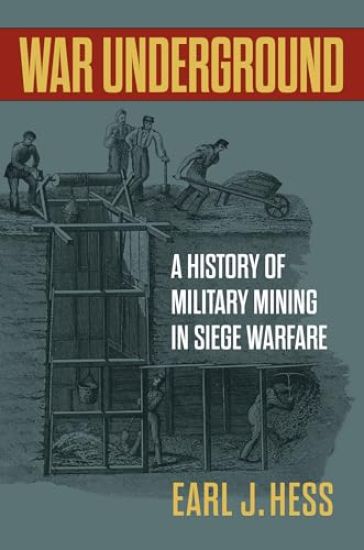
War Underground

War Underground

Earl J. Hess

UNIVERSITY PRESS OF KANSAS
2025
sidottu
Renowned military historian Earl Hess offers the first book dedicated to the history of underground tactics and strategy in warfare from antiquity to the present.From as early as ancient Greek, Roman, and Chinese warfare to the battles of World War I, military mining was an essential component of siege warfare. Armies have tunneled underneath castle walls, dug trenches across no-man’s-land, and engineered confusing defensive countermines. These tactics for assaulting enemy fortifications and positions by creating underground access have adapted to changes in warfare, technology, geography, and culture. While its use diminished after 1918, when speed and movement took precedence over capturing strongpoints, military mining remains a viable strategy still deployed to this day. Although military historians have given mining marginal treatment in virtually every study of siege warfare, it has not yet been treated with depth or comprehensiveness as a subject in its own right. In this first book-length study of the subject, renowned military historian Earl Hess now fully addresses the topic of military mining from its earliest origins to the twenty-first century.In War Underground, Hess offers a sweeping study of the use of offensive and defensive military mining in more than 300 sieges from around the world and across almost three millennia. The result is an impressively broad and comprehensive treatment of the grand history of military mining, which offers novel insights to the evolution and trajectory of the strategy since its ancient origins.
Civil War Supply and Strategy

Civil War Supply and Strategy

Earl J. Hess

LOUISIANA STATE UNIVERSITY PRESS
2024
pokkari
Winner of the Army Historical Foundation Distinguished Writing AwardCivil War Supply and Strategy stands as a sweeping examination of the decisive link between the distribution of provisions to soldiers and the strategic movement of armies during the Civil War. Award-winning historian Earl J. Hess reveals how that dynamic served as the key to success, especially for the Union army as it undertook bold offensives striking far behind Confederate lines. How generals and their subordinates organized military resources to provide food for both men and animals under their command, he argues, proved essential to Union victory.The Union army developed a powerful logistical capability that enabled it to penetrate deep into Confederate territory and exert control over select regions of the South. Logistics and supply empowered Union offensive strategy but limited it as well; heavily dependent on supply lines, road systems, preexisting railroad lines, and natural waterways, Union strategy worked far better in the more developed Upper South. Union commanders encountered unique problems in the Deep South, where needed infrastructure was more scarce. While the Mississippi River allowed Northern armies to access the region along a narrow corridor and capture key cities and towns along its banks, the dearth of rail lines nearly stymied William T. Sherman's advance to Atlanta. In other parts of the Deep South, the Union army relied on massive strategic raids to destroy resources and propel its military might into the heart of the Confederacy. As Hess's study shows, from the perspective of maintaining food supply and moving armies, there existed two main theaters of operation, north and south, that proved just as important as the three conventional eastern, western, and Trans-Mississippi theaters. Indeed, the conflict in the Upper South proved so different from that in the Deep South that the ability of Federal officials to negotiate the logistical complications associated with army mobility played a crucial role in determining the outcome of the war.
Gene Kelly

Gene Kelly

Earl J. Hess; Pratibha A. Dabholkar

University Press of Kansas
2020
sidottu
Whether as a curiosity or a beloved idol, Gene Kelly (1912-1996) lives on in our cultural memory as a fantastic dancer in MGM musicals, especially Singin' in the Rain. But dancing, however extraordinary, was only one of his many gifts. This book, for the first time, offers a full picture of Gene Kelly as the Renaissance man he actually was - dancer, yes, but also choreographer, actor, clown, singer, director, teacher, and mentor. Kelly was star of radio and television as well as film, avant-garde as artist and auteur but also ahead of the curve in opening the world of dance to different races, ethnicities, and genders.Gene Kelly: The Making of a Creative Legend takes us from Kelly's youth in Depression-era Pittsburgh through his years on Broadway and ascendance to stardom in Hollywood. Authors Hess and Dabholkar pay particular attention to his work with the US Navy, solo directing, and lesser-known but considerable accomplishments in television, radio, and on the stage in later years. The book gives us a rare inside look at Kelly's relationships with dancing partners and peers from Leslie Caron, Vera-Ellen, and Cyd Charisse to Fred Astaire, and at his directorial collaboration with Stanley Donen and Vincent Minnelli. The authors show us significant but little-examined facets of Kelly's character and career, such as the political convictions that got him graylisted in Hollywood; his passion for creating cine-dance and serving as an ambassador of dance in America; and his forging of links between dance, civil rights, and the 'common man.'Steeped in research and replete with photographs, this career biography uniquely encompasses all phases of Gene Kelly's life and work - and finally gives us a full portrait of this central figure in the history of the film musical during Hollywood's Golden Age.
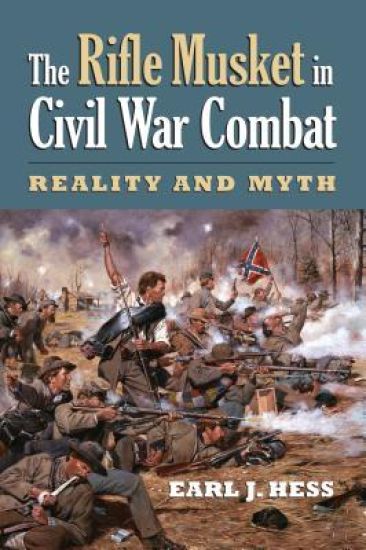
The Rifle Musket in Civil War Combat

The Rifle Musket in Civil War Combat

Earl J. Hess

University Press of Kansas
2016
nidottu
The Civil War's single-shot, muzzle-loading musket revolutionized warfare-or so we've been told for years. Noted historian Earl J. Hess forcefully challenges that claim, offering a new, clear-eyed, and convincing assessment of the rifle musket's actual performance on the battlefield and its impact on the course of the Civil War. Many contemporaries were impressed with the new weapon's increased range of 500 yards, compared to the smoothbore musket's range of 100 yards, and assumed that the rifle was a major factor in prolonging the Civil War. Historians have also assumed that the weapon dramatically increased casualty rates, made decisive victories rare, and relegated cavalry and artillery to far lesser roles than they played in smoothbore battles. Hess presents a completely new assessment of the rifle musket, contending that its impact was much more limited than previously supposed and was confined primarily to marginal operations such as skirmishing and sniping. He argues further that its potential to alter battle line operations was virtually nullified by inadequate training, soldiers' preference for short-range firing, and the difficulty of seeing the enemy at a distance. He notes that bullets fired from the new musket followed a parabolic trajectory unlike those fired from smoothbores; at mid-range, those rifle balls flew well above the enemy, creating two killing zones between which troops could operate untouched. He also presents the most complete discussion to date of the development of skirmishing and sniping in the Civil War. Drawing upon the observations and reflections of the soldiers themselves, Hess offers the most compelling argument yet made regarding the actual use of the rifle musket and its influence on Civil War combat. Engagingly written and meticulously researched, his book will be of special interest to Civil War scholars, buffs, re-enactors, and gun enthusiasts alike.
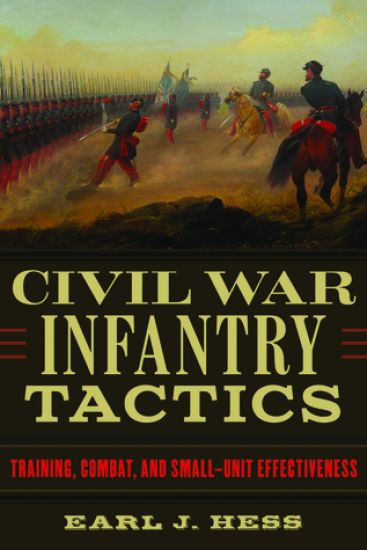
Civil War Infantry Tactics

Civil War Infantry Tactics

Earl J. Hess

Louisiana State University Press
2015
sidottu
For decades, military historians have argued that the introduction of the rifle musket-with a range five times longer than that of the smoothbore musket-made the shoulder-to-shoulder formations of linear tactics obsolete. Author Earl J. Hess challenges this deeply entrenched assumption. He contends that long-range rifle fire did not dominate Civil War battlefields or dramatically alter the course of the conflict because soldiers had neither the training nor the desire to take advantage of the musket rifle's increased range. Drawing on the drill manuals available to officers and a close reading of battle reports, Civil War Infantry Tactics demonstrates that linear tactics provided the best formations and maneuvers to use with the single-shot musket, whether rifle or smoothbore. The linear system was far from an outdated relic that led to higher casualties and prolonged the war. Indeed, regimental officers on both sides of the conflict found the formations and maneuvers in use since the era of the French Revolution to be indispensable to the survival of their units on the battlefield. The training soldiers received in this system, combined with their extensive experience in combat, allowed small units a high level of articulation and effectiveness. Unlike much military history that focuses on grand strategies, Hess zeroes in on formations and maneuvers (or primary tactics), describing their purpose and usefulness in regimental case studies, and pinpointing which of them were favorites of unit commanders in the field. The Civil War was the last conflict in North America to see widespread use of the linear tactical system, and Hess convincingly argues that the war also saw the most effective tactical performance yet in America's short history.
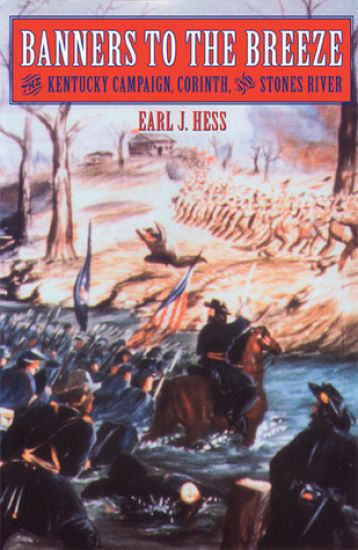
Banners to the Breeze

Banners to the Breeze

Earl J. Hess

University of Nebraska Press
2010
pokkari
Banners to the Breeze analyzes three major Civil War campaigns that were conducted following a series of devastating Confederate defeats at the hands of Ulysses S. Grant in the spring of 1862. After the recapture of Tennessee, Confederate armies under Braxton Bragg and Edmund Kirby Smith conducted a brilliant advance into the deeply divided state of Kentucky. Meanwhile, other Confederate forces under Sterling Price and Earl Van Dorn attempted to recapture the town of Corinth, Mississippi. As the year drew to a close, Bragg's army was involved in a tactical draw at the battle of Stones River. Earl J. Hess mixes dramatic narrative and new analysis as he brings these campaigns together in a coherent whole. Previously unpublished historic photographs of the battlefields are included.
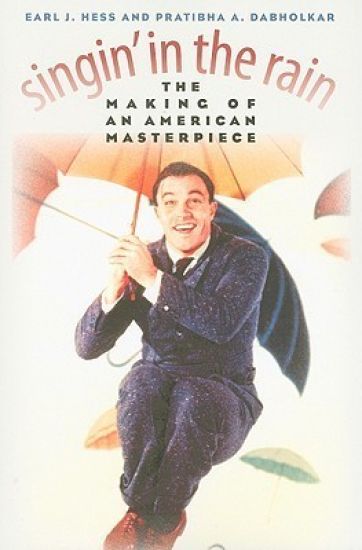
Singin' in the Rain

Singin' in the Rain

Earl J. Hess

University Press of Kansas
2009
nidottu
America's most popular film critic is hardly alone in singing the praises of ""Singin' in the Rain"". This quintessential American film - made in Hollywood's Golden Age, showcasing the genius of Gene Kelly, and featuring what Ebert calls 'the most joyous musical sequence ever filmed' - has inspired love and admiration from fellow critics, film scholars, and movie buffs worldwide for more than half a century. Indeed, its reputation continues to grow: the American Film Institute now ranks it number 1 on its list of the Greatest Movie Musicals of All Time and number 5 on its list of the Greatest American Films of All Time. Echoing the enthusiasm of the film's most devoted fans, Earl Hess and Pratibha Dabholkar embrace and illuminate both the film and its reputation. Combining lucid prose with meticulous scholarship, they provide for the first time the complete inside story of how this classic movie was made, marketed, and received. They re-create the actual movie-making experience, on the set and behind the scenes, and chronicle every step in production from original concept through casting, scripting, rehearsals, filming, scoring, and editing. They then trace its distribution, critical reception, and enduring reputation. The book is brimming with human interest, bursting with anecdotes and quotes by and about the film's stars and makers. Here are Gene Kelly and Donald O'Connor at the top of their form, along with Debbie Reynolds and Cyd Charisse in their breakthrough roles. Here, too, are fascinating tidbits - about censorship troubles, continuity flaws, stunt doubles for Kelly, voice doubles for cast members, the dubbing of taps, and genealogy of all the songs. Hess and Dabholkar also provide in-depth analyses of each of the major song-and-dance performances, including details of everything from the dynamics of 'Gotta Dance!' to the physical challenges of the remarkable title number. Based on exhaustive research in oral histories, studio production records, letters, memoirs, and interviews, their book is factually impeccable, compulsively readable, and indispensable for anyone who loves movies at their absolute best.
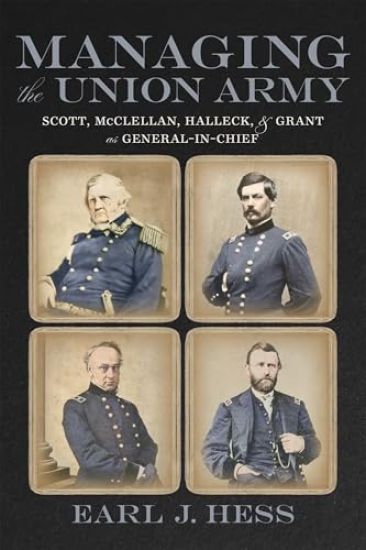
Managing the Union Army

Managing the Union Army

Earl J. Hess

LOUISIANA STATE UNIVERSITY PRESS
2026
sidottu
The general-in-chief did not command the million-man Union army that fought in the Civil War, as most historians have assumed; rather, he was a member of a management team that included the president and the secretary of war. The president, as commander-in-chief, created the position by appointing an officer to it, and he could dismiss that officer at any time and choose not to appoint another. The general-in-chief had to cooperate closely with the president and the secretary of war to ensure the team functioned effectively. In Managing the Union Army, renowned Civil War historian Earl J. Hess upends our understanding of the general-in-chief, his role in the Union military system, and his influence on the conflict's outcome. Hess reinterprets the accomplishments and failures of the four men who held the position, evaluating Winfield Scott, George B. McClellan, Henry W. Halleck, and Ulysses S. Grant in ways that might surprise many students of Civil War military history. The Union general-in-chief could take on four major responsibilities. The first was to serve as a military advisor to the president and the secretary of war. The second was to develop policies to govern the huge Union army. The third was to recommend officers to command corps, field armies, and military departments. The fourth was to actually command a portion of the army in field operations, a role that Grant alone fulfilled. Hess shows how the performance of the four men varied greatly across the three other tasks. He also details Grant's unique achievement as a field commander—ending the war, which none of the other Union generals-in-chief were able to do. Hess illuminates how personality traits helped or hindered the generals-in-chief during the war. McClellan's deeply flawed personality contributed to his failure in fulfilling the duties of the position. Grant's strongly positive personality and will-do attitude, by contrast, helped him to succeed more fully in the role than any of his predecessors. Hess also offers a much more positive evaluation of Halleck than is typical of the scholarly literature on Civil War commanders. Halleck was not only a successful general-in-chief but also fundamentally supported Grant during the last year of the conflict by serving as chief of staff of the U.S. Army, a fourth member of the management team. From an elderly though distinguished officer like Scott, to Grant, the most effective general of the Civil War, the office of general-in-chief evolved into the crucial military position in the Federal war effort. Hess's study, through a close examination of administrative history, offers a dramatically new way of understanding how the Union army worked in the Civil War.
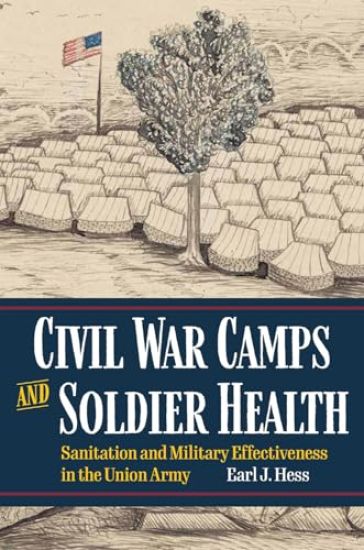
Civil War Camps and Soldier Health

Civil War Camps and Soldier Health

Earl J. Hess

KENT STATE UNIVERSITY PRESS
2026
nidottu
The Civil War was a watershed in public awareness of the many challenges to soldier health posed by camp life. Sanitarians among civilians and regular army officers attempted to meet those challenges by addressing a range of topics associated with preventive health care in the volunteer army. The U.S. Sanitary Commission, a non-governmental agency sanctioned by the Federal government, created a massive campaign to study conditions in semi-permanent camps and advise unit commanders how to avoid unnecessary illness and curb soldier deaths by disease. Commission inspectors, mostly civilian physicians, examined camps from 1861 to early 1864 and filed more than 1400 reports of their findings. Civil War Camps and Soldier Health delves deeply into 280 of those reports, shedding new and startling light on camp conditions. Addressing camp situation, shelter, clothing, personal cleanliness, garbage disposal, latrines, food, cooking, water, alcohol, morale, recruit examination, smallpox vaccination, regimental hospitals, and officer supervision, the camp inspection returns are unique snapshots of what it was like to live in a Union army camp. The evidence shows that sanitation varied widely from unit to unit and across time periods. The ability of volunteer regimental officers and surgeons to take sanitary principles seriously often was low. But alcoholic consumption was much lower than we think, while disposing of garbage and human waste often non-existent. Overall the volunteer regiments did well enough to get by, but they did not achieve high marks for military effectiveness when it came to preventive health care.
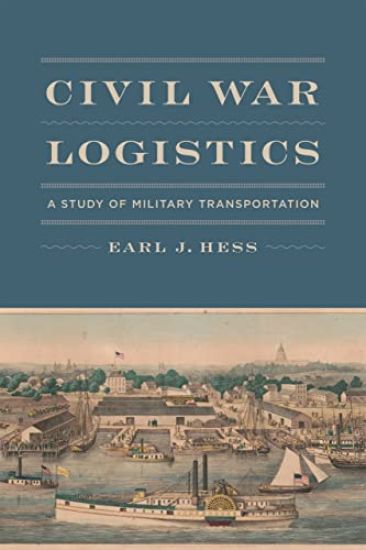
Civil War Logistics

Civil War Logistics

Earl J. Hess

LOUISIANA STATE UNIVERSITY PRESS
2026
pokkari
Winner of the Eugene Feit Award in Civil War Studies by the New York Military Affairs Symposium During the Civil War, neither the Union nor the Confederate army could have operated without effective transportation systems. Moving men, supplies, and equipment required coordination on a massive scale, and Earl J. Hess's Civil War Logistics offers the first comprehensive analysis of this vital process. Utilizing an enormous array of reports, dispatches, and personal accounts by quartermasters involved in transporting war materials, Hess reveals how each conveyance system operated as well as the degree to which both armies accomplished their logistical goals. In a society just realizing the benefits of modern travel technology, both sides of the conflict faced challenges in maintaining national and regional lines of transportation. Union and Confederate quartermasters used riverboats, steamers, coastal shipping, railroads, wagon trains, pack trains, cattle herds, and their soldiers in the long and complicated chain that supported the military operations of their forces. Soldiers in blue and gray alike tried to destroy the transportation facilities of their enemy, firing on river boats and dismantling rails to disrupt opposing supply lines while defending their own means of transport. According to Hess, Union logistical efforts proved far more successful than Confederate attempts to move and supply its fighting forces, due mainly to the North's superior administrative management and willingness to seize transportation resources when needed. As the war went on, the Union's protean system grew in complexity, size, and efficiency, while that of the Confederates steadily declined in size and effectiveness until it hardly met the needs of its army. Indeed, Hess concludes that in its use of all types of military transportation, the Federal government far surpassed its opponent and thus laid the foundation for Union victory in the Civil War.
Civil War Cavalry

Civil War Cavalry

Earl J. Hess

LOUISIANA STATE UNIVERSITY PRESS
2025
sidottu
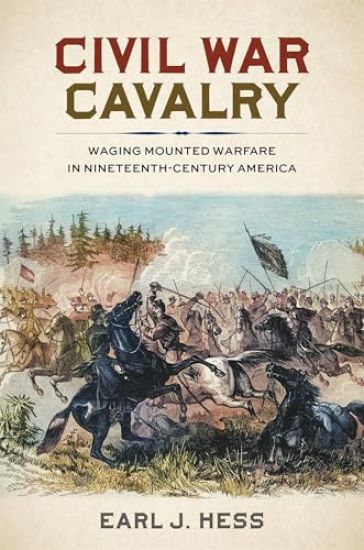
The Civil War produced the largest cavalry force ever raised in American history. In Civil War Cavalry, Earl J. Hess examines that force comprehensively and from new perspectives, challenging standard views of the war's mounted arm. Hess surveys the organization, training, administration, arming, and mounting of cavalry units and examines mounted troops' tactical formations and maneuvers. He addresses the nature of cavalry operations, discussing the mounted charge, dismounted fighting, long-distance raids, the varied types of weapons used by troopers, and the difficulty of supplying horses. Hess also brings concepts from the burgeoning field of animal history to argue that cavalry mounts exercised a degree of agency in shaping their role in the large military machine. Civil War Cavalry is a sweeping and innovative history, establishing a new criterion for understanding how Americans waged mounted warfare in the mid-nineteenth century.
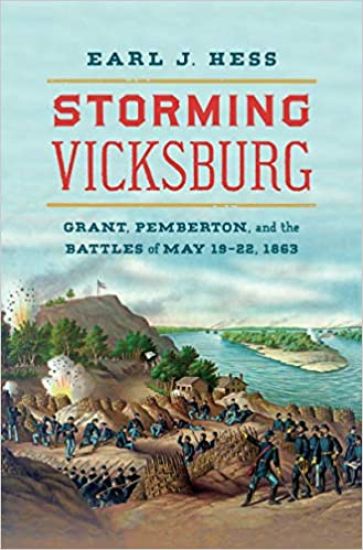
Storming Vicksburg

Storming Vicksburg

Earl J. Hess

THE UNIVERSITY OF NORTH CAROLINA PRESS
2024
pokkari
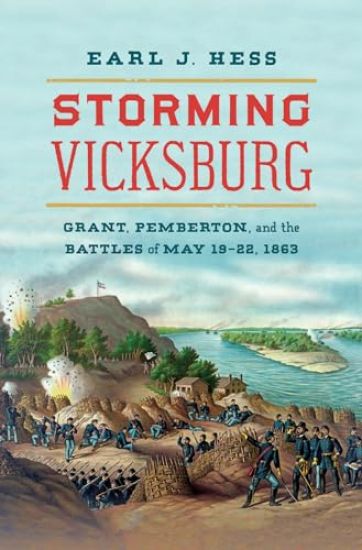
The most overlooked phase of the Union campaign to capture Vicksburg, Mississippi, was the time period from May 18 to May 25, 1863, when Ulysses S. Grant closed in on the city and attempted to storm its defenses. Federal forces mounted a limited attack on May 19 and failed to break through Confederate lines. After two days of preparation, Grant's forces mounted a much larger assault. Although the Army of the Tennessee had defeated Confederates under John C. Pemberton at Champion Hill on May 16 and Big Black River on May 17, the defenders yet again repelled Grant's May 22 attack. The Gibraltar of the Confederacy would not fall until a six-week siege ended with Confederate surrender on July 4. In Storming Vicksburg, military historian Earl J. Hess reveals how a combination of rugged terrain, poor coordination, and low battlefield morale among Union troops influenced the result of the largest attack mounted by Grant's Army of the Tennessee. Using definitive research in unpublished personal accounts and other underutilized archives, Hess makes clear that events of May 19–22 were crucial to the Vicksburg campaign's outcome and shed important light on Grant's generalship, Confederate defensive strategy, and the experience of common soldiers as an influence on battlefield outcomes.
Civil War Infantry Tactics

Civil War Infantry Tactics

Earl J. Hess

LOUISIANA STATE UNIVERSITY PRESS
2023
pokkari
For decades, military historians have argued that the introduction of the rifle musket-with a range five times longer than that of the smoothbore musket-made the shoulder-to-shoulder formations of linear tactics obsolete. Author Earl J. Hess challenges this deeply entrenched assumption. He contends that long-range rifle fire did not dominate Civil War battlefields or dramatically alter the course of the conflict because soldiers had neither the training nor the desire to take advantage of the musket rifle's increased range. Drawing on the drill manuals available to officers and a close reading of battle reports, Civil War Infantry Tactics demonstrates that linear tactics provided the best formations and maneuvers to use with the single-shot musket, whether rifle or smoothbore. The linear system was far from an outdated relic that led to higher casualties and prolonged the war. Indeed, regimental officers on both sides of the conflict found the formations and maneuvers in use since the era of the French Revolution to be indispensable to the survival of their units on the battlefield. The training soldiers received in this system, combined with their extensive experience in combat, allowed small units a high level of articulation and effectiveness. Unlike much military history that focuses on grand strategies, Hess zeroes in on formations and maneuvers (or primary tactics), describing their purpose and usefulness in regimental case studies, and pinpointing which of them were favorites of unit commanders in the field. The Civil War was the last conflict in North America to see widespread use of the linear tactical system, and Hess convincingly argues that the war also saw the most effective tactical performance yet in America's short history.
Civil War Torpedoes and the Global Development of Landmine Warfare
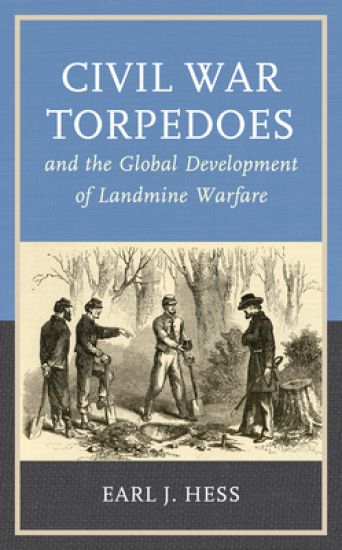
Civil War Torpedoes examines the history of landmine development and use in the Civil War and beyond. The author organizes his scholarship around three thematic elements: tactics, technology, and morality. Hess uses multiple archival sources to tell a compelling narrative, one that stresses not only the tactical and technological challenges faced by torpedo pioneers but one that also considers the moral stigma most contemporaries attached to this new weapon of war.
Civil War Torpedoes and the Global Development of Landmine Warfare
Civil War Torpedoes examines the history of landmine development and use in the Civil War and beyond. The author organizes his scholarship around three thematic elements: tactics, technology, and morality. Hess uses multiple archival sources to tell a compelling narrative, one that stresses not only the tactical and technological challenges faced by torpedo pioneers but one that also considers the moral stigma most contemporaries attached to this new weapon of war.
Civil War Field Artillery

Civil War Field Artillery

Earl J. Hess

LOUISIANA STATE UNIVERSITY PRESS
2022
sidottu
The American Civil War saw the creation of the largest, most potent artillery force ever deployed in a conflict fought in the Western Hemisphere. It was as sizable and powerful as any raised in prior European wars. Moreover, Union and Confederate artillery included the largest number of rifled pieces fielded in any conflagration in the world up to that point. Earl J. Hess's Civil War Field Artillery is the first comprehensive general history of the artillery arm that supported infantry and cavalry in the conflict. Based on deep and expansive research, it serves as an exhaustive examination with abundant new interpretations that reenvision the Civil War's military. Hess explores the major factors that affected artillerists and their work, including the hardware, the organization of artillery power, relationships between artillery officers and other commanders, and the influence of environmental factors on battlefield effectiveness. He also examines the lives of artillerymen, the use of artillery horses, manpower replacement practices, effects of the widespread construction of field fortifications on artillery performance, and the problems of resupplying batteries in the field. In one of his numerous reevalutions, Hess suggests that the early war practice of dispersing guns and assigning them to infantry brigades or divisions did not inhibit the massing of artillery power on the battlefield, and that the concentration system employed during the latter half of the conflict failed to produce a greater concentration of guns. In another break with previous scholarship, he shows that the efficacy of fuzes to explode long-range ordnance proved a problem that neither side was able to resolve during the war. Indeed, cumulative data on the types of projectiles fired in battle show that commanders lessened their use of the new long-range exploding ordnance due to bad fuzes and instead increased their use of solid shot, the oldest artillery projectile in history.
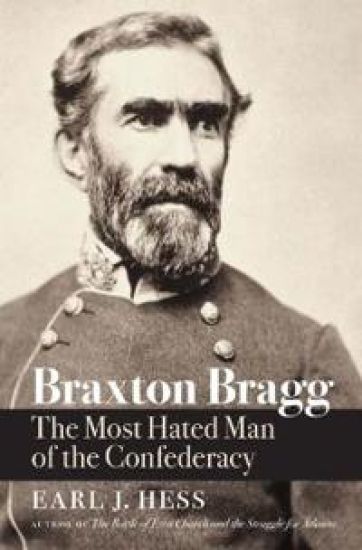
Braxton Bragg

Braxton Bragg

Earl J. Hess

The University of North Carolina Press
2021
pokkari
As a leading Confederate general, Braxton Bragg (1817-1876) earned a reputation for incompetence, for wantonly shooting his own soldiers, and for losing battles. This public image established him not only as a scapegoat for the South's military failures but also as the chief whipping boy of the Confederacy. The strongly negative opinions of Bragg's contemporaries have continued to color assessments of the general's military career and character by generations of historians. Rather than take these assessments at face value, Earl J. Hess's biography offers a much more balanced account of Bragg, the man and the officer. While Hess analyzes Bragg's many campaigns and battles, he also emphasizes how his contemporaries viewed his successes and failures and how these reactions affected Bragg both personally and professionally. The testimony and opinions of other members of the Confederate army--including Bragg's superiors, his fellow generals, and his subordinates--reveal how the general became a symbol for the larger military failures that undid the Confederacy. By connecting the general's personal life to his military career, Hess positions Bragg as a figure saddled with unwarranted infamy and humanizes him as a flawed yet misunderstood figure in Civil War history.
Storming Vicksburg

Storming Vicksburg

Earl J. Hess

The University of North Carolina Press
2020
sidottu
The most overlooked phase of the Union campaign to capture Vicksburg, Mississippi, was the time period from May 18 to May 25, 1863, when Ulysses S. Grant closed in on the city and attempted to storm its defenses. Federal forces mounted a limited attack on May 19 and failed to break through Confederate lines. After two days of preparation, Grant's forces mounted a much larger assault. Although the Army of the Tennessee had defeated Confederates under John C. Pemberton at Champion Hill on May 16 and Big Black River on May 17, the defenders yet again repelled Grant's May 22 attack. The Gibraltar of the Confederacy would not fall until a six-week siege ended with Confederate surrender on July 4. In Storming Vicksburg, military historian Earl J. Hess reveals how a combination of rugged terrain, poor coordination, and low battlefield morale among Union troops influenced the result of the largest attack mounted by Grant's Army of the Tennessee. Using definitive research in unpublished personal accounts and other underutilized archives, Hess makes clear that events of May 19 - 22 were crucial to the Vicksburg campaign's outcome and shed important light on Grant's generalship, Confederate defensive strategy, and the experience of common soldiers as an influence on battlefield outcomes.