Kirjojen hintavertailu. Mukana 12 657 676 kirjaa ja 12 kauppaa.
Kirjailija
Edward Lear
Kirjat ja teokset yhdessä paikassa: 127 kirjaa, julkaisuja vuosilta 1832-2025, suosituimpien joukossa Selected Poems: The Best Nonsense Verse. Vertaile teosten hintoja ja tarkista saatavuus suomalaisista kirjakaupoista.
Reprint of the original, first published in 1871. The publishing house Anatiposi publishes historical books as reprints. Due to their age, these books may have missing pages or inferior quality. Our aim is to preserve these books and make them available to the public so that they do not get lost.
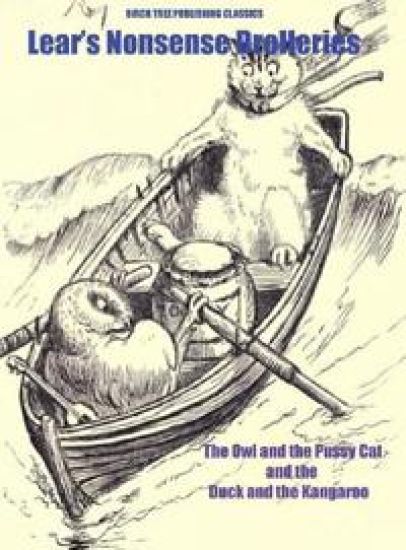
Nonsense Drolleries; The Owl & The Pussy-Cat-The Duck & The Kangaroo., has been regarded as significant work throughout human history, and in order to ensure that this work is never lost, we have taken steps to ensure its preservation by republishing this book in a contemporary format for both current and future generations. This entire book has been retyped, redesigned, and reformatted. Since these books are not made from scanned copies, the text is readable and clear.
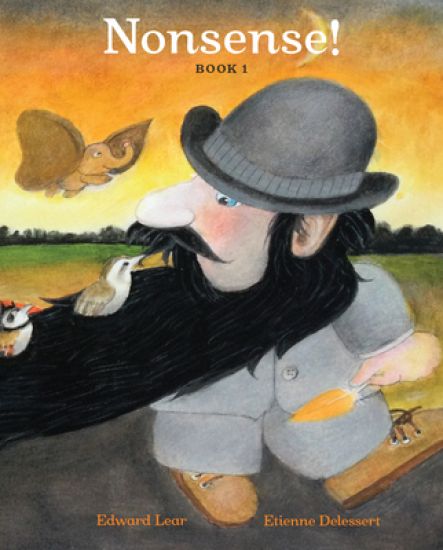
Although he may have wished to be remembered as a more "serious" writer, the 19th-century English poet Edward Lear left an important legacy of limericks to the canon of nonsense verse. One of Lear's most famous five-line poems, "There was an Old Man with a beard," here receives full illustrative treatment from Swiss-American artist Etienne Delessert, whose work celebrates and seeks to expand the imaginative capacities of children. Intended to set the stage for a forthcoming series of standalone poems, Nonsense Book One will whet young readers' appetites for further adventures in rhyme.
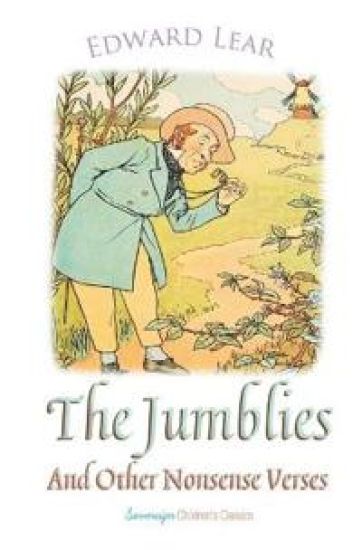
This Book "The Jumblies, and Other Nonsense Verses" has been considered important throughout the human history, and so that this work is never forgotten we have made efforts in its preservation by republishing this book in a modern format for present and future generations. This whole book has been reformatted, retyped and designed. These books are not made of scanned copies of their original work and hence the text is clear and readable.
I sina längre dikter var den brittiske nonsensmästaren Edward Lear uppfinningsrik, komisk och melankolisk. Inom den versform som han framför allt odlade, limericken, är han vildare och mer absurd, och innehållet i dikterna, som Lear skrev direkt för barn, kom att stå i ett intressant spänningsförhållande till limerickens bestämda, femradiga form. Magnus Hedlunds nya, kongeniala översättning av 129 limerickar gör full rättvisa åt Lears egenartade fantasi och tillsätter en dos av översättarens egen underskruvade göteborgshumor. Lear illustrerade själv sina limerickar med spretiga, underfundiga tuschteckningar, och dessa finns naturligtvis med i ellerströms svenska utgåva.
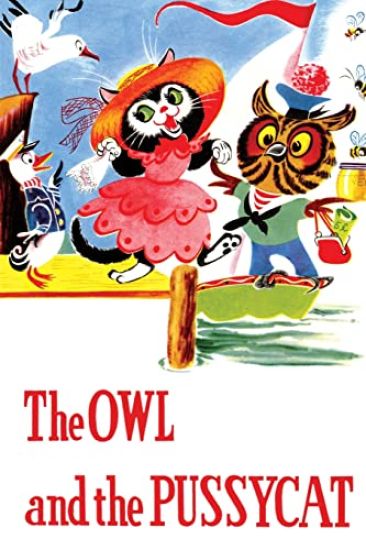
English artist, illustrator, and poet Edward Lear is well known for his the volumes of limericks and nonsense poems that he published beginning with his first "A Book of Nonsense" in 1846. These clever and memorable limericks and poems were instantly popular when they first appeared and Lear followed his first volume with several more works of nonsense poetry over the course of his career. These "nonsense" works turn ordinary language and literary expectations on their head with made up words and strange and meaningless phrases. While limericks usually consist of five lines and bawdy topics, Lear's limericks vary in length and are never scandalous. Instead, they are charming and creative, combining words and images into surprising and unexpected verses. "The Owl and the Pussycat", which was first published in 1871 in "Nonsense Songs, Stories, Botany, and Alphabets", is a charming example of Lear's whimsical poetry. Also included in this volume are "The Pobble who has No Toes" and "The Quangle Wangle's Hat", all charmingly illustrated by Margaret Jervis. This edition is printed on premium acid-free paper and reproduces in full color these illustrated versions of Lear's poems.
Nonsense books is an unchanged, high-quality reprint of the original edition of 1888. Hansebooks is editor of the literature on different topic areas such as research and science, travel and expeditions, cooking and nutrition, medicine, and other genres. As a publisher we focus on the preservation of historical literature. Many works of historical writers and scientists are available today as antiques only. Hansebooks newly publishes these books and contributes to the preservation of literature which has become rare and historical knowledge for the future.
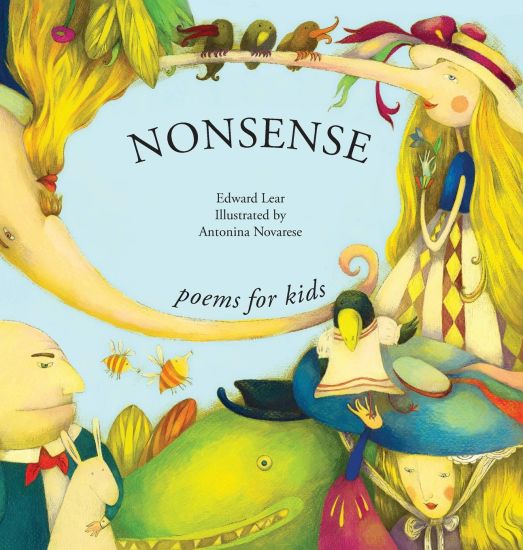
Do you want your child to enjoyIntroduce Lear's all-time classic poetry to your little one. Meet an Old Man with a beardHilarious, whimsical, and fun to read, this colourful picture book is designed especially for young children. With its engaging illustrations, full of playful characters and humour, this picturebook is sure to become a favorite among little ones. excellent for young readers ages 5 to 8 large and easy-to-read font full-page ideal gift for various occasions If you are looking for an educating and entertaining book for your child, you need to add this to your home library.
Do you want your child to enjoyIntroduce Lear's all-time classic poetry to your little one. Meet an Old Man with a beardHilarious, whimsical, and fun to read, this colourful picture book is designed especially for young children. With its engaging illustrations, full of playful characters and humour, this picturebook is sure to become a favorite among little ones. excellent for young readers ages 5 to 8 large and easy-to-read font full-page ideal gift for various occasions If you are looking for an educating and entertaining book for your child, you need to add this to your home library.
Edward Lear was an English artist, illustrator, author, and poet, renowned for his literary nonsense, in poetry and prose, and especially his limericks, a form that he popularized.Lear's nonsense works are distinguished by a facility of verbal invention and a poet's delight in the sounds of words, both real and imaginary. A stuffed rhinoceros becomes a "diaphanous doorscraper." A "blue Boss-Woss" plunges into "a perpendicular, spicular, orbicular, quadrangular, circular depth of soft mud." His heroes are Quangle-Wangles, Pobbles, and Jumblies. His most famous piece of verbal invention, a "runcible spoon" occurs in the closing lines of The Owl and the Pussycat, and is now found in many English dictionaries.
Edward Lear was an English artist, illustrator, author, and poet, renowned for his literary nonsense, in poetry and prose, and especially his limericks, a form that he popularized.Lear's nonsense works are distinguished by a facility of verbal invention and a poet's delight in the sounds of words, both real and imaginary. A stuffed rhinoceros becomes a "diaphanous doorscraper." A "blue Boss-Woss" plunges into "a perpendicular, spicular, orbicular, quadrangular, circular depth of soft mud." His heroes are Quangle-Wangles, Pobbles, and Jumblies. His most famous piece of verbal invention, a "runcible spoon" occurs in the closing lines of The Owl and the Pussycat, and is now found in many English dictionaries.
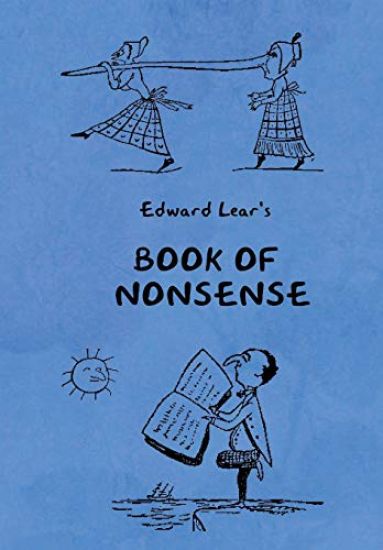
Book of Nonsense by Edward Lear. Edward Lear was an English artist, illustrator, musician, author and poet, and is known now mostly for his literary nonsense in poetry and prose and especially his limericks, a form he popularised. His principal areas of work as an artist were threefold: as a draughtsman employed to illustrate birds and animals; making coloured drawings during his journeys, which he reworked later, sometimes as plates for his travel books; as a (minor) illustrator of Alfred, Lord Tennyson's poems. He published four settings in 1853, five in 1859, and three in 1860. Lear's were the only musical settings that Tennyson approved of. Lear also composed music for many of his nonsense songs, including "The Owl and the Pussy-cat," but only two of the scores have survived, the music for "The Courtship of the Yonghy-Bonghy-Bo" and "The Pelican Chorus". While he never played professionally, he did perform his own nonsense songs and his settings of others' poetry at countless social gatherings, sometimes adding his own lyrics (as with the song "The Nervous Family"), and sometimes replacing serious lyrics with nursery rhymes.