Kirjojen hintavertailu. Mukana 12 657 676 kirjaa ja 12 kauppaa.
Kirjailija
Edward Lear
Kirjat ja teokset yhdessä paikassa: 127 kirjaa, julkaisuja vuosilta 1832-2025, suosituimpien joukossa Selected Poems: The Best Nonsense Verse. Vertaile teosten hintoja ja tarkista saatavuus suomalaisista kirjakaupoista.
Edward Lear (1812 - 1888) was an English writer of nonsense, the most famous piece of which is The Owl and the Pussycat. He is also credited with popularizing the limerick, though there was some speculation as to whether his patron, the Earl of Derby, simply used Lear as a pseudonym for his own writings. Lear was also a successful illustrator and even spent some time tutoring Queen Victoria in drawing before his improper behaviour had him thrown out of court.
Edward Lear (12 or 13 May 1812 - 29 January 1888) was an English artist, illustrator, musician, author and poet, and is known now mostly for his literary nonsense in poetry and prose and especially his limericks, a form he popularised. His principal areas of work as an artist were threefold: as a draughtsman employed to illustrate birds and animals; making coloured drawings during his journeys, which he reworked later, sometimes as plates for his travel books; as a (minor) illustrator of Alfred Tennyson's poems. As an author, he is known principally for his popular nonsense collections of poems, songs, short stories, botanical drawings, recipes, and alphabets. He also composed and published twelve musical settings of Tennyson's poetry. Early years: Lear was born into a middle-class family at Holloway, North London, the penultimate of twenty-one children (and youngest to survive) of Ann Clark Skerrett and Jeremiah Lear, a stockbroker formerly working for the family sugar refining business.He was raised by his eldest sister, also named Ann, 21 years his senior. Jeremiah Lear ended up defaulting to the London Stock Exchange in the economic upheaval following the Napoleonic Wars; owing to the family's now more limited finances, Lear and his sister were required to leave the family home, Bowmans Lodge, and live together when he was aged four. Ann doted on Edward and continued to act as a mother for him until her death, when he was almost 50 years of age. Lear suffered from lifelong health afflictions. From the age of six he suffered frequent grand mal epileptic seizures, and bronchitis, asthma, and during later life, partial blindness. Lear experienced his first seizure at a fair near Highgate with his father. The event scared and embarrassed him. Lear felt lifelong guilt and shame for his epileptic condition. His adult diaries indicate that he always sensed the onset of a seizure in time to remove himself from public view. When Lear was about seven years old he began to show signs of depression, possibly due to the instability of his childhood. He suffered from periods of severe melancholia which he referred to as "the Morbids." Artist: Lear was already drawing "for bread and cheese" by the time he was aged 16 and soon developed into a serious "ornithological draughtsman" employed by the Zoological Society and then from 1832 to 1836 by the Earl of Derby, who kept a private menagerie at his estate, Knowsley Hall. He was the first major bird artist to draw birds from real live birds, instead of skins. Lear's first publication, published when he was 19 years old, was Illustrations of the Family of Psittacidae, or Parrots in 1830.One of the greatest ornithological artists of his era, he taught Elizabeth Gould whilst also contributing to John Gould's works and was compared favourably with the naturalist John James Audubon. Unfortunately his eyesight deteriorated too much to work with such precision on the fine drawings and etchings of plates used in lithography, thus he turned to landscape painting and travel. Among other travels, he visited Greece and Egypt during 1848-49, and toured India during 1873-75, including a brief detour to Ceylon. While travelling he produced large quantities of coloured wash drawings in a distinctive style, which he converted later in his studio into oil and watercolour paintings, as well as prints for his books. His landscape style often shows views with strong sunlight, with intense contrasts of colour. Between 1878 and 1883 Lear spent his summers on Monte Generoso, a mountain on the border between the Swiss canton of Ticino and the Italian region of Lombardy. His oil painting The Plains of Lombardy from Monte Generoso is in the Ashmolean Museum in the English city of Oxford.Throughout his life he continued to paint seriously. He had a lifelong ambition to illustrate Tennyson's poems; near the end of his life a volume with a small number of illustrations was published...................
Edward Lear (12 or 13 May 1812 - 29 January 1888) was an English artist, illustrator, musician, author and poet, and is known now mostly for his literary nonsense in poetry and prose and especially his limericks, a form he popularised. His principal areas of work as an artist were threefold: as a draughtsman employed to illustrate birds and animals; making coloured drawings during his journeys, which he reworked later, sometimes as plates for his travel books; as a (minor) illustrator of Alfred Tennyson's poems. As an author, he is known principally for his popular nonsense collections of poems, songs, short stories, botanical drawings, recipes, and alphabets. He also composed and published twelve musical settings of Tennyson's poetry. Early years: Lear was born into a middle-class family at Holloway, North London, the penultimate of twenty-one children (and youngest to survive) of Ann Clark Skerrett and Jeremiah Lear, a stockbroker formerly working for the family sugar refining business.He was raised by his eldest sister, also named Ann, 21 years his senior. Jeremiah Lear ended up defaulting to the London Stock Exchange in the economic upheaval following the Napoleonic Wars; owing to the family's now more limited finances, Lear and his sister were required to leave the family home, Bowmans Lodge, and live together when he was aged four. Ann doted on Edward and continued to act as a mother for him until her death, when he was almost 50 years of age. Lear suffered from lifelong health afflictions. From the age of six he suffered frequent grand mal epileptic seizures, and bronchitis, asthma, and during later life, partial blindness. Lear experienced his first seizure at a fair near Highgate with his father. The event scared and embarrassed him. Lear felt lifelong guilt and shame for his epileptic condition. His adult diaries indicate that he always sensed the onset of a seizure in time to remove himself from public view. When Lear was about seven years old he began to show signs of depression, possibly due to the instability of his childhood. He suffered from periods of severe melancholia which he referred to as "the Morbids." Artist: Lear was already drawing "for bread and cheese" by the time he was aged 16 and soon developed into a serious "ornithological draughtsman" employed by the Zoological Society and then from 1832 to 1836 by the Earl of Derby, who kept a private menagerie at his estate, Knowsley Hall. He was the first major bird artist to draw birds from real live birds, instead of skins. Lear's first publication, published when he was 19 years old, was Illustrations of the Family of Psittacidae, or Parrots in 1830.One of the greatest ornithological artists of his era, he taught Elizabeth Gould whilst also contributing to John Gould's works and was compared favourably with the naturalist John James Audubon. Unfortunately his eyesight deteriorated too much to work with such precision on the fine drawings and etchings of plates used in lithography, thus he turned to landscape painting and travel. Among other travels, he visited Greece and Egypt during 1848-49, and toured India during 1873-75, including a brief detour to Ceylon. While travelling he produced large quantities of coloured wash drawings in a distinctive style, which he converted later in his studio into oil and watercolour paintings, as well as prints for his books. His landscape style often shows views with strong sunlight, with intense contrasts of colour. Between 1878 and 1883 Lear spent his summers on Monte Generoso, a mountain on the border between the Swiss canton of Ticino and the Italian region of Lombardy. His oil painting The Plains of Lombardy from Monte Generoso is in the Ashmolean Museum in the English city of Oxford.Throughout his life he continued to paint seriously. He had a lifelong ambition to illustrate Tennyson's poems; near the end of his life a volume with a small number of illustrations was published.........
More Nonsense - pictures, rhymes, botany, etc. is an unchanged, high-quality reprint of the original edition of 1872. Hansebooks is editor of the literature on different topic areas such as research and science, travel and expeditions, cooking and nutrition, medicine, and other genres. As a publisher we focus on the preservation of historical literature. Many works of historical writers and scientists are available today as antiques only. Hansebooks newly publishes these books and contributes to the preservation of literature which has become rare and historical knowledge for the future.
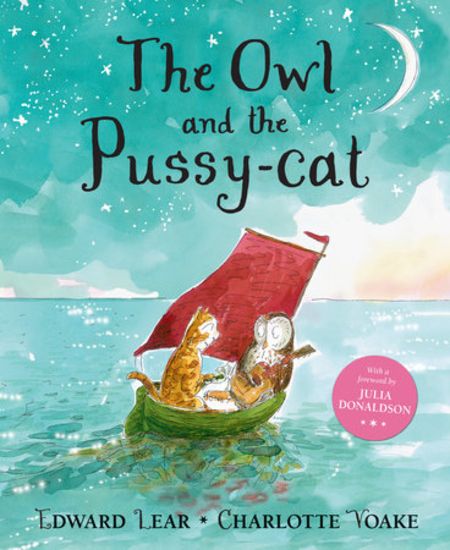
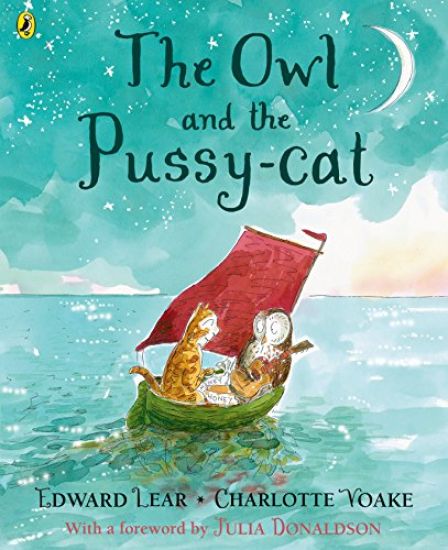
Follow the adventures of the Owl and the Pussy-cat in a beautifully illustrated new edition of the beloved classic. Edward Lear's lyrical rhyme about an unusual couple who sail far, far away has delighted and captivated readers for generations. With expressive illustrations by Charlotte Voake and a forward by master storyteller Julia Donaldson, this is a book to be treasured by Lear fans young and old.
Edward Lear's classic poem, The Owl and the Pussy-cat, beautifully illustrated by Charlotte Voake and introduced with a foreword by Julia DonaldsonThe Owl and the Pussy-cat went to sea In a beautiful pea-green boat...Edward Lear's classic poem has delighted readers of all ages for generations. It is given new life by Charlotte Voake's exquisite illustrations in this beautiful new edition. Introduced by a foreword from world-renowned children's author and Lear devotee, Julia Donaldson, this is a book to be treasured by Lear fans both old and young.Be sure to look out for Julia Donaldson's sequel to this much-loved poem, The Further Adventures of the Owl and the Pussy-cat.