Kirjojen hintavertailu. Mukana 12 390 323 kirjaa ja 12 kauppaa.
Kirjailija
Edward O. Wilson
Kirjat ja teokset yhdessä paikassa: 75 kirjaa, julkaisuja vuosilta 1971-2021, suosituimpien joukossa E. O. Wilson: Biophilia, The Diversity Of Life, Naturalist (loa #340). Vertaile teosten hintoja ja tarkista saatavuus suomalaisista kirjakaupoista.
Encounter some of the most beautiful creatures in Costa Rica in Piotr Naskrecki's Hidden Kingdom. This book is a visual journey into the world of the insects and their relatives that dominate all terrestrial habitats in Costa Rica through their sheer numbers, biomass, and the ecological functions they perform. Naskrecki's stunning photographs serve as both a tool to help identify the insects that a visitor to Costa Rica is likely to encounter, and as an illustration of their diverse behaviors and ecological roles. Through high-impact imagery and engaging narrative about insects and their evolutionary history, this book, an ideal companion on a visit to Costa Rica, reinforces or awakens in the readers their innate curiosity about the less appreciated elements of life on Earth. Each section of the book presents fascinating and useful facts about Costa Rica's insects. Naskrecki's photographs show the variety of morphological adaptations, survival strategies, and interlocking roles that insects play in tropical ecosystems.
In this profound and lyrical book, one of our most celebrated biologists offers a sweeping examination of the relationship between the humanities and the sciences: what they offer to each other, how they can be united, and where they still fall short. Both endeavours, Edward O. Wilson reveals, have their roots in human creativity--the defining trait of our species.Reflecting on the deepest origins of language, storytelling, and art, Wilson demonstrates how creativity began not ten thousand years ago, as we have long assumed, but over one hundred thousand years ago in the Paleolithic age. Chronicling this evolution of creativity from primate ancestors to humans, The Origins of Creativity shows how the humanities, spurred on by the invention of language, have played a largely unexamined role in defining our species. And in doing so, Wilson explores what we can learn about human nature from a surprising range of creative endeavors--the instinct to create gardens, the use of metaphors and irony in speech, and the power of music and song.Our achievements in science and the humanities, Wilson notes, make us uniquely advanced as a species, but also give us the potential to be supremely dangerous, most worryingly in our abuse of the planet. The humanities in particular suffer from a kind of anthropomorphism, encumbered by a belief that we are the only species among millions that seem to matter, yet Wilson optimistically reveals how researchers will have to address this parlous situation by pushing further into the realm of science, especially fields such as evolutionary biology, neuroscience, and anthropology.With eloquence and humanity, Wilson calls for a transformational "Third Enlightenment," in which the blending of these endeavors will give us a deeper understanding of the human condition and our crucial relationship with the natural world.
History is not a prerogative of the human species, Edward O. Wilson declares in Half-Earth. Demonstrating that we blindly ignore the histories of millions of other species, Wilson warns us that a point of no return is imminent. Refusing to believe that our extinction is predetermined, Wilson has written Half-Earth as a cri de coeur, proposing that the only solution to our impending “Sixth Extinction” is to increase the area of natural reserves to half the surface of the earth. Half-Earth is a resounding conclusion to the best-selling trilogy begun by the “splendid” (Financial Times) The Social Conquest of Earth (ISBN 978 0 87140 363 6) and “engaging and highly readable” (Times Higher Education) The Meaning of Human Existence (ISBN 978 0 87140 100 7).
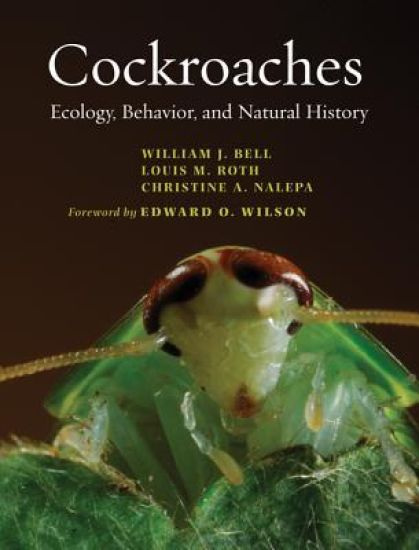
The cockroach is truly an evolutionary wonder. This definitive volume provides a complete overview of suborder Blattaria, highlighting the diversity of these amazing insects in their natural environments. Beginning with a foreword by Edward O. Wilson, the book explores the fascinating natural history and behavior of cockroaches, describing their various colors, sizes, and shapes, as well as how they move on land, in water, and through the air. In addition to habitat use, diet, reproduction, and behavior, Cockroaches covers aspects of cockroach biology, such as the relationship between cockroaches and microbes, termites as social cockroaches, and the ecological impact of the suborder. With over 100 illustrations, an expanded glossary, and an invaluable set of references, this work is destined to become the classic book on the Blattaria. Students and research entomologists can mine each chapter for new ideas, new perspectives, and new directions for future study.
History is not a prerogative of the human species, Edward O. Wilson declares in Half-Earth. Demonstrating that we blindly ignore the histories of millions of other species, Wilson warns us that a point of no return is imminent. Refusing to believe that our extinction is predetermined, Wilson has written Half-Earth as a cri de coeur, proposing that the only solution to our impending “Sixth Extinction” is to increase the area of natural reserves to half the surface of the earth. Half-Earth is a resounding conclusion to the best-selling trilogy begun by the “splendid” (Financial Times) The Social Conquest of Earth (ISBN 978 0 87140 363 6) and “engaging and highly readable” (Times Higher Education) The Meaning of Human Existence (ISBN 978 0 87140 100 7).
Miten ihmiskunta sai alkunsa? Miksi ihmisiä ylipäätään on olemassa? Mihin olemme menossa - ja miksi?Kirjassaan Mitä ihmisen olemassaolo merkitsee biologi Edward O. Wilson pohtii, mikä tekee ihmisestä lajina poikkeuksellisen. Hän tarkastelee kysymystä sekä luonnontieteellisestä että filosofisesta näkökulmasta ja esittää käsityksensä siitä, mistä olemme tulossa ja mihin olemme menossa. Hän pureutuu aiheisiin, joita on pitkänuransa aikana pohtinut toistuvasti: ympäristön tilaan, ihmisen käyttäytymisen biologiseen perustaan, luonnontieteiden ja ihmistieteiden yhteen saattamiseen sekä uskonnon myrkylliseen vaikutukseen.Ihmiskunta on muutoksen kynnyksellä. Teknologinen ja tieteellinen kehitys edistyvät harppauksin. Ilmastonmuutos panee elämän ehdot uusiksi. Mikään ei ole niin kuin ennen.Paitsi ihminen itse: Homo sapiens, kohtalaisen älykäs, aisteiltaan vajavainen ja itsestään loputtoman kiinnostunut olento. Evoluutio on suonut tälle olennolle kyvyn keksiä uutta ja ilmaista itseään. Ihmisessä tiedollinen etevyys yhdistyy hengen luovuuteen. Ratkaisu polttaviin ongelmiin on mahdollinen.Edward O. Wilson (1929-2021) Harvardin yliopiston emeritusprofessori ja yksi merkittävimmistä nykybiologeista, tunnetaan arvostettuna muurahaistutkijana sekä sosiobiologian perustajana. Myös luonnon monimuotoisuus (biodiversiteetti) on yksi hänen keskeisistä kiinnostuksen kohteistaan. Wilsonille on myönnetty Pulitzer-palkinto kahdesti, ja Time-lehti on valinnut hänet Yhdysvaltojen 25 vaikutusvaltaisimman ihmisen joukkoon.
Searching for meaning in what Nietzsche called "the rainbow colours" around the outer edges of knowledge and imagination, Edward O. Wilson bridges science and philosophy to create a twenty-first-century treatise on human existence. Once criticised for his over-reliance on genetics, Wilson unfurls his most expansive and advanced theories on human behaviour. Whether attempting to explicate "the Riddle of the Human Species", warning of "the Collapse of Biodiversity" or creating a plausible "Portrait of E.T.", Wilson believes that humanity holds a special position in the known universe. Alarmed, however, that we are about to abandon natural selection by redesigning biology and human nature as we wish them, Wilson concludes that advances in science and technology bring us our greatest moral dilemma in millennia.
Searching for meaning in what Nietzsche called "the rainbow colours" around the outer edges of knowledge and imagination, Edward O. Wilson bridges science and philosophy to create a twenty-first-century treatise on human existence. Once criticised for his over-reliance on genetics, Wilson unfurls his most expansive and advanced theories on human behaviour. Whether attempting to explicate "the Riddle of the Human Species", warning of "the Collapse of Biodiversity" or creating a plausible "Portrait of E.T.", Wilson believes that humanity holds a special position in the known universe. Alarmed, however, that we are about to abandon natural selection by redesigning biology and human nature as we wish them, Wilson concludes that advances in science and technology bring us our greatest moral dilemma in millennia.
Edward O. Wilson has distilled sixty years of teaching into a book for students, young and old. Reflecting on his coming-of-age in the South as a Boy Scout and a lover of ants and butterflies, Wilson threads these twenty-one letters, each richly illustrated, with autobiographical anecdotes that illuminate his career—both his successes and his failures—and his motivations for becoming a biologist. At a time in human history when our survival is more than ever linked to our understanding of science, Wilson insists that success in the sciences does not depend on mathematical skill, but rather a passion for finding a problem and solving it. From the collapse of stars to the exploration of rain forests and the oceans’ depths, Wilson instills a love of the innate creativity of science and a respect for the human being’s modest place in the planet’s ecosystem in his readers.
World Literature Today Editor's Pick "Enchanting...The Poetic Species is a wonderful read in its entirety, short yet infinitely simulating." --MARIA POPOVA, Brain Pickings In this shimmering conversation (the outgrowth of an event co-sponsored by the American Museum of Natural History and Poets House), Edward O. Wilson, renowned scientist and proponent of "consilience" or the unity of knowledge, finds an ardent interlocutor in Robert Hass, whose credo as United States poet laureate was "imagination makes communities." As they explore the many ways that poetry and science enhance each other, they travel from anthills to ancient Egypt and to the heights and depths of human potential. A testament to how science and the arts can join forces to educate and inspire, this book is also a passionate plea for conservation of all the planet's species. Edward O. Wilson, a biologist, naturalist, and bestselling author, has received more than 100 awards from around the world, including the Pulitzer Prize. A professor emeritus at Harvard University, he lives in Lexington, Massachusetts. Robert Hass' poetry is rooted in the landscapes of his native northern California. He has been awarded the MacArthur "Genius" Fellowship, the National Book Critics Circle Award (twice), the Pulitzer Prize, and the National Book Award. He is a professor of English at University of California-Berkeley.
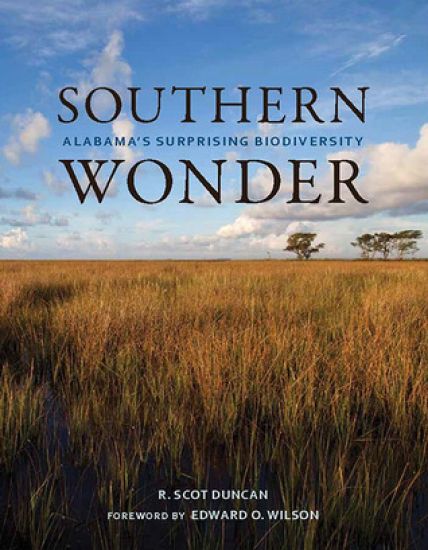
Southern Wonder explores Alabama’s amazing biological diversity, the reasons for the large number of species in the state, and the importance of their preservation.Alabama ranks fifth in the nation in number of species of plants and animals found in the state, surpassed only by the much larger western states of California,Texas, Arizona, and New Mexico. When all the species of birds, trees, mammals, reptiles, amphibians, fishes, wildflowers, dragonflies, tiger beetles, and ants are tallied, Alabama harbors more species than 90 percent of the other states in the United States. Alabamais particularly rich in aquatic biodiversity, leading the nation in species of freshwater fishes, turtles, mussels, crayfish, snails, damselflies, and carnivorous plants. The state also hosts an exceptional number of endemic species?those not found beyond its borders?ranking seventh in the nation with 144 species. The state’s 4,533 species, with more being inventoried and discovered each year, are supported by no less than 64 distinct ecological systems?each a unique blend of soil, water, sunlight, heat, and natural disturbance regimes. Habitats include dry forests, moist forests, swamp forests, sunny prairies, grassy barrens, scorching glades, rolling dunes, and bogs filled with pitcher plants and sundews. The state also includes a region of subterranean ecosystems that are more elaborate and species rich than any other place on the continent.Although Alabama is teeming with life, the state’s prominence as a refuge for plants and animals is poorly appreciated. Even among Alabama’s citizens, few outside a small circle of biologists, advocates, and other naturalists understand the special quality of the state’s natural heritage. R. Scot Duncan rectifies this situation in Southern Wonder by providing a well-written, comprehensive overview that the general public, policy makers, and teachers can understand and use. Readers are taken on an exploratory journey of the state’s varied landscapes?from the Tennessee River Valley to the coastal dunes?and are introduced to remarkable species, such as the cave salamander and the beach mouse. By interweaving the disciplines of ecology, evolution, meteorology, and geology into an accessible whole, Duncan explains clearly why Alabama is so biotically rich and champions efforts for its careful preservation.Published in Cooperation with The Nature Conservancy.
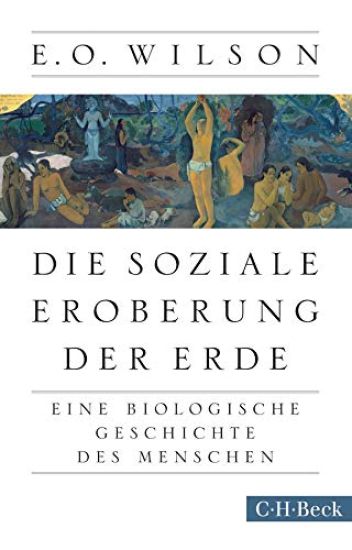
Sparking vigorous debate in the sciences, The Social Conquest of Earth upends “the famous theory that evolution naturally encourages creatures to put family first” (Discover). Refashioning the story of human evolution, Wilson draws on his remarkable knowledge of biology and social behavior to demonstrate that group selection, not kin selection, is the premier driving force of human evolution. In a work that James D. Watson calls “a monumental exploration of the biological origins of the human condition,” Wilson explains how our innate drive to belong to a group is both a “great blessing and a terrible curse” (Smithsonian). Demonstrating that the sources of morality, religion, and the creative arts are fundamentally biological in nature, the renowned Harvard University biologist presents us with the clearest explanation ever produced as to the origin of the human condition and why it resulted in our domination of the Earth’s biosphere.
Edward O. Wilson has distilled sixty years of teaching into a book for students, young and old. Reflecting on his coming-of-age in the South as a Boy Scout and a lover of ants and butterflies, Wilson threads these twenty-one letters, each richly illustrated, with autobiographical anecdotes that illuminate his career—both his successes and his failures—and his motivations for becoming a biologist. At a time in human history when our survival is more than ever linked to our understanding of science, Wilson insists that success in the sciences does not depend on mathematical skill, but rather a passion for finding a problem and solving it. From the collapse of stars to the exploration of rain forests and the oceans’ depths, Wilson instills a love of the innate creativity of science and a respect for the human being’s modest place in the planet’s ecosystem in his readers.
The world's first national park, Yellowstone is a symbol of nature's enduring majesty and the paradigm of protected areas across the globe. But Yellowstone is constantly changing. How we understand and respond to events that are putting species under stress, say the authors of Yellowstone's Wildlife in Transition, will determine the future of ecosystems that were millions of years in the making. With a foreword by the renowned naturalist E. O. Wilson, this is the most comprehensive survey of research on North America's flagship national park available today.Marshaling the expertise of over thirty contributors, Yellowstone's Wildlife in Transition examines the diverse changes to the park's ecology in recent decades. Since its creation in the 1870s, the priorities governing Yellowstone have evolved, from intensive management designed to protect and propagate depleted large-bodied mammals to an approach focused on restoration and preservation of ecological processes. Recognizing the importance of natural occurrences such as fires and predation, this more ecologically informed oversight has achieved notable successes, including the recovery of threatened native species of wolves, bald eagles, and grizzly bears.Nevertheless, these experts detect worrying signs of a system under strain. They identify three overriding stressors: invasive species, private-sector development of unprotected lands, and a warming climate. Their concluding recommendations will shape the twenty-first-century discussion over how to confront these challenges, not only in American parks but for conservation areas worldwide. Highly readable and fully illustrated, Yellowstone's Wildlife in Transition will be welcomed by ecologists and nature enthusiasts alike.
Walter Tschinkel's passion for fire ants has been stoked by over thirty years of exploring the rhythm and drama of Solenopsis invicta's biology. Since South American fire ants arrived in Mobile, Alabama, in the 1940s, they have spread to become one of the most reviled pests in the Sunbelt.In Fire Ants Tschinkel provides not just an encyclopedic overview of S. invicta--how they found colonies, construct and defend their nests, forage and distribute food, struggle among themselves for primacy, and even relocate entire colonies--but a lively account of how research is done, how science establishes facts, and the pleasures and problems of a scientific career. Between chapters detailed enough for experts but readily accessible to any educated reader, "interludes" provide vivid verbal images of the world of fire ants and the people who study them. Early chapters describe the several failed, and heavily politically influenced, eradication campaigns, and later ones the remarkable spread of S. invicta's "polygyne" form, in which nests harbor multiple queens and colonies reproduce by "budding." The reader learns much about ants, the practice of science, and humans' role in the fire ant's North American success.
"Forgotten Grasslands of the South" is the study of one of the biologically richest and most endangered ecosystems in North America. In a seamless blend of science and personal observation, renowned ecologist Reed Noss explains the natural history of southern grasslands, their origin and history, and the physical determinants of grassland distribution, including ecology, soils, landform, and hydrology. In addition to offering fascinating new information about these little-studied ecosystems, Noss demonstrates how natural history is central to the practice of conservation. Although theory and experimentation have recently dominated the field of ecology, ecologists are coming to realise how these distinct approaches are not divergent but complementary, and that pursuing them together can bring greater knowledge and understanding of how the natural world works and how we can best conserve it. This long-awaited work sets a new standard for scientific literature and is essential reading for those who study and work to conserve the grasslands of the South as well as for everyone who is fascinated by the natural world.