Kirjojen hintavertailu. Mukana 12 297 076 kirjaa ja 12 kauppaa.
Kirjailija
Edward O. Wilson
Kirjat ja teokset yhdessä paikassa: 75 kirjaa, julkaisuja vuosilta 1971-2021, suosituimpien joukossa E. O. Wilson: Biophilia, The Diversity Of Life, Naturalist (loa #340). Vertaile teosten hintoja ja tarkista saatavuus suomalaisista kirjakaupoista.
Entranced by Edward O. Wilson’s mesmerizing evocation of his Southern childhood in The Naturalist and Anthill, Alex Harris approached the scientist about collaborating on a book about Wilson’s native world of Mobile, Alabama. Perceiving that Mobile was a city small enough to be captured through a lens yet old enough to have experienced a full epic cycle of tragedy and rebirth, the photographer and the naturalist joined forces to capture the rhythms of this storied Alabama Gulf region through a swirling tango of lyrical words and breathtaking images. With Wilson tracing his family’s history from the Civil War through the Depression—when mule-driven wagons still clogged the roads—to Mobile’s racial and environmental struggles to its cultural triumphs today, and with Harris stunningly capturing the mood of a radically transformed city that has adapted to the twenty-first century, the book becomes a universal story, one that tells us where we all come from and why we are here.
Where did we come from? What are we? Where are we going? In a generational work of clarity and passion, one of our greatest living scientists directly addresses these three fundamental questions of religion, philosophy, and science while “overturning the famous theory that evolution naturally encourages creatures to put family first” (Discover magazine). Refashioning the story of human evolution in a work that is certain to generate headlines, Wilson draws on his remarkable knowledge of biology and social behavior to show that group selection, not kin selection, is the primary driving force of human evolution. He proves that history makes no sense without prehistory, and prehistory makes no sense without biology. Demonstrating that the sources of morality, religion, and the creative arts are fundamentally biological in nature, Wilson presents us with the clearest explanation ever produced as to the origin of the human condition and why it resulted in our domination of the Earth’s biosphere.
"The Behavior Guide to African Mammals" is as different from a conventional field guide as motion pictures are from a snapshot. Whether we are able to look at them face to face, on television, or in the hundreds of illustrations provided here by Daniel Otte, this guide allows us to understand what animals do and what their behavior means. Drawing on his own extensive fieldwork and on the research of many other scientists, Richard Despard Estes describes and explains the behavior of four major groups of mammals. Estes' remarkably informative guide is as up-to-date for the zoologist as it is accessible for the interested onlooker.
Spanning evolutionary science from its inception to its latest findings, from discoveries and data to philosophy and history, this book is the most complete, authoritative, and inviting one-volume introduction to evolutionary biology available. Clear, informative, and comprehensive in scope, Evolution opens with a series of major essays dealing with the history and philosophy of evolutionary biology, with major empirical and theoretical questions in the science, from speciation to adaptation, from paleontology to evolutionary development (evo devo), and concluding with essays on the social and political significance of evolutionary biology today. A second encyclopedic section travels the spectrum of topics in evolution with concise, informative, and accessible entries on individuals from Aristotle and Linneaus to Louis Leakey and Jean Lamarck; from T. H. Huxley and E. O. Wilson to Joseph Felsenstein and Motoo Kimura; and on subjects from altruism and amphibians to evolutionary psychology and Piltdown Man to the Scopes trial and social Darwinism. Readers will find the latest word on the history and philosophy of evolution, the nuances of the science itself, and the intricate interplay among evolutionary study, religion, philosophy, and society.Appearing at the beginning of the Darwin Year of 2009—the 200th anniversary of the birth of Charles Darwin and the 150th anniversary of the publication of the Origin of Species—this volume is a fitting tribute to the science Darwin set in motion.
Winner of the 2010 Heartland Prize, Anthill follows the thrilling adventures of a modern-day Huck Finn, enthralled with the "strange, beautiful, and elegant" world of his native Nokobee County. But as developers begin to threaten the endangered marshlands around which he lives, the book’s hero decides to take decisive action. Edward O. Wilson—the world’s greatest living biologist—elegantly balances glimpses of science with the gripping saga of a boy determined to save the world from its most savage ecological predator: man himself.
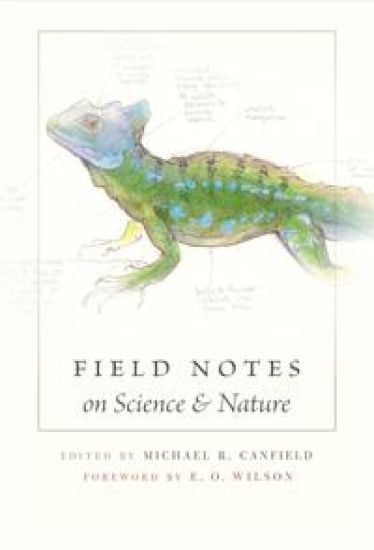
Once in a great while, as the New York Times noted recently, a naturalist writes a book that changes the way people look at the living world. John James Audubon’s Birds of America, published in 1838, was one. Roger Tory Peterson’s 1934 Field Guide to the Birds was another. How does such insight into nature develop?Pioneering a new niche in the study of plants and animals in their native habitat, Field Notes on Science and Nature allows readers to peer over the shoulders and into the notebooks of a dozen eminent field workers, to study firsthand their observational methods, materials, and fleeting impressions.What did George Schaller note when studying the lions of the Serengeti? What lists did Kenn Kaufman keep during his 1973 “big year”? How does Piotr Naskrecki use relational databases and electronic field notes? In what way is Bernd Heinrich’s approach “truly Thoreauvian,” in E. O. Wilson’s view? Recording observations in the field is an indispensable scientific skill, but researchers are not generally willing to share their personal records with others. Here, for the first time, are reproductions of actual pages from notebooks. And in essays abounding with fascinating anecdotes, the authors reflect on the contexts in which the notes were taken.Covering disciplines as diverse as ornithology, entomology, ecology, paleontology, anthropology, botany, and animal behavior, Field Notes offers specific examples that professional naturalists can emulate to fine-tune their own field methods, along with practical advice that amateur naturalists and students can use to document their adventures.
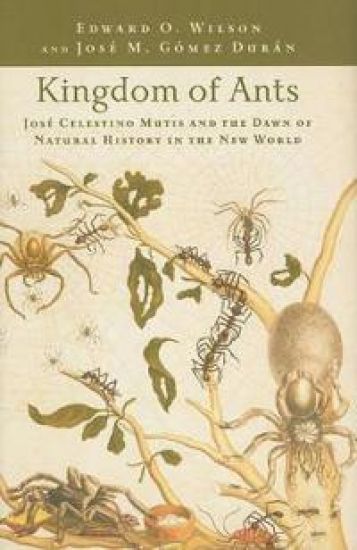
One of the earliest New World naturalists, Jose Celestino Mutis began his professional life as a physician in Spain and ended it as a scientist and natural philosopher in modern-day Colombia. Drawing on new translations of Mutis's nearly forgotten writings, this fascinating story of scientific adventure in eighteenth-century South America retrieves Mutis's contributions from obscurity. In 1760, the 28-year-old Mutis-newly appointed as the personal physician of the Viceroy of the New Kingdom of Granada-embarked on a 48-year exploration of the natural world of northern South America. His thirst for knowledge led Mutis to study the region's flora, become a professor of mathematics, construct the first astronomical observatory in the Western Hemisphere, and amass one of the largest scientific libraries in the world. He translated Newton's writings and penned essays about Copernicus; lectured extensively on astronomy, geography, and meteorology; and eventually became a priest. But, as two-time Pulitzer Prize-winner Edward O. Wilson and Spanish natural history scholar Jose M. Gomez Duran reveal in this enjoyable and illustrative account, one of Mutis's most magnificent accomplishments involved ants. Acting at the urging of Carl Linnaeus-the father of taxonomy-shortly after he arrived in the New Kingdom of Granada, Mutis began studying the ants that swarmed everywhere. Though he lacked any entomological training, Mutis built his own classification for the species he found and named at a time when New World entomology was largely nonexistent. His unorthodox catalog of army ants, leafcutters, and other six-legged creatures found along the banks of the Magdalena provided a starting point for future study. Wilson and Duran weave a compelling, fast-paced story of ants on the march and the eighteenth-century scientist who followed them. A unique glance into the early world of science exploration, Kingdom of Ants is a delight to read and filled with intriguing information.
"In the Amazon Basin the greatest violence sometimes begins as a flicker of light beyond the horizon. There in the perfect bowl of the night sky, untouched by light from any human source, a thunderstorm sends its premonitory signal and begins a slow journey to the observer, who thinks: the world is about to change." Watching from the edge of the Brazilian rain forest, witness to the sort of violence nature visits upon its creatures, Edward O. Wilson reflects on the crucible of evolution, and so begins his remarkable account of how the living world became diverse and how humans are destroying that diversity. Wilson, internationally regarded as the dean of biodiversity studies, conducts us on a tour through time, traces the processes that create new species in bursts of adaptive radiation, and points out the cataclysmic events that have disrupted evolution and diminished global diversity over the past 600 million years. The five enormous natural blows to the planet (such as meteorite strikes and climatic changes) required 10 to 100 million years of evolutionary repair. The sixth great spasm of extinction on earth--caused this time entirely by humans--may be the one that breaks the crucible of life. Wilson identifies this crisis in countless ecosystems around the globe: coral reefs, grasslands, rain forests, and other natural habitats. Drawing on a variety of examples such as the decline of bird populations in the United States, the extinction of many species of freshwater fish in Africa and Asia, and the rapid disappearance of flora and fauna as the rain forests are cut down, he poignantly describes the death throes of the living world's diversity--projected to decline as much as 20 percent by the year 2020. All evidence marshaled here resonates through Wilson's tightly reasoned call for a spirit of stewardship over the world's biological wealth. He makes a plea for specific actions that will enhance rather than diminish not just diversity but the quality of life on earth. Cutting through the tangle of environmental issues that often obscure the real concern, Wilson maintains that the era of confrontation between forces for the preservation of nature and those for economic development is over; he convincingly drives home the point that both aims can, and must, be integrated. Unparalleled in its range and depth, Wilson's masterwork is essential reading for those who care about preserving the world biological variety and ensuring our planet's health.
In this landmark volume, an international group of scientists has synthesized their collective expertise and insight into a newly unified vision of insect societies and what they can reveal about how sociality has arisen as an evolutionary strategy.Jürgen Gadau and Jennifer Fewell have assembled leading researchers from the fields of molecular biology, evolutionary genetics, neurophysiology, behavioral ecology, and evolutionary theory to reexamine the question of sociality in insects. Recent advances in social complexity theory and the sequencing of the honeybee genome ensure that this book will be valued by anyone working on sociality in insects. At the same time, the theoretical ideas presented will be of broad-ranging significance to those interested in social evolution and complex systems.
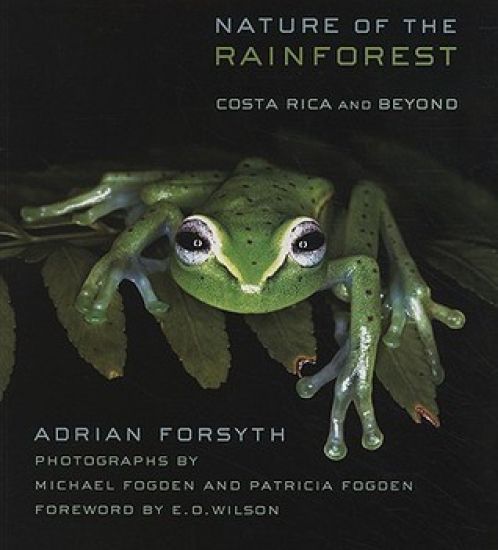
A Zona Tropical Publication"The words 'tropical rainforest' may conjure up vistas populated by jaguars, brilliant macaws, and flowers amid the grandeur of towering buttressed trees. But the eager, expectant visitor is not regaled with the sight of charismatic vertebrates, gaudy birds, and luminous orchids. In the rainforest, close encounters with life that moves are usually rare but brilliant episodes; one is bedazzled for an instant and then left alone in the quiet greenery. Under such conditions, one must see the episode as part of a process; tracing the connections between organisms is the essence of rainforest appreciation."—Nature of the RainforestNature of the Rainforest is a breathtaking tour of an environment that is the pinnacle of biodiversity and evolutionary sophistication by an award-winning author and two photographers who love the rainforest, understand its intricacies, and have spent considerable time there documenting its wildlife and complexity. Adrian Forsyth draws on four decades of personal encounters with the animals of the rainforest—including poison-dart frogs, three-toed sloths, bushmasters, and umbrellabirds—as a starting point to communicate key ecological topics such as biodiversity, coevolution, rarity, chemical defense, nutrient cycling, and camouflage. The luminous photographs capture stunning and rare creatures in action, including the now- extinct golden toad mating, a jaguar on the prowl, and the hermit hummingbird feeding. The behaviors and characteristics of the rainforest inhabitants featured here not only illustrate the text but also advance the scientific narrative and exemplify the critical importance of conservation. Thematic chapters are interspersed with four chapters devoted to specific habitats and regions of Costa Rica and Peru, areas with some of the most diverse arrays of plant and animal species in the world. The result is an exuberant celebration of the rainforest in text and images.
Called “one of the greatest men alive” by The Times of London, E. O. Wilson proposes an historic partnership between scientists and religious leaders to preserve Earth’s rapidly vanishing biodiversity.
First, there is a soft rustle in the underbrush, then a low-slung, utterly bizarre-looking insectivore dashes in front of Eladio Fernández. With a reflexive click of digital shutter, he's captured the reclusive (Solenodon paradoxus--a living fossil. A Dominican-based conservationist and photographer, Fernandez is documenting the efforts of a distinguished team of international scientists as they unravel the workings of evolution being played out on the island of Hispaniola.A short flight from the Florida coast, Hispaniola offers unique opportunities, not just to photographers like Fernández, but to evolutionary biologists as well. At 40 million years, Hispaniola is far older than the Galápagos. Its considerable age, along with a diversity of habitats--from mountains and cloud forests to savannahs and tropical lowlands--makes this island one of the most spectacular, if poorly understood, troves of biota on the planet. The extraordinary richness of species, much of it endangered and yet to be described, is showcased here in nearly 400 spectacular photographs. The photos are accompanied by essays--in both English and Spanish--that make known the Hispaniolan fungi, plants, and animals by the experts who know them best.Insights gained from Hispaniola's unique flora and fauna, from its rare orchids to its stunningly beautiful bird life, may enrich our understanding of other, more complex, living systems worldwide. What Fernández captures here so vividly is not just the amazing variety of living creatures that have erupted in evolutionary isolation, but the urgency of scientists racing to give that variety a name before it vanishes.
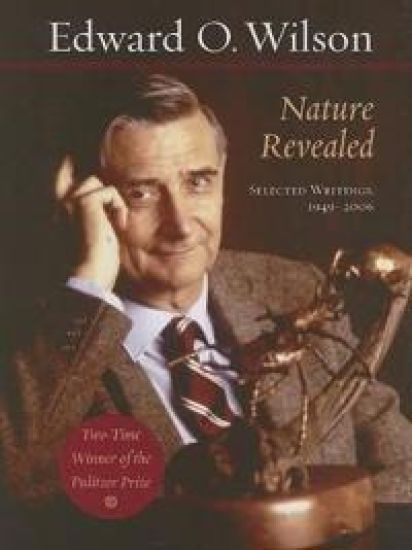
Two-time Pulitzer Prize winner Edward O. Wilson is one of the leading biologists and philosophical thinkers of our time. In this compelling collection, Wilson's observations range from the tiny glands of ants to the nature of the living universe. Many of the pieces are considered landmarks in evolutionary biology, ecology, and behavioral biology. Wilson explores topics as diverse as slavery in ants, the genetic basis of societal structure, the discovery of the taxon cycle, the original formulation of the theory of island biogeography, a critique of subspecies as a unit of classification, and the conservation of life's diversity. Each article is presented in its original form, dating from Wilson's first published article in 1949 to his most recent exploration of the natural world. Preceding each piece is a brief essay by Wilson that explains the context in which the article was written and provides insights into the scientist himself and the debates of the time. This collection enables us to share Wilson's various vantage points and to view the complexities of nature through his eyes. Wilson aficionados, along with readers discovering his work for the first time, will find in this collection a world of beauty, complexity, and challenge.
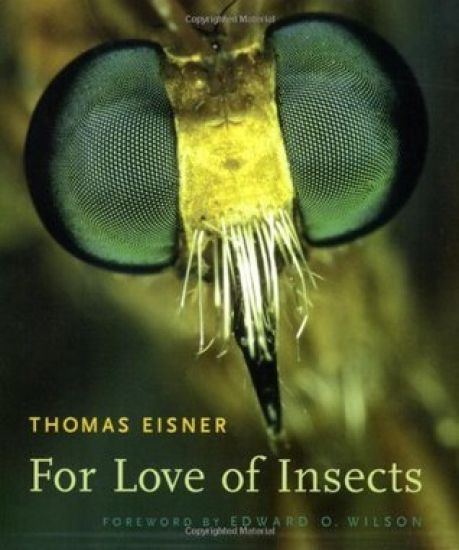
Imagine beetles ejecting defensive sprays as hot as boiling water; female moths holding their mates for ransom; caterpillars disguising themselves as flowers by fastening petals to their bodies; termites emitting a viscous glue to rally fellow soldiers--and you will have entered an insect world once beyond imagining, a world observed and described down to its tiniest astonishing detail by Thomas Eisner. The story of a lifetime of such minute explorations, For Love of Insects celebrates the small creatures that have emerged triumphant on the planet, the beneficiaries of extraordinary evolutionary inventiveness and unparalleled reproductive capacity.To understand the success of insects is to appreciate our own shortcomings, Eisner tells us, but never has a reckoning been such a pleasure. Recounting exploits and discoveries in his lab at Cornell and in the field in Uruguay, Australia, Panama, Europe, and North America, Eisner time and again demonstrates how inquiry into the survival strategies of an insect leads to clarifications beyond the expected; insects are revealed as masters of achievement, forms of life worthy of study and respect from even the most recalcitrant entomophobe. Filled with descriptions of his ingenious experiments and illustrated with photographs unmatched for their combination of scientific content and delicate beauty, Eisner's book makes readers participants in the grand adventure of discovery on a scale infinitesimally small, and infinitely surprising.
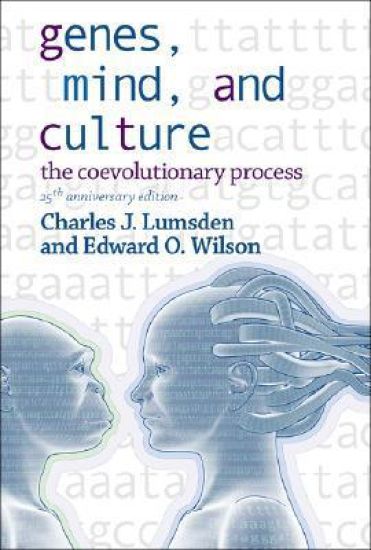
Long considered one of the most provocative and demanding major works on human sociobiology, Genes, Mind, and Culture introduces the concept of gene-culture coevolution. It has been out of print for several years, and in this volume Lumsden and Wilson provide a much needed facsimile edition of their original work, together with a major review of progress in the discipline during the ensuing quarter century. They argue compellingly that human nature is neither arbitrary nor predetermined, and identify mechanisms that energize the upward translation from genes to culture. The authors also assess the properties of genetic evolution of mind within emergent cultural patterns. Lumsden and Wilson explore the rich and sophisticated data of developmental psychology and cognitive science in a fashion that, for the first time, aligns these disciplines with human sociobiology. The authors also draw on population genetics, cultural anthropology, and mathematical physics to set human sociobiology on a predictive base, and so trace the main steps that lead from the genes through human consciousness to culture.
As the world's leading authority on wasps, Howard Ensign Evans' lifelong study of this creature was only one aspect of his life as an acclaimed scientist and author. For readers, he illuminated the otherworldly lives of humble creatures in such popular books as "Life on a Little-Known Planet", "Wasp Farm", and "Pioneer Naturalists". Evans was a master entomologist who seems only to have been truly comfortable in places where the bugs called; there he found his beauty, his magic and his poetry. In this collection, which he completed just before his death at 83, it appears Evans knew all 900,000 species of his gems that to others were only insects, along with the lowly magpie and the birds of Australia as well. Edward O. Wilson, one of the world's preeminent biologists, is the author of more than twenty-five books, including Sociobiology, the Pulitzer Prize-winning The Ants, and the best-selling novel Anthill. A professor emeritus at Harvard University, he lives in Lexington, Massachusetts.
In his new preface E. O. Wilson reflects on how he came to write this book: how The Insect Societies led him to write Sociobiology, and how the political and religious uproar that engulfed that book persuaded him to write another book that would better explain the relevance of biology to the understanding of human behavior.
Eloquent, practical and wise, this book by one of the world's most important scientists--and two time Pulitzer Prize winner--should be read and studied by anyone concerned with the fate of the natural world. It "makes one thing clear ... we know what we do, and we have a choice" (The New York Times Book Review). E.O. Wilson assesses the precarious state of our environment, examining the mass extinctions occurring in our time and the natural treasures we are about to lose forever. Yet, rather than eschewing doomsday prophesies, he spells out a specific plan to save our world while there is still time. His vision is a hopeful one, as economically sound as it is environmentally necessary.
View a collection of videos on Professor Wilson entitled "On the Relation of Science and the Humanities"Species of the genus Pheidole are the most abundant and diverse ants of the New World and range from the northern United States to Argentina. In this richly illustrated book, Edward O. Wilson untangles its classification for the first time, characterizing all 625 known species, 341 of which are new to science, and ordering them into 19 species groups. The author's keys and drawings, the latter showing complete body views arranged in the style of field books, allow rapid identification by anyone with an elementary understanding of entomology. In presenting all of Pheidole, the book covers one-fifth of the known ant species of the Western Hemisphere, including many of the commonest forms.Wilson also summarizes our knowledge of the natural history of each species, much of it previously unpublished. In addition, he provides a general account of hyperdiversity, confirming that it is not a statistical artifact but a genuine biological phenomenon that can best be understood by detailed analyses of groups of organisms such as the Pheidole ants.An important innovation in this book is the inclusion of a CD-ROM containing high-resolution digital images of the type specimens. The CD-ROM is designed to allow quick retrieval of information such as known range, group membership, measurements, and color. The CD-ROM thus will be useful in creating "instant" field guides, comparison charts, and local checklists.
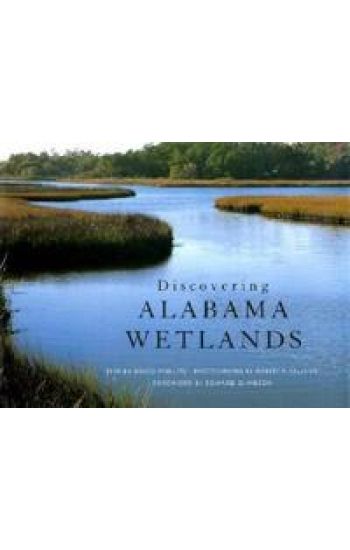
This visually stunning portrait of Alabama's many diverse wetland habitats and their associated plants and animals is a passionate plea for their thoughtful care and protection. Alabama could easily be called the ""Aquatic State,"" It has an abundant supply of rain with countless streams, rivers, lakes, swamps, bogs, bottomlands, and bays that capture and channel this freshwater. An estimated 20 percent of the nation's total freshwater works its way through this small physical land area that ranges from the temperate foothills of the Appalachians to the semitropical Gulf coast. Alabama's varied watery realms have harbored and continue to sustain a rich diversity of plant and animal species virtually unequaled on the continent. With Discovering Alabama Wetlands, ecologist-educator Doug Phillips and photographer Robert Falls celebrate these productive natural habitats. One hundred color photographs and a data-rich text illustrate the natural beauty and serenity of these special places while explaining their vital role in filtering toxins and sediment from groundwater, nourishing a quifers, and preventing flooding. Special focus is given to key areas - Little River Canyon National Preserve a top Lookout Mountain; Wheeler National Wildlife Refuge in the backwater of the Tennessee River, a major attraction for wintering waterfowl; the 100-mile-long Sipsey River and Swamp, slowly wending its way through the central part of the state; and the vast Mobile Tensaw Delta, a remarkable inland estuary that has been designated a World Wildlife Biosphere. But the authors also explore lesser coastal estuaries, pitcher-plant bogs, limestone seeps, and prairie marshes as important mini-habitats supporting rare and sometimes endemic species. This book sounds a strong warning for fragile, dwindling wetlarids. Phillips explains that more tha half of the original area of Alabama wetlands - 4 million acres - has already been lost to two centuries of excessive timbering practices, agricultural drainage, suburban sprawl, and siltation. In reasoned, direct prose, he encourages readers to adopt a proactive attitude in protecting their nearby wetland areas, areas that will be essential to economic stability and the quality of life in Alabama for generations. With this beautifully illustrated album, Phillips and Falls offer their eloquent statement for wetlands protection.