

Kirjailija
Eli Ginzberg
Kirjat ja teokset yhdessä paikassa: 54 kirjaa, julkaisuja vuosilta 1970-2024, suosituimpien joukossa Health Manpower & Health Policy. Vertaile teosten hintoja ja tarkista saatavuus suomalaisista kirjakaupoista.
54 kirjaa
Kirjojen julkaisuhaarukka 1970-2024.


This volume seeks a better understanding of the issues and options involved in the generation and transfer of technology to poor small farmers. It is intended to provide a fresh opportunity to develop guidelines for the future design and implementation of rural development investment projects.

Technology And Employment
Eli Ginzberg; Thierry J Noyelle; Thomas M Stanback Jr
Routledge
2019
sidottu
This volume is the first of four publications that will present the research on technology and employment carried out by Conservation of Human Resources of Columbia University over the past several years. This research was started with a small grant from the Rockefeller Foundation in 1982.

This book focuses on the aspects of the changing U.S. labor market, including the role that the export of advanced business services from the United States plays in the increasing globalization of the world's economy and the reemergence of national employment policy.

This book contains five chapters based on papers that were prepared for the Cornell University Medical College Second Conference on Health Policy held in New York City on February 27-28, 1986, plus an introductory chapter and a summary of the discussion written by me as chairman and editor. The title, From Physician Shortage to Patient Shortage: The Uncertain Future of Medical Practice, underscores two of the major changes that are operating to reshape the U.S. health care sector.

The early 1990s saw the U.S. health care system under intensifying pressures and strains as a consequence of steeply rising expenditures, an increase in the number of uninsured persons, and a range of other challenges, including increasingly severe pressures on government and employers, the principal payers for health care. As a consequence of these and other dysfunctional developments, Eli Ginzberg explored and assessed the problems and the transformations underway in the financing of U.S. health care and in the delivery of services. On the eve of an era of major health care reform, Medical Gridlock and Health Reform presents his findings.

This book summarizes the key findings from Philadelphia Private Industry Council's 1985 customer survey. It helps young people to take a critical look at their living practices and define their personal agenda and action plan for pursuing constructive choices in the future.
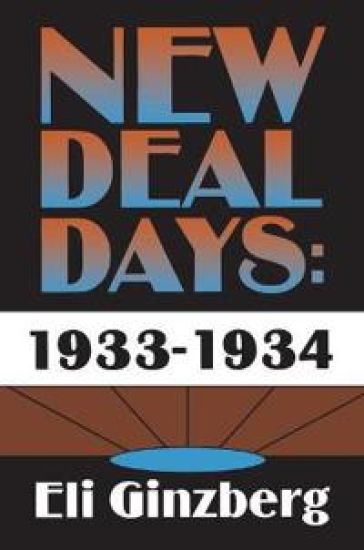
This is an extraordinary, first hand account of how the United States economy weathered the most devastating depression in the nation's history and how it responded to Roosevelt's New Deal initiatives.

Written just before the beginning of World War II, this is an early example of field research into human resources by one of the pioneers in the area. Ginzberg investigates why so many long-term unemployed coal miners in South Wales remained in their villages rather than relocating to other areas of the United Kingdom where jobs were more plentiful. The results of his work, originally published in 1942, remain of value both as a record of an era, an example of communities in distress, and a model of failed social policy.
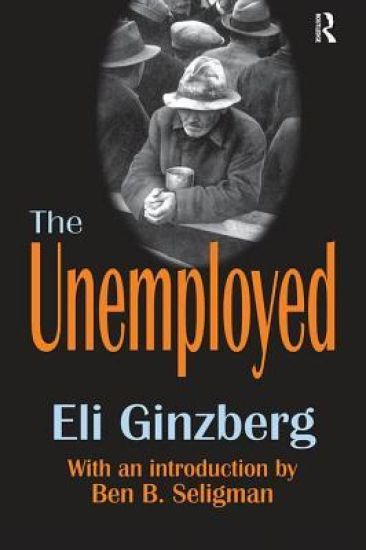
This classic study of the effect of unemployment and of the ways of relieving it upon actual, typical families of the 1930s and 1940s is a vivid, startling picture of the demoralizing influence and consequences of America's relief policies during the Depression years. The study comprises an incisive interpretation of the problem and a series of absorbing human interest stories of representative families on relief cases selected from experiences of relief, including the records of families from various religious groups in an exhaustive study conducted in New York City.Most research on unemployment of the 1930s conspicuously lacks studies of the unemployed themselves. Yet, this is the crux of the matter necessary to truly understand the cbnsequences of unemployment then and now, so as to deal with it intelligently and efficiently. This book deals with what employment does to people. It answers important questions about the unemployed that are rarely asked. Who are they? Did they fail to earn a living even in prosperous times? What precipitated their unemployment? Do they prefer relief to work? Did unemployment bring about changes in how they think and feel? This is a volume of continuing relevance, and will be of interest to legislators, economists, social scientists, social workers, and psychologists.

This is a deeply personal memoir by the doyen of applied economics in the United States. His name is indelibly linked to the creation, expansion, and refinement of employment policy and human resource needs from 1935 to the present. Eli Ginzberg has been a longtime consultant to the federal government, including nine presidents. In this volume, the focus is on American Jewry in the present century from the perspective of an active participant observer and a critical social science based analyst.My Brother's Keeper deals with the changing position of American Jewry in the twentieth century. Ginzberg makes extensive use of his own experiences to review the changes that have taken place in urban life, university involvement, and government agencies. The work covers Jewish life from pre-Hitler Germany to the present, and discusses with intimate candor synagogue life. Drawing upon his unique vantage point, Ginzberg presents new material about many leaders and events that helped transform the role of American Jews in their relationship with other Americans and Israel. At a more conceptual level the author explores major new influences that have reshaped American Jewry, such as the rise of neo-orthodoxy, the substantial increase in Jewish day schools, the blossoming of Judaica studies in American universities, and the rise of women in leadership roles.This memoir makes use of the best social science evidence, and draws on the special experiences of the author in the world of a deeply religious family and tradition. It ranks as a major contribution to the small shelf of self-reflections by social scientists.

In the English-speaking world, Karl Renner is by far the best-known among the Austro-Marxists who were active in the Austrian socialist movement during the first few decades of the twentieth century. Recognition of Renner's scholarship is due largely to the English translations of his works on Marxism, as well as to the secondary writings on his notions of socialist legality and national cultural autonomy.Renner has for over half a century been celebrated for the only book of his that has, to date, been wholly translated into English. It remains the classic socialist attempt to off er a realistic understanding of the role of the legal institution of private property in modern society: The Institutions of Private Law and Their Social Functions. In his introduction to this edition, A. Javier Trevii?1/2o discusses the volume's relevance for today, and briefly describes that aspect of Renner's life that occupied most of this time and energy: his involvement in Austrian social democratic politics.The substance of Renner's exposition remains intact. The text provides one of the best insights into the relationship between capitalism and property's economic functions. It emphasizes how this fundamental institution's application has, since the initial stage of finance capitalism, increased or diminished, been externally transformed, or inherently metamorphosed. In an age of unprecedented global financial crisis, emerging market countries, and increased government regulation, Trevii?1/2o suggests we would do well to heed the book's message. It might help us understand the complex situations we encounter today as we grapple with our hybrid identities as salaried workers and economic investors.

In one of the foremost critiques of the widespread view that in market-based economics the fluctuations of the marketplace are essentially self-regulating, Eli Ginzberg argues the reverse. He asserts that government regulation or intervention to provide stability in the capitalist marketplace is a necessity. In this classic statement of macroeconomic theory, Ginzberg argues that self-directed stable economies, devoid of an appreciation of social and psychological factors, are essentially illusory.The ability of strong blocs--corporate, labor, and agricultural--to control the market in the hope of bettering their economic position places great difficulties in the path of securing a stable economy. For Ginzberg, economic fluctuations in the decade preceding the Great Depression can largely be explained by the interaction of technological, psychological, and monetary factors. Without these factors being subjected to some sort of control, economic stability must remain an illusion.The current period of a significant fall-off in earnings, profits, and full employment also followed a decade of unparalleled monetary growth. The concerns Ginzberg raised are relevant once again. It may turn out that the "neoliberalism" of the present has something to say in response to the free market/free society premises currently in vogue.In a brilliant introductory essay, Nobel Laureate Robert M. Solow offers an impressive report card on The Illusion of Economic Stability: "The prose is tighter and more aphoristic than late Ginzberg, and the tone is more detached, even sardonic." He concludes by admitting that a volatile stock market is one more reason why automatic economic stability seems as illusory today as it did when the book first appeared.

Academic health centers (AHCs) have played a key role in propelling the United States to world leadership in technological advances in medicine. At the same time, however, many of these urban-based hospitals have largely ignored the medical care of their poor neighbors. Now one of the leading experts in American health policy and economics ponders whether current and proposed changes in the financing and delivery of medical care will result in a realignment between AHCs and the poor.Basing his discussion on an analysis of the nation’s twenty-five leading research-oriented health centers, Eli Ginzberg and his associates trace the history of AHCs in the twentieth century. He claims that AHCs are once again moving toward treating the poor because these hospitals need to admit more Medicaid patients to fill their empty beds, and their medical students need opportunities to practice in ambulatory sites. He also assesses some of the more important trends that may challenge the AHCs, including financial concerns, changing medical practice environments, and the likelihood of some form of universal health insurance.Eli Ginzberg is director of The Eisenhower Center for Conservation of Human Resources, Columbia University. He has been a consultant to nine U.S. presidents and chaired the National Commission for Employment Policy for six presidents. He is the author of numerous books as well as articles on health affairs in the New England Journal of Medicine, the Journal of the American Medical Association, and many other journals.

Psychiatry and Military Manpower Policy: A Reappraisal of the Experience in World War II
Eli Ginzberg; John L. Herma; Sol W. Ginsburg
Literary Licensing, LLC
2011
nidottu

European Impressions of the American Worker
Robert W. Smuts; Eli Ginzberg
Literary Licensing, LLC
2011
nidottu

The Institutions of Private Law and Their Social Functions
Eli Ginzberg
AldineTransaction
2009
nidottu
In the English-speaking world, Karl Renner is by far the best-known among the Austro-Marxists who were active in the Austrian socialist movement during the first few decades of the twentieth century. Recognition of Renner's scholarship is due largely to the English translations of his works on Marxism, as well as to the secondary writings on his notions of socialist legality and national cultural autonomy.Renner has for over half a century been celebrated for the only book of his that has, to date, been wholly translated into English. It remains the classic socialist attempt to off er a realistic understanding of the role of the legal institution of private property in modern society: The Institutions of Private Law and Their Social Functions. In his introduction to this edition, A. Javier Trevii?1/2o discusses the volume's relevance for today, and briefly describes that aspect of Renner's life that occupied most of this time and energy: his involvement in Austrian social democratic politics.The substance of Renner's exposition remains intact. The text provides one of the best insights into the relationship between capitalism and property's economic functions. It emphasizes how this fundamental institution's application has, since the initial stage of finance capitalism, increased or diminished, been externally transformed, or inherently metamorphosed. In an age of unprecedented global financial crisis, emerging market countries, and increased government regulation, Trevii?1/2o suggests we would do well to heed the book's message. It might help us understand the complex situations we encounter today as we grapple with our hybrid identities as salaried workers and economic investors.

This is a deeply personal memoir by the doyen of applied economics in the United States. His name is indelibly linked to the creation, expansion, and refinement of employment policy and human resource needs from 1935 to the present. Eli Ginzberg has been a longtime consultant to the federal government, including nine presidents. In this volume, the focus is on American Jewry in the present century from the perspective of an active participant observer and a critical social science based analyst.My Brother's Keeper deals with the changing position of American Jewry in the twentieth century. Ginzberg makes extensive use of his own experiences to review the changes that have taken place in urban life, university involvement, and government agencies. The work covers Jewish life from pre-Hitler Germany to the present, and discusses with intimate candor synagogue life. Drawing upon his unique vantage point, Ginzberg presents new material about many leaders and events that helped transform the role of American Jews in their relationship with other Americans and Israel. At a more conceptual level the author explores major new influences that have reshaped American Jewry, such as the rise of neo-orthodoxy, the substantial increase in Jewish day schools, the blossoming of Judaica studies in American universities, and the rise of women in leadership roles.This memoir makes use of the best social science evidence, and draws on the special experiences of the author in the world of a deeply religious family and tradition. It ranks as a major contribution to the small shelf of self-reflections by social scientists.

This classic study of the effect of unemployment and of the ways of relieving it upon actual, typical families of the 1930s and 1940s is a vivid, startling picture of the demoralizing influence and consequences of America's relief policies during the Depression years. The study comprises an incisive interpretation of the problem and a series of absorbing human interest stories of representative families on relief—cases selected from experiences of relief, including the records of families from various religious groups in an exhaustive study conducted in New York City.Most research on unemployment of the 1930s conspicuously lacks studies of the unemployed themselves. Yet, this is the crux of the matter—necessary to truly understand the cbnsequences of unemployment then and now, so as to deal with it intelligently and efficiently. This book deals with what employment does to people. It answers important questions about the unemployed that are rarely asked. Who are they? Did they fail to earn a living even in prosperous times? What precipitated their unemployment? Do they prefer relief to work? Did unemployment bring about changes in how they think and feel? This is a volume of continuing relevance, and will be of interest to legislators, economists, social scientists, social workers, and psychologists.