
Kirjailija
Elie Wiesel
Kirjat ja teokset yhdessä paikassa: 72 kirjaa, julkaisuja vuosilta 1920-2025, suosituimpien joukossa Dimensions of the Holocaust. Vertaile teosten hintoja ja tarkista saatavuus suomalaisista kirjakaupoista.
72 kirjaa
Kirjojen julkaisuhaarukka 1920-2025.

Skolko nuzhno vremeni, chtoby stat palachom - Ispolnitelem smertnoj kazni za ideju? U Elishi, geroja etoj knigi, - vsego odna noch, no ona okazhetsja dlinnoj, kak zhizn do glubokoj starosti. Molodoj evrej na rassvete dolzhen ubit ofitsera-anglichanina. Esli Elisha izbran palachom, to Dzhon Douson naznachen zhertvoj: ego kaznjat za dejstvija anglijskoj okkupatsionnoj armii v Palestine. A vremja do rassveta - vremja vstrech i proschanij, proverki sebja i poiska Istiny. Rassvet stanovitsja ventsom nochi, a ne predvestnikom dnja. Eto tot reshajuschij chas, kogda palach i prigovorennyj okazyvajutsja litsom k litsu i nachinaetsja prostoj i tragicheskij dialog, otkryvajuschij istinu.
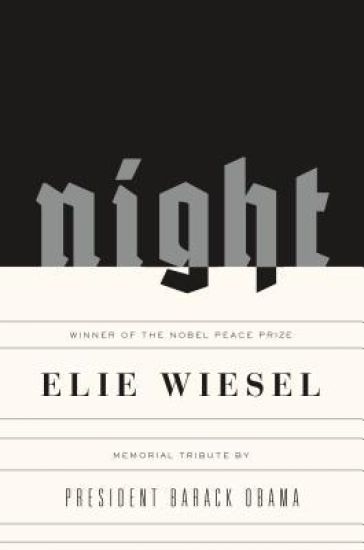
A memorial edition of Elie Wiesel's seminal memoir of surviving the Nazi death camps, with tributes by President Obama and Samantha Power When Elie Wiesel died in July 2016, the White House issued a memorial statement in which President Barack Obama called him "the conscience of the world." The whole of the president's eloquent tribute serves as a foreword to this memorial edition of Night. "Like millions of admirers, I first came to know Elie through his account of the horror he endured during the Holocaust simply because he was Jewish," wrote the president. In 1986, when Wiesel received the Nobel Peace Prize, the Norwegian Nobel Committee wrote, "Elie Wiesel was rescued from the ashes of Auschwitz after storm and fire had ravaged his life. In time he realized that his life could have purpose: that he was to be a witness, the one who would pass on the account of what had happened so that the dead would not have died in vain and so the living could learn." Night, which has sold millions of copies around the world, is the very embodiment of that conviction. It is written in simple, understated language, yet it is emotionally devastating, never to be forgotten. Born in the town of Sighet, Transylvania, Wiesel was a teenager when he and his family were deported to Auschwitz and then Buchenwald. Night is the shattering record of his memories of the death of his mother, father, and little sister, Tsipora; the death of his own innocence; and his despair as a deeply observant Jew confronting the absolute evil of man. "Never shall I forget that night, the first night in camp, that turned my life into one long night," writes Wiesel. "Never shall I forget . . . even were I condemned to live as long as God Himself." These words are etched into the wall of the Holocaust Memorial Museum in Washington. Far more than a chronicle of the sadistic realm of the camps, Night also addresses many of the philosophical and personal questions implicit in any serious consideration of the Holocaust. In addition to tributes from President Obama and Samantha Powers, this memorial edition of Night includes the unpublished text of a speech that Wiesel delivered before the United Nations General Assembly on the sixtieth anniversary of the liberation of Auschwitz, entitled "Will the World Ever Know." These remarks powerfully resonate with Night and with subsequent acts of genocide.

Translated by Marion Wiesel A profoundly and unexpectedly intimate, deeply affecting summing up of his life so far, from one of the most cherished moral voices of our time. Eighty-two years old, facing emergency heart surgery and his own mortality, Elie Wiesel reflects back on his life. Emotions, images, faces and questions flash through his mind. His family before and during the unspeakable Event. The gifts of marriage and children and grandchildren that followed. In his writing, in his teaching, in his public life, has he done enough for memory and the survivors? His ongoing questioning of God--where has it led? Is there hope for mankind? The world's tireless ambassador of tolerance and justice has given us this luminous account of hope and despair, an exploration of the love, regrets and abiding faith of a remarkable man.
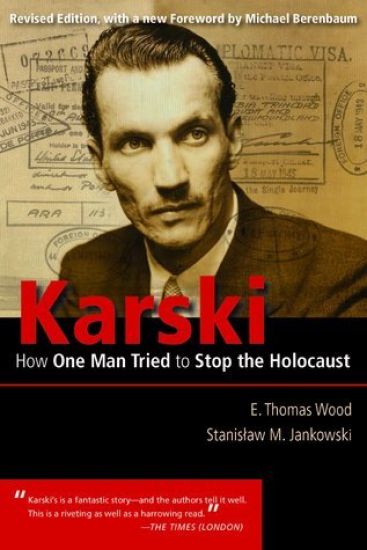
A young Polish diplomat turned cavalry officer, Jan Karski joined the Polish Underground movement in 1939. He became a courier for the Underground, crossing enemy lines to serve as a liaison between occupied Poland and the free world.In 1942, Jewish leaders asked him to carry a desperate message to Allied leaders: the news of Hitler's effort to exterminate the Jews of Europe. To be able to deliver an authentic report, Karski twice toured the Warsaw Ghetto in disguise and later volunteered to be smuggled into a camp that was part of the Nazi murder machine.Carrying searing tales of inhumanity, Karski set out to alert the world to the emerging Holocaust, meeting with top Allied officials and later President Roosevelt, to deliver his descriptions of genocide.Part spy thriller and part compelling story of moral courage against all odds, Karski is the first definitive account of perhaps the most significant warning of the impending Holocaust to reach the free world.

When an essay is due and dreaded exams loom, here's the lit-crit help students need to succeed! SparkNotes Literature Guides make studying smarter, better, and faster. They provide chapter-by-chapter analysis, explanations of key themes, motifs and symbols, a review quiz, and essay topics. Lively and accessible, SparkNotes is perfect for late-night studying and paper writing.
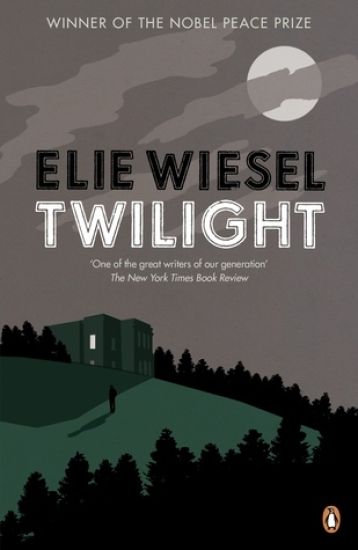
Twilight is a haunting novel by Nobel Peace prize-winning author Elie Wiesel.Raphael Lipkin hears voices and talks to ghosts. Spending the summer at the Mountain Clinic, a New York psychiatric hospital, he is not a patient but rather a visiting professional with a secret, highly personal quest.A Holocaust survivor who has painstakingly rebuilt his life, he has watched, horrified and helpless, as it all started coming apart. He longs for Pedro, the man who rescued him in postwar Poland - who became his mentor, hero, saviour and friend - and taught him truth from falsehood. But Pedro vanished into Stalin's gulags . . .Desperate to explain his own survival, Raphael now seeks among the delusional patients the answers to the mysteries of good, evil and madness.'A masterful storyteller . . . Wiesel creates a kaleidoscope of images that raise tantalizing questions' The Boston Globe'From the abyss of the death camps he has come as a messenger to mankind--not with a message of hate and revenge, but with one of brotherhood and atonement' From the Citation for the 1986 Nobel Peace Prize'Unquestionably, Wiesel is one of the most admirable, indeed indispensable, human beings now writing' Washington Post
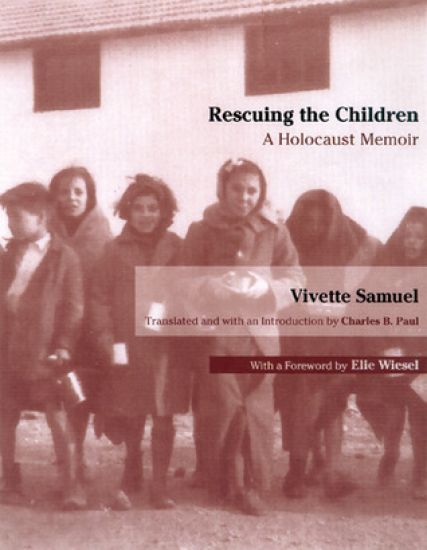
Rescuing the Children is the memoir of Vivette Samuel, who at age twenty-two began working for the OEuvre de secours aux enfants (OSE, or Society for Assistance to Children). The OSE and similar organizations saved 86 percent of Jewish children in France from deportation to Nazi concentration and extermination camps.
»Jeg har fortalt lidt om min fortid, ikke for at I skal forstå den, men for at I skal vide, at I aldrig kommer til at forstå den«. Sådan skriver den jødiske forfatter, professor og politiske aktivist Elie Wiesel bl.a. om sine oplevelser under og efter 2. Verdenskrig. I Rosinantes klassikerserie har vi nyoversat hans selvbiografiske romantriologi Natten, Daggry og Dagen, der for første gang udkommer samlet på dansk – tre romaner, der er små af omfang men bærer på historier af stor tyngde. Her med forord af Herman Pundik. Natten, der udkom i 1958, fortæller om jøderne i byen Sighet og deportationen til udryddelseslejrene. Daggry handler om den unge Elisha, der som deltager i kampen for et selvstændigt Israel bliver udvalgt til at skyde en engelsk officer, som jøderne holder som gidsel. Dagen er beretningen om en mand i New York, der er kommet alvorligt til skade ved en ulykke, og som – mens han svæver mellem liv og død – hjemsøges af forfærdelige minder fra krigens tid. Pressen skriver: »Elie Wiesels skæbne er fantastisk, en eksercits i lidelse, og samtidig en fortælling om lidelsens veje … Fortællingerne udmærker sig ved en massiv stoflighed i sproget og et nærmest fysisk intimiderende nærvær i begivenhedsforløbet.« **** – Johs. H. Christensen, Jyllands-Posten »Elie Wiesels bøger er hård kost. Han skriver på en lammende følelse af ensomhed og illusionsløshed, der hele tiden bringer ham i frivillig nærhed af døden og dødslængslen … Her er Wiesel rå og direkte, og det virker så stærkt, fordi han skriver enkelt og nøgternt.« – Peter Nielsen, Information »…vigtige og bevægende vidnesbyrd om at leve videre med erindringerne om de rædsler, der befinder sig uden for sproget og det normale liv…« – Jørgen Johansen, Berlingske
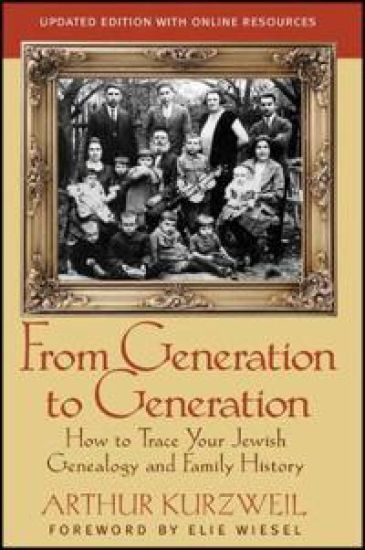
Since it was first published in 1980, From Generation to Generation has inspired thousands to pursue the unique challenges and rewards of Jewish genealogy. Far more engaging than a mere how-to reference guide, this landmark book is also part detective story and part spiritual quest. As Arthur Kurzweil takes you along on his own fascinating journey through his family’s past, you’ll learn about the tools, techniques, and the step-by-step process of Jewish genealogical research – including the most current information on using the Internet and the newly accessible archives of Eastern Europe and the former Soviet Union. But even more, after reading this fully updated, revised, and beloved classic, you will undoubtedly be inspired to embark on a genealogical quest of your own!
Now in paperback, Wiesel's newest novel "reminds us, with force, that his writing is alive and strong. The master has once again found a startling freshness."--Le Monde des Livres A European expatriate living in New York, Doriel suffers from a profound sense of desperation and loss. His mother, a member of the Resistance, survived World War II only to die soon after in France in an accident, together with his father. Doriel was a hidden child during the war, and his knowledge of the Holocaust is largely limited to what he finds in movies, newsreels, and books. Doriel's parents and their secrets haunt him, leaving him filled with longing but unable to experience the most basic joys in life. He plunges into an intense study of Judaism, but instead of finding solace, he comes to believe that he is possessed by a dybbuk. Surrounded by ghosts, spurred on by demons, Doriel finally turns to Dr. Th r se Goldschmidt, a psychoanalyst who finds herself particularly intrigued by her patient. The two enter into an uneasy relationship based on exchange: of dreams, histories, and secrets. And despite Doriel's initial resistance, Dr. Goldschmidt helps bring him to a crossroads--and to a shocking denouement. "In its own high-stepping yet paradoxically heart-wracking way, Wiesel's novel] can most assuredly be considered beautiful (almost beyond belief)."--The Philadelphia Inquirer

Genocide has been called 'a problem from hell' and despite vehement declarations of 'never again' it's a problem that continues to plague the world. From the beginning of history to the most recent massacres in Bosnia, Rwanda, and Darfur, genocide defies resolution. And given today's worldwide access to highly lethal weapons and advanced communications technology facilitating incitement to hate, we can expect to see this problem grow. It is often claimed that genocide occurs without warning, taking both local and global communities by surprise. Yet, as David Hamburg convincingly shows, we have had long-term advance knowledge of most modern genocides dating back to the early 20th century Armenian tragedy in Turkey and before. In this book, Dr. Hamburg applies a groundbreaking new perspective-the medical model of prevention-to the scourge of genocide in the world. Preventing genocide is not only possible, Dr Hamburg contends, but essential given its high cost in lives, human rights, and international security. Here he maps out numerous practical steps to recognise genocidal conflicts early and stem their tides of violence before they become acute. He also outlines several institutions in place and programs underway at the UN, EU, and NATO devoted to preventing future genocides before they erupt. He draws lessons both from missed opportunities and successful experiences and makes many constructive suggestions about strengthening international institutions, governments, and NGOs for this purpose.
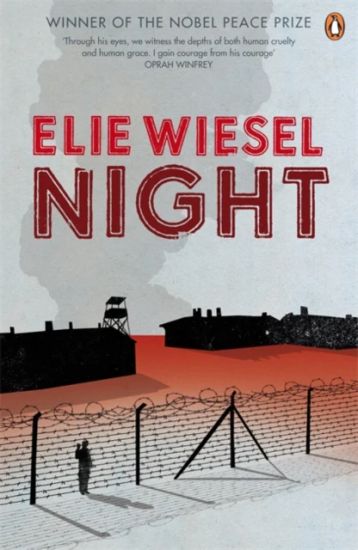
Born into a Jewish ghetto in Hungary, as a child, Elie Wiesel was sent to the Nazi concentration camps at Auschwitz and Buchenwald. This is his account of that atrocity: the ever-increasing horrors he endured, the loss of his family and his struggle to survive in a world that stripped him of humanity, dignity and faith. Describing in simple terms the tragic murder of a people from a survivor’s perspective, Night is among the most personal, intimate and poignant of all accounts of the Holocaust. A compelling consideration of the darkest side of human nature and the enduring power of hope, it remains one of the most important works of the twentieth century.
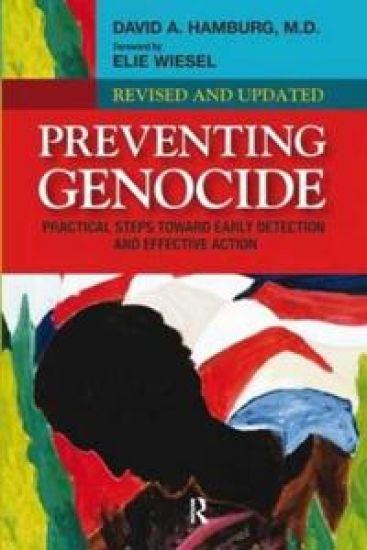
Genocide has been called 'a problem from hell' and despite vehement declarations of 'never again' it's a problem that continues to plague the world. From the beginning of history to the most recent massacres in Bosnia, Rwanda, and Darfur, genocide defies resolution. And given today's worldwide access to highly lethal weapons and advanced communications technology facilitating incitement to hate, we can expect to see this problem grow. It is often claimed that genocide occurs without warning, taking both local and global communities by surprise. Yet, as David Hamburg convincingly shows, we have had long-term advance knowledge of most modern genocides dating back to the early 20th century Armenian tragedy in Turkey and before. In this book, Dr. Hamburg applies a groundbreaking new perspective-the medical model of prevention-to the scourge of genocide in the world. Preventing genocide is not only possible, Dr Hamburg contends, but essential given its high cost in lives, human rights, and international security. Here he maps out numerous practical steps to recognise genocidal conflicts early and stem their tides of violence before they become acute. He also outlines several institutions in place and programs underway at the UN, EU, and NATO devoted to preventing future genocides before they erupt. He draws lessons both from missed opportunities and successful experiences and makes many constructive suggestions about strengthening international institutions, governments, and NGOs for this purpose.
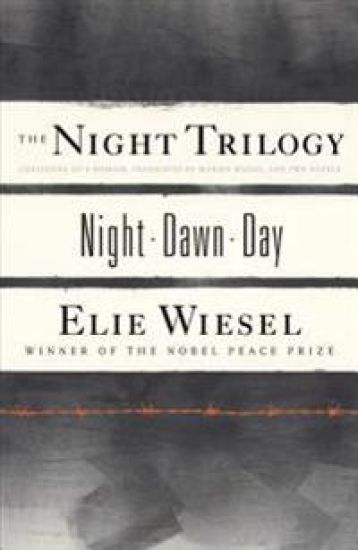
The new translation of the bestselling memoir Night in one volume with its companion novels, Dawn and Day Night is one of the masterpieces of Holocaust literature. First published in 1958, it is the autobiographical account of an adolescent boy and his father in Auschwitz. Elie Wiesel writes of their battle for survival and of his battle with God for a way to understand the wanton cruelty he witnesses each day. In the short novel Dawn (1960), a young man who has survived World War II and settled in Palestine joins a Jewish underground movement and is commanded to execute a British officer who has been taken hostage. In Day (previously titled The Accident, 1961), Wiesel questions the limits of conscience: Can Holocaust survivors forge a new life despite their memories? Wiesel's trilogy offers insights on mankind's attraction to violence and on the temptation of self-destruction.
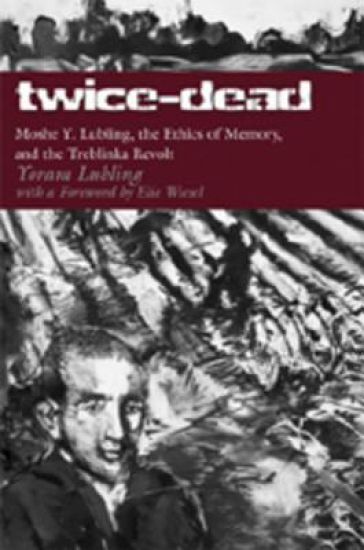
On August 2, 1943, a small group of Jewish prisoners at the Treblinka death-camp in Poland revolted against their Nazi and Ukrainian guards. The prisoners burned the camp down, facilitating the escape of 200-300 prisoners, of whom only 40-60 survived the war. Although not a single leader of the revolt survived, 27 survivors submitted eyewitness testimonies. Twice-Dead tells the story of Moshe Y. Lubling, the true leader of the Treblinka Revolt, a leader of the Labor Zionists, and the chairman of the legendary Workers' Council in the Czestochowa Ghetto. Twice-Dead corrects the accepted account of the revolt, ensuring that Moshe Y. Lubling's heroic life and death will not be forgotten.
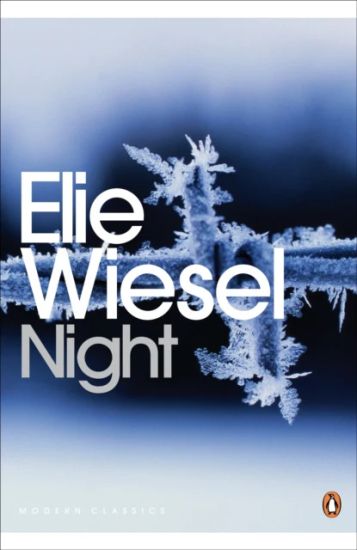
Elie Wiesel's harrowing first-hand account of the atrocities committed during the Holocaust, Night is translated by Marion Wiesel with a preface by Elie Wiesel in Penguin Modern Classics.Born into a Jewish ghetto in Hungary, as a child, Elie Wiesel was sent to the Nazi concentration camps at Auschwitz and Buchenwald. This is his account of that atrocity: the ever-increasing horrors he endured, the loss of his family and his struggle to survive in a world that stripped him of humanity, dignity and faith. Describing in simple terms the tragic murder of a people from a survivor's perspective, Night is among the most personal, intimate and poignant of all accounts of the Holocaust. A compelling consideration of the darkest side of human nature and the enduring power of hope, it remains one of the most important works of the twentieth century.Elie Wiesel (b. 1928) was fifteen years old when he and his family were deported by the Nazis to Auschwitz. After the war, Wiesel studied in Paris and later became a journalist. During an interview with the distinguished French writer, Francois Mauriac, he was persuaded to write about his experiences in the death camps. The result was his internationally acclaimed memoir, La Nuit or Night, which has since been translated into more than thirty languages.If you enjoyed Night, you might also like Primo Levi's The Periodic Table, also available in Penguin Modern Classics.'A slim volume of terrifying power'The New York Times'To the best of my knowledge no one has left behind him so moving a record' Alfred Kazin'Wiesel has taken his own anguish and imaginatively metamorphosed it into art' Curt Leviant, Saturday Review
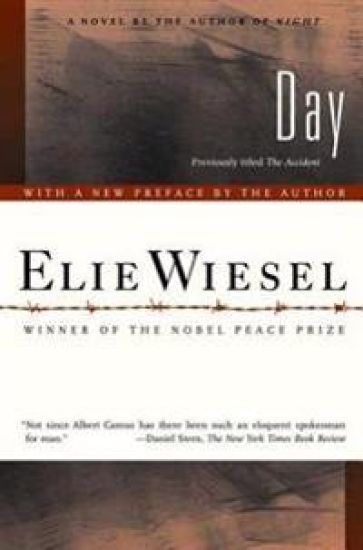
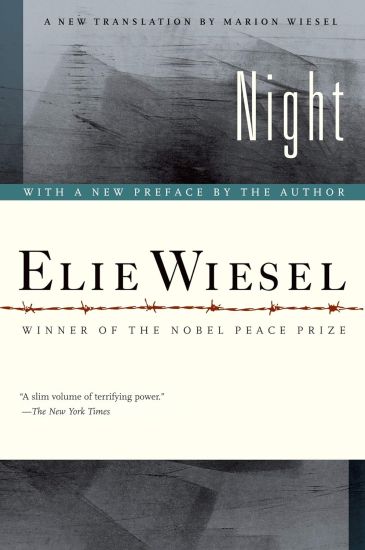
The narrative of a boy who lived through Auschwitz and Buchenwald provides a short and terrible indictment of modern humanity.