Kirjojen hintavertailu. Mukana 12 657 676 kirjaa ja 12 kauppaa.
Kirjailija
Epictetus
Kirjat ja teokset yhdessä paikassa: 144 kirjaa, julkaisuja vuosilta 1890-2026, suosituimpien joukossa Meditations Of Marcus Aurelius Antoninus. Vertaile teosten hintoja ja tarkista saatavuus suomalaisista kirjakaupoista.
Although he was born into slavery and endured a permanent physical disability, Epictetus (ca. 50-ca. 130 AD) maintained that all people are free to control their lives and to live in harmony with nature. We will always be happy, he argued, if we learn to desire that things should be exactly as they are. After attaining his freedom, Epictetus spent his entire career teaching philosophy and advising a daily regimen of self-examination. His pupil Arrianus later collected and published the master's lecture notes; the Enchiridion, or Manual, is a distillation of Epictetus' teachings and an instructional manual for a tranquil life. Full of practical advice, this work offers guidelines for those seeking contentment as well as for those who have already made some progress in that direction.
Although he was born into slavery and endured a permanent physical disability, Epictetus (ca. 50-ca. 130 AD) maintained that all people are free to control their lives and to live in harmony with nature. We will always be happy, he argued, if we learn to desire that things should be exactly as they are. After attaining his freedom, Epictetus spent his entire career teaching philosophy and advising a daily regimen of self-examination. His pupil Arrianus later collected and published the master's lecture notes; the Enchiridion, or Manual, is a distillation of Epictetus' teachings and an instructional manual for a tranquil life. Full of practical advice, this work offers guidelines for those seeking contentment as well as for those who have already made some progress in that direction.
This Stoicism Collection contains three of the most notable Stoic pieces, The Meditations of Marcus Aurelius, Seneca's Letters from a Stoic, and The Discourses of Epictetus. These three pieces are the foundations of Stoicism.
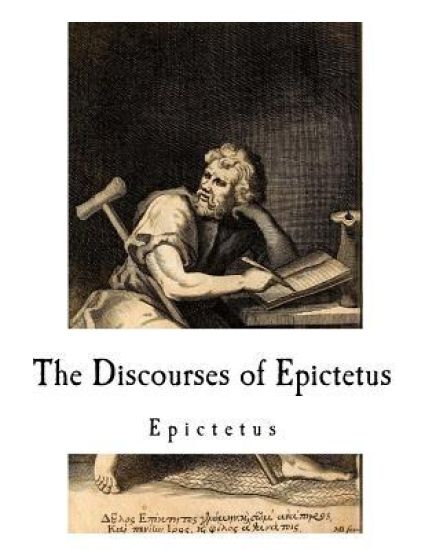
The Discourses of Epictetus are a series of extracts from the teachings of the Stoic philosopher Epictetus. This is the complete version, containing books 1 - 4.
Enchiridion is a Late Latin term derived from the Greek word 10;B3;C7;B5;B9;C1;AF;B4;B9;BF;BD; (enkheiridion) referring to a small manual or handbook. Similarly, The Enchiridion, or Manual of Epictetus is a short manual - a short manual of Stoic ethical advice compiled by Arrian, a 2nd-century disciple of the Greek philosopher Epictetus.
The little book by Epictetus called Enchiridion or "manual" has played a disproportionately large role in the rise of modern attitudes and modern philosophy. As soon as it had been translated into the vernacular languages, it became a bestseller among independent intellectuals, among anti-Christian thinkers, and among philosophers of a subjective cast. Montaigne had a copy of the Enchiridion among his books. Pascal violently rejected the megalomaniac pride of the Stoic philosopher. Frederick the Great carried the book with him on all campaigns. It was a source of inspiration and encouragement to Anthony, Earl of Shaftesbury, in the serious illness which ended only in his death; many pages of his diaries contain passages copied from the Enchiridion. It has been studied and widely quoted by Scottish philosophers like Francis Hutcheson, Adam Smith, and Adam Ferguson who valued Stoic moral philosophy for its reconciliation of social dependency and personal independence.
Very little is known of the life of Epictetus. It is said that he was a native of Hierapolis in Phrygia, a town between the Maeander and a branch of the Maeander named the Lycus. Hierapolis is mentioned in the epistle of Paul to the people of Colossae (Coloss. iv., 13); from which it has been concluded that there was a Christian church in Hierapolis in the time of the apostle. The date of the birth of Epictetus is unknown. The only recorded fact of his early life is that he was a slave in Rome, and his master was Epaphroditus, a profligate freedman of the Emperor Nero. There is a story that the master broke his slave's leg by torturing him; but it is better to trust to the evidence of Simplicius, the commentator on the Encheiridion, or Manual, who says that Epictetus was weak in body and lame from an early age. It is not said how he became a slave; but it has been asserted in modern times that the parents sold the child. I have not, however, found any authority for this statement. It may be supposed that the young slave showed intelligence, for his master sent or permitted him to attend the lectures of C. Musonius Rufus, an eminent Stoic philosopher. It may seem strange that such a master should have wished to have his slave made into a philosopher; but Garnier, the author of a "M moire sur les Ouvrages d'Epict te," explains this matter very well in a communication to Schweighaeuser. Garnier says: "Epictetus, born at Hierapolis of Phrygia of poor parents, was indebted apparently for the advantages of a good education to the whim, which was common at the end of the Republic and under the first emperors, among the great of Rome to reckon among their numerous slaves grammarians, poets, rhetoricians, and philosophers, in the same way as rich financiers in these later ages have been led to form at a great cost rich and numerous libraries. This supposition is the only one which can explain to us how a wretched child, born as poor as Irus, had received a good education, and how a rigid Stoic was the slave of Epaphroditus, one of the officers of the imperial guard. For we cannot suspect that it was through predilection for the Stoic doctrine, and for his own use, that the confidant and the minister of the debaucheries of Nero would have desired to possess such a slave."
The little book by Epictetus called Enchiridion or "manual" has played a disproportionately large role in the rise of modern attitudes and modern philosophy. As soon as it had been translated into the vernacular languages, it became a bestseller among independent intellectuals, among anti-Christian thinkers, and among philosophers of a subjective cast. Montaigne had a copy of the Enchiridion among his books. Pascal violently rejected the megalomaniac pride of the Stoic philosopher. Frederick the Great carried the book with him on all campaigns. It was a source of inspiration and encouragement to Anthony, Earl of Shaftesbury, in the serious illness which ended only in his death; many pages of his diaries contain passages copied from the Enchiridion. It has been studied and widely quoted by Scottish philosophers like Francis Hutcheson, Adam Smith, and Adam Ferguson who valued Stoic moral philosophy for its reconciliation of social dependency and personal independence.
In this collection of two brief but highly influential works, Epictetus' Stoic philosophy addresses the nature of fate and man's place in the universe. The philosopher also explores the distinction between what is and is not within our power, the meaning of good and evil, how we should live, the importance of self-knowledge, and many other issues.
Are these the only works of Providence in us? What words suffice to praise or set them forth? Had we but understanding, should we ever cease hymning and blessing the Divine Power, both openly and in secret, and telling of His gracious gifts? Whether digging or ploughing or eating, should we not sing the hymn to God: - Great is God, for that He hath given us such instruments to till the ground withal: Great is God, for that He hath given us hands, and the power of swallowing and digesting; of unconsciously growing and breathing while we sleep
The Discourses of EpictetusWith the Encheiridion - A SelectionTranslated by George LongThe Discourses of Epictetus are a series of extracts of the teachings of the Stoic philosopher Epictetus written down by Arrian c. 108 AD. There were originally eight books, but only four now remain in their entirety, along with a few fragments of the others. In a preface attached to the Discourses, Arrian explains how he came to write them: I neither wrote these Discourses of Epictetus in the way in which a man might write such things; nor did I make them public myself, inasmuch as I declare that I did not even write them. But whatever I heard him say, the same I attempted to write down in his own words as nearly as possible, for the purpose of preserving them as memorials to myself afterwards of the thoughts and the freedom of speech of Epictetus.The Discourses are unlikely to be word-for-word transcriptions and are probably written-up versions of Arrian's lecture notes. The books did not have a formal title in ancient times.The earliest manuscript of the Discourses is a twelfth-century manuscript kept at the Bodleian Library, Oxford. In the Bodleian manuscript, a blot or stain has fallen onto one of the pages, and has made a series of words illegible; in all the other known manuscripts these words (or sometimes the entire passage) are omitted, thus all the other manuscripts are derived from this one archetype.The Discourses were first printed (in Greek) by Vettore Trincavelli, at Venice in 1535.
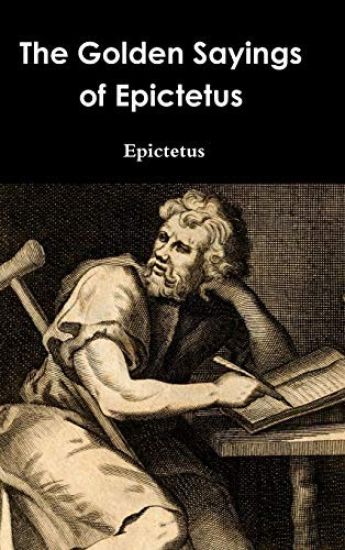
The Golden Sayings of Epictetus is one of three key texts, along with the Meditations of Marcus Aurelius and Seneca's Letters From A Stoic, from which we know the philosophy of Stoicism.
The Enchiridion or Manual of Epictetus is a short manual of Stoic ethical advice from the 2nd-century Greek Stoic philosopher Epictetus. The focus is on applying philosophy in daily life. The primary theme is that one should accept what happens. The Enchiridion, along with the Meditations of Marcus Aurelius and Seneca's Letters From A Stoic, is one of three key texts from which the modern world knows Stoicism.










![Enchiridion (with a Selection from the Discourses) [Translated by George Long with an Introduction by T. W. Rolleston]](/covers/9781420953824.jpg)