
Kirjailija
Ernst Jünger
Kirjat ja teokset yhdessä paikassa: 78 kirjaa, julkaisuja vuosilta 1929-2026, suosituimpien joukossa Linjen. Vertaile teosten hintoja ja tarkista saatavuus suomalaisista kirjakaupoista.
Mukana myös kirjoitusasut: Ernst Junger
78 kirjaa
Kirjojen julkaisuhaarukka 1929-2026.

Written during the worst years of the Second World War, The Peace is Ernst J nger's noble attempt to see a way forward for Europe and Western Civilization after decades of civil war and destruction. More than a document of historical interest, it is a statement of principle and hope by one of the great men of 20th century history.
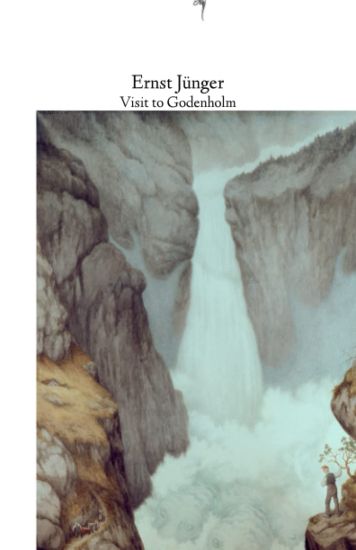
Visit to Godenholm (German: Besuch auf Godenholm) is a 1952 novella by the German writer Ernst J nger. It tells the story of a group of people who are invited to the island Godenholm in Scandinavia, where they take part in a mind-altering s ance with strong surreal imagery. "The light began to crackle, a blue thread rose from the edge of the candelabra. Moltner looked at it first with amazement, then with delight, as if his eyes had gained a new power. Honey-scented smoke rose from thin wicks and then branched out into delicate wreaths. It was as if his imagination had created it - a tapestry of pale sea lilies in a depth that barely rippled with the surge of the waves. Time activated in the structure - encircled it, twisted and curved it, as if imaginary coins were being quickly stacked on top of one another. The multiplicity of space was revealed in the fibrous net, in the nerves stretching the thread in infinite numbers and unfurling vertically."

Obschestvo tekhnologicheskogo progressa i torzhestvo iskusstvennogo intellekta, roboty, zamenjajuschie cheloveka na proizvodstve, razvitie virtualnoj realnosti i komfortnoe suschestvovanie - takov antiutopicheskij mir, v kotorom zhivet otstavnoj rotmistr Rikhard. Plata za podobnoe "blagopoluchie" - odinochestvo i utrata lichnoj svobody.Nesmotrja na eto, on pytaetsja poluchit rabotu na fabrike po proizvodstvu nadelennykh intellektom robotov-liliputov nekoego Dzapparoni, izoschrennogo ljubitelja eksperimentov, zhelajuschego prevzojti glavnogo tvortsa - prirodu. No byt mozhet, sovershenstvo tekhnologij - illjuzornoe blago, kotoroe lish sbivaet chelovechestvo s istinnogo puti?
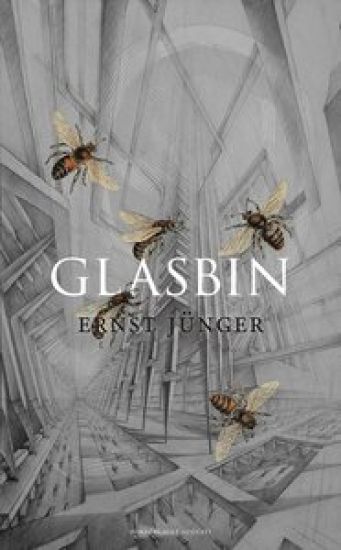
Richard står på botten av sin karriär, av sitt liv, barskrapad och, tycker han, fundamentalt misslyckad i sin hustrus ögon. För att förändra sin situation vänder han sig till sin forne kamrat inom Lätta kavalleriet, Twinnings. Denne har kontakter i samhällets alla vrår och erbjuder Richard en intervju hos industrimagnaten Zapparoni, den ökände och mytomspunne mångmiljardär som gjort sin förmögenhet på miniatyrrobotar och revolutionerat den moderna filmindustrin. Zapparoni tycker sig ha problem med sin egensinniga personal och söker någon som förstår att hålla dem under uppsikt så att uppfinningarna inte försvinner till konkurrenterna.Anställningen har dock ett outtalat pris, och under intervjun slits Richard mellan fruktan för sitt eget liv och sina föreställningar om Zapparoni och dennes metoder. När Richard vilar ut sig i Zapparonis lilla trädgård full av surrande bin, retar en ingivelse honom - är allt verkligen som det verkar? Ernst Jüngers framtidsroman Glasbin är en av författarens mest kända berättelser. I den fängslande historien med dess skrämmande och illavarslande scener gör Jünger ett flertal anmärkningsvärt träffsäkra förutsägelser om framtiden när han beskriver den totala övervakningens intrång i människans liv, robot- och nanoteknologins utveckling, det moderna samhällets påverkan på miljön, och inte minst om de multinationella jättarnas ofta överstatliga och autonoma karaktär och de gränslösa medel som står till deras ägares förfogande.
Skogen utgör i denna essä symbolen för ett nytt frihetsanspråk, i ruinerna efter det andra världskriget. När Skogsvandringen utkom 1951 gällde denna fråga på ett plan hela Tysklands öde - moraliskt, militärt och politiskt en bruten nation, som nu fann sig lämnad i skiljelinjen mellan massdemokratins och folkrepublikernas rustade världsmakter i öst och i väst. Samtidigt är det ett motståndsmanifest för den enskilda människan, bortom gränsernas och de olika statsskickens tvingande inskränkningar. Den som väljer skogsvandrarens väg finner sig ställd inför en maktordning som i förening med tekniken reser totala anspråk. Dess framträdande kräver en ny form av frihet, och för att tyda dess symboler och kulisser krävs ett perspektivskifte. Likt partisanen väljer skogsvandraren att lämna detta samhälle bakom sig för att i skogen grunda sin frihet på ett djupare inre plan. Först då blir det återigen möjligt att handla.Ernst Jünger (1895-1998) har som ingen annan kommit att betraktas som en uttolkare av hela 1900-talets malströmmar och dynamiska potential. Skogsvandringen anknyter till flera teman i hans författarskap, inte minst den enskilda människans trotsiga försök att hävda sin frihet i en teknisk-titanisk tidsålder.
The Storm of Steel: From the Diary of a German Storm-Troop Officer on the Western Front
Ernst Jünger
Cosimo Classics
2020
nidottu
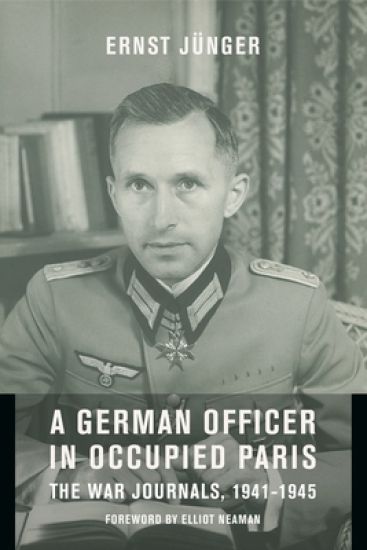
A German Officer in Occupied Paris
Ernst Jünger; Elliot Neaman
Columbia University Press
2020
pokkari
Ernst Jünger was one of twentieth-century Germany’s most important—and most controversial—writers. Decorated for bravery in World War I and the author of the acclaimed western front memoir Storm of Steel, he frankly depicted war’s horrors even as he extolled its glories. As a Wehrmacht captain during World War II, Jünger faithfully kept a journal in occupied Paris and continued to write on the eastern front and in Germany until its defeat—writings that are of major historical and literary significance.Jünger’s Paris journals document his Francophile excitement, romantic affairs, and fascination with botany and entomology, alongside mystical and religious ruminations and trenchant observations on the occupation and the politics of collaboration. While working as a mail censor, he led the privileged life of an officer, encountering artists such as Céline, Cocteau, Braque, and Picasso. His notes from the Caucasus depict the chaos after Stalingrad and atrocities on the eastern front. Upon returning to Paris, Jünger observed the French resistance and was close to the German military conspirators who plotted to assassinate Hitler in 1944. After fleeing France, he reunited with his family as Germany’s capitulation approached. Both participant and commentator, close to the horrors of history but often distancing himself from them, Jünger turned his life and experiences into a work of art. These wartime journals appear here in English for the first time, giving fresh insights into the quandaries of the twentieth century from the keen pen of a paradoxical observer.
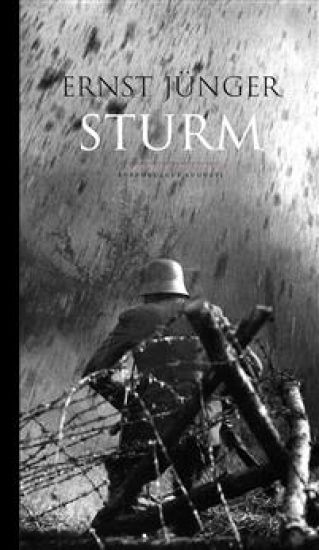
Berättelsen "Sturm" utspelar sig på västfronten under första världskriget. På ljuskänsligt papper fäster Ernst Jünger via sitt alter ego, officeren Sturm, sina upplevelser från skyttegravsstriderna dagarna före och under Sommeoffensiven på sommaren 1916. Tillsammans med sina frontkamrater försöker Sturm överleva både som kulturvarelse och vardagen i skyttegraven, i en tid då mordmaskineriet och det hänsynslösa kvantitetstänkandet hotar människans djupaste värdighet och mening. I dödens skugga betraktar sig officerskollegerna som andliga äventyrare i en utslocknande kulturepok."En stilistiskt fullfjädrad 'seismograf' med den 'rena anden' i en värld präglad av moralisk bankrutt som övergripande mål för sitt suggestiva berättande"Svenska Dagbladet"På ett oöverträffat sätt gestaltar han den mentalitet av dödskult, heder, förakt för demokrati och det moderna samhället som präglade många unga män vid tiden för de bägge världskrigen"Arbetet
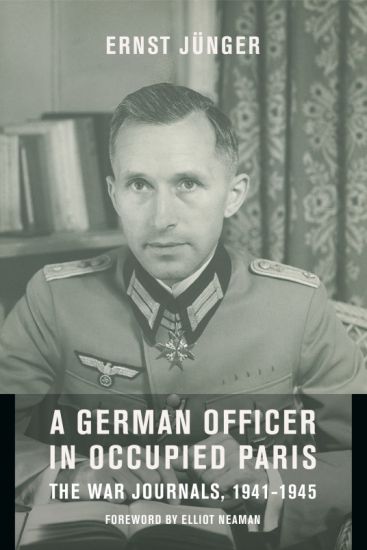
A German Officer in Occupied Paris
Ernst Jünger; Elliot Neaman
Columbia University Press
2019
sidottu
Ernst Jünger was one of twentieth-century Germany’s most important—and most controversial—writers. Decorated for bravery in World War I and the author of the acclaimed western front memoir Storm of Steel, he frankly depicted war’s horrors even as he extolled its glories. As a Wehrmacht captain during World War II, Jünger faithfully kept a journal in occupied Paris and continued to write on the eastern front and in Germany until its defeat—writings that are of major historical and literary significance.Jünger’s Paris journals document his Francophile excitement, romantic affairs, and fascination with botany and entomology, alongside mystical and religious ruminations and trenchant observations on the occupation and the politics of collaboration. While working as a mail censor, he led the privileged life of an officer, encountering artists such as Céline, Cocteau, Braque, and Picasso. His notes from the Caucasus depict the chaos after Stalingrad and atrocities on the eastern front. Upon returning to Paris, Jünger observed the French resistance and was close to the German military conspirators who plotted to assassinate Hitler in 1944. After fleeing France, he reunited with his family as Germany’s capitulation approached. Both participant and commentator, close to the horrors of history but often distancing himself from them, Jünger turned his life and experiences into a work of art. These wartime journals appear here in English for the first time, giving fresh insights into the quandaries of the twentieth century from the keen pen of a paradoxical observer.
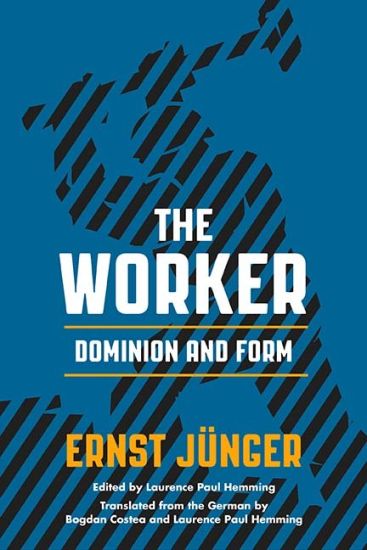
Written in 1932, just before the fall of the Weimar Republic and on the eve of the Nazi accession to power, Ernst Jünger’s The Worker: Dominion and Form articulates a trenchant critique of bourgeois liberalism and seeks to identify the form characteristic of the modern age. Jünger’s analyses, written in critical dialogue with Marx, are inspired by a profound intuition of the movement of history and an insightful interpretation of Nietzsche’s philosophy.Martin Heidegger considered Jünger “the only genuine follower of Nietzsche,” singularly providing “an interpretation which took shape in the domain of that metaphysics which already determines our epoch, even against our knowledge; this metaphysics is Nietzsche's doctrine of the ‘will to power.’” In The Worker, Jünger examines some of the defining questions of that epoch: the nature of individuality, society, and the state; morality, justice, and law; and the relationships between freedom and power and between technology and nature.This work, appearing in its entirety in English translation for the first time, is an important contribution to debates on work, technology, and politics by one of the most controversial German intellectuals of the twentieth century. Not merely of historical interest, The Worker carries a vital message for contemporary debates about world economy, political stability, and equality in our own age, one marked by unsettling parallels to the 1930s.