Kirjojen hintavertailu. Mukana 12 657 676 kirjaa ja 12 kauppaa.
Kirjailija
Erwin Chemerinsky
Kirjat ja teokset yhdessä paikassa: 26 kirjaa, julkaisuja vuosilta 1987-2025, suosituimpien joukossa Justice at Trial. Vertaile teosten hintoja ja tarkista saatavuus suomalaisista kirjakaupoista.
The Supreme Court’s October 2024 Term was filled with blockbuster decisions that will have a dramatic effect on the law and on people’s lives. This concise book reviews the key decisions of October Term 2024 and their implications. Table of Contents: Introduction Administrative Law Business Law Cases Civil Procedure and Federal Jurisdiction Civil Rights Criminal Law and Procedure Environmental Law Equal Protection First Amendment: Religion First Amendment: Speech Guns Immigration Law Presidential Power Looking Ahead
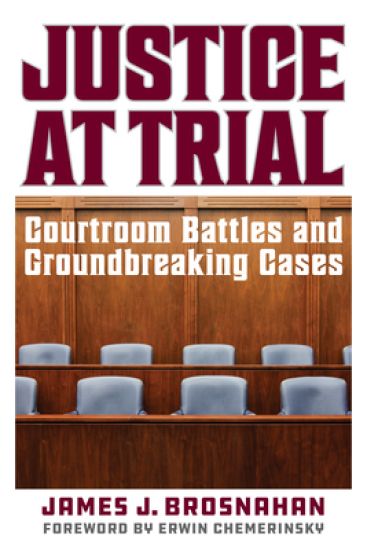
Follow a trial lawyer’s career through the demanding, often controversial, and suspenseful world of jury trials, tension-filled appeals and the different worlds of courtrooms, jail cells, corporate boardrooms, and law firms. Each of the cases in the nineteen chapters were selected from a total of his 150 jury trials to reflect issues of current importance, including refugees on the Mexican border, gargantuan gender battles inside one of the largest corporations in the world, sexual taboos on national television, accusations of terrorism, government agents who cheat, innocent prisoners in our jails, the constitutional right to speak and print the truth, bringing law to a war zone, poverty and murder on Native American Reservations, current problems of hunger in America, and more.
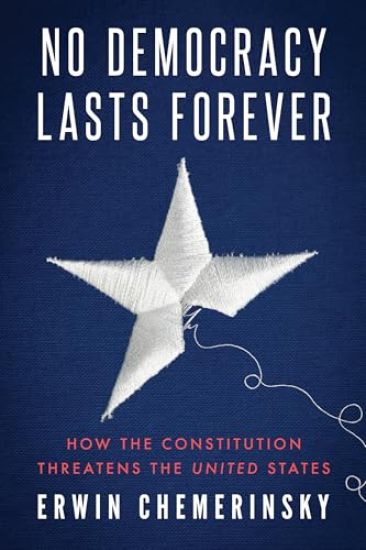
The American Constitution has become a threat to American democracy. Due to its inherent flaws Erwin Chemerinsky, has concluded that the nearly 250-year-old founding document can no longer hold. One might expect that amending the Constitution would solve the problem, yet only fifteen of the 11,848 amendments proposed since 1789 have passed. Chemerinsky contends that without major changes, the Constitution is beyond redemption in that it has created a government that can no longer deal with the urgent issues that threaten America and the world. Despite these troubles, Chemerinsky looks to the past and finds hope that change can happen. Political Armageddon can be avoided, Chemerinsky writes, if the Constitution is rewritten from start to finish.
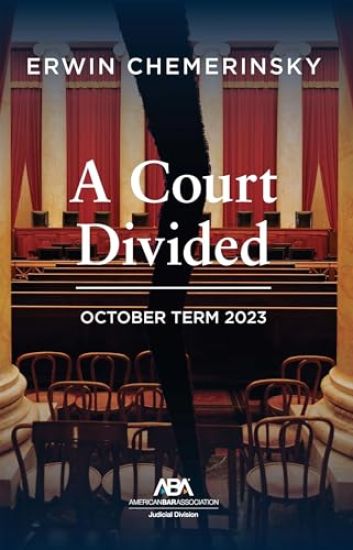
The Supreme Court’s October 2023 Term was filled with blockbuster decisions that will have a dramatic effect on the law and on people’s lives. The Court created broad immunity from criminal prosecution for official acts taken by a president, dramatically limited the power of federal administrative agencies, clarified the meaning of the Second Amendment, and empowered cities to use the criminal law against the unhoused. This concise book reviews the key decisions of October Term 2022 and their implications.
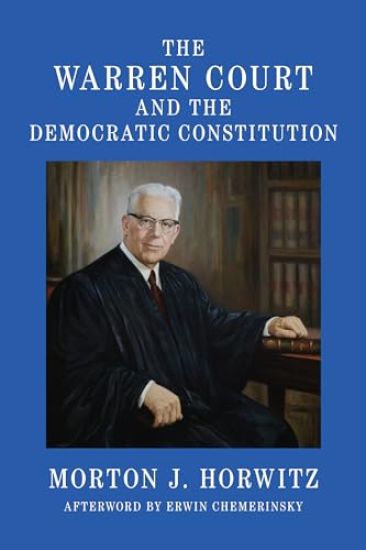
A timely history of the profound impact of Earl Warren's Supreme Court on many areas of modern American government and societyFrom 1953 to 1969, Earl Warren served as chief justice of the US Supreme Court. During that time, the Warren Court made a number of historically important decisions involving anti-miscegenation laws (Loving v. Virginia), the right to privacy (Griswold v. Connecticut), and, perhaps most important, racial segregation (Brown v. Board of Education).In The Warren Court and Democratic Constitution, Horwitz highlights the radical shift in traditional jurisprudential ideas that occurred during Earl Warren's tenure as chief justice. He details how Brown v. Board of Education exerted a powerful influence on the agenda of the Warren Court and reshaped almost every subject area in constitutional law. With this decision, the concept of a "living Constitution," the idea that the Constitution ought to develop to accommodate social change, emerged and was institutionalized by the Court. Brown inspired a more active reading of the Equal Protection Clause, and the Court soon applied this expanded notion of "equal protection" to legislative apportionment, recognized the rights of supposed "outsiders" (e.g., undocumented peoples and children born out of wedlock), and initiated a new era of legal attacks on gender discrimination.The Warren Court's jurisprudence is radically opposed to the current Supreme Court's emphasis on originalism, the approach of interpreting the Constitution according to its meaning at the time of writing. Readers interested in an alternative to originalism, as well as Supreme Court history and civil rights, will gain a deeper understanding of the profound impact of the Warren Court on many areas of modern American government and society.
Deeply troubled by the US Constitution’s inherent flaws, Erwin Chemerinsky, the renowned dean of Berkeley law school, came to the sobering conclusion that the nearly 250-year-old founding document is responsible for the crisis now facing American democracy. Pointing out that just fifteen of the 11,848 amendments proposed since 1789 have passed, Chemerinsky contends that the very nature of our polarisation results from the Constitution’s “bad bones”, which have created a government that no longer works or has the confidence of the public. Yet political armageddon can still be avoided, Chemerinsky writes, if a new constitutional convention is empowered to replace the Constitution of 1787, much as the Founding Fathers replaced the outdated Articles of Confederation. If this isn’t possible, Americans must give serious thought to forms of secession—including a United States structured like the European Union—based on a recognition that what divides the United States is, in fact, greater than what unites it.
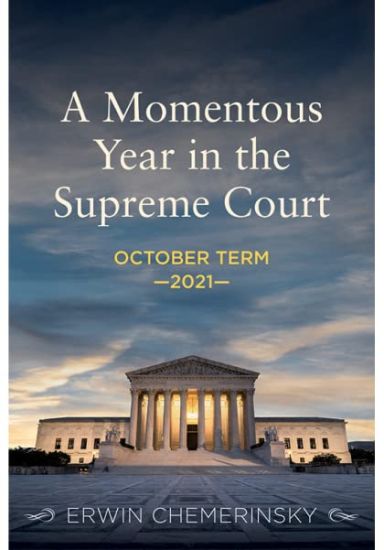
This review of the Supreme Court's October 2021 Term looks back at the major cases addressed by the Court and provides a valuable focus on the implications of these decisions. Written by Erwin Chemerinsky, Dean of the University of California at Berkeley School of Law, the book takes a neutral tone, neither praising nor criticizing the decisions, and organizes the case essays by topic.
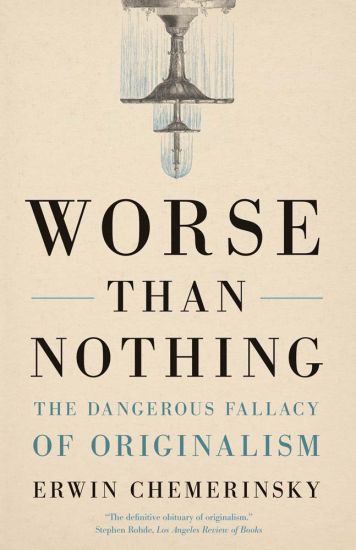
Why originalism is a flawed, incoherent, and dangerously ideological method of constitutional interpretation “Chemerinsky . . . offers a concise, point-by-point refutation of the theory [of originalism]. He argues that it cannot deliver what it promises—and if it could, no one would want what it is selling.”—David Cole, New York Review of Books Originalism, the view that the meaning of a constitutional provision is fixed when it is adopted, was once the fringe theory of a few extremely conservative legal scholars but is now a well-accepted mode of constitutional interpretation. Three of the Supreme Court’s nine justices explicitly embrace the originalist approach, as do increasing numbers of judges in the lower courts. Noted legal scholar Erwin Chemerinsky gives a comprehensive analysis of the problems that make originalism unworkable as a method of constitutional interpretation. He argues that the framers themselves never intended constitutional interpretation to be inflexible and shows how it is often impossible to know what the “original intent” of any particular provision was. Perhaps worst of all, though its supporters tout it as a politically neutral and objective method, originalist interpretation tends to disappear when its results fail to conform to modern conservative ideology.
Follow a trial lawyer’s career through the demanding, often controversial, and suspenseful world of jury trials, tension-filled appeals and the different worlds of courtrooms, jail cells, corporate boardrooms, and law firms. Each of the cases in the nineteen chapters were selected from a total of his 150 jury trials to reflect issues of current importance, including refugees on the Mexican border, gargantuan gender battles inside one of the largest corporations in the world, sexual taboos on national television, accusations of terrorism, government agents who cheat, innocent prisoners in our jails, the constitutional right to speak and print the truth, bringing law to a war zone, poverty and murder on Native American Reservations, current problems of hunger in America, and more.
Buy a new version of this textbook and receive access to the Connected eBook on Casebook Connect, including lifetime access to the online ebook with highlight, annotation, and search capabilities. Access also includes an outline tool and other helpful resources. Connected eBooks provide what you need most to be successful in your law school classes. Federal Courts deservedly have the reputation of being an exceptionally difficult course, and this book is designed to make it accessible to students by providing the context of cases and doctrines, as well as explaining their relevance to the issues being litigated in the 21st century. Federal Courts in Context supports what pedagogic research calls "deep learning." It does so by framing federal jurisdiction and structural constitutional law using clear, concise explanations of the social and historical context of canonical cases to reveal the concrete stakes of traditional debates about federal judicial power. The result is an engaging, accessible, and richly textured account of the subject supporting not only more sophisticated doctrinal and jurisprudential analysis but also the necessary foundation for inclusive pedagogy in the training of diverse 21st-century lawyers. The focus is on canonical cases and their context rather than notoriously dense treatise-like material common to other books in the field. The book is also organized to dovetail with Erwin Chemerinsky's Federal Jurisdiction to maximize the accessibility of the casebook content and learning outcomes.Benefits for instructors and students: Structured to pair with the most commonly used secondary reference in the field, Erwin Chemerinsky's Federal Jurisdiction.Focuses on canonical cases and excerpts rather than long, dense notes and treatise-like material.Directly addresses the structural constitutional significance of the Civil War, Reconstruction Amendments, and the retreat from Reconstruction for federalism, the modern Court's federalism revival, and separation of powers.Makes explicit the influences of Indian Removal, allotment, and the late nineteenth-century extension of the American empire on doctrines of sovereignty, jurisdiction, plenary power, and non-Article III courts.Provides interdisciplinary contextualization of the labor movement, the New Deal, and the reproductive rights movement to enrich analysis of reverse-Erie cases, the rise of the administrative state, agency adjudication, and standing.Marries doctrinal and theoretical precision about the course's core concepts (federalism, separation of powers, the Supremacy Clause, and jurisdiction) with legal realist sensibilities and attention to how ordinary people are affected by structural constitutional law, rather than abstractions, Socratic questions without answers, or other pedagogic techniques divorced from the research on deep learning.
The ACLU was involved in excess of 1,190 cases in the US Supreme Court as a party, counsel of record/ACLU attorney, or as the filer of an amicus (friend of the court) brief, during ninety-four of its first one hundred years, ending in January 19, 2020. This handbook summarizes all the facts and statistics from its companion three-volume set of over 1,190 cases (from June 8, 1925, Gitlow v. New York), and contains three examples of the cases found in the three-volume set.
Is a fight against equality and for privilege a fight for religious supremacy? Andrew L. Seidel, a constitutional attorney and author of the critically acclaimed book The Founding Myth: Why Christian Nationalism Is Un-American, dives into the debate on religious liberty, the modern attempt to weaponize religious freedom, and the Supreme Court's role in that “crusade.” Seidel examines some of the key Supreme Court cases of the last thirty years—including Masterpiece Cakeshop v. Colorado Civil Rights Commission (a bakery that refused to make a wedding cake for a gay couple), Trump v. Hawaii (the anti-Muslim travel ban case), American Legion v. American Humanist Association (related to a group maintaining a 40-foot Christian cross on government-owned land), and Tandon v. Newsom (a Santa Clara Bible group exempted from Covid health restrictions), as well as the recent overturning of Roe v. Wade—and how a hallowed legal protection, freedom of religion, has been turned into a tool to advance privilege and impose religion on others. This is a meticulously researched and deeply insightful account of our political landscape with a foreword provided by noted constitutional scholar Erwin Chemerinsky, author of The Case Against the Supreme Court.The issue of church versus state is more relevant than ever in today’s political climate and with the conservative majority status of the current Supreme Court. This book is a standout on the shelf for fans of Michelle Alexander, Bob Woodward, and Christopher Hitchens. Readers looking for critiques of the rise of Christian nationalism, like Jesus and John Wayne, and examinations like How Democracies Die will devour Seidel's analysis.Hardcover with dust jacket; 320 pages; 9 in H by 6 in W.
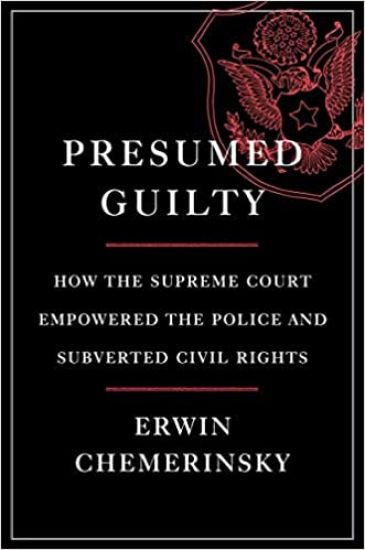
Police are nine times more likely to kill African-American men than they are other Americans--in fact, nearly one in every thousand will die at the hands, or under the knee, of an officer. As eminent constitutional scholar Erwin Chemerinsky powerfully argues, this is no accident, but the horrific result of an elaborate body of doctrines that allow the police and, crucially, the courts to presume that suspects--especially people of color--are guilty before being charged. Today in the United States, much attention is focused on the enormous problems of police violence and racism in law enforcement. Too often, though, that attention fails to place the blame where it most belongs, on the courts, and specifically, on the Supreme Court. A "smoking gun" of civil rights research, Presumed Guilty presents a groundbreaking, decades-long history of judicial failure in America, revealing how the Supreme Court has enabled racist practices, including profiling and intimidation, and legitimated gross law enforcement excesses that disproportionately affect people of color.For the greater part of its existence, Chemerinsky shows, deference to and empowerment of the police have been the modi operandi of the Supreme Court. From its conception in the late eighteenth century until the Warren Court in 1953, the Supreme Court rarely ruled against the police, and then only when police conduct was truly shocking. Animating seminal cases and justices from the Court's history, Chemerinsky--who has himself litigated cases dealing with police misconduct for decades--shows how the Court has time and again refused to impose constitutional checks on police, all the while deliberately gutting remedies Americans might use to challenge police misconduct.Finally, in an unprecedented series of landmark rulings in the mid-1950s and 1960s, the pro-defendant Warren Court imposed significant constitutional limits on policing. Yet as Chemerinsky demonstrates, the Warren Court was but a brief historical aberration, a fleeting liberal era that ultimately concluded with Nixon's presidency and the ascendance of conservative and "originalist" justices, whose rulings--in Terry v. Ohio (1968), City of Los Angeles v. Lyons (1983), and Whren v. United States (1996), among other cases--have sanctioned stop-and-frisks, limited suits to reform police departments, and even abetted the use of lethal chokeholds. Written with a lawyer's knowledge and experience, Presumed Guilty definitively proves that an approach to policing that continues to exalt "Dirty Harry" can be transformed only by a robust court system committed to civil rights. In the tradition of Richard Rothstein's The Color of Law, Presumed Guilty is a necessary intervention into the roiling national debates over racial inequality and reform, creating a history where none was before--and promising to transform our understanding of the systems that enable police brutality.
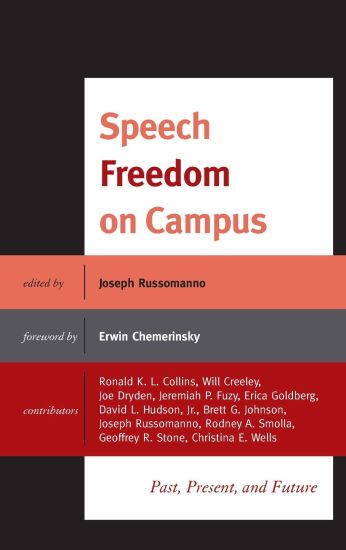
Traditionally, the university or college is thought to be the ultimate location for the discovery and sharing of knowledge. After all, on these campuses are some of the great minds across all fields, as well as students who are not only eager to learn, but who often contribute to our shared wisdom. For those ideals to be achieved, however, ideas require access to some kind of virtual marketplace from which people can sample and consider them, discuss and debate them. Restricting the expression of those ideas for whatever reason is the enemy of not only this process, but also of knowledge discovery. Speech freedom on our college and university campuses, like everywhere else, is fragile. There are those who wish to suppress it, more often than not when the words express ideas, opinions, and even facts that conflict with their beliefs. Why is this effort, so completely at odds with the foundational values of this country, made? This topic explored in Speech Freedom on Campus: Past, Present and Future is multi-layered, and its analysis is best accomplished through multiple perspectives. Joseph Russomanno’s edited collection does precisely that, utilizing 10 different scholars to examine various aspects and issues related to speech freedom on campus.
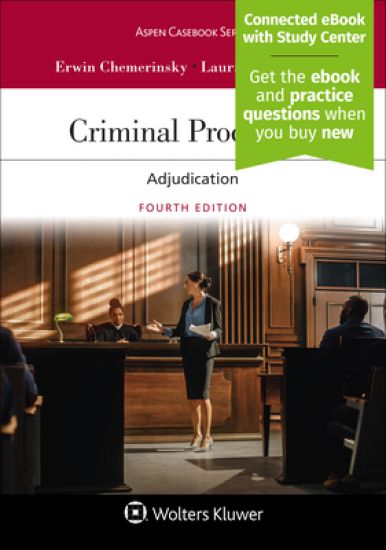
Buy a new version of this textbook and receive access to the Connected eBook with Study Center on Casebook Connect, including lifetime access to the online ebook with highlight, annotation, and search capabilities. Access also includes practice questions, an outline tool, and other helpful resources. Connected eBooks provide what you need most to be successful in your law school classes. Written in a student-friendly manner, the fourth edition of Criminal Procedure: Adjudication eschews excessive reliance on rhetorical questions and law review excerpts in favor of comprehensive exploration of black letter law and current policy issues. Authored by a pair of well-respected criminal and constitutional law scholars, Criminal Procedure: Adjudication utilizes a chronological approach that guides students through criminal procedure doctrine, from prosecution initiation to habeas corpus relief. In addition to presenting the perspectives from various stakeholders (e.g. defense attorneys, judges, prosecutors, and victims), the authors take care to provide students with useful, practice-oriented materials, including pleadings and motions papers. Criminal Procedure: Adjudication not only employs a systemic approach that takes students through each step of criminal adjudication, but also introduces issues at the forefront of modern criminal procedure debates.New to the Fourth Edition: The Fourth Edition has been thoroughly updated to provide analysis of important, recent decisions in the area of Criminal Procedure, including several decisions from the Supreme Court's most recent terms and discussion of policy issues at the forefront of criminal law.New cases include McCoy v. Louisiana (Sixth Amendment right to counsel); Ramos v. Louisiana (trial by jury); Flowers v. Mississippi (jury composition and selection); Jones v. Mississippi (sentencing); Bucklew v. Precythe (the death penalty); and Gamble v. United States (the dual sovereignty doctrine in double jeopardy)Professors and student will benefit from: Straightforward writing style and dynamic text Clear and not cluttered with law reviews excerptsRelies on cases and author essays rather than excerpts and rhetoric questionsPresents thoughtfully edited principal and note casesIntuitive organization and chronological presentation Presents topics in easy-to-understand approach from prosecution to post-conviction reliefApproachable organization based on common progression through criminal justice systemSystematic and cohesive presentation of topics Explores underlying policy before heading into doctrinal specificsPractice-oriented features Discussion of important, modern criminal procedure issuesUseful examples for future and current criminal law practitionersTeaching materials Include: Teacher's ManualPowerPointsPractice examsSupplemental handouts and practice materialsCompanion video
Presumed Guilty, like the best-selling The Color of Law, is a "smoking gun" of civil rights research, a troubling history that reveals how the Supreme Court enabled racist policing and sanctioned law enforcement excesses. The fact that police are nine times more likely to kill Black men than other Americans is no accident; it is the result of an elaborate body of doctrines that allow the police and courts to presume that suspects are guilty before being charged.Demonstrating how the prodefendant Warren Court was a brief historical aberration, Erwin Chemerinsky shows how this more liberal era ended with Nixon's presidency and the ascendance of conservative justices, whose rulings--like Terry v. Ohio and Los Angeles v. Lyons--have permitted stops and frisks, limited suits to reform police departments, and even abetted the use of chokeholds. Presumed Guilty concludes that an approach to policing that continues to exalt "Dirty Harry" can be transformed only by a robust court system committed to civil rights.
Traditionally, the university or college is thought to be the ultimate location for the discovery and sharing of knowledge. After all, on these campuses are some of the great minds across all fields, as well as students who are not only eager to learn, but who often contribute to our shared wisdom. For those ideals to be achieved, however, ideas require access to some kind of virtual marketplace from which people can sample and consider them, discuss and debate them. Restricting the expression of those ideas for whatever reason is the enemy of not only this process, but also of knowledge discovery. Speech freedom on our college and university campuses, like everywhere else, is fragile. There are those who wish to suppress it, more often than not when the words express ideas, opinions, and even facts that conflict with their beliefs. Why does an effort so completely at odds with the foundational values of this country happen? This topic explored in Speech Freedom on Campus: Past, Present and Future is multi-layered, and its analysis is best accomplished through multiple perspectives. Joseph Russomanno’s edited collection does precisely that, utilizing 10 different scholars to examine various aspects and issues related to speech freedom on campus.
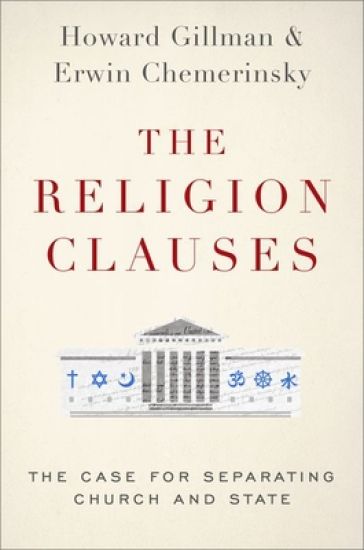
Throughout American history, views on the proper relationship between the state and religion have been deeply divided. And, with recent changes in the composition of the Supreme Court, First Amendment law concerning religion is likely to change dramatically in the years ahead. In The Religion Clauses, Erwin Chemerinsky and Howard Gillman, two of America's leading constitutional scholars, begin by explaining how freedom of religion is enshrined in the First Amendment through two provisions. They defend a robust view of both clauses and work from the premise that that the establishment clause is best understood, in the words of Thomas Jefferson, as creating a wall separating church and state. After examining all the major approaches to the meaning of the Constitution's religion clauses, they contend that the best approaches are for the government to be strictly secular and for there to be no special exemptions for religious people from neutral and general laws that others must obey. In an America that is only becoming more diverse with respect to religion, this is not only the fairest approach, but the one most in tune with what the First Amendment actually prescribes. Both a pithy primer on the meaning of the religion clauses and a broad-ranging indictment of the Court's misinterpretation of them in recent years, The Religion Clauses shows how a separationist approach is most consistent with the concerns of the founders who drafted the Constitution and with the needs of a religiously pluralistic society in the 21st century.
This work will become the defining text on progressive constitutionalism -- a parallel to Thomas Picketty's contribution but for all who care deeply about constitutional law. Beautifully written and powerfully argued, this is a masterpiece. --Lawrence Lessig, Harvard Law School, and author of Free Culture Worried about what a super conservative majority on the Supreme Court means for the future of civil liberties? From gun control to reproductive health, a conservative court will reshape the lives of all Americans for decades to come. The time to develop and defend a progressive vision of the U.S. Constitution that protects the rights of all people is now. University of California Berkeley Dean and respected legal scholar Erwin Chemerinsky expertly exposes how conservatives are using the Constitution to advance their own agenda that favors business over consumers and employees, and government power over individual rights. But exposure is not enough. Progressives have spent too much of the last forty-five years trying to preserve the legacy of the Warren Court's most important rulings and reacting to the Republican-dominated Supreme Courts by criticizing their erosion of rights--but have not yet developed a progressive vision for the Constitution itself. Yet, if we just look to the promise of the Preamble--liberty and justice for all--and take seriously its vision, a progressive reading of the Constitution can lead us forward as we continue our fight ensuring democratic rule, effective government, justice, liberty, and equality. Includes the Complete Constitution and Amendments of the United States of America
Can free speech coexist with an inclusive campus environment? “An urgent and indispensable roadmap to guide us through one of the most divisive periods in American history.”—Stephen Rohde, Los Angeles Review of Books Hardly a week goes by without another controversy over free speech on college campuses. On one side, there are increased demands to censor hateful, disrespectful, and bullying expression and to ensure an inclusive and nondiscriminatory learning environment. On the other side are traditional free speech advocates who charge that recent demands for censorship coddle students and threaten free inquiry. In this clear and carefully reasoned book, a university chancellor and a law school dean—both constitutional scholars who teach a course in free speech to undergraduates—argue that campuses must provide supportive learning environments for an increasingly diverse student body but can never restrict the expression of ideas. This book provides the background necessary to understanding the importance of free speech on campus and offers clear prescriptions for what colleges can and can’t do when dealing with free speech controversies.

![Federal Courts in Context: [Connected Ebook]](/covers/9781543850314.jpg)