

Kirjailija
Étienne Balibar
Kirjat ja teokset yhdessä paikassa: 36 kirjaa, julkaisuja vuosilta 1977-2025, suosituimpien joukossa Spinoza und die Politik. Vertaile teosten hintoja ja tarkista saatavuus suomalaisista kirjakaupoista.
Mukana myös kirjoitusasut: Etienne Balibar, Ètienne Balibar
36 kirjaa
Kirjojen julkaisuhaarukka 1977-2025.

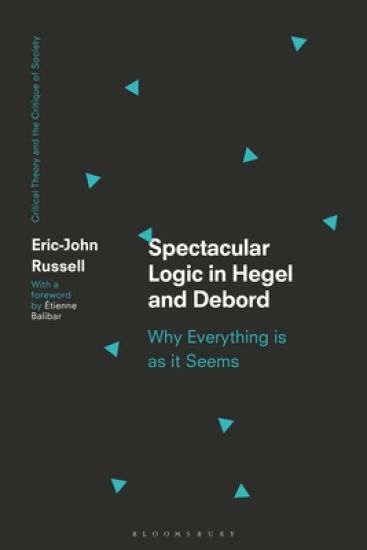
Spectacular Logic in Hegel and Debord
Eric-John Russell; Étienne Balibar
BLOOMSBURY PUBLISHING PLC
2022
nidottu
Revisiting Guy Debord’s seminal work, The Society of the Spectacle (1967), Eric-John Russell breathes new life into a text which directly preceded and informed the revolutionary fervour of May 1968. Deepening the analysis between Debord and Marx by revealing the centrality of Hegel’s speculative logic to both, he traces Debord’s intellectual debt to Hegel in a way that treads new ground for critical theory. Drawing extensively from The Phenomenology of Spirit (1807) and Science of Logic (1812), this book illustrates the lasting impact of Debord’s critical theory of 20th-century capitalism and reveals new possibilities for the critique of capitalism.
Spectacular Logic in Hegel and Debord
Eric-John Russell; Étienne Balibar
Bloomsbury Academic
2021
sidottu
Revisiting Guy Debord’s seminal work, The Society of the Spectacle (1967), Eric-John Russell breathes new life into a text which directly preceded and informed the revolutionary fervour of May 1968. Deepening the analysis between Debord and Marx by revealing the centrality of Hegel’s speculative logic to both, he traces Debord’s intellectual debt to Hegel in a way that treads new ground for critical theory. Drawing extensively from The Phenomenology of Spirit (1807) and Science of Logic (1812), this book illustrates the lasting impact of Debord’s critical theory of 20th-century capitalism and reveals new possibilities for the critique of capitalism.
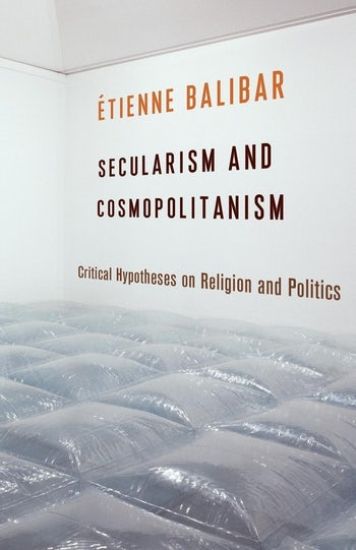
What is the relationship between cosmopolitanism and secularism—the worldwide and the worldly? While cosmopolitan politics may seem inherently secular, existing forms of secularism risk undermining the universality of cosmopolitanism because they privilege the European tradition over all others and transform particular historical norms into enunciations of truth, valid for all cultures and all epochs. In this book, the noted philosopher Étienne Balibar explores the tensions lurking at this troubled nexus in order to advance a truly democratic and emancipatory cosmopolitanism, which requires a secularization of secularism itself.Balibar argues for the idea of the universal against its particular dominant institutions. He questions the assumptions that underlie popular ideas of secularism and religion and outlines the importance of a new critique for the contemporary world. Balibar holds that conflicts between religious and secular discourses need to be reframed from a point of view that takes into account the cultural hybridization, migration and mobility, and transformation of borders that have reshaped the postcolonial age. Among the topics discussed are the uses and misuses of the category of religion and the religious, the paradoxical genealogy of monotheism, French laïcité’s identitarian turn, and the implications of the responses to the Charlie Hebdo attacks for an extended definition of free speech. Going beyond circumscribed notions of religion and the public sphere, Secularism and Cosmopolitanism is a profound rethinking of identity and difference that seeks to make room for a renewed political imagination.
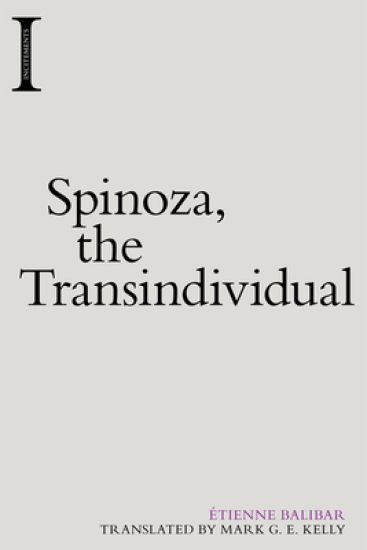
Etienne Balibar, one of the foremost living French philosophers, builds on his landmark work 'Spinoza and Politics' with this exploration of Spinoza's ontology. Balibar situates Spinoza in relation to the major figures of Marx and Freud as a precursor to the more recent French thinker Gilbert Simondon's concept of the transindividual. Presenting a crucial development in his thought, Balibar takes the concept of transindividuality beyond Spinoza to show it at work at both the individual and the collective level.
tienne Balibar, one of the foremost living French philosophers, builds on his landmark work 'Spinoza and Politics' with this exploration of Spinoza's ontology. Balibar situates Spinoza in relation to the major figures of Marx and Freud as a precursor to the more recent French thinker Gilbert Simondon's concept of the transindividual. Presenting a crucial development in his thought, Balibar takes the concept of transindividuality beyond Spinoza to show it at work at both the individual and the collective level.
Many on the Left have looked upon "universal" as a dirty word, one that signals liberalism's failure to recognize the masculinist and Eurocentric assumptions from which it proceeds. In rejecting universalism, we have learned to reorient politics around particulars, positionalities, identities, immanence, and multiple modernities. In this book, one of our most important political philosophers builds on these critiques of the tacit exclusions of Enlightenment thought, while at the same time working to rescue and reinvent what universal claims can offer for a revolutionary politics answerable to the common. In the contemporary quarrel of universals, Balibar shows, the stakes are no less than the future of our democracies. In dialogue with such philosophers as Alain Badiou, Judith Butler, and Jacques Rancière, he meticulously investigates the paradoxical processes by which the universal is constructed and deconstructed, instituted and challenged, in modern society. With critical rigor and keen historical insight, Balibar shows that every statement and institution of the universal—such as declarations of human rights—carry an exclusionary, particularizing principle within themselves and that every universalism immediately falls prey to countervailing universalisms. Always equivocal and plural, the universal is thus a persistent site of conflict within societies and within subjects themselves. And yet, Balibar suggests, the very conflict of the universal—constituted as an ever-unfolding performative contradiction—also provides the emancipatory force needed to reinvigorate and reimagine contemporary politics and philosophy. In conversation with a range of thinkers from Marx, Freud, and Benjamin through Foucault, Derrida, and Scott, Balibar shows the power that resides not in the adoption of a single universalism but in harnessing the energies made available by claims to universality in order to establish a common answerable to difference.
Many on the Left have looked upon "universal" as a dirty word, one that signals liberalism's failure to recognize the masculinist and Eurocentric assumptions from which it proceeds. In rejecting universalism, we have learned to reorient politics around particulars, positionalities, identities, immanence, and multiple modernities. In this book, one of our most important political philosophers builds on these critiques of the tacit exclusions of Enlightenment thought, while at the same time working to rescue and reinvent what universal claims can offer for a revolutionary politics answerable to the common. In the contemporary quarrel of universals, Balibar shows, the stakes are no less than the future of our democracies. In dialogue with such philosophers as Alain Badiou, Judith Butler, and Jacques Rancière, he meticulously investigates the paradoxical processes by which the universal is constructed and deconstructed, instituted and challenged, in modern society. With critical rigor and keen historical insight, Balibar shows that every statement and institution of the universal—such as declarations of human rights—carry an exclusionary, particularizing principle within themselves and that every universalism immediately falls prey to countervailing universalisms. Always equivocal and plural, the universal is thus a persistent site of conflict within societies and within subjects themselves. And yet, Balibar suggests, the very conflict of the universal—constituted as an ever-unfolding performative contradiction—also provides the emancipatory force needed to reinvigorate and reimagine contemporary politics and philosophy. In conversation with a range of thinkers from Marx, Freud, and Benjamin through Foucault, Derrida, and Scott, Balibar shows the power that resides not in the adoption of a single universalism but in harnessing the energies made available by claims to universality in order to establish a common answerable to difference.

Wann artikulieren sich Konflikte zwischen den Klassen rassistisch? Und sind hier noch andere als ökonomische Strukturen im Spiel? Was ist die Spezifik des gegenwärtigen Rassismus? Wie lässt sie sich mit der Klassenspaltung im Kapitalismus und den Widersprüchen des Nationalstaats verknüpfen? Inwiefern zwingt uns das Phänomen des Rassismus wiederum zu einem Überdenken des Nationalismus und der Klassenkämpfe? Diesen Fragen gehen Etienne Balibar und Immanuel Wallerstein in diesem Grundlagenwerk der Rassismustheorie nach. Sie belegen, dass die Konflikte zwischen den Klassen noch in andere als nur ökonomische Strukturen eingebunden sind; die Widersprüchlichkeit des Rassismus zeigt sich in der Formierung nationaler und ethnischer Identitäten ebenso wie in der zweideutigen Wirksamkeit herrschender Ideologien.
What is the relationship between cosmopolitanism and secularism—the worldwide and the worldly? While cosmopolitan politics may seem inherently secular, existing forms of secularism risk undermining the universality of cosmopolitanism because they privilege the European tradition over all others and transform particular historical norms into enunciations of truth, valid for all cultures and all epochs. In this book, the noted philosopher Étienne Balibar explores the tensions lurking at this troubled nexus in order to advance a truly democratic and emancipatory cosmopolitanism, which requires a secularization of secularism itself.Balibar argues for the idea of the universal against its particular dominant institutions. He questions the assumptions that underlie popular ideas of secularism and religion and outlines the importance of a new critique for the contemporary world. Balibar holds that conflicts between religious and secular discourses need to be reframed from a point of view that takes into account the cultural hybridization, migration and mobility, and transformation of borders that have reshaped the postcolonial age. Among the topics discussed are the uses and misuses of the category of religion and the religious, the paradoxical genealogy of monotheism, French laïcité’s identitarian turn, and the implications of the responses to the Charlie Hebdo attacks for an extended definition of free speech. Going beyond circumscribed notions of religion and the public sphere, Secularism and Cosmopolitanism is a profound rethinking of identity and difference that seeks to make room for a renewed political imagination.
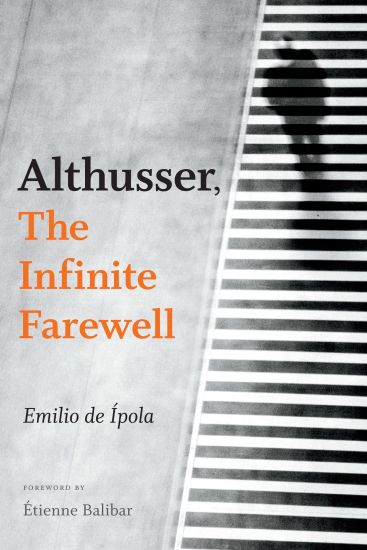
Althusser, the Infinite Farewell
Emilio de Ípola; Étienne Balibar
Duke University Press
2018
pokkari
In Althusser, The Infinite Farewell-originally published in Spanish and appearing here in English for the first time-Emilio de Ípola contends that Althusser’s oeuvre is divided between two fundamentally different and at times contradictory projects. The first is the familiar Althusser, that of For Marx and Reading Capital. Symptomatically reading these canonical texts alongside Althusser’s lesser-known writings, de Ípola reveals a second, subterranean current of thought that flows throughout Althusser’s classic formulations and which only gains explicit expression in his later works. This subterranean current leads Althusser to move toward an aleatory materialism, or a materialism of the encounter. By explicating this key aspect of Althusser’s theoretical practice, de Ípola revitalizes classic debates concerning major theoretico-political topics, including the relationship between Marxism, structuralism, and psychoanalysis; the difference between ideology, philosophy, and science; and the role of contingency and subjectivity in political encounters and social transformation. In so doing, he underscores Althusser’s continuing importance to political theory and Marxist and post-Marxist thought.
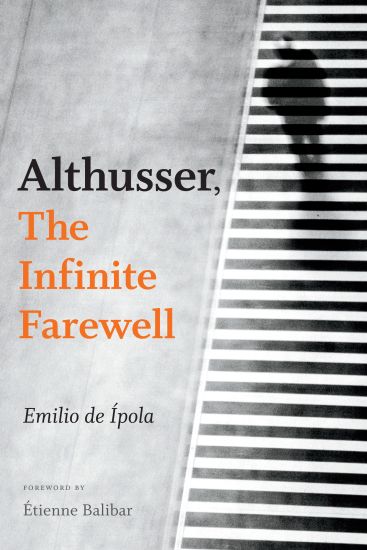
Althusser, the Infinite Farewell
Emilio de Ípola; Étienne Balibar
Duke University Press
2018
sidottu
In Althusser, The Infinite Farewell-originally published in Spanish and appearing here in English for the first time-Emilio de Ípola contends that Althusser’s oeuvre is divided between two fundamentally different and at times contradictory projects. The first is the familiar Althusser, that of For Marx and Reading Capital. Symptomatically reading these canonical texts alongside Althusser’s lesser-known writings, de Ípola reveals a second, subterranean current of thought that flows throughout Althusser’s classic formulations and which only gains explicit expression in his later works. This subterranean current leads Althusser to move toward an aleatory materialism, or a materialism of the encounter. By explicating this key aspect of Althusser’s theoretical practice, de Ípola revitalizes classic debates concerning major theoretico-political topics, including the relationship between Marxism, structuralism, and psychoanalysis; the difference between ideology, philosophy, and science; and the role of contingency and subjectivity in political encounters and social transformation. In so doing, he underscores Althusser’s continuing importance to political theory and Marxist and post-Marxist thought.
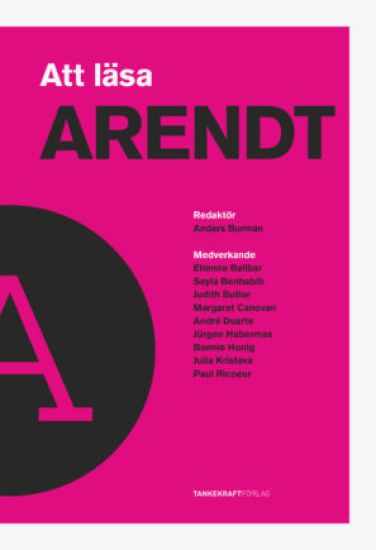
Att läsa Arendt
Étienne Balibar; Judith Butler; Julia Kristeva; Bonnie Honig; Jürgen Habermas; Seyla Benhabib; Paul Ricoeur
Tankekraft Förlag
2017
nidottu
Hannah Arendt framstår med allt större tydlighet som en av det förra århundradets mest egensinniga och användbara teoretiker. Föreliggande antologi samlar nio essäer och artiklar om hennes politiska tänkande. Ett par av texterna är skrivna av författare som primärt kan karakteriseras som Arendtforskare medan de övriga är skrivna av mer namnkunniga politiska tänkare och filosofer för vilka Arendt blir en dialogpartner i det kontinuerliga utvecklandet av deras egna teorier. Genomgående handlar det om författare som tänker med Arendt mot Arendt och som visar att det med utgångspunkt i hennes verk fortfarande är möjligt att ställa de riktigt stora frågorna om politikens mening, våld och makt, mänskliga rättigheter och människans villkor. Parallellt med den här boken publiceras Rätten till rättigheter: Politiska texter i urval som innehåller essäer, fragment och intervjuer av och med Hannah Arendt. Redaktör för båda volymerna är Anders Burman, idéhistoriker verksam vid Södertörns högskola som på TankeKraft förlag tidigare gett ut Att läsa Hegel (tillsammans med Anders Bartonek) och Flykten från Hegel.
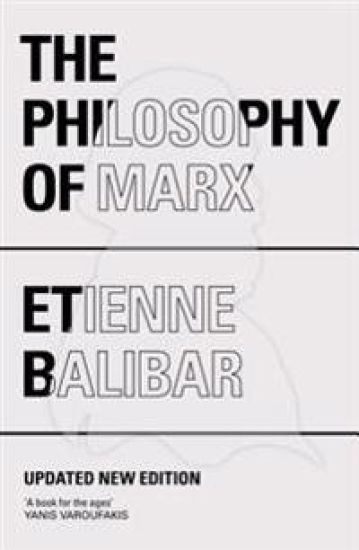
Written by one of political theory's leading thinkers, The Philosophy of Marx examines all the key areas of Marx's writings in their wider historical and theoretical context-including the concepts of class struggle, ideology, humanism, progress, determinism, commodity fetishism, and the state. Etienne Balibar opens a gateway into the thought of one of history's great minds.In this updated edition to this now classic work, Balibar has added a substantial introduction and new material. Complete with key "information boxes" for the student to make the most challenging areas of theory easy to understand, this remains the best available introduction to the most important thinker of the past 200 years.

What can the universals of political philosophy offer to those who experience "the living paradox of an inegalitarian construction of egalitarian citizenship"? Citizen Subject is the summation of Étienne Balibar's career-long project to think the necessary and necessarily antagonistic relation between the categories of citizen and subject. In this magnum opus, the question of modernity is framed anew with special attention to the self-enunciation of the subject (in Descartes, Locke, Rousseau, and Derrida), the constitution of the community as "we" (in Hegel, Marx, and Tolstoy), and the aporia of the judgment of self and others (in Foucualt, Freud, Kelsen, and Blanchot). After the "humanist controversy" that preoccupied twentieth-century philosophy, Citizen Subject proposes foundations for philosophical anthropology today, in terms of two contrary movements: the becoming-citizen of the subject and the becoming-subject of the citizen. The citizen-subject who is constituted in the claim to a "right to have rights" (Arendt) cannot exist without an underside that contests and defies it. He—or she, because Balibar is concerned throughout this volume with questions of sexual difference—figures not only the social relation but also the discontent or the uneasiness at the heart of this relation. The human can be instituted only if it betrays itself by upholding "anthropological differences" that impose normality and identity as conditions of belonging to the community. The violence of "civil" bourgeois universality, Balibar argues, is greater (and less legitimate, therefore less stable) than that of theological or cosmological universality. Right is thus founded on insubordination, and emancipation derives its force from otherness. Ultimately, Citizen Subject offers a revolutionary rewriting of the dialectic of universality and differences in the bourgeois epoch, revealing in the relationship between the common and the universal a political gap at the heart of the universal itself.

In Violence and Civility, Etienne Balibar boldly confronts the insidious causes of violence, racism, nationalism, and ethnic cleansing worldwide, as well as mass poverty and dispossession. Through a novel synthesis of theory and empirical studies of contemporary violence, the acclaimed thinker pushes past the limits of political philosophy to reconceive war, revolution, sovereignty, and class. Through the pathbreaking thought of Derrida, Balibar builds a topography of cruelty converted into extremism by ideology, juxtaposing its subjective forms (identity delusions, the desire for extermination, and the pursuit of vengeance) and its objective manifestations (capitalist exploitation and an institutional disregard for life). Engaging with Marx, Hegel, Hobbes, Clausewitz, Schmitt, and Luxemburg, Balibar introduces a new, productive understanding of politics as antiviolence and a fresh approach to achieving and sustaining civility. Rooted in the principles of transformation and empowerment, this theory brings hope to a world increasingly divided even as it draws closer together.

Att läsa Spinoza
Antonio Negri; Gilles Deleuze; Baruch Spinoza; Étienne Balibar; Luce Irigaray
Tankekraft Förlag
2016
nidottu
Baruch Spinoza har under de senaste decennierna tilldragit sig ett ökat filosofiskt intresse. Inte minst inom den politiska teorin har 1600-talsfilosofens formuleringar om demokratins villkor och förutsättningarna för grundandet av en politisk gemenskap blivit utgångspunkt för ett fruktbart nytänkande kring makt och motstånd i en samtida kontext. I denna antologi samlas ett brett urval av inflytelserika läsningar som ur skilda men besläktade perspektiv tar sig an hela rikedomen i Spinozas tänkande – från hans utläggningar om etik, politik och kunskap till den mer allmänna frågan om den filosofiska aktualiteten i klassiska filosofiska verk. Som helhet erbjuder boken ett rikhaltigt material för fördjupade studier i den spinozistiska traditionen. Innehållsförteckning: ”Spinozas filosofiska aktualitet: Heidegger, Adorno, Foucault” av Pierre Macherey, ”Definitionen av sanning hos Descartes och Spinoza” av Martial Gueroult, ”Vi och Spinoza” av Gilles Deleuze, ”Hegels idealistiske Spinoza” av Pierre Macherey, ”Om Spinoza” av Louis Althusser, ”Inneslutningen: En läsning av Spinoza” av Luce Irigaray, ”Spinozas stängda antologi” av Alain Badiou, ”Kropp och själ: Logiken om det ena eller det andra hos Spinoza” av Chantal Jacquet, ”’Politisk traktat’ eller grundandet av den moderna demokratin” av Antonio Negri, ”Den ’fria multitudens’ gåta” av François Zourabichvili, ”Spinoza Anti-Orwell: Massornas fruktan” av Étienne Balibar, ”Kvinnor och tjänare i Spinozas demokrati” av Alexandre Matheron, ”Spinozas historieteori eller filosofi om den historiska utvecklingen” av André Tosel, ”Den etiska världsbilden” av Gilles Deleuze, ”Spinoza och postmodernisterna” av Antonio Negri.

In Masses, Classes, Ideas, well-known French philosopher Etienne Balibar explores the relationship between abstract philosophy and concrete politics. The book gathers together for the first time in English nine of Balibar's most influential essays written over the last decade, which have been carefully revised and reordered in logical succession with an original preface.Balibar discusses the influence of political philosophy on collective movements, touching on issues of religious and class struggle, nationalism and racism, the rights of man and the citizen, and property as a social relation. He seeks to explain the novelty of Marxist philosophy and political theory with respect to the classical doctrines of "state" and "revolution." Masses, Classes, Ideas also examines the limitations and aporias which have become manifest in Marxist philosophy and critically assesses its legacy, offering a provocative contribution to the project of renewing democratic theory.

Reading Capital
Louis Althusser; Étienne Balibar; Pierre Macherey; Jacques Rancière; Roger Establet
Verso Books
2016
nidottu
Originally published in 1965, Reading Capital is a landmark of French thought and radical theory, reconstructing Western Marxism from its foundations. Louis Althusser, the French Marxist philosopher, maintained that Marx's project could only be revived if its scientific and revolutionary novelty was thoroughly divested of all traces of humanism, idealism, Hegelianism and historicism. In order to complete this critical rereading, Althusser and his students at the École normale supérieure ran a seminar on Capital, re-examining its arguments, strengths and weaknesses in detail, and it was out of those discussions that this book was born.Previously only available in English in highly abridged form, this edition, appearing fifty years after its original publication in France, restores chapters by Roger Establet, Pierre Macherey and Jacques Rancière. It includes a major new introduction by Étienne Balibar.