Kirjailija
Etienne Gilson
Kirjat ja teokset yhdessä paikassa: 74 kirjaa, julkaisuja vuosilta 1932-2026, suosituimpien joukossa John Duns Scotus. Vertaile teosten hintoja ja tarkista saatavuus suomalaisista kirjakaupoista.
Mukana myös kirjoitusasut: Étienne Gilson
74 kirjaa
Kirjojen julkaisuhaarukka 1932-2026.
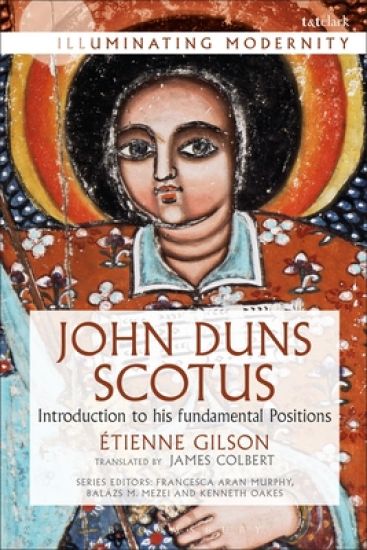
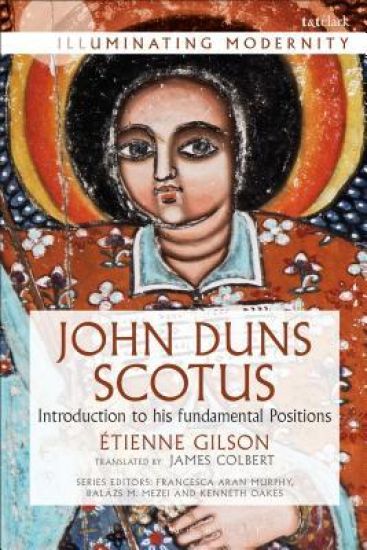
Étienne Gilson's Jean Duns Scot: Introduction À Ses Positions Fondamentales is widely understood to be one of the most important works on John Duns Scotus’ texts, famous for their complexity. James Colbert’s translation is the first time that Gilson's work on Scotus has been put into English, with an introduction by Trent Pomplun and an afterword by John Millbank. Scotus contributed to the development of a metaphysical system that was compatible with Christian doctrine, an epistemology that altered the 13th century understanding of human knowledge, and a theology that stressed both divine and human will. Gilson, in turn, offers a thoroughly comprehensive introduction to the fundamental positions that Scotus stood for. Explaining Scotus’s views on metaphysics, the existence of infinite being and divine nature, the matter of the physical spiritual and angelic, intellectual knowledge and will and Scotus’ relationship with other scholars, Gilson and Colbert show how deeply Scotus left a mark on discussions of such disparate topics as the semantics of religious language, the problem of universals, divine illumination, and the nature of human freedom.This work has been translated from the original work in French Jean Duns Scot. Introduction à ses positions fondamentales (© 1952 by Librairie Philosophique J. Vrin).
A classic study of the art of painting and its relationship to reality In this book, Étienne Gilson puts forward a bold interpretation of the kind of reality depicted in paintings and its relation to the natural order. Drawing on insights from the writings of great painters—from Leonardo, Reynolds, and Constable to Mondrian and Klee—Gilson shows how painting is foreign to the order of language and knowledge. Painting, he argues, seeks to add new beings to nature, not to represent those that already exist. For this reason, we must distinguish it from another art, that of picturing, which seeks to produce images of actual or possible beings. Though pictures play an important part in human life, they do not belong in the art of painting. Through this distinction, Gilson sheds new light on the evolution of modern painting. A magisterial work of scholarship by an acclaimed historian of philosophy, Painting and Reality features paintings from both classical and modern schools, and includes extended selections from the writings of Reynolds, Delacroix, Gris, Gill, and Ozenfant.
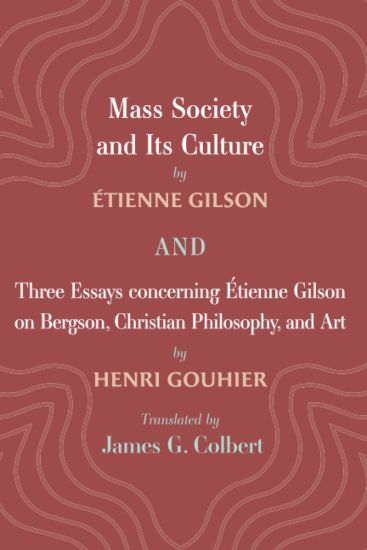
Mass Society and Its Culture, and Three Essays concerning Etienne Gilson on Bergson, Christian Philosophy, and Art
Étienne Gilson; Henri Gouhier
Cascade Books
2023
pokkari
A medievalist and defender of the notion of Christian philosophy, Etienne Gilson had a lifelong interest in the philosophy of art. He questioned whether what is reproduced as art in contemporary society is art at all. This is not a simple issue. A cheap version of a novel is still a novel. A picture of a statue is not a statue, nor indeed is a photograph of a painting a painting. Recorded music has particular complications. The organizer of an industrial assembly line is neither an artist nor an artisan. Yet, thanks to such mass production, a much broader population has knowledge of artworks than would otherwise be possible. Religions must minister to mass societies and provide appropriate liturgies. But in the process, there is a danger of misrepresenting complex religious teachings. At the end of his own life, Henri Gouhier, Gilson's first doctoral student, prepared three essays on Gilson. The first, on Bergson, gives a sense of Gilson's formation in early twentieth-century French philosophy. The second reconstructs the development of the notion of Christian philosophy and the heated controversy it provoked. Finally, Gouhier presents Gilson's general philosophy of art and gives a helpful framework to Gilson's comments on art in a mass society.
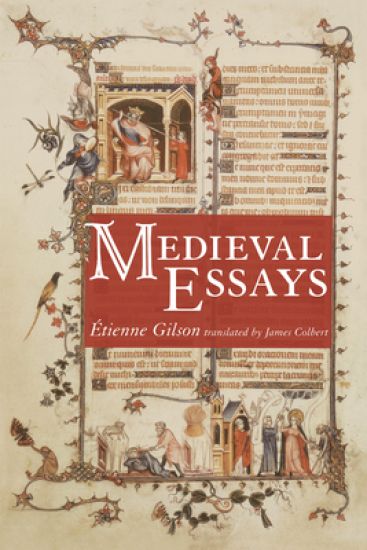
Those new to Gilson can get a sense of the theme that dominated most of his life's work in the central essay on the historical significance of Thomism. Those familiar with him will perhaps be surprised by the sympathy with which he treats the more traditional theologians who resisted Aquinas and the Latin Averroists alike. Gilson prolongs his seminal demonstration of Scholastic influence on Descartes's philosophy by showing that there is also some unfortunate Scholastic influence in what we would call Descartes's natural science, specifically his meteorology. Both new and old Gilsonians will be intrigued by the account of how Descartes was convinced by Harvey that human blood makes a complete circulation, but against Harvey offered his own clear, distinct, and wrongheaded account of why it does. ""Etienne Gilson is James Colbert's favorite author and his continued translations of Gilson's essays are deeply sensitive to his many medieval philosophical accounts and undeniably accurate in representing them. Colbert's work is outstanding."" --Stephen F. Brown, Boston College James Colbert is Professor Emeritus of philosophy at Fitchburg State University. He has translated from French Italian, and Spanish. His favorite author is the great twentieth-century medievalist Etienne Gilson. Cascade Books published his translation of Gilson's Medieval Essays (2011) and Jean Danielou's Philo of Alexandria (2014).
The Mystical Theology of St. Bernard
Etienne Gilson; A. H. C. Downes
Literary Licensing, LLC
2013
nidottu
The great philosopher and historian of philosophy, Étienne Gilson, sets out to show that final causality or purposiveness and formal causality are principles for those who think hard and carefully about the world, including the world of biology. Gilson insists that a completely rational understanding of organisms and biological systems requires the philosophical notion of teleology, the idea that certain kinds of things exist and have ends or purposes the fulfillment of which are linked to their natures—in other words, formal and final causes. His approach relies on philosophical reflection on the facts of science, not upon theology or an appeal to religious authorities such as the Church or the Bible.
Litterature Et Philosophie: Oeuvres Completes, Tome III
Etienne Gilson
Librarie Philosophique J. Vrin
2025
nidottu
Oeuvres Completes Tome II: Un Philosophe Dans La Cite. 1944-1973
Etienne Gilson; Florian Michel
Librarie Philosophique J. Vrin
2023
nidottu
Ce deuxieme tome des OEuvres completes rassemble plus de 210 textes publies par Etienne Gilson entre 1944 et 1973 et presente l'ensemble des prises de parole d'Etienne Gilson sur son actualite. Il comprend notamment les volumes Le philosophe et la theologie (1960), La societe de masse et sa culture (1967), Les tribulations de Sophie (1967), ainsi que les articles de revue, les entretiens, les conferences, les prefaces, les interventions publiques et tous les articles que Gilson redige pour la presse nationale. Pour la premiere fois sont enfin assembles la centaine d'articles que Gilson publie dans Le Monde au sortir de la guerre, ainsi que les pieces de ce qui est entre dans l'histoire sous le nom de "l'affaire Gilson". Comme pour le premier tome des OEuvres completes (Un philosophe dans la cite. 1908-1943), ces opera minora de Gilson ne sont nullement secondaires. Nombreuses, precises et riches, comme des miniatures, elles dessinent un portrait neuf et revelent un itineraire meconnu et exceptionnel, qui, du College de France a l'Academie francaise, du Quai d'Orsay au Senat, croise enjeux intellectuels, religieux, politiques, mediatiques et diplomatiques, etc.
Mass Society and Its Culture, and Three Essays concerning Etienne Gilson on Bergson, Christian Philosophy, and Art
Étienne Gilson; Henri Gouhier
Cascade Books
2023
sidottu
A medievalist and defender of the notion of Christian philosophy, Etienne Gilson had a lifelong interest in the philosophy of art. He questioned whether what is reproduced as art in contemporary society is art at all. This is not a simple issue. A cheap version of a novel is still a novel. A picture of a statue is not a statue, nor indeed is a photograph of a painting a painting. Recorded music has particular complications. The organizer of an industrial assembly line is neither an artist nor an artisan. Yet, thanks to such mass production, a much broader population has knowledge of artworks than would otherwise be possible. Religions must minister to mass societies and provide appropriate liturgies. But in the process, there is a danger of misrepresenting complex religious teachings. At the end of his own life, Henri Gouhier, Gilson's first doctoral student, prepared three essays on Gilson. The first, on Bergson, gives a sense of Gilson's formation in early twentieth-century French philosophy. The second reconstructs the development of the notion of Christian philosophy and the heated controversy it provoked. Finally, Gouhier presents Gilson's general philosophy of art and gives a helpful framework to Gilson's comments on art in a mass society.