Kirjojen hintavertailu. Mukana 12 129 126 kirjaa ja 12 kauppaa.

Kirjailija

Euripides

Kirjat ja teokset yhdessä paikassa: 535 kirjaa, julkaisuja vuosilta 1802-2026, suosituimpien joukossa Euripides: Herakles. Vertaile teosten hintoja ja tarkista saatavuus suomalaisista kirjakaupoista.

Mukana myös kirjoitusasut: Eurípides, Euripides .

535 kirjaa

Kirjojen julkaisuhaarukka 1802-2026.

The Complete Euripides

The Complete Euripides

Euripides

Oxford University Press Inc
2011
nidottu
Based on the conviction that only translators who write poetry themselves can properly re-create the celebrated and timeless tragedies of Aeschylus, Sophocles, and Euripides, the Greek Tragedy in New Translations series offers new translations that go beyond the literal meaning of the Greek in order to evoke the poetry of the originals. This volume collects Euipides' Alcestis (translated by William Arrowsmith), a subtle drama about Alcestis and her husband Admetos, which is the oldest surviving work by the dramatist; Medea (Michael Collier and Georgia Machemer), a moving vengeance story and an excellent example of the prominence and complexity that Euripides gave to female characters; Helen (Peter Burian), a genre breaking play based on the myth of Helen in Egypt; and Cyclops (Heather McHugh and David Konstan), a highly lyrical drama based on a celebrated episode from the Odyssey. This volume retains the informative introductions and explanatory notes of the original editions and adds a single combined glossary and Greek line numbers.
The Complete Euripides

The Complete Euripides

Euripides

Oxford University Press Inc
2009
nidottu
Collected here for the first time in the series are three major plays by Euripides: Bacchae, translated by Reginald Gibbons and Charles Segal, a powerful examination of the horror and beauty of Dionysiac ecstasy; Herakles, translated by Tom Sleigh and Christian Wolff, a violent dramatization of the madness and exile of one of the most celebrated mythical figures; and The Phoenician Women, translated by Peter Burian and Brian Swamm, a disturbing interpretation of the fate of the House of Laios following the tragic fall of Oedipus. These three tragedies were originally available as single volumes. This volume retains the informative introductions and explanatory notes of the original editions and adds a single combined glossary and Greek line numbers.
Euripides: Herakles

Euripides: Herakles

Euripides

Oxford University Press Inc
2001
nidottu
In Herakles, Euripides reveals with great subtlety and complexity the often brutal underpinnings of our social arrangements. The play enacts a thoroughly contemporary dilemma about the relationship between personal and state violence to civic order . Of all of Euripides' plays, this is his most skeptically subversive examination of myth, morality, and power. The play depicts Herakles being driven mad by Hera, the wife of Zeus. Hera hates Herakles because he is one of Zeus' children born of adultery. In his madness, Herakles is driven to murder his own wife and children, and he eventually exiles himself to Athens. The volume includes a new translation, an introduction, notes on the text, and a glossary.
Bacchae of Euripides

Bacchae of Euripides

Euripides

Cambridge University Press
1979
sidottu
The Bacchae is the last and greatest of Euripides' plays. Its theme of the cost of resisting the gods who reside in human nature itself is still of immediate interest to audiences and readers and has inspired modern interpretations. Professor Kirk has made a translation which is both accurate and readable. This he supports with an analytic commentary and a substantial introductory essay which provide the Greek-less reader with essential background information and offer interpretation of a kind usually found only in Greek editions. This is a translation for students of Greek tragedy, particularly in courses on classics in translations or classical civilisation. It will also be useful for students of drama and of English and other literatures.
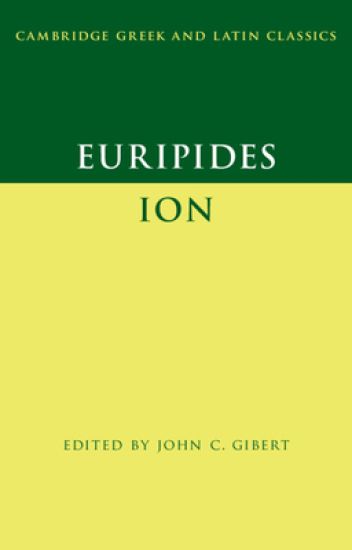
Euripides: Ion

Euripides: Ion

Euripides

Cambridge University Press
2019
pokkari
Ion is one of Euripides' most appealing and inventive plays. With its story of an anonymous temple slave discovered to be the son of Apollo and Creusa, an Athenian princess, it is a rare example of Athenian myth dramatized for the Athenian stage. It explores the Delphic oracle and Greek piety; the Athenian ideology of autochthony and empire; and the tragic suffering and longing of the mythical foundling and his mother, whose experiences are represented uniquely in surviving Greek literature. The plot anticipates later Greek comedy, while the recognition scene builds on a tradition founded by Homer's Odyssey and Aeschylus' Oresteia. The introduction sets out the main issues in interpretation and discusses the play's contexts in myth, religion, law, politics, and society. By attending to language, style, meter, and dramatic technique, this edition with its detailed commentary makes Ion accessible to students, scholars, and readers of Greek at all levels.
Euripides: Ion

Euripides: Ion

Euripides

Cambridge University Press
2019
sidottu
Ion is one of Euripides' most appealing and inventive plays. With its story of an anonymous temple slave discovered to be the son of Apollo and Creusa, an Athenian princess, it is a rare example of Athenian myth dramatized for the Athenian stage. It explores the Delphic oracle and Greek piety; the Athenian ideology of autochthony and empire; and the tragic suffering and longing of the mythical foundling and his mother, whose experiences are represented uniquely in surviving Greek literature. The plot anticipates later Greek comedy, while the recognition scene builds on a tradition founded by Homer's Odyssey and Aeschylus' Oresteia. The introduction sets out the main issues in interpretation and discusses the play's contexts in myth, religion, law, politics, and society. By attending to language, style, meter, and dramatic technique, this edition with its detailed commentary makes Ion accessible to students, scholars, and readers of Greek at all levels.
The Complete Euripides Volume V

The Complete Euripides Volume V

Euripides

Oxford University Press Inc
2011
sidottu
Based on the conviction that only translators who write poetry themselves can properly re-create the celebrated and timeless tragedies of Aeschylus, Sophocles, and Euripides, the Greek Tragedy in New Translations series offers new translations that go beyond the literal meaning of the Greek in order to evoke the poetry of the originals. This volume collects Euipides' Alcestis (translated by William Arrowsmith), a subtle drama about Alcestis and her husband Admetos, which is the oldest surviving work by the dramatist; Medea (Michael Collier and Georgia Machemer), a moving vengeance story and an excellent example of the prominence and complexity that Euripides gave to female characters; Helen (Peter Burian), a genre breaking play based on the myth of Helen in Egypt; and Cyclops (Heather McHugh and David Konstan), a highly lyrical drama based on a celebrated episode from the Odyssey. This volume retains the informative introductions and explanatory notes of the original editions and adds a single combined glossary and Greek line numbers.
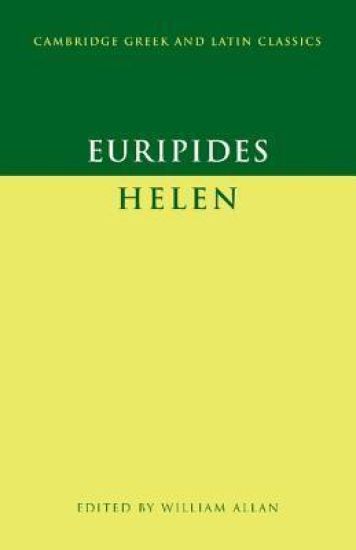
Euripides: 'Helen'

Euripides: 'Helen'

Euripides

Cambridge University Press
2008
pokkari
This up-to-date edition offers a detailed literary and cultural analysis of Euripides' Helen, a work which arguably embodies the variety and dynamism of fifth-century Athenian tragedy more than any other surviving play. The story of an exemplary wife (not an adulteress) who went to Egypt (not to Troy), Euripides' 'new Helen' skilfully transforms and supplants earlier currents of literature and myth. The Introduction elucidates Euripides' treatment of Helen and sets the play in its wider intellectual context. It also discusses questions of genre and reception, rejecting such descriptions as 'tragicomedy' or 'romantic tragedy', and showing how later artists have responded to Euripides' unorthodox heroine and her phantom double. The Commentary's notes on language and style are intended to make Helen fully accessible to readers of Greek at all levels, while the edition as a whole is designed for use by anyone with an interest in Greek tragedy.
Euripides: Bakkhai

Euripides: Bakkhai

Euripides

Oxford University Press Inc
2001
nidottu
Euripides' Bakkhai is the staple of the canon of Greek tragedy and is required or strongly recommended reading for most undergraduate Classics majors. It also surfaces quite often in non-classics courses focusing on tragedy because its structure and thematics offer exemplary models of the classic tragic elements. The plot of Bakkhai centers around the actions of Pentheus, King of Thebes, who refused to recognise the god Dionysus or permit Thebans to worship him. In revenge, Dionysus drove Pentheus mad, made him cross-dress as a maenad, sent him to worship the god he had spurned, and made his mother, Agave, mistake him for a wild beast and rip him to shreds. Gibbons, a prize-winning poet, and Segal, a renowned classicist, are both leaders in their professions and are well-suited to take on this central text of Greek tragedy. This edition includes an introduction, a new translation, notes on the text, and a glossary.
Euripides Plays: 3

Euripides Plays: 3

Euripides

Methuen Drama
1997
nidottu
Published in the new Methuen Classical Dramatists series The three plays in this volume straddle the borders between comedy and tragedy. Alkestis is a moving "romance" with death; it has parallels to Shakespeare's The Winter's Tale. Helen, an alternative version of the tragic portrayal of the Trojan War, shows Helen "relocated in a delightful comedy" (Observer) - as an innocent victim of her own beauty, hidden in Egypt by the gods while her image has been abducted by Paris. In Ion, a father who thought he was childless discovers his son, and a son who thought he was motherless finds his mother.
Ion

Ion

Euripides

Oxford University Press Inc
1996
nidottu
One of Euripides' late plays, Ion is a complex enactment of the changing relations between the human and divine orders and the way in which our understanding of the gods is mediated and re-visioned by myths. The story begins years before the play begins, with the rape of the mortal Kreousa, queen of Athens, by Apollo. Kreousa bears Apollos' child in secret then abandons it. Unbeknownst to her, Apollo has the child brought to his temple at Delphi to be reared by the priestess as ward of the shrine. Many years later, Kreousa, now married to the foreigner Xouthos but childless, comes to Delphi seeking prophecy about children. Apollo, however, speaking through the oracle, bestows the temple ward, Ion, on Xouthos as his child. Enraged, Kreousa conspires to kill as an interloper the very son she has despaired of finding. After mother and son both try to kill each other, the priestess reveals the birth tokens that permit Kreousa to recognize and embrace the child she thought was dead. Ion discovers the truth of his parentage and departs for Athens, as a mixed blood of humanity and divinity, to participate in the life of the polis. In Ion, disturbing riptides of thought and feeling run just below the often shimmering surfaces of Euripidean melodrama. Although the play contains some of Euripides' most beautiful lyrical writing, it quivers throughout with near disasters, poorly informed actions and misdirected intentions that almost result in catastrophe. Kreousa says at one point that good and evil do not mix, but Euripides' argument, and what the youthful Ion strives to understand, is that human beings are not only compounded of good and evil, but that the two are often the same thing differently experienced, differently understood, just as beauty and violence are mixed both in the gods and in the mortal world.
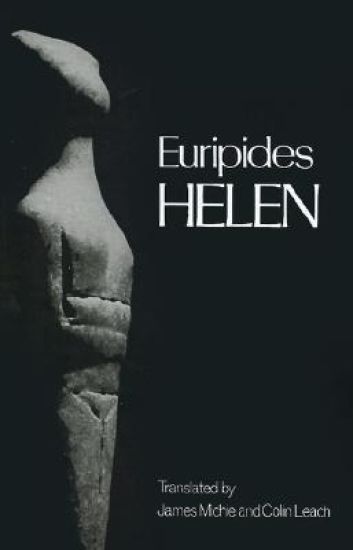
Helen

Helen

Euripides

Oxford University Press Inc
1992
nidottu
Outstepping the literal bounds of genre, Euripides' Helen has been referred to by scholars as both a tragedy and a comedy. In this sensitive new translation by James Michie and Colin Leach, Euripides' fragile structure of subtlety, in both timing and tone, is beautifully preserved. From the myth ascribed to the Sicilian poet Stesichorus, Helen plays on the question of two Helens: one a phantom in Troy, and the other the real Helen who remained in Egypt. A myriad of reversals, thought-provoking examples of differing orders of reality, and juxtapositions of opposites, allow Euripides to comment on the futility of war and the distinction between appearance and reality.
Euripides Plays: 2

Euripides Plays: 2

Euripides

Methuen Drama
1991
nidottu
Published in the new Methuen Classical Dramatists series Euripides' searching, poetic voice probes the waste and suffering of war in these plays which are set wake of the Trojan defeat to reflect the playwright's changing attitude to the real war between Athens and Sparta in his own day - 4th century BC. Hecuba is a play of ghosts and shadowy death; The Women of Troy is a searing indictment of the aftermath of defeat; Iphigenia at Aulis shows a human tragedy at the heart of the mechanics of war; and Cyclops is a satyr play which offers a comic antidote to the tragedies.With an introduction by J. Michael Walton