

Kirjailija
Ezra Pound
Kirjat ja teokset yhdessä paikassa: 142 kirjaa, julkaisuja vuosilta 1957-2025, suosituimpien joukossa Hugh Selwyn Mauberley. Vertaile teosten hintoja ja tarkista saatavuus suomalaisista kirjakaupoista.
142 kirjaa
Kirjojen julkaisuhaarukka 1957-2025.


NEW PRINT WITH PROFESSIONAL TYPE-SET IN CONTRAST TO SCANNED PRINTS OFFERED BY OTHERS Certain Noble Plays Of Japan: From The Manuscripts Of Ernest Fenollosa, Chosen And Finished By Ezra Pound With An Introduction By William Butler Yeats; Translated By Ernest Fenollosa This book is a result of an effort made by us towards making a contribution to the preservation and repair of original classic literature. In an attempt to preserve, improve and recreate the original content, we have worked towards: 1. Type-setting & Reformatting: The complete work has been re-designed via professional layout, formatting and type-setting tools to re-create the same edition with rich typography, graphics, high quality images, and table elements, giving our readers the feel of holding a fresh and newly reprinted and/or revised edition, as opposed to other scanned & printed (Optical Character Recognition - OCR) reproductions. 2. Correction of imperfections: As the work was re-created from the scratch, therefore, it was vetted to rectify certain conventional norms with regard to typographical mistakes, hyphenations, punctuations, blurred images, missing content/pages, and/or other related subject matters, upon our consideration. Every attempt was made to rectify the imperfections related to omitted constructs in the original edition via other references. However, a few of such imperfections which could not be rectified due to intentional\unintentional omission of content in the original edition, were inherited and preserved from the original work to maintain the authenticity and construct, relevant to the work.


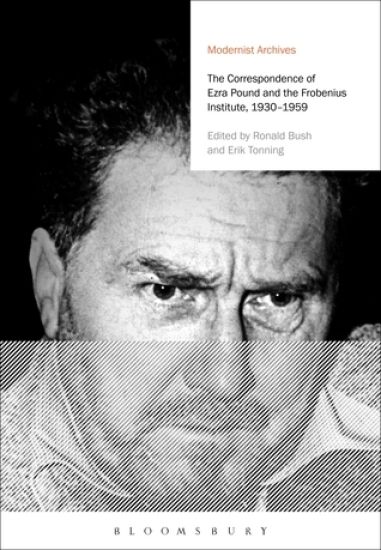
The Correspondence of Ezra Pound and the Frobenius Institute, 1930-1959
Ezra Pound
Bloomsbury Academic
2024
sidottu
Collecting in full for the first time the correspondence between Ezra Pound and members of Leo Frobenius' Forschungsinstitut für Kulturmorphologie in Frankfurt across a 30 year period, this book sheds new light on an important but previously unexplored influence on Pound's controversial intellectual development in the Fascist era. Ezra Pound's long-term interest in anthropology and ethnography exerted a profound influence on early 20th century literary Modernism. These letters reveal the extent of the influence of Frobenius' concept of 'Paideuma' on Pound's poetic and political writings during this period and his growing engagement with the culture of Nazi Germany. Annotated throughout, the letters are supported by contextualising essays by leading Modernist scholars as well as relevant contemporary published articles by Pound himself and his leading correspondent at the Institute, the American Douglas C. Fox.

Lustra of Ezra Pound by Bai Li has been regarded as significant work throughout human history, and in order to ensure that this work is never lost, we have taken steps to ensure its preservation by republishing this book in a contemporary format for both current and future generations. This entire book has been retyped, redesigned, and reformatted. Since these books are not made from scanned copies, the text is readable and clear.
The Cantos of Ezra Pound is one of the great landmarks in twentieth-century poetry. This Fourth Collected edition of 1987 includes two previously uncollected cantos, and some passages from other cantos, omitted from earlier printings, restored to the text. The additional cantos, numbered LXXII and LXXIII, were written by Ezra Pound in Italian, during the collapse of Italy at the end of the war.. They belong in the sequence between the John Adams and the Pisan cantos.

Ezra Pound's "Poems 1918-21" emerges as a seminal collection reflecting his revolutionary approach to modernist poetry. In this work, Pound deftly intertwines imagism and a tonal complexity that challenges traditional forms. Through meticulously crafted language and striking imagery, he prompts the reader to engage with the intricacies of art and culture in a post-war context marked by disillusionment and renewal. The collection showcases Pound's distinctive style characterized by precision and brevity, echoing his broader critique of society and the artistic conventions of his time. Ezra Pound, a leading figure of the modernist movement, was profoundly influenced by his experiences in early 20th-century Europe, particularly in relation to the aftermath of World War I. His involvement in various avant-garde literary circles and his fervent advocacy for artistic innovation guided his exploration of poetry that transcends mere personal expression, aspiring instead towards a grander commentary on human experience. This period of his life is encapsulated in this collection, highlighting his evolving philosophical and aesthetic ideologies. For readers seeking to delve deep into the world of modernist poetry, "Poems 1918-21" offers a rich tapestry of emotion and intellect. Pound's innovative techniques challenge poetic conventions and invite readers to reconsider the relationship between language and meaning. This collection is essential for anyone interested in understanding the transformation of poetry during a pivotal moment in literary history.
BLAST I & II - Ezra PoundAutor: Ezra PoundEditado & Traducido por Juan ArabiaISBN: 9789874197948 Idioma: Espa ol - Ingl sHacia 1914, en Londres, se comenz a editar el primer n mero de la revista BLAST. Un nuevo movimiento, del que BLAST era el rgano oficial, fue llamado Vorticismo por Ezra Pound, siendo Pound y Wyndham Lewis sus principales publicistas. El advenimiento de BLAST fue anunciado en la contraportada de The Egoist (publicaci n en la que Pound colaboraba) con un anuncio que proclamaba: "Fin de la Era Cristiana". Poemas del mismo Lewis, como "Enemy of the Stars", conten an cierta declaraci n del movimiento: "Our Vortex is not afraid of the Past: it has forgotten its existence. / Our Vortex regards the Future as as sentimental as the past" (Nuestro V rtice no teme al Pasado: ha olvidado su existencia. / Nuestro V rtice mira hacia el Futuro tan sencillamente como hacia el pasado).Sin embargo, Pound siempre aclar (a diferencia del futurismo) que el Vorticismo no s lo conten a un torbellino "donde las ideas se precipitan constantemente". Se trataba, m s bien, de un movimiento que estaba en di logo con lo mejor de las tradiciones (era el momento en el que Pound encontraba similitudes entre el imagismo y la poes a oriental): poes a china (Li Po), Catulo, Propercio, Bertran de Born y otros autores del pante n poundiano. Fue Pound el que invent el t rmino "vorticista". Proviene de "vortex" v rtice, el punto m ximo de energ a, torbellino o centro de un cicl n. Los poemas vorticistas se representan por su car cter experimental, reflejado en la sensaci n del v rtigo que comunica, la serie de enumeraciones no relacionadas, el uso de las formas (y por tanto dinamismo) en la velocidad y simultaneidad en el que las piezas se relacionan (como en un cuadro abstracto) en planos que juegan e interaccionan.

Ezra Pound's and Olga Rudge's The Blue Spill
Ezra Pound; Olga Rudge
Bloomsbury Academic
2021
nidottu
Written during the Italian winter of 1930, The Blue Spill is an unfinished detective novel written by Ezra Pound – the leading figure of modernist poetry in the 20th century – and his long-time companion Olga Rudge. Published for the first time in this authoritative critical edition, the novel reflects both Rudge’s and Pound’s voracious reading of popular fiction as it echoes and parodies such writers as Agatha Christie, Dorothy L. Sayers and P.G. Wodehouse.Based on the original manuscripts of the novel, this critical edition includes annotation and textual commentary throughout. The book also includes critical essays exploring the contexts of the work, from the dynamics of artistic collaboration to the growing popularity of detective fiction at the beginning of the 20th century. Taken together, this unique publication sheds new light on the relationship between the literary avant-garde and popular culture in the modernist period.
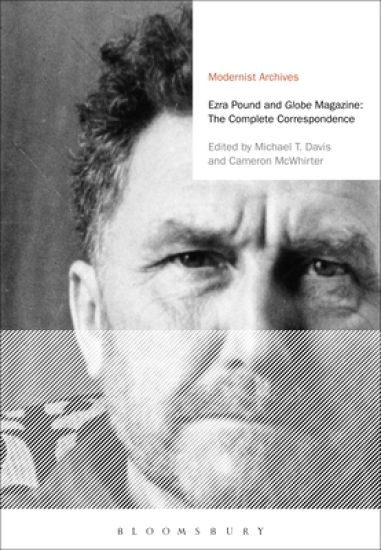
Ezra Pound and 'Globe' Magazine: The Complete Correspondence
Ezra Pound
Bloomsbury Academic
2021
nidottu
In the summer of 1936, Ezra Pound agreed to take on the role of European Correspondent for a newly launched travel journal entitled Globe: The International Magazine. Ezra Pound and 'Globe' Magazine: The Complete Correspondence collects for the first time Pound’s writings for the journal and his extensive correspondence with one of its editors, James Taylor Dunn, and the leading writers who Pound himself attempted to recruit for the magazine. Numbering almost forty letters and twenty published and unpublished articles, these writings represent a darkly significant time in Pound’s thought as his infatuation with the rise of fascism took root. Annotated throughout and supported by substantial explorations of the historical and cultural contexts of the writings, the book also includes a substantial bibliography of related writings and a biographical glossary of the major figures discussed in the correspondence and writing. Together, these texts represent an important resource for anyone interested in an important phase of 20th-Century literary modernism.

The book "" Exultations, has been considered important throughout the human history, and so that this work is never forgotten we have made efforts in its preservation by republishing this book in a modern format for present and future generations. This whole book has been reformatted, retyped and designed. These books are not made of scanned copies and hence the text is clear and readable.
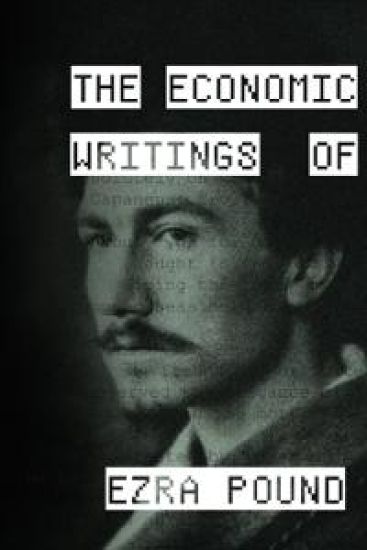
Although many have tried to erase him from memory, Ezra Pound still stands with Mark Twain, Herman Melville, and Nathaniel Hawthorne as one of the great American writers, and most will still admit that he is America's greatest poet. He's famous for not only defining the modernist poetry movement with works such as Ripostes, Hugh Selwyn Mauberley, and The Cantos; but also for mentoring and promoting many of the twentieth century's most important writers including T.S. Elliot, Robert Frost, William Butler Yeats, Ernest Hemingway, James Joyce, and D.H. Lawrence. On the other hand, Pound is also famous (or rather, infamous) for a series of pro-Fascist radio broadcasts made in Italy during World War II. After the war, Pound was arrested for treason and held for six months at a detention center outside Pisa. However, after he was flown back to America the US government shied away from trying Pound in court, instead choosing to lock him up in St. Elizabeth's Hospital for mental illness - even after he had been found fit to stand trial in Italy. According to literary scholar Hugh Kenner, the reason for Pound's being committed was to "prevent the ideas expressed in his broadcasts from being inspected" by the public at large. In short, they were likely worried that the public might hear something that they agree with. Contained in these pages are very likely some of the opinions and knowledge that they didn't want you to hear. Pound's distaste for the war and his admiration of Fascism largely stemmed from his exploration of the topic of economics. In particular Pound saw the Fascist model's ability to subordinate money to the interests of society as superior to the English and American models which allowed the power of bankers to run unfettered. In What is Money For?, Ezra Pound even touted Fascism as the only system whose "surgeon's knife" can cut the "cancer of usury out of the life of the nations." Although quotes like this were enough for many to label him a "genuine Fascist", Pound was not an idealogue. He was actually against promoting Italian-style Fascism in America. This is not to say that I "advocate" Fascism in and for America, or that I think that Fascism is possible in America without Mussolini. Pound believed that a country could take inspiration from the successes of other nations, but that there "may be several economic solutions to any problem," and that 1930s America was not suited for an Italian-style government.


Certain Noble Plays of Japan; From The Manuscripts Of Ernest Fenollosa
Ezra Pound
ALPHA EDITION
2021
pokkari
This book has been considered important throughout the human history, and so that this work is never forgotten Alpha Editions has made efforts in its preservation by republishing this book in a modern format for the present and future generations. This whole book has been re-formatted, re-typed and re-designed. These books are not made of scanned copies of their original work, and hence the text is clear and readable.

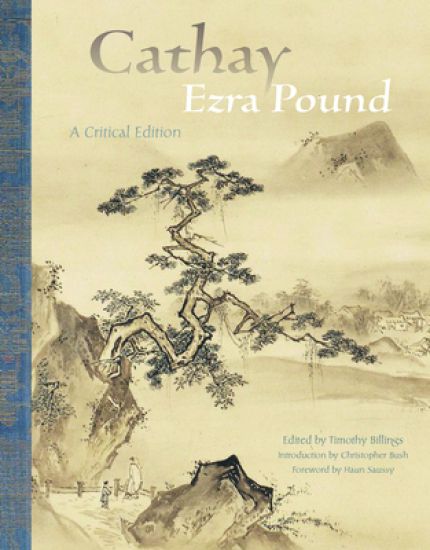
Finalist, Pegasus Award for Poetry Criticism Ezra Pound's Cathay (1915) is a masterpiece both of modernism and of world literature. The muscular precision of images that mark Pound's translations helped establish a modern style for American literature, at the same time creating a thirst for classical Chinese poetry in English. Pound's dynamic free-verse translations in a modern idiom formed the basis for T.S. Eliot's famous claim that Pound was the "inventor of Chinese poetry for our time." Yet Pound achieved this feat without knowing any Chinese, relying instead on word-for-word "cribs" left by the Orientalist Ernest Fenollosa, whose notebooks reveal a remarkable story of sustained cultural exchange. This fully annotated critical edition focuses on Pound's astonishing translations without forgetting that the original Chinese poems are masterpieces in their own right. On the one hand, the presentation of all that went into the final Cathay makes it possible for the first time to appreciate the magnitude and the nuances of Pound's poetic art. At the same time, by bringing the final text together with the Chinese and Old English poems it claims to translate, as well as the manuscript traces of Pound's Japanese and American interlocutors, the volume also recovers practices of poetic circulation, resituating a Modernist classic as a work of world literature. The Pound text and its intertexts are presented with care, clarity, and visual elegance. By providing the first accurate and unabridged transcriptions of Fenollosa's notebooks, along with carefully edited Chinese texts, the volume makes it possible to trace the movements of poetic ideas and poetic expression as they veer toward and away from Pound's creations. In supplying the full Fenollosa texts, the volume overturns decades of scholarship that has mystified Pound's translation process as a kind of "clairvoyance," displaying instead the impressive amount of sinological learning preserved in Fenollosa's hard-to-read notebooks and by detailing every deviation from the probable sense of the originals. The edition also supplies exhaustive historical, critical, and textual notes, clarifying points that have sometimes lent obscurity to Pound's poems and making the process of translation visible even for readers with no knowledge of Chinese. Cathay: A Critical Edition includes the original fourteen Chinese translations as well as Pound's unique version of "The Seafarer," which is fully annotated alongside its Anglo-Saxon source. Also included are Pound's fifteen additional Chinese translations from Lustra and other contemporary publications, his essay "Chinese Poetry" (1919), a substantial textual Introduction, and original essays by Christopher Bush and Haun Saussy on international modernism, the mediation of Japan, and translation. The meticulous treatment and analysis of the texts for this landmark edition will forever change how readers view Pound's "Chinese" poems. In addition to discoveries that permanently alter the scholarly record and force us to revise a number of critical commonplaces, the critical apparatus allows readers to make fresh discoveries by making available the specific networks through which poetic expression moved among hands, languages, and media. Ultimately, this edition not only enables us more fully to appreciate a canonical work of Modernism but also resituates the art of Pound's translations by recovering the historical circulations that went into the making of a multiply authored and intrinsically hybrid masterpiece.