Kirjojen hintavertailu. Mukana 12 390 323 kirjaa ja 12 kauppaa.
Kirjailija
F. Scott Fitzgerald
Kirjat ja teokset yhdessä paikassa: 1 058 kirjaa, julkaisuja vuosilta 1905-2026, suosituimpien joukossa Tender is the Night. Vertaile teosten hintoja ja tarkista saatavuus suomalaisista kirjakaupoista.
Mukana myös kirjoitusasut: F Scott Fitzgerald, F.Scott Fitzgerald, F. Scott Fitzgerald, (?????? F Scott Fitzgerald, F SCOTT FITZGERALD
Nueva York, a os 20. En la alta sociedad norteamericana, llama la atenci n la presencia de Jay Gatsby, un hombre misterioso e inmensamente rico, al que todos consideran un advenedizo, lo que no impide que acudan a sus fastuosas fiestas en su granmansi n de Long Island. Gatsby vive obsesionado con la idea de recuperar al amor que dej escapar a os atr s. Para ello se har amigo de su vecino reci n llegado, el joven Nick Carraway.
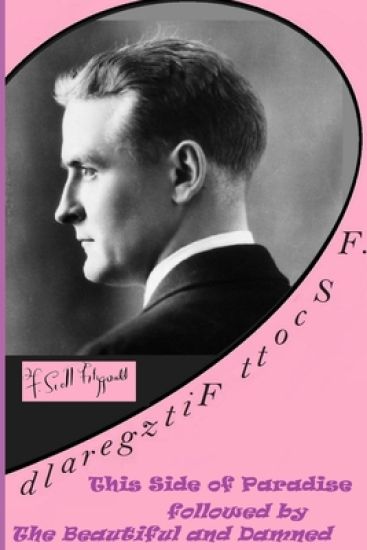
The novel explores the theme of love warped by greed and status seeking. The novel famously helped F. Scott Fitzgerald gain Zelda Sayre's hand in marriage due to its success. " I don't want to repeat my innocence. I want the pleasure of losing it again. " - This Side of Paraide, F. Scott Fitzgerald 1920 THE ORIGINAL CLASSIC WRITTEN BY F. SCOTT FITZGERALD BEST SELLING AUTHOR OF THE GREAT GATSBY FIRST PUBLISHED IN 1920
The Beautiful and Damned, first published by Scribner's in 1922, is F. Scott Fitzgerald's second novel. It explores and portrays New York caf society and the American Eastern elite during the Jazz Age before and after "the Great War" and in the early 1920s. As in his other novels, Fitzgerald's characters in this novel are complex, especially with respect to marriage and intimacy. The work is generally considered to have drawn upon and be based on Fitzgerald's relationship and marriage with his wife Zelda Fitzgerald. Plot summary: The Beautiful and Damned tells the story of Anthony Patch, a 1910s socialite and presumptive heir to a tycoon's fortune, and his courtship and relationship with his wife Gloria Gilbert. It describes his brief service in the Army during World War I, and the couple's post-war partying life in New York, and his later alcoholism. Gloria and Anthony's love story is much more than just a couple falling in love. Their story deals with the hardships of a relationship, especially when each character has a tendency to be selfish. Joanna Stolarek suggests, Fitzgerald draws on "Zelda, the object of the writer's literary passion" (Stolarek et al. 53). 4] Toward the end of the novel, Fitzgerald sums up the plot and his intentions in writing it somewhat, even referencing his own first novel, when a financially successful writer friend tells Anthony: "You know these new novels make me tired. My God Everywhere I go some silly girl asks me if I've read 'This Side of Paradise'. Are our girls really like that? If it's true to life, which I don't believe, the next generation is going to the dogs. I'm sick of all this shoddy realism. I think there's a place for the romanticist in literature." Francis Scott Key Fitzgerald (September 24, 1896 - December 21, 1940), known professionally as F. Scott Fitzgerald, was an American novelist and short story writer, whose works illustrate the Jazz Age. While he achieved limited success in his lifetime, he is now widely regarded as one of the greatest American writers of the 20th century. Fitzgerald is considered a member of the "Lost Generation" of the 1920s. He finished four novels: This Side of Paradise, The Beautiful and Damned, The Great Gatsby, and Tender Is the Night. A fifth, unfinished novel, The Last Tycoon, was published posthumously. Fitzgerald also authored 4 collections of short stories, as well as 164 short stories in magazines during his lifetime. Early life: Born in 1896 in Saint Paul, Minnesota, to an upper middle class family, Fitzgerald was named after his famous second cousin, three times removed on his father's side, Francis Scott Key, but was always known as plain Scott Fitzgerald. He was also named after his deceased sister, Louise Scott Fitzgerald, one of two sisters who died shortly before his birth. "Well, three months before I was born," he wrote as an adult, "my mother lost her other two children ... I think I started then to be a writer." His father was Edward Fitzgerald, of Irish and English ancestry, who had moved to St. Paul from Maryland after the Civil War, and was described as "a quiet gentlemanly man with beautiful Southern manners." His mother was Mary "Molly" McQuillan Fitzgerald, the daughter of an Irish immigrant who had made his fortune in the wholesale grocery business.Edward Fitzgerald was the first cousin once removed of Mary Surratt, hanged in 1865 for conspiring to assassinate Abraham Lincoln. Scott Fitzgerald spent the first decade of his childhood primarily in Buffalo, New York, occasionally in West Virginia (1898-1901 and 1903-1908) where his father worked for Procter & Gamble, with a short interlude in Syracuse, New York, (between January 1901 and September 1903).Edward Fitzgerald had earlier worked as a wicker furniture salesman; he joined Procter & Gamble when the business failed....
The novel's new incarnation, "This Side of Paradise", a largely autobiographical story about love and greed, was centered on Amory Blaine, an ambitious Midwesterner who falls in love with, but is ultimately rejected by, two girls from high-class families. The novel was published in 1920 to glowing reviews and, almost overnight, turned Fitzgerald, at the age of 24, into one of the country's most promising young writers. One week after the novel's publication, he married Zelda Sayre in New York. They had one child, a daughter named Frances Scott Fitzgerald, born in 1921. In 1922, Fitzgerald published his second novel, "The Beautiful and Damned", the story of the troubled marriage of Anthony and Gloria Patch. The Beautiful and Damned helped to cement his status as one of the great chroniclers and satirists of the culture of wealth, extravagance and ambition that emerged during the affluent 1920s-what became known as the Jazz Age.
The Beautiful and Damned, first published by Scribner's in 1922, is F. Scott Fitzgerald's second novel. It explores and portrays New York caf society and the American Eastern elite during the Jazz Age before and after "the Great War" and in the early 1920s. As in his other novels, Fitzgerald's characters in this novel are complex, especially with respect to marriage and intimacy. The work is generally considered to have drawn upon and be based on Fitzgerald's relationship and marriage with his wife Zelda Fitzgerald
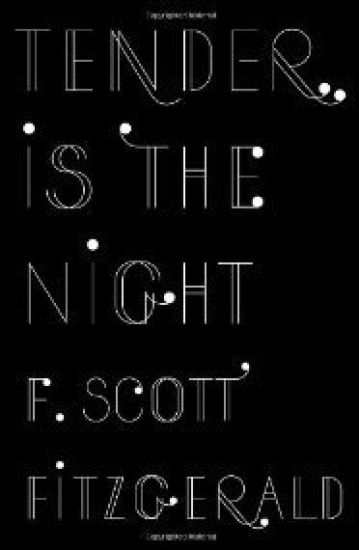
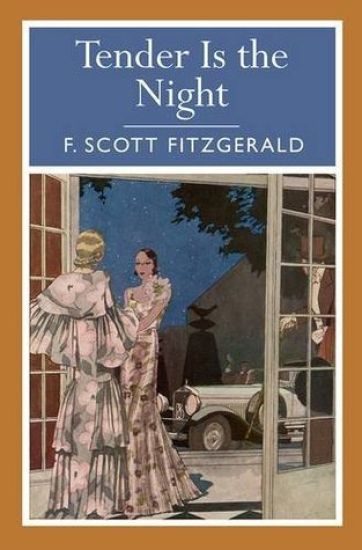
Set in the South of France in the decade after the First World War, Tender is the Night explores the new world of moneyed leisure found by the first generation of idle-rich Americans to take refuge in the French Riviera, bracketed between the horrors of the Great War and the Great Depression to come. It is the story of a brilliant and magnetic psychiatrist named Dick Diver; the bewitching, wealthy, and dangerously unstable mental patient, Nicole, who becomes his wife; and the beautiful, harrowing ten-year pas de deux they act out along the border between sanity and madness. F. Scott Fitzgerald deliberately set out to write the most ambitious and far-reaching novel of his career, experimenting radically with narrative conventions of chronology and point of view and drawing on early breakthroughs in psychiatry to enrich his account of the makeup and breakdown of character and culture.This stunning Macmillan Collector's Library edition of Tender is the Night features an afterword by Ned Halley.
"I want to write something new, something extraordinary and beautiful and simple and intricately patterned." -- F. Scott Fitzgerald (1923)."The first step American fiction has taken since Henry James." - T. S. Eliot."One of the most important works in American literature -- and, to many, the great American novel." -- Time. The Great Gatsby, F. Scott Fitzgerald's masterpiece is perhaps "The Great American Novel." It is as Fitzgerald hoped, something new, something extraordinary. It is set in Long Island, during the excitement and enthusiasm of "the Jazz Age," a term coined by Fitzgerald in his earlier collection, Tales of the Jazz Age. Fitzgerald himself was part of this milieu. The handsome millionaire Jay Gatsby seems to have everything, but where did his wealth come from, and what is he still in search of? The Great Gatsby was not a commercial success initially, and it was only after Fitzgerald's early death that it was appreciated. It is now near the top of almost every list of best novels and is on almost every curriculum. Francis Scott Fitzgerald (September 24, 1896 - December 21, 1940) was an American novelist, essayist, screenwriter, and short-story writer, although he is best known for his novels depicting the flamboyance and excess of the Jazz Age. His life mirrors that of Jay Gatsby in some ways. Writer Richard Ford calls Fitzgerald, Hemingway and Faulkner "the Three Kings who set the measure for every writer since."
The book collects some famous short stories by well-known American writers, some of them received prizes and honors in the US, such as Pulitzer Prize for Fiction and National Book Award for Fiction. Reading these stories is helpful to better understanding of American culture and society.
The Beautiful and the Damned tells the story of Anthony Patch, his relationship with his wife Gloria, his service in the army, and his alcoholism. The novel provides an excellent portrait of the Eastern elite as the Jazz Age begins its ascent, engulfing all classes into what would soon be known as the Caf Society
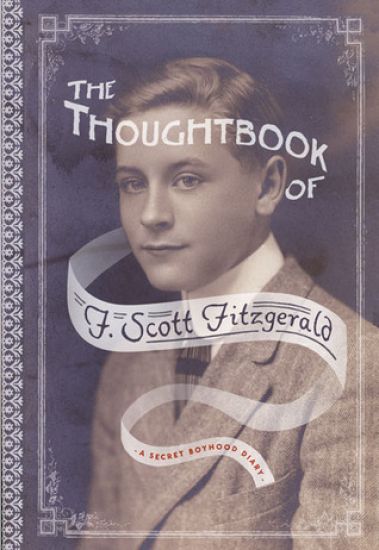
When F. Scott Fitzgerald was fourteen and living in the Crocus Hill neighborhood of St. Paul, he began keeping a short diary of his exploits among his friends, friendly rivals, and crushes. He gave the journal a title page-Thoughtbook of Francis Scott Key Fitzgerald of St. Paul Minn. U.S.A.-and kept it securely locked in a box under his bed. He would later use The Thoughtbook as the basis for “The Book of Scandal” in his Basil Lee Duke stories, and brief sections were copied over the years for use by scholars and even published in Life magazine. “Are you going to the Ordways’? the Herseys’? the Schultzes’?” Here, for the first time, is a complete transcription of this charming, twenty-seven-page diary highlighting Fitzgerald’s escapades among the children of some of St. Paul’s most influential families-models for the families described in The Great Gatsby. Presented in a simple format for both scholars and general readers alike, The Thoughtbook of F. Scott Fitzgerald includes a new introduction by Dave Page that covers the history and provenance of the diary, its place and meaning in Fitzgerald’s literary development, and its revelations about his life and writing process.One of the earliest known works by F. Scott Fitzgerald, The Thoughtbook provides a unique glimpse of Fitzgerald as a young boy and his social circle as they played among the grand homes of Summit Avenue, making up games, starting secret societies, competing with rivals, and (at all times) staying up-to-date on who exactly is vying for whose attention.