Kirjojen hintavertailu. Mukana 12 390 323 kirjaa ja 12 kauppaa.

Kirjailija

F. Scott Fitzgerald

Kirjat ja teokset yhdessä paikassa: 1 058 kirjaa, julkaisuja vuosilta 1905-2026, suosituimpien joukossa Tender is the Night. Vertaile teosten hintoja ja tarkista saatavuus suomalaisista kirjakaupoista.

Mukana myös kirjoitusasut: F Scott Fitzgerald, F.Scott Fitzgerald, F. Scott Fitzgerald, (?????? F Scott Fitzgerald, F SCOTT FITZGERALD

1 058 kirjaa

Kirjojen julkaisuhaarukka 1905-2026.

The Vegetable

The Vegetable

F Scott Fitzgerald

Cosimo Classics
1923
pokkari
"Jerry Frost is thirty-five. He is a clerk for the railroad at $3,000 a year. He possesses no eyebrows, but nevertheless he constantly tries to knit them."-F. Scott Fitzgerald, The Vegetable (1923)The Vegetable; or, From President to Postman (1923) is the only play F. Scott Fitzgerald wrote and when produced was regarded by many as a disaster. The title is derived from a quote Fitzgerald stated came from a "current magazine" as written on the title page of the work: "Any man who doesn't want to get on in the world, to make a million dollars, and maybe even park his toothbrush in the White House...-he's nothing more or less than a vegetable." This foray by Fitzgerald into playwriting is a must-read for those intrigued by one of the most prolific authors of the twentieth century.

Benediction

Benediction

F Scott Fitzgerald

Cosimo Classics
1920
pokkari
"It's like that idea of saving your life by losing it. You see we sort of feel that the less human a man is, in your sense of human, the better servant he can be to humanity."-Kieth, Benediction, by F. Scott Fitzgerald (1920).Benediction (1920) was first published as part of a collection of short stories, Flappers and Philosophers (also available from Cosimo Classics) and focuses on the main character, nineteen-year-old Lois, her older brother Kieth, and her visit to the Jesuit seminary where Kieth is studying. Each character attempts to understand the other's view of Catholicism, Kieth's as clergy revealing strong faith and Lois's as laity questioning Catholic traditions. H. L. Mencken believed this story to be the best in the book, so this is the perfect indulgence for all who love Fitzgerald and early twentieth century literature.
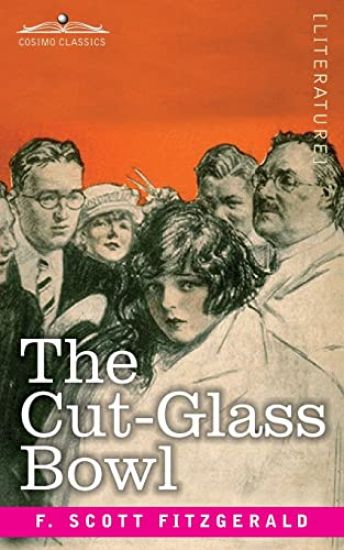
The Cut-Glass Bowl

The Cut-Glass Bowl

F Scott Fitzgerald

Cosimo Classics
1920
pokkari
"It was astonishing to think that life had once been the sum of her current love-affairs. It was now the sum of her current problems."-F. Scott Fitzgerald, The Cut-Glass Bowl (1920)The Cut-Glass Bowl (1920), by F. Scott Fitzgerald, was first published in Scribner's Magazine and later in his short story collection, Flappers and Philosophers (also available from Cosimo Classics). Fitzgerald's plot focuses on the domestic strife of married couple Harold and Evylyn, and a wedding gift, the cut-glass bowl-the center of each disappointment and tragedy. Fitzgerald uses his own experiences with the excess of the Roaring Twenties and a troubled marriage to create a classic tale of family dysfunction. One of his earliest published works, this story is a preview to the themes found in many of Fitzgerald's later and more noted works such as The Great Gatsby (1925) and The Beautiful and Damned (1922).
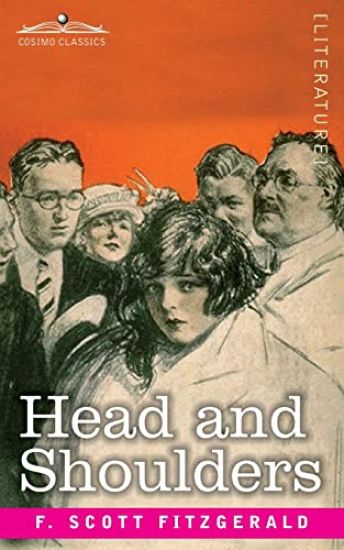
Head and Shoulders

Head and Shoulders

F Scott Fitzgerald

Cosimo Classics
1920
pokkari
Head and Shoulders (1920) by F. Scott Fitzgerald, first published in the Saturday Evening Post and later in his short story collection, Flappers and Philosophers (also available from Cosimo Classics), features Horace, a Princeton academic, who falls for flapper, Marcia. Marcia's shoulders shaking in her performances and Horace's "head" with his academia are the basis for the title. Ironically, by the end of the story the two reverse, and Horace becomes the shoulders of the relationship and Marcia, the head. The story was also made into a silent film, The Chorus Girl's Romance (1920). With characters reminiscent of Gatsby and Daisy, this romance is for fans of The Great Gatsby (1925) and Fitzgerald.
The Four Fists

The Four Fists

F Scott Fitzgerald

Cosimo Classics
1920
pokkari
"He had no plans, no definite intentions, except to kiss her lips again, to hold her in his arms." ―F. Scott Fitzgerald, The Four Fists (1920)The Four Fists (1920) was first published as part of a collection of short stories, Flappers and Philosophers (also available from Cosimo Classics) and features Samuel Meredith, a man whose face seems to be quite hittable. The fists to the face begin when he is an arrogant student in boarding school, punched for his superiority. Samuel does not fight back but rather takes the first hit and the three subsequent fists to the face. Instead of producing a negative reaction, the hits help Samuel achieve success in life. A character study with morality undertones, this is essential reading for fans of Fitzgerald's well-crafted prose.
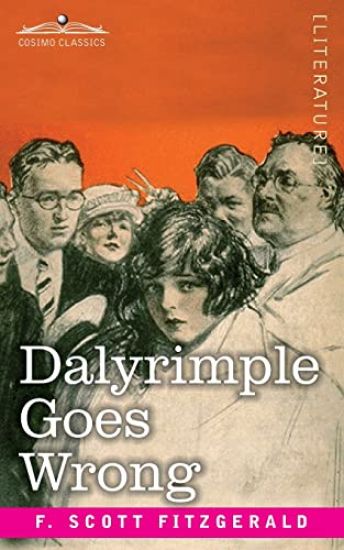
Dalyrimple Goes Wrong

Dalyrimple Goes Wrong

F Scott Fitzgerald

Cosimo Classics
1920
pokkari
"Cutting corners meant rejecting the old childhood principles that success came from faithfulness to duty, that evil was necessarily punished or virtue necessarily rewarded-that honest poverty was happier than corrupt riches."-F. Scott Fitzgerald, Dalyrimple Goes Wrong (1920)Dalyrimple Goes Wrong (1920), written in September of 1919 by F. Scott Fitzgerald, was first published in a collection of short stories, Flappers and Philosophers (also available from Cosimo Classics). The story begins with veteran Bryan Dalyrimple returning home from the war in Germany feeling unappreciated and dissatisfied with society. He tries unsuccessfully to make his name in the business world and consequently, he turns to a life of crime as an answer to his frustrations. Dalyrimple's disillusionment and despair are themes for which Fitzgerald is famous. This is a must-read for Fitzgerald fans and those who love early twentieth century literature.
The Ice Palace

The Ice Palace

F Scott Fitzgerald

Cosimo Classics
1920
pokkari
"Then she kissed him until the sky seemed to fade out and all her smiles and tears to vanish in an ecstasy of eternal seconds."―F. Scott Fitzgerald, The Ice Palace (1920)The Ice Palace (1920) by F. Scott Fitzgerald, first published in the Saturday Evening Post and later in his short story collection, Flappers and Philosopher (also available from Cosimo Classics) is based on the ice palace present at the 1887 winter carnival held in St. Paul, Minnesota, Fitzgerald's native city. The story's main character, Sally Carrol, is a Southern belle interested in exploring her Northerner beau's home; however, while there, she discovers the vast differences between the two regions. At one point, she feels deep terror within the ice palace, and consequently, returns to the comfortable South. This story is an essential addition to a collection of Fitzgerald's great works.
The Offshore Pirate

The Offshore Pirate

F Scott Fitzgerald

Cosimo Classics
1920
pokkari
"You see, this is the beauty I want. Beauty has got to be astonishing, astounding-it's got to burst in on you like a dream, like the exquisite eyes of a girl." ―Carlyle, The Offshore Pirate by F. Scott Fitzgerald (1920). The Offshore Pirate (1920) by F. Scott Fitzgerald, first published in the Saturday Evening Post and later in his short story collection, Flappers and Philosophers (also available from Cosimo Classics), features spoiled rich girl, Ardita Farnam, and her uncle. The two are luxuriating on a yacht to Florida when it is captured by "pirates." Ironically, Ardita and the captain engage in a whirlwind romance with a twist at its end. The original ending (that it was Ardita's dream) was revised by Fitzgerald with the new ending touted by the author as one of the best he had ever written. This story is for fans of the femme fatale character and of Fitzgerald's well-crafted fiction.
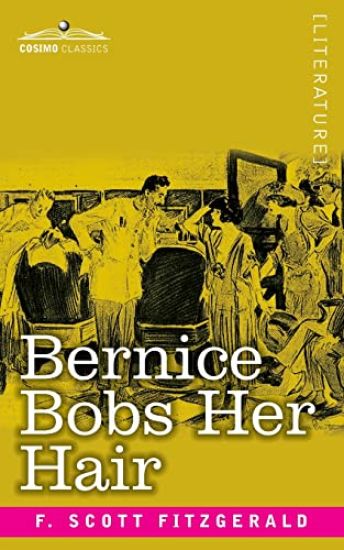
Bernice Bobs Her Hair

Bernice Bobs Her Hair

F Scott Fitzgerald

Cosimo Classics
1920
pokkari
"He wondered idly whether she was a poor conversationalist because she got no attention or got no attention because she was a poor conversationalist." -F. Scott Fitzgerald, Bernice Bobs Her Hair (1920)Bernice Bobs Her Hair (1920), by F. Scott Fitzgerald, was first published in the Saturday Evening Post and later in his short story collection, Flappers and Philosophers (also available from Cosimo Classics). When protagonist Bernice travels to visit her beautiful socialite cousin, Marjorie, she is deemed socially awkward by Marjorie and her clique. Bobbing her hair seemed to be the road to popularity, but in the end proved too scandalous. Fitzgerald based his idea on Berenice II of Egypt, who sacrificed her hair to the gods to gain victory in warfare; however, persona non grata Bernice gains little. This entertaining tale of social status is sure to enthrall fans of Fitzgerald and The Jazz Age.
The Adjuster

The Adjuster

F Scott Fitzgerald

Cosimo Classics
1905
pokkari
"...selfishness in women has an irresistible appeal to many men. Luella's selfishness existed side by side with a childish beauty, and, in consequence, Charles Hemple had begun to take the blame upon himself for situations which she had obviously brought about." -F. Scott Fitzgerald, The Adjuster (1926) The Adjuster (1926) by F. Scott Fitzgerald is a short story focused on the themes the author portrays so expertly: money, marital discord, and melancholy. The story deviates from his typical since the main character Luella has married for money but is left with shouldering responsibility unbeknownst to her after husband, Charles, and their child become ill. Rich with Fitzgerald's lyrical prose and social insight, this story is perfect for those who are fans of this great American writer and the Roaring Twenties.
Love in the Night

Love in the Night

F Scott Fitzgerald

Cosimo Classics
1905
pokkari
"But the question of love in the night was the thing nearest his heart...there was a lovely unknown girl concerned in it, and that it ought to take place beneath the Riviera moon." -F. Scott Fitzgerald, Love in the Night (1925) Love in the Night (1925) by F. Scott Fitzgerald was first published in the Saturday Evening Post at the height of the author's popularity as a magazine fiction writer. His formula of love and success is evident in the romance between the main character, Val, a Russian-American aristocrat, and an American heiress. Fitzgerald loosely based the protagonist on his friend, Prince Val Engalitcheff who allegedly committed suicide in 1923. Set on a yacht in the French Riviera this is a must-read for those who wish to escape reality and enjoy Fitzgerald's well-crafted prose.
How to Live on $36,000 a Year and How to Live on Practically Nothing a Year
"We were going to the Old World to find a new rhythm to our lives...With a true conviction that we had left our old selves behind forever." -F. Scott Fitzgerald, How to Live on Practically Nothing a Year (1924) How to Live on $36,000 a Year and How to Live on Practically Nothing a Year (1924) by F. Scott Fitzgerald is a compilation of two essays which details Fitzgerald's attempt to live a wealthy lifestyle on an author's salary. Fitzgerald and wife Zelda spend lavishly and consequently, end up penniless. However, the couple hears living abroad is less expensive and moves to the French Riviera. Despite their desire to live simply, the two are swept up by the social life of expatriates and are doomed to further debt. In this volume, Fitzgerald inimitably crafts the excesses of The Roaring Twenties for readers who love the era.
Absolution

Absolution

F Scott Fitzgerald

Cosimo Classics
1905
pokkari
"... Absolution is a penetrating and profound effort to articulate life in primal and dark conflict." -The New York Times (1926) Absolution (1924) by F. Scott Fitzgerald is the story of adolescent Rudolph Miller, a romantic dreamer who attempts to escape his small, Midwestern town through the lies he tells and the alter ego he creates. Rudolph's revelations in the confessional to his priest, Father Schwartz reveal his character flaws, however, he receives "absolution" through the story's events. First written as the prologue for The Great Gatsby (1925, also available from Cosimo Classics), Fitzgerald intended to reveal Jay Gatsby's childhood, but scrapped the idea, changed the names, and published it as a short story. This moralistic and romantic tale is for all who love Fitzgerald and fiction of the early twentieth century.
How to Live on Practically Nothing a Year

How to Live on Practically Nothing a Year

F Scott Fitzgerald

Cosimo Classics
1905
pokkari
"When your eyes first fall upon the Mediterranean you know at once why it was here that man first stood erect and stretched out his arms toward the sun. It is a blue sea..." -F. Scott Fitzgerald, How to Live on Practically Nothing a Year (1924) How to Live on Practically Nothing a Year (1924) by F. Scott Fitzgerald is a follow-up essay to How to Live on $36,000 a Year, that chronicles Fitzgerald's attempt to provide wife Zelda with the wealthy lifestyle she loved. After spending the author's salary to the point of debt, the couple is told living abroad is less expensive, so they move to the French Riviera. Despite their desire to live simply, the two are swept up by the social life of expatriates and doomed to further financial ruin. This cleverly crafted insight into the lavishness and excess of the era is a must-read for all who want to know more about the life of Fitzgerald.
How to Live on $36,000 a Year

How to Live on $36,000 a Year

F Scott Fitzgerald

Cosimo Classics
1905
pokkari
"I found one day to my horror that I didn't have a dollar in the world...This particular crisis passed the next morning when the discovery that publishers sometimes advance royalties sent me hurriedly to mine." -F. Scott Fitzgerald, How to Live on $36,000 a Year (1924) How to Live on $36,000 a Year (1924) by F. Scott Fitzgerald is an essay which details Fitzgerald's attempt to live a wealthy lifestyle on an author's salary. In an attempt to give wife Zelda the life to which she had been accustomed, Fitzgerald bows to the excesses of the time. The couple spends lavishly, ends up penniless, and accrues debt. Fitzgerald pokes fun at himself in this glimpse into the sights and sounds of The Roaring Twenties, a delight for readers who love the era.