
Kirjailija
Fernando Pessoa
Kirjat ja teokset yhdessä paikassa: 115 kirjaa, julkaisuja vuosilta 1997-2027, suosituimpien joukossa Levottomuuden kirja. Vertaile teosten hintoja ja tarkista saatavuus suomalaisista kirjakaupoista.
115 kirjaa
Kirjojen julkaisuhaarukka 1997-2027.
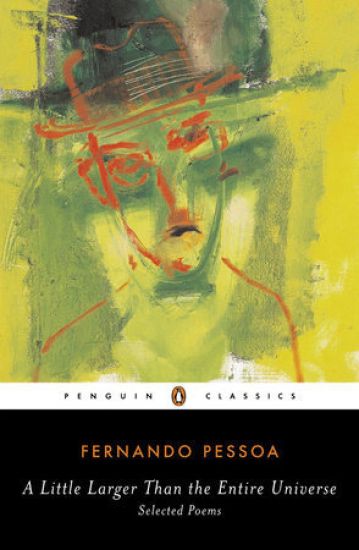
This is the largest and richest volume of poetry by Pessoa available in English. It includes generous selections from the three poetic alter egos that the Portuguese writer dubbed "heteronyms" - Alberto Caeiro, Ricardo Reis and Alvaro de Campos - and from the vast and varied work he wrote under his own name.
De två noveller som här presenteras för första gången i svensk översättning speglar Fernando Pessoas känsloliv och bär en stark prägel av hans längtan, lidelse och lidande. De härrör från två vitt skilda skeden i författarens liv – ”Djävulens timma” skrevs i hans tidiga ungdom när han var full av glöd och visioner och ”En stoikers fostran” mot slutet av hans liv när de flesta av hans förhoppningar hade grusats. Under de cirka tjugo år som förflöt mellan dessa novellers tillkomst skrev Pessoa ett stort antal verk som senare – efter hans död – skulle ge honom världsrykte. Tanken på en sådan postum berömmelse var dock helt främmande för den frustrerade stoikern barn de Teive, Pessoas språkrör i den senare novellen. Baronen brände upp alla sina manuskript utom ett enda, ett avskedsbrev, strax innan han begick självmord. ”Det må handla om honom, men det handlar också om någon annan i ett magiskt spel. Ty det finns andra bilder av den kanske (då!) misslyckade Pessoa – en man som levde sitt liv på Lissabons underbara kaféer och som i kretsen av vänner och beundrare lade ut texten om litteraturen, och om den litteratur som skulle komma. Han fick ju rätt. Och för den som vill veta mera om vad som skulle komma är denna härliga lilla tolkningsvolym bara att rekommendera.” – Mats Gellerfelt i Svenska Dagbladet
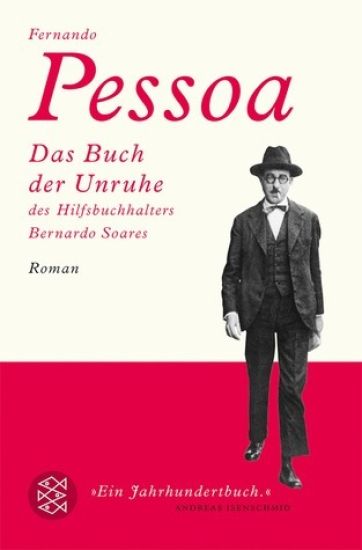
Das Buch der Unruhe des Hilfsbuchhalters Bernardo Soares
Fernando Pessoa
FISCHER Taschenbuch
2006
pokkari
Lissabon ist die weiße Stadt am Meer, in der sich Traum und Sehnsucht treffen. Keiner konnte ihre Melancholie und Einsamkeit besser ermessen als Fernando Pessoa. Hinter immer neuen Masken schlüpft er durch die engen Gassen, um mit jedem Blick eine neue Szene des kleinen Welttheaters zu erhaschen.

Von einem Freund befragt, gibt "ein großer Händler und ehemaliger Schieber" Auskunft über seinen Aufstieg vom einfachen Arbeiter zum wohlhabenden Bankier. Aber auch über seine anarchistische Gesinnung, die er nie aufgegeben hat. Mit verblüffend schlüssiger Logik legt er seinem fassungslosen Zuhörer dar, daß diesem Aufstieg eine anarchistische Methode zugrunde liegt: "Geld zu erwerben, es in so großer Menge zu erwerben, daß sein Einfluß nicht mehr spürbar werden konnte." Der einzig logische Schluß kann denn auch nur lauten: Der wahre Anarchist muß Bankier werden, der wahre Bankier ist konsequenter Anarchist.
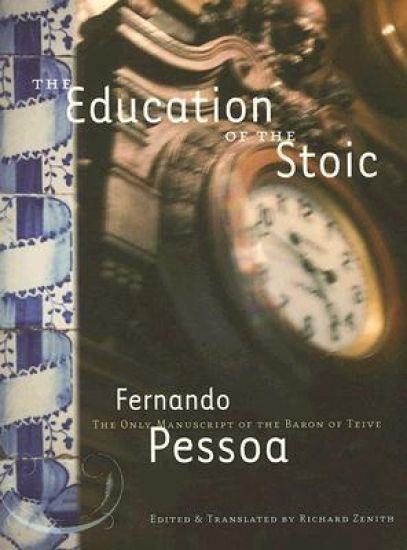
In 1999, translator Richard Zenith made a new find in the Pessoa archive in Lisbon: a group of prose writings by a previously unknown heteronym, the Baron of Teive.' The Portuguese volume of these writings has been received by scholars as a crucial piece of the puzzle that is Pessoa's oeuvre. The Education of the Stoic is the unique work left by the Baron of Teive, who, after destroying all his previous literary attempts and before destroying himself, explains 'the impossibility of producing superior art.' It is the dark companion piece to The Book of Disquiet.'
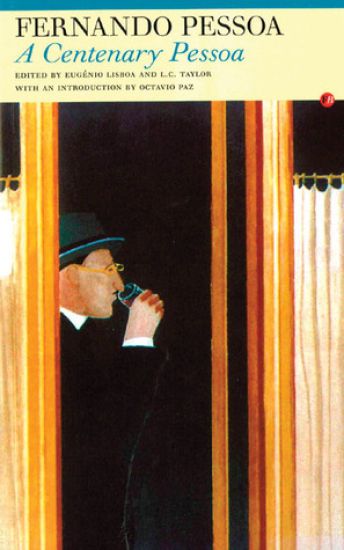
'Author of paradoxes as clear as water and, as water, dizzying: ... mysterious man who does not cultivate mystery, mysterious as the mid-day moon, taciturn phantom of the Portuguese mid-day - who is Pessoa?' asks Octavio Paz. This collection of the work of Fernando Pessoa (1888-1935) answers that question. It is an essential introduction to the work of one of the most original European poets of the twentieth century. It includes translations of a broad selection of his poems and his extraordinary prose, and some of his original English writings. A major introductory essay by Octavio Paz, a critical anthology, two posthumous 'interviews' and illustrations from the Pessoa archive are also included, to reveal the world of Pessoa in all its richness.
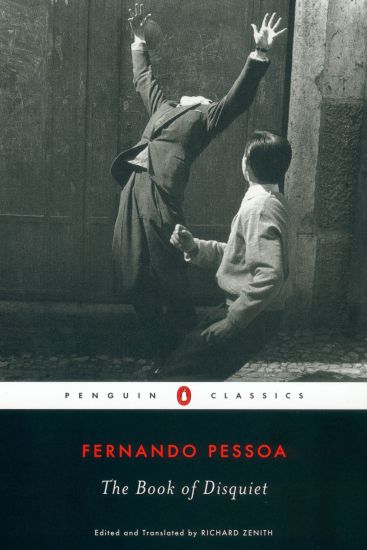
A modernist masterwork that has now taken on a similar iconic status to Ulysses, The Trial or In Search of Lost Time, Fernando Pessoa's The Book of Disquiet is edited and translated with an introduction by Richard Zenith in Penguin Modern Classics. 'Fernando Pessoa, strictly speaking, doesn't exist,' - so claimed Alvaro de Campos, one of the 'heteronyms', fully-realised substitute personalities invented by Fernando Pessoa to spare himself the trouble of living real life. In this extraordinary book, the putative 'factless autobiography' of an accountant named Bernardo Soares, Fernando Pessoa explores and dismantles the nature of memory, identity, time and narrative, creating one of the greatest - but also the strangest - modernist texts. An assembly of sometimes-linked fragments, The Book of Disquiet is a mesmerising, haunting 'novel' without parallel in any other culture. This edition includes notes on the reconstruction of the text, appendices containing material omitted from the final version and letters which Pessoa intended to incorporate into the text. This edition also includes a table of the 'heteronyms' used by Pessoa in his writing. Fernando Pessoa (1888–1935) was born in Lisbon and brought up in Durban, South Africa. A prolific writer, ascribing his work to a variety of personas or 'heteronyms', Pessoa published little in his lifetime. Although acknowledged as an intellectual and a poet, his literary genius went largely unrecognised until after his death. If you enjoyed The Book of Disquiet, you might like Finnegan's Wake, also available in Penguin Modern Classics. 'One of the twentieth century's greatest literary talents ... This superb edition of The Book of Disquiet is ... a masterpiece' John Lanchester, Daily Telegraph 'Must rank as the supreme assault on authorship in modern European literature' John Gray, New Statesman 'Portugal's greatest modern poet ... deals with the only important question in the world, not less important because it is unanswerable: What am I?' Anthony Burgess, Observer
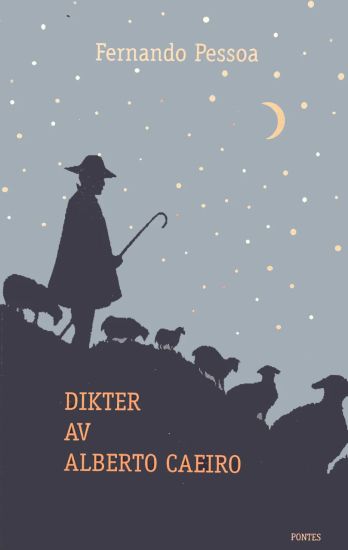
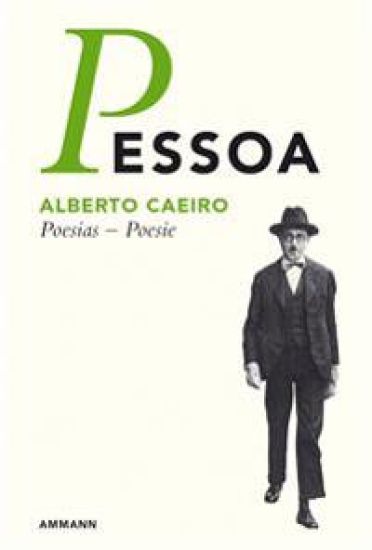
Alberto Caeiro är en av Pessoas heteronymer. Denne anspråkslöse naturpoet i en fåraherdes gestalt var kanske hans favoritidentitet. I ett brev till en bekant skrev Pessoa själv 1914: ”Om det finns någon del av mitt verk som bär uppriktighets prägel så är det Caeiros dikter.” De skrevs alla 1914 och utgör en samling i tre delar: ”Fåraherden”, ”Den Förälskade herden” och ”Strödda dikter”. ”... här finns dikter av stor skönhet som uttrycker glädje, sorg och smärta. Vi möter verkligen den lille mannen under stjärnornas oändlighet som tillsammans med naturen och sina får begrundar Alltet. Då är det som om Pessoa bokstavligen tappar masken och han skriver med hjärtat och vi är en del av denna outgrundliga natur och materia” – Mats Gellerfelt i Svenska Dagbladet
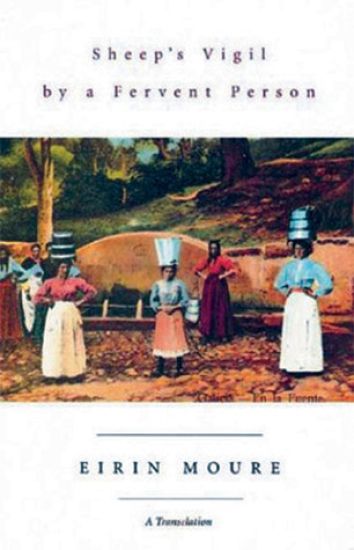
A temporary move to Toronto in the winter of 2000, a twisted ankle, an empty house -- all inspired Moure as she read Alberto Caeiro/Fernando Pessoa's classic long poem O Guardador de Rebanhos. For fun, she started to translate, altering tones and vocabularies. From the Portuguese countryside and roaming sheep of 1914, a 21st century Toronto emerged, its neighbourhoods still echoing the 1950s, their dips and hollows, hordes of wild cats, paved creeks. Her poem became a translation, a transcreation, the jubilant and irrepressible vigil of a fervent person. "Suddenly," says Moure impishly, "I had found my master." Caeiro's sheep were his thoughts and his thoughts, he claimed, were all sensations. Moure's sheep are stray cats and from her place in Caeiro's poetry, she creates a woman alive in an urban world where the rural has not vanished, where the archaic suffuses us even when we do not beckon it, and yet the present tense floods us fully.
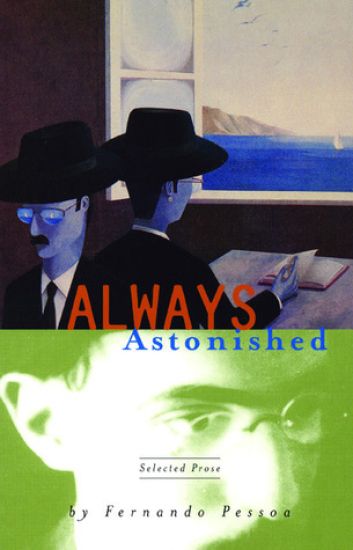
"After looking for him in the poems, we search for him in the prose. The pursuit of the Other in Pessoa's work is never-ending," writes Edwin Honig. Essential to understanding the great Portuguese poet are the essays written about (and by) his heteronyms--Alberto Caeiro, Ricardo Reis, and Alvaro de Campos--the several pseudonyms under which he wrote an extraordinary body of poetry. In Always Astonished, Pessoa and his several selves debate and discuss one another's work, revealing how Portuguese modernism was shaped. Fernando Pessoa is one of the great voices of twentieth-century literature, and these manifestos, letters, journal notes, and critical essays range through aesthetics, lyric poetry, dramatic and visual arts, and the psychology of the artist. He gives us, too, a singularly heterodox political position in his strange work of fiction, The Anarchist Banker. "Eloquent, volatile and obsessed with life--and death--[Pessoa is one of the] modernist giants in whose shadow we live and who made our century one of the extraordinary richness."--The New York Times "Only a few years ago Fernando Pessoa was all but invisible in English. Now this outsider's outsider looms as the latest icon of modern poetry. Eugenio Lisboa devised A Centenary Pessoa in 1995, a lavish miscellany of poems, essays, biography, photographs, even paintings he inspired. Edwin Honig and Susan M. Brown reissued Poems of Fernando Pessoa, along with Honig's Always Astonished, a selected prose."-Robert Polito, BOMB Magazine Fernando Pessoa is Portugal's most important contemporary poet. He wrote under several identities, which he called heteronyms: Albet Caeiro, Alvaro de Campos, Ricardo Reis, and Bernardo Soares. He wrote fine poetry under his own name as well, and each of his "voices" is completely different in subject, temperament, and style.
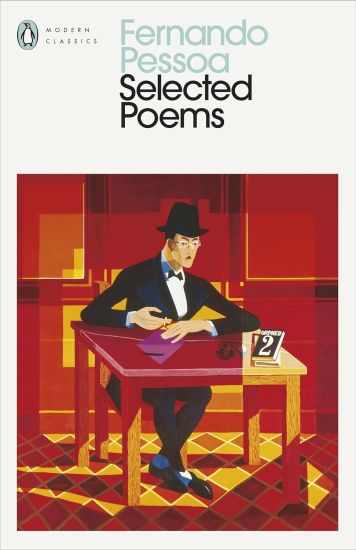
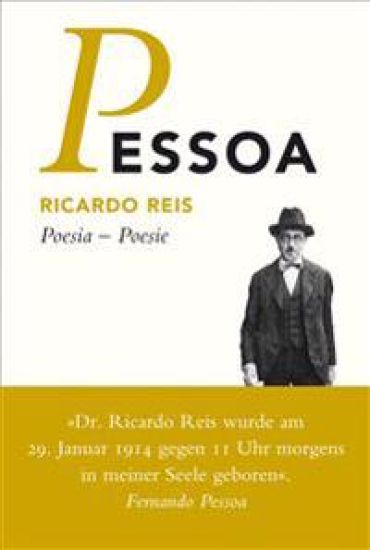
The writing of Fernando Pessoa reveals a mind shaken by intense inner suffering. In these poems he adopted four separate personae: Alberto Caeiro, Alvaro de Campos, Ricardo Reis and himself, using them to express 'great swarms of thought and feeling'. While each personae has its own poetic identity, together they convey a sense of ambivalence and consolidate a striving for completeness. Dramatic, lyrical, Christian, pagan, old and modern, Pessoa's poets and poetry contribute to the 'mysterious importance of existence'.

The Book of Disquietude is the 'factless autobiography' of Bernardo Soares, one of the 72 literary personae with which Fernando Pessoa created the theatre of himself. Conceived in 1916, Soares is, Pessoa declares, 'a mutilation' of his own personality. This is the first, and only complete, English edition. Other versions are abridgements. The translator and scholar Richard Zenith includes all the 'fragments' which made up the 1982 edition, 48 additional fragments and some from the Pessoa archive never previously published. He provides a full introduction and notes.