Kirjailija
Florence Nightingale
Kirjat ja teokset yhdessä paikassa: 117 kirjaa, julkaisuja vuosilta 1854-2026, suosituimpien joukossa Cassandra. Vertaile teosten hintoja ja tarkista saatavuus suomalaisista kirjakaupoista.
117 kirjaa
Kirjojen julkaisuhaarukka 1854-2026.
In her nineteenth-century essay, Florence Nightingale speaks out against the imposed restrictions, idleness, and triviality that characterized the life of Victorian women.
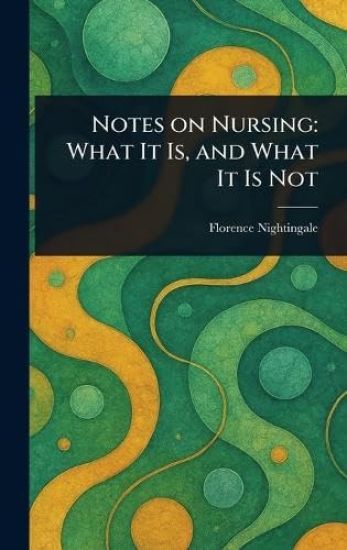
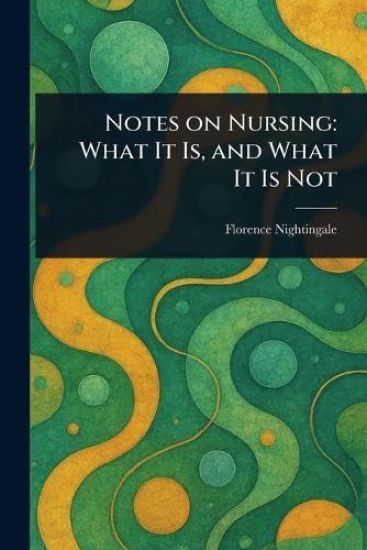
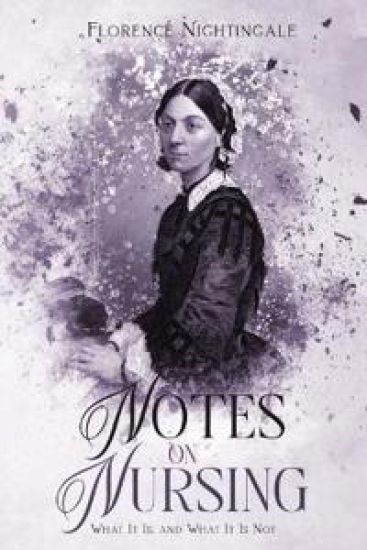
Notes on Nursing: What It Is, and What It Is Not
Florence Nightingale
Anson Street Press
2025
sidottu
Florence Nightingale's "Notes on Nursing: What It Is, and What It Is Not," remains a foundational text in the field of nursing and patient care. Originally published to educate women caring for the sick, this concise guide emphasizes the importance of environmental factors in promoting health and recovery. Nightingale's insights into hygiene, ventilation, nutrition, and observation continue to resonate, offering practical advice on creating optimal conditions for healing. More than just a manual, "Notes on Nursing" presents a philosophy of care that prioritizes the patient's well-being and comfort. It underscores the significance of attentive nursing practices and the critical role nurses play in supporting the body's natural healing processes. This edition offers a timeless perspective on the art and science of nursing, relevant to anyone interested in health, women's health, and the history of medical practices.This work has been selected by scholars as being culturally important, and is part of the knowledge base of civilization as we know it.This work is in the public domain in the United States of America, and possibly other nations. Within the United States, you may freely copy and distribute this work, as no entity (individual or corporate) has a copyright on the body of the work.Scholars believe, and we concur, that this work is important enough to be preserved, reproduced, and made generally available to the public. We appreciate your support of the preservation process, and thank you for being an important part of keeping this knowledge alive and relevant.
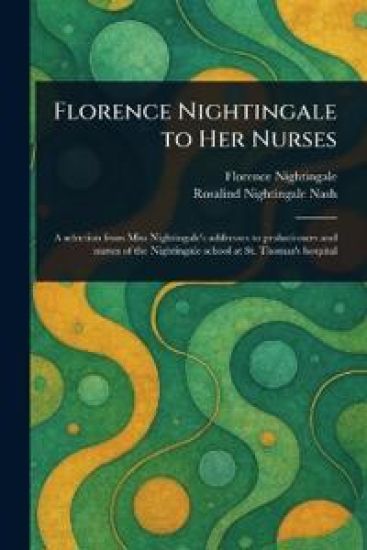
Florence Nightingale to Her Nurses
Florence Nightingale; Rosalind Nightingale Nash
Anson Street Press
2025
pokkari
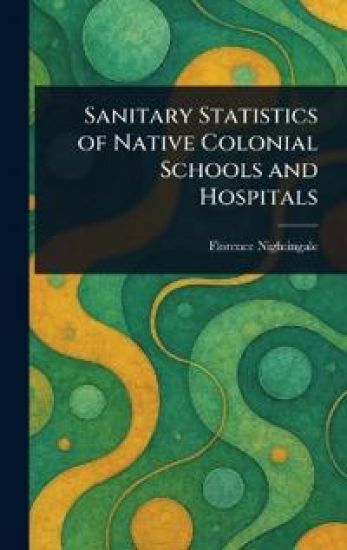
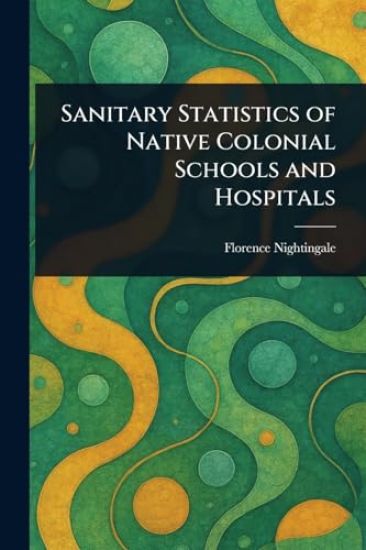
Sanitary Statistics of Native Colonial Schools and Hospitals
Florence Nightingale
Anson Street Press
2025
sidottu
Sanitary Statistics of Native Colonial Schools and Hospitals
Florence Nightingale
Anson Street Press
2025
pokkari
Directions for Cooking by Troops, in Camp and Hospital
Florence Nightingale
Anson Street Press
2025
pokkari
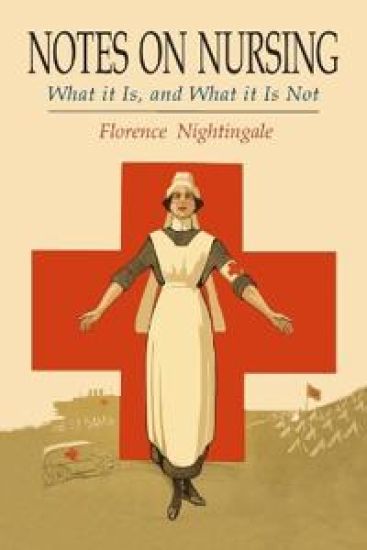
Notes on Nursing: What It Is, and What It Is Not
Florence Nightingale
Anson Street Press
2025
nidottu
Florence Nightingale's "Notes on Nursing: What It Is, and What It Is Not," remains a foundational text in the field of nursing and patient care. Originally published to educate women caring for the sick, this concise guide emphasizes the importance of environmental factors in promoting health and recovery. Nightingale's insights into hygiene, ventilation, nutrition, and observation continue to resonate, offering practical advice on creating optimal conditions for healing. More than just a manual, "Notes on Nursing" presents a philosophy of care that prioritizes the patient's well-being and comfort. It underscores the significance of attentive nursing practices and the critical role nurses play in supporting the body's natural healing processes. This edition offers a timeless perspective on the art and science of nursing, relevant to anyone interested in health, women's health, and the history of medical practices.This work has been selected by scholars as being culturally important, and is part of the knowledge base of civilization as we know it.This work is in the public domain in the United States of America, and possibly other nations. Within the United States, you may freely copy and distribute this work, as no entity (individual or corporate) has a copyright on the body of the work.Scholars believe, and we concur, that this work is important enough to be preserved, reproduced, and made generally available to the public. We appreciate your support of the preservation process, and thank you for being an important part of keeping this knowledge alive and relevant.
Before she became the legendary "Lady with the Lamp" healing soldiers in the Crimean War, Florence Nightingale shattered conventions as a pioneering nurse and reformer. Her seminal work Notes on Nursing, published in 1860, distills over a decade of her transformative insights and methods. This profound volume remains essential reading for all in the healing professions.Caring for ill bodies and minds requires more than medicine alone, Nightingale admonishes. She illuminates the vital role of nutrition, sanitation, cleanliness, ventilation, warmth, and managing the patient's environment in facilitating healing. Nightingale overturns common neglect of these essentials with keen observations from years studying disease statistics and death rates in hospitals. Her analysis of deficiencies in existing care sparked sweeping reforms that drastically reduced preventable deaths.Far ahead of her time, Nightingale recognized the power of psychology in healing. She insisted nurturing hope and calm in patients is as important as physical care in aiding recovery. Her wisdom reached even to directions for home nursing and architectural design of hospitals. Principles that seem obvious now were revelatory when Notes on Nursing was first published.This landmark work brims with Nightingale's characteristic insight, conviction, and concise style. She marshals irrefutable evidence, pungent examples, and sharp wit to convince both caregivers and families to implement essential reforms. Undoubtedly abrasive to the old guard of her day, Nightingale's deep compassion shines through as she urges priority be given to improving patient outcomes through better care practices.Notes on Nursing exemplifies Florence Nightingale's groundbreaking work elevating nursing to a respected profession and noble calling. This volume captures her visionary ideas and poetic pragmatism that profoundly influenced medicine and society. Two centuries later, it remains powerful and transformative reading.
Reprint of the original, first published in 1859. The publishing house Anatiposi publishes historical books as reprints. Due to their age, these books may have missing pages or inferior quality. Our aim is to preserve these books and make them available to the public so that they do not get lost.
Reprint of the original. The publishing house Anatiposi publishes historical books as reprints. Due to their age, these books may have missing pages or inferior quality. Our aim is to preserve these books and make them available to the public so that they do not get lost.
Florence Nightingale initially released her book Notes on Nursing: What it Is and What it Is Not in 1859. It was a 76-page book with a 3-page addendum that Harrison of Pall Mall published with the intention of providing nursing advice to people who were responsible for other people's health. Florence Nightingale emphasized that the book was intended to aid in the practice of caring for others rather than serve as a full manual for learning how to become a nurse. The Nightingale School of Nursing's then-director Joan Quixley stated in her introduction to the 1974 edition that despite the passage of time since the publication of Notes on Nursing, "The book astounds one with its applicability to contemporary attitudes and nursing skills, whether these are used by the "ordinary woman" at home, in a hospital, or in the community. The social, economic, and professional distinctions of the nineteenth and twentieth centuries in no way prohibit the young student or learner from developing if he or she is driven to do so, its unchanged fundamentals by way of intelligent thought and practice".