Kirjailija
Florence Nightingale
Kirjat ja teokset yhdessä paikassa: 117 kirjaa, julkaisuja vuosilta 1854-2026, suosituimpien joukossa Cassandra. Vertaile teosten hintoja ja tarkista saatavuus suomalaisista kirjakaupoista.
117 kirjaa
Kirjojen julkaisuhaarukka 1854-2026.
Reprint of the original, first published in 1863.
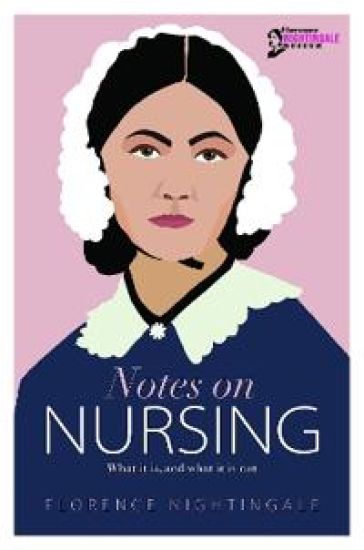
Florence Nightingale's Notes on Nursing, published in 1859, was the first book to address the specifics of patient care. It was written in a time when medical science was beginning to understand the importance of rules of hygiene. Hospitals were places where infections spread quickly, and caregivers were mainly untrained and impoverished. Nightingale spoke to these issues and gave specific directions to resolve concerns such as nourishment, ventilation, personal cleanliness, and patient observation.
In this classic historical nursing text, Florence Nightingale shares her advice on nursing to those entrusted with the health of others. Publishing in conjunction with the Florence Nightingale Museum.
In this classic historical text on hospitals, Florence Nightingale voices the importance of hygiene, fresh air and water, cleanliness, proper drainage, and ample light as well as ongoing consideration for patients' feelings.
This book has been considered by academicians and scholars of great significance and value to literature. This forms a part of the knowledge base for future generations. So that the book is never forgotten we have represented this book in a print format as the same form as it was originally first published. Hence any marks or annotations seen are left intentionally to preserve its true nature.
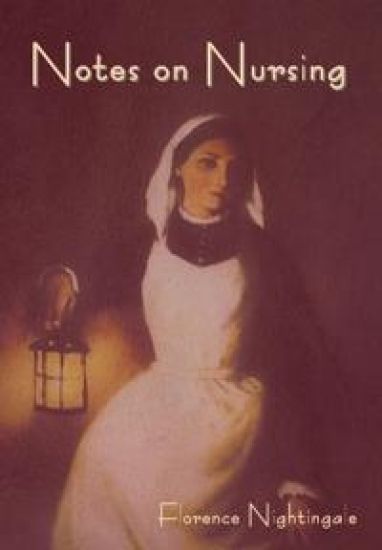
Notes on Nursing: What it is and What it is Not is a book first published by Florence Nightingale in 1859. A 136-page volume, it was intended to give hints on nursing to those entrusted with the health of others. Florence Nightingale stressed that it was not meant to be a comprehensive guide from which to teach one's self to be a nurse but to help in the practice of treating others.In her introduction to the 1974 edition, Joan Quixley, then head of the Nightingale School of Nursing, wrote that despite the passage of time since Notes on Nursing was published, "the book astonishes one with its relevance to modern attitudes and skills in nursing, whether this be practised at home by the 'ordinary woman', in hospital or in the community. The social, economic and professional differences of the nineteenth and twentieth centuries in no way hinder the young student or pupil from developing, if he or she is motivated to do so, its unchanged fundamentals by way of intelligent thought and practice". "With its mid-nineteenth century background of poverty, neglect, ignorance and prejudice the book was a challenge to contemporary views of nursing, of nurses and of the patient". "The book was the first of its kind ever to be written. It appeared at a time when the simple rules of health were only beginning to be known, when its topics were of vital importance not only for the well-being and recovery of patients, when hospitals were riddled with infection, when nurses were still mainly regarded as ignorant, uneducated persons. The book has, inevitably, its place in the history of nursing, for it was written by the founder of modern nursing".
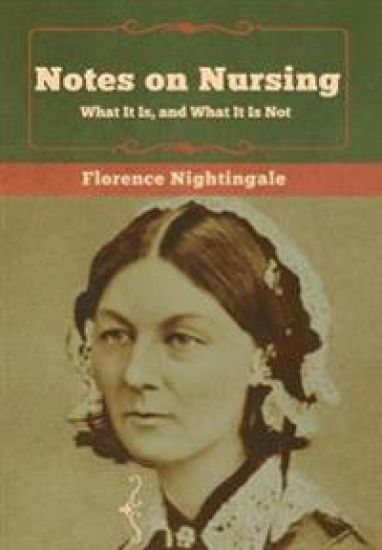
In her pioneering work, Florence Nightingale discusses holistic health, home health, alternative therapies, health prevention and maintenance, the role of women in nursing and everyday life, nursing administration, leadership, communications skills as well as mind/body and body/mind relationships. Notes on Nursing - What It Is, and What It Is Not is essential reading for nurse students and educators.
In her pioneering work, Florence Nightingale discusses holistic health, home health, alternative therapies, health prevention and maintenance, the role of women in nursing and everyday life, nursing administration, leadership, communications skills as well as mind/body and body/mind relationships. Notes on Nursing: What It Is, and What It Is Not is essential reading for nurse students and educators.
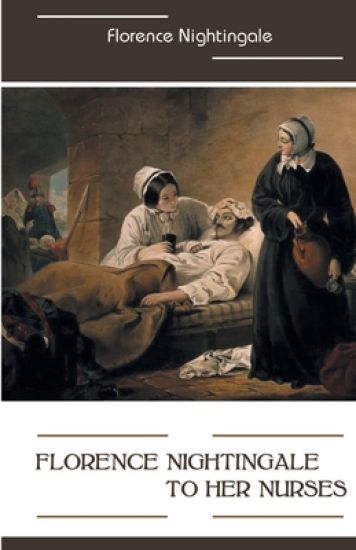
Florence Nightingale To Her Nurses: A Selection From Miss Nightingale's Addresses To Probationers And Nurses Of The Nightingale School At St. Thomas's Hospital Edited, With Preface By Rosalind Nash This book is a result of an effort made by us towards making a contribution to the preservation and repair of original classic literature. In an attempt to preserve, improve and recreate the original content, we have worked towards: 1. Type-setting & Reformatting: The complete work has been re-designed via professional layout, formatting and type-setting tools to re-create the same edition with rich typography, graphics, high quality images, and table elements, giving our readers the feel of holding a 'fresh and newly' reprinted and/or revised edition, as opposed to other scanned & printed (Optical Character Recognition - OCR) reproductions. 2. Correction of imperfections: As the work was re-created from the scratch, therefore, it was vetted to rectify certain conventional norms with regard to typographical mistakes, hyphenations, punctuations, blurred images, missing content/pages, and/or other related subject matters, upon our consideration. Every attempt was made to rectify the imperfections related to omitted constructs in the original edition via other references. However, a few of such imperfections which could not be rectified due to intentional\unintentional omission of content in the original edition, were inherited and preserved from the original work to maintain the authenticity and construct, relevant to the work. We believe that this work holds historical, cultural and/or intellectual importance in the literary works community, therefore despite the oddities, we accounted the work for print as a part of our continuing effort towards preservation of literary work and our contribution towards the development of the society as a whole, driven by our beliefs. We are grateful to our readers for putting their faith in us and accepting our imperfections with regard to preservation of the historical content. HAPPY READING
Notes On Nursing: What It Is, And What It Is Not. This book is a result of an effort made by us towards making a contribution to the preservation and repair of original classic literature. In an attempt to preserve, improve and recreate the original content, we have worked towards: 1. Type-setting & Reformatting: The complete work has been re-designed via professional layout, formatting and type-setting tools to re-create the same edition with rich typography, graphics, high quality images, and table elements, giving our readers the feel of holding a 'fresh and newly' reprinted and/or revised edition, as opposed to other scanned & printed (Optical Character Recognition - OCR) reproductions. 2. Correction of imperfections: As the work was re-created from the scratch, therefore, it was vetted to rectify certain conventional norms with regard to typographical mistakes, hyphenations, punctuations, blurred images, missing content/pages, and/or other related subject matters, upon our consideration. Every attempt was made to rectify the imperfections related to omitted constructs in the original edition via other references. However, a few of such imperfections which could not be rectified due to intentional\unintentional omission of content in the original edition, were inherited and preserved from the original work to maintain the authenticity and construct, relevant to the work. We believe that this work holds historical, cultural and/or intellectual importance in the literary works community, therefore despite the oddities, we accounted the work for print as a part of our continuing effort towards preservation of literary work and our contribution towards the development of the society as a whole, driven by our beliefs. We are grateful to our readers for putting their faith in us and accepting our imperfections with regard to preservation of the historical content. HAPPY READING
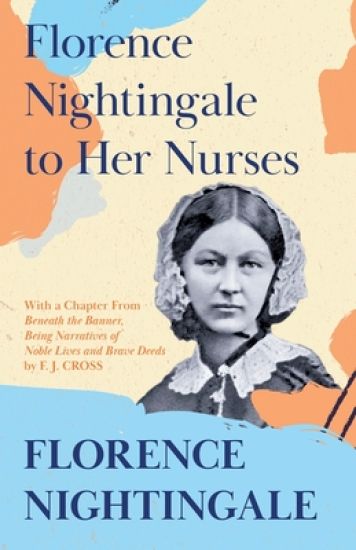
Florence Nightingale to Her Nurses
Florence Nightingale; F J Cross
Brilliant Women - Read Co.
2020
pokkari
First published in 1914, "Florence Nightingale to Her Nurses" contains a selection of addresses given by Nightingale to the probationers and nurses of The Nightingale School at St. Thomas's Hospital. Florence Nightingale (1820-1910) was an English social reformer, statistician, and pioneer of modern nursing. She became famous during the time she served as manager and trainer of nurses during the Crimean War, giving nursing a positive reputation and becoming a Victorian culture icon. Also known as "The Lady with the Lamp", she was an accomplished writer who produced a large corpus of work related to medical knowledge. Offering a unique insight into the mind and work of one of the most famous nurses in history, "Florence Nightingale to Her Nurses" is not to be missed by those with an interest in Florence Nightingale and how she shaped the face of modern nursing over a century ago. Other notable works by Florence Nightingale include: "Notes on Nursing: What Nursing Is, What Nursing is Not" (1859), "Suggestions for Thought" (1860), and "Una and the Lion" (1871). Read & Co. are republishing this volume now in a modern edition complete with an introductory from "Beneath the Banner, Being Narratives of Noble Lives and Brave Deeds" by F. J. Cross.
A Guide to Hospitals and Nursing - A Collection of Writings and Excerpts
Florence Nightingale; Lytton Strachey
Brilliant Women - Read Co.
2020
pokkari
Florence Nightingale (1820-1910) was an English social reformer, statistician, and pioneer of modern nursing. She became famous during the time she served as manager and trainer of nurses during the Crimean War, giving nursing a positive reputation and becoming a Victorian culture icon. Also known as "The Lady with the Lamp", she was an accomplished writer who produced a large corpus of work related to medical knowledge. A great example of such writing is "Guide To Hospitals And Nursing", within which Nightingale outlines some key principles of nursing with a particular focus on nursing for the poor and underprivileged. Highly recommended for those with an interest in the history and development of nursing and not to be missed by the discerning collector. Contents include: "Florence Nightingale, By Lytton Strachey", "Suggestions On A System Of Nursing For Hospitals In India", "Trained Nursing For The Sick Poor", "Workhouse Nursing - The Story Of A Successful Experiment", "Amy Sanitary Administration, and Its Reform Under The Late Lord Herbert", "Health Teaching In Towns And Villages. Rural Hygiene", etc. Other notable works by this author include: "Notes on Nursing: What Nursing Is, What Nursing is Not" (1859), "Suggestions for Thought" (1860), and "Una and the Lion" (1871).This classic work is being republished now in a new edition complete with an introductory chapter by Lytton Strachey.
Notes on Nursing - What It Is, and What It Is Not
Florence Nightingale; F J Cross
Brilliant Women - Read Co.
2020
pokkari
Florence Nightingale (1820-1910) was an English social reformer, statistician, and pioneer of modern nursing. She became famous during the time she served as manager and trainer of nurses during the Crimean War, giving nursing a positive reputation and becoming a Victorian culture icon. Also known as "The Lady with the Lamp", she was an accomplished writer who produced work related to medical knowledge. Nightingale's 1859 work "Notes on Nursing - What It Is, and What It Is Not" represented the fundaments of the curriculum at the Nightingale School and other nursing schools, despite originally devised as a guide for home nursing. It includes every day sanitary knowledge, covering such topics as taking food and what kinds of food, bed and bedding, light, cleanliness of rooms, personal cleanliness, etc. Contents include: "Ventilation And Warming", "Health Of Houses", "Petty Management", "Noise", "Variety", etc. Other notable works by this author include: "Florence Nightingale to Her Nurses" (1914), "Suggestions for Thought" (1860), and "Una and the Lion" (1871). Read & Co. are republishing this volume now in a modern edition complete with an introductory from "Beneath the Banner, Being Narratives of Noble Lives and Brave Deeds" by F. J. Cross.
Notes on Nursing: What it is and What it is Not is a book first published by Florence Nightingale in 1859. A 136-page volume, it was intended to give hints on nursing to those entrusted with the health of others. Florence Nightingale stressed that it was not meant to be a comprehensive guide from which to teach one's self to be a nurse but to help in the practice of treating others.In her introduction to the 1974 edition, Joan Quixley, then head of the Nightingale School of Nursing, wrote that despite the passage of time since Notes on Nursing was published, "the book astonishes one with its relevance to modern attitudes and skills in nursing, whether this be practised at home by the 'ordinary woman', in hospital or in the community. The social, economic and professional differences of the nineteenth and twentieth centuries in no way hinder the young student or pupil from developing, if he or she is motivated to do so, its unchanged fundamentals by way of intelligent thought and practice". "With its mid-nineteenth century background of poverty, neglect, ignorance and prejudice the book was a challenge to contemporary views of nursing, of nurses and of the patient". "The book was the first of its kind ever to be written. It appeared at a time when the simple rules of health were only beginning to be known, when its topics were of vital importance not only for the well-being and recovery of patients, when hospitals were riddled with infection, when nurses were still mainly regarded as ignorant, uneducated persons. The book has, inevitably, its place in the history of nursing, for it was written by the founder of modern nursing".