Kirjojen hintavertailu. Mukana 12 390 323 kirjaa ja 12 kauppaa.

Kirjailija

Florence Nightingale

Kirjat ja teokset yhdessä paikassa: 117 kirjaa, julkaisuja vuosilta 1854-2026, suosituimpien joukossa Cassandra. Vertaile teosten hintoja ja tarkista saatavuus suomalaisista kirjakaupoista.

117 kirjaa

Kirjojen julkaisuhaarukka 1854-2026.

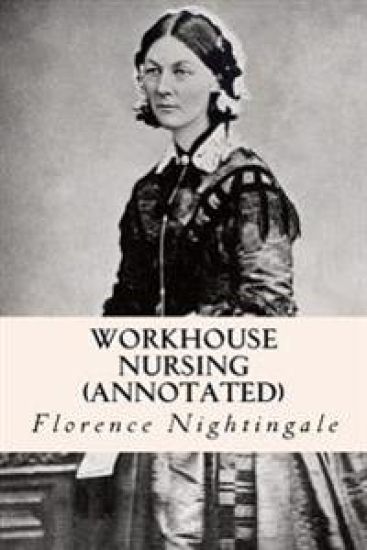
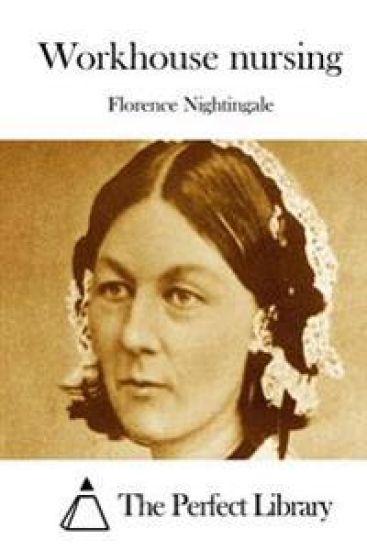
Workhouse nursing (annotated)

Workhouse nursing (annotated)

Florence Nightingale

Createspace Independent Publishing Platform
2016
nidottu
Workhouse nursing is a classic nursing profession text by Florence Nightingale. The following nursing history classic contains a brief account of the nursing experiment successfully tried by the Select Vestry of Liverpool (the guardians of the poor)-the introduction of trained Nurses into the male wards of the Workhouse Infirmary. That experiment having resulted so successfully as to induce the Vestry to extend the system to the remainder of the infirmary, it may be interesting to those who are concerned in the management of workhouses elsewhere to learn something of its history and progress. Florence Nightingale (12 May 1820 - 13 August 1910) was an English social reformer and statistician, and the founder of modern nursing. Nightingale came to prominence while serving as a manager of nurses trained by her during the Crimean War, where she organised the tending to wounded soldiers. She gave nursing a highly favourable reputation and became an icon of Victorian culture, especially in the persona of "The Lady with the Lamp" making rounds of wounded soldiers at night. While recent commentators have asserted Nightingale's achievements in the Crimean War were exaggerated by the media at the time, critics agree on the decisive importance of her follow-up achievements in professionalising nursing roles for women. 6] In 1860, Nightingale laid the foundation of professional nursing with the establishment of her nursing school at St Thomas' Hospital in London. It was the first secular nursing school in the world, now part of King's College London. In recognition of her pioneering work in nursing, the Nightingale Pledge taken by new nurses, and the Florence Nightingale Medal, the highest international distinction a nurse can achieve, were named in her honour, and the annual International Nurses Day is celebrated around the world on her birthday. Her social reforms include improving healthcare for all sections of British society, advocating better hunger relief in India, helping to abolish prostitution laws that were over-harsh to women, and expanding the acceptable forms of female participation in the workforce. Nightingale was a prodigious and versatile writer. In her lifetime, much of her published work was concerned with spreading medical knowledge. Some of her tracts were written in simple English so that they could easily be understood by those with poor literary skills. She was also a pioneer in the use of infographics, effectively using graphical presentations of statistical data. 6] Much of her writing, including her extensive work on religion and mysticism, has only been published posthumously.
Notes on Nursing (annotated)

Notes on Nursing (annotated)

Florence Nightingale

Createspace Independent Publishing Platform
2015
nidottu
Notes on Nursing is a classic nursing education text by Florence Nightingale. The following nursing notes are by no means intended as a rule of thought by which nurses can teach themselves to nurse, still less as a manual to teach nurses to nurse. They are meant simply to give hints for thought to women who have personal charge of the health of others. Every woman, or at least almost every woman, in England has, at one time or another of her life, charge of the personal health of somebody, whether child or invalid, --in other words, every woman is a nurse. Florence Nightingale (12 May 1820 - 13 August 1910) was an English social reformer and statistician, and the founder of modern nursing. Nightingale came to prominence while serving as a manager of nurses trained by her during the Crimean War, where she organised the tending to wounded soldiers. 3] She gave nursing a highly favourable reputation and became an icon of Victorian culture, especially in the persona of "The Lady with the Lamp" making rounds of wounded soldiers at night. While recent commentators have asserted Nightingale's achievements in the Crimean War were exaggerated by the media at the time, critics agree on the decisive importance of her follow-up achievements in professionalising nursing roles for women. 6] In 1860, Nightingale laid the foundation of professional nursing with the establishment of her nursing school at St Thomas' Hospital in London. It was the first secular nursing school in the world, now part of King's College London. In recognition of her pioneering work in nursing, the Nightingale Pledge taken by new nurses, and the Florence Nightingale Medal, the highest international distinction a nurse can achieve, were named in her honour, and the annual International Nurses Day is celebrated around the world on her birthday. Her social reforms include improving healthcare for all sections of British society, advocating better hunger relief in India, helping to abolish prostitution laws that were over-harsh to women, and expanding the acceptable forms of female participation in the workforce. Nightingale was a prodigious and versatile writer. In her lifetime, much of her published work was concerned with spreading medical knowledge. Some of her tracts were written in simple English so that they could easily be understood by those with poor literary skills. She was also a pioneer in the use of infographics, effectively using graphical presentations of statistical data. Much of her writing, including her extensive work on religion and mysticism, has only been published posthumously. Florence Nightingale's most famous contribution came during the Crimean War, which became her central focus when reports got back to Britain about the horrific conditions for the wounded. On 21 October 1854, she and the staff of 38 women volunteer nurses that she trained, including her aunt Mai Smith, and 15 Catholic nuns (mobilised by Henry Edward Manning) 18] were sent (under the authorisation of Sidney Herbert) to the Ottoman Empire. Nightingale was assisted in Paris by her friend Mary Clarke. They were deployed about 295 nautical miles (546 km; 339 mi) across the Black Sea from Balaklava in the Crimea, where the main British camp was based. Nightingale arrived early in November 1854 at Selimiye Barracks in Scutari (modern-day sk dar in Istanbul). Her team found that poor care for wounded soldiers was being delivered by overworked medical staff in the face of official indifference. Medicines were in short supply, hygiene was being neglected After Nightingale sent a plea to The Times for a government solution to the poor condition of the facilities, the British Government commissioned Isambard Kingdom Brunel to design a prefabricated hospital that could be built in England and shipped to the Dardanelles. The result was Renkioi Hospital, a civilian facility that, under the management of Dr Edmund Alexander Parkes, had a death rate less than 1/10th that of Sc
Notes on Nursing (annotated)

Notes on Nursing (annotated)

Florence Nightingale

Createspace Independent Publishing Platform
2015
nidottu
Notes on Nursing is a classic nursing education text by Florence Nightingale. The following nursing notes are by no means intended as a rule of thought by which nurses can teach themselves to nurse, still less as a manual to teach nurses to nurse. They are meant simply to give hints for thought to women who have personal charge of the health of others. Every woman, or at least almost every woman, in England has, at one time or another of her life, charge of the personal health of somebody, whether child or invalid, --in other words, every woman is a nurse. Florence Nightingale (12 May 1820 - 13 August 1910) was an English social reformer and statistician, and the founder of modern nursing. Nightingale came to prominence while serving as a manager of nurses trained by her during the Crimean War, where she organised the tending to wounded soldiers. 3] She gave nursing a highly favourable reputation and became an icon of Victorian culture, especially in the persona of "The Lady with the Lamp" making rounds of wounded soldiers at night. While recent commentators have asserted Nightingale's achievements in the Crimean War were exaggerated by the media at the time, critics agree on the decisive importance of her follow-up achievements in professionalising nursing roles for women. 6] In 1860, Nightingale laid the foundation of professional nursing with the establishment of her nursing school at St Thomas' Hospital in London. It was the first secular nursing school in the world, now part of King's College London. In recognition of her pioneering work in nursing, the Nightingale Pledge taken by new nurses, and the Florence Nightingale Medal, the highest international distinction a nurse can achieve, were named in her honour, and the annual International Nurses Day is celebrated around the world on her birthday. Her social reforms include improving healthcare for all sections of British society, advocating better hunger relief in India, helping to abolish prostitution laws that were over-harsh to women, and expanding the acceptable forms of female participation in the workforce. Nightingale was a prodigious and versatile writer. In her lifetime, much of her published work was concerned with spreading medical knowledge. Some of her tracts were written in simple English so that they could easily be understood by those with poor literary skills. She was also a pioneer in the use of infographics, effectively using graphical presentations of statistical data. Much of her writing, including her extensive work on religion and mysticism, has only been published posthumously. Florence Nightingale's most famous contribution came during the Crimean War, which became her central focus when reports got back to Britain about the horrific conditions for the wounded. On 21 October 1854, she and the staff of 38 women volunteer nurses that she trained, including her aunt Mai Smith, and 15 Catholic nuns (mobilised by Henry Edward Manning) 18] were sent (under the authorisation of Sidney Herbert) to the Ottoman Empire. Nightingale was assisted in Paris by her friend Mary Clarke. They were deployed about 295 nautical miles (546 km; 339 mi) across the Black Sea from Balaklava in the Crimea, where the main British camp was based. Nightingale arrived early in November 1854 at Selimiye Barracks in Scutari (modern-day sk dar in Istanbul). Her team found that poor care for wounded soldiers was being delivered by overworked medical staff in the face of official indifference. Medicines were in short supply, hygiene was being neglected After Nightingale sent a plea to The Times for a government solution to the poor condition of the facilities, the British Government commissioned Isambard Kingdom Brunel to design a prefabricated hospital that could be built in England and shipped to the Dardanelles. The result was Renkioi Hospital, a civilian facility that, under the management of Dr Edmund Alexander Parkes, had a death rate less than 1/10th that of Sc
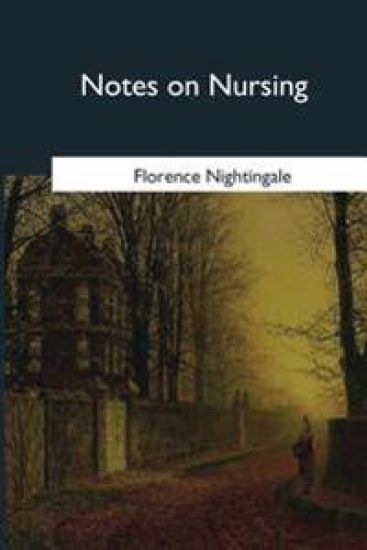
Notes on Nursing

Notes on Nursing

Florence Nightingale

Createspace Independent Publishing Platform
2015
nidottu
Notes on Nursing is a classic historical nursing education text by Florence Nightingale. The following nursing notes are by no means intended as a rule of thought by which nurses can teach themselves to nurse, still less as a nursing manual to teach nurses to nurse. They are meant simply to give hints for thought to women who have personal charge of the health of others. Every woman, or at least almost every woman, in England has, at one time or another of her life, charge of the personal health of somebody, whether child or invalid, --in other words, every woman is a nurse. Florence Nightingale (12 May 1820 - 13 August 1910) was an English social reformer and statistician, and the founder of modern nursing. Nightingale came to prominence while serving as a manager of nurses trained by her during the Crimean War, where she organised the tending to wounded soldiers. 3] She gave nursing a highly favourable reputation and became an icon of Victorian culture, especially in the persona of "The Lady with the Lamp" making rounds of wounded soldiers at night. While recent commentators have asserted Nightingale's achievements in the Crimean War were exaggerated by the media at the time, critics agree on the decisive importance of her follow-up achievements in professionalising nursing roles for women. 6] In 1860, Nightingale laid the foundation of professional nursing with the establishment of her nursing school at St Thomas' Hospital in London. It was the first secular nursing school in the world, now part of King's College London. In recognition of her pioneering work in nursing, the Nightingale Pledge taken by new nurses, and the Florence Nightingale Medal, the highest international distinction a nurse can achieve, were named in her honour, and the annual International Nurses Day is celebrated around the world on her birthday. Her social reforms include improving healthcare for all sections of British society, advocating better hunger relief in India, helping to abolish prostitution laws that were over-harsh to women, and expanding the acceptable forms of female participation in the workforce. Nightingale was a prodigious and versatile writer. In her lifetime, much of her published work was concerned with spreading medical knowledge. Some of her tracts were written in simple English so that they could easily be understood by those with poor literary skills. She was also a pioneer in the use of infographics, effectively using graphical presentations of statistical data. Much of her writing, including her extensive work on religion and mysticism, has only been published posthumously. Florence Nightingale's most famous contribution came during the Crimean War, which became her central focus when reports got back to Britain about the horrific conditions for the wounded. On 21 October 1854, she and the staff of 38 women volunteer nurses that she trained, including her aunt Mai Smith, and 15 Catholic nuns (mobilised by Henry Edward Manning) 18] were sent (under the authorisation of Sidney Herbert) to the Ottoman Empire. Nightingale was assisted in Paris by her friend Mary Clarke. They were deployed about 295 nautical miles (546 km; 339 mi) across the Black Sea from Balaklava in the Crimea, where the main British camp was based. Nightingale arrived early in November 1854 at Selimiye Barracks in Scutari (modern-day sk dar in Istanbul). Her team found that poor care for wounded soldiers was being delivered by overworked medical staff in the face of official indifference. Medicines were in short supply, hygiene was being neglected
Florence Nightingale to Her Nurses

Florence Nightingale to Her Nurses

Florence Nightingale

Literary Licensing, LLC
2014
sidottu
Florence Nightingale To Her Nurses is a collection of letters and notes written by the famous British nurse, Florence Nightingale, to her fellow nurses. The book provides an insight into Nightingale's thoughts and opinions on nursing, healthcare, and the role of women in society during the 19th century.The letters cover a wide range of topics, including the importance of hygiene, the management of hospitals, the training of nurses, and the treatment of patients. Nightingale also addresses issues such as the need for nurses to be educated and knowledgeable, the role of religion in nursing, and the challenges faced by women in the field of healthcare.The book is a valuable resource for anyone interested in the history of nursing and healthcare, as well as for those looking to learn more about the life and work of Florence Nightingale. It offers a unique perspective on the development of modern nursing and the important role played by Nightingale in shaping the profession.This Is A New Release Of The Original 1914 Edition.This scarce antiquarian book is a facsimile reprint of the old original and may contain some imperfections such as library marks and notations. Because we believe this work is culturally important, we have made it available as part of our commitment for protecting, preserving, and promoting the world's literature in affordable, high quality, modern editions, that are true to their original work.
Des Soins À Donner Aux Malades: CE Qu'il Faut Faire, CE Qu'il Faut Éviter
Des soins a donner aux malades: ce qu'il faut faire, ce qu'il faut eviter / par Miss Nightingale; ouvrage traduit de l'anglais avec l'autorisation de l'auteur, precede d'une lettre 16 juillet 1862] de M. Guizot et d'une introduction par M. DarembergDate de l'edition originale: 1862Ce livre est la reproduction fidele d'une oeuvre publiee avant 1920 et fait partie d'une collection de livres reimprimes a la demande editee par Hachette Livre, dans le cadre d'un partenariat avec la Bibliotheque nationale de France, offrant l'opportunite d'acceder a des ouvrages anciens et souvent rares issus des fonds patrimoniaux de la BnF.Les oeuvres faisant partie de cette collection ont ete numerisees par la BnF et sont presentes sur Gallica, sa bibliotheque numerique.En entreprenant de redonner vie a ces ouvrages au travers d'une collection de livres reimprimes a la demande, nous leur donnons la possibilite de rencontrer un public elargi et participons a la transmission de connaissances et de savoirs parfois difficilement accessibles.Nous avons cherche a concilier la reproduction fidele d'un livre ancien a partir de sa version numerisee avec le souci d'un confort de lecture optimal. Nous esperons que les ouvrages de cette nouvelle collection vous apporteront entiere satisfaction.Pour plus d'informations, rendez-vous sur www.hachettebnf.fr
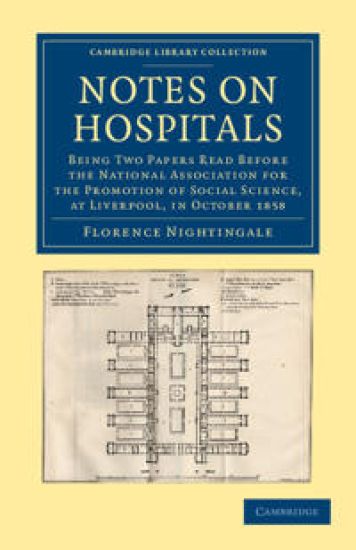
Notes on Hospitals

Notes on Hospitals

Florence Nightingale

Cambridge University Press
2013
pokkari
Returning from the Crimea, Florence Nightingale (1820–1910) used her experience of army medicine to ameliorate civilian nursing care. She was appalled by the conditions she found, affirming that the first requirement of a hospital was that 'it should do the sick no harm'. Problems such as overcrowding and damp, in addition to lack of ventilation and proper sanitation, contributed to high mortality rates. Nightingale's belief that such suffering was preventable was seen as revolutionary. In 1859 she published her two most influential works, Notes on Nursing (also reissued in this series) and Notes on Hospitals. This collection contains the two papers she presented to the National Association for the Promotion of Social Science in 1858. Also included, from 1857, is her evidence to the royal commission on the British army's sanitary conditions. Three illustrated articles on hospital design, published in The Builder in 1858, form an appendix to the work.
Notes on Nursing: What It Is and What It Is Not

Notes on Nursing: What It Is and What It Is Not

Florence Nightingale

Windham Press
2013
nidottu
Notes on Nursing: What it is, and What it is not By Florence Nightingale Contents Ventilation and Warming Health of Houses Petty Management Noise Variety Taking Food What Food? Bed and Bedding Light Cleanliness of Rooms and Walls Personal Cleanliness Chattering Hopes and Advices Observation of the Sick Preface The following notes are by no means intended as a rule of thought by which nurses can teach themselves to nurse, still less as a manual to teach nurses to nurse. They are meant simply to give hints for thought to women who have personal charge of the health of others. Every woman, or at least almost every woman, in England has, at one time or another of her life, charge of the personal health of somebody, whether child or invalid, --in other words, every woman is a nurse. Every day sanitary knowledge, or the knowledge of nursing, or in other words, of how to put the constitution in such a state as that it will have no disease, or that it can recover from disease, takes a higher place. It is recognized as the knowledge which every one ought to have--distinct from medical knowledge, which only a profession can have. If, then, every woman must, at some time or other of her life, become a nurse, i.e., have charge of somebody's health, how immense and how valuable would be the produce of her united experience if every woman would think how to nurse. I do not pretend to teach her how, I ask her to teach herself, and for this purpose I venture to give her some hints. Excerpt Disease a reparative process. Shall we begin by taking it as a general principle--that all disease, at some period or other of its course, is more or less a reparative process, not necessarily accompanied with suffering: an effort of nature to remedy a process of poisoning or of decay, which has taken place weeks, months, sometimes years beforehand, unnoticed, the termination of the disease being then, while the antecedent process was going on, determined? If we accept this as a general principle we shall be immediately met with anecdotes and instances to prove the contrary. Just so if we were to take, as a principle-all the climates of the earth are meant to be made habitable for man, by the efforts of man-the objection would be immediately raised, -Will the top of Mont Blanc ever be made habitable? Our answer would be, it will be many thousands of years before we have reached the bottom of Mont Blanc in making the earth healthy. Wait till we have reached the bottom before we discuss the top. In watching disease, both in private houses and in public hospitals, the thing which strikes the experienced observer most... ------------------------------------------------------------------------------------------------------------------------------------------ Windham Press is committed to bringing the lost cultural heritage of ages past into the 21st century through high-quality reproductions of original, classic printed works at affordable prices. This book has been carefully crafted to utilize the original images of antique books rather than error-prone OCR text. This also preserves the work of the original typesetters of these classics, unknown craftsmen who laid out the text, often by hand, of each and every page you will read. Their subtle art involving judgment and interaction with the text is in many ways superior and more human than the mechanical methods utilized today, and gave each book a unique, hand-crafted feel in its text that connected the reader organically to the art of bindery and book-making. We think these benefits are worth the occasional imperfection resulting from the age of these books at the time of scanning, and their vintage feel provides a connection to the past that goes beyond the mere words of the text.