Kirjojen hintavertailu. Mukana 12 270 797 kirjaa ja 12 kauppaa.

Kirjailija

Francisco De Quevedo

Kirjat ja teokset yhdessä paikassa: 120 kirjaa, julkaisuja vuosilta 1999-2026, suosituimpien joukossa The Visions of Dom Francisco de Quevedo Villegas, ... Made English by Sir Roger L'Estrange, Kt. the Eleventh Edition, Corrected.. Vertaile teosten hintoja ja tarkista saatavuus suomalaisista kirjakaupoista.

120 kirjaa

Kirjojen julkaisuhaarukka 1999-2026.

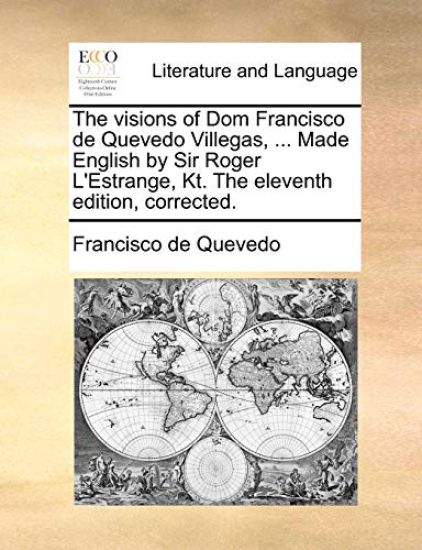
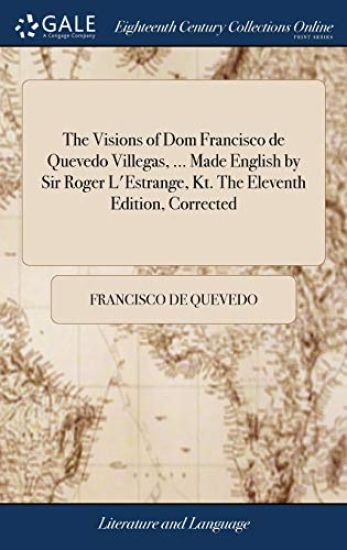
The Visions of Dom Francisco de Quevedo Villegas, ... Made English by Sir Roger L'Estrange, Kt. The Eleventh Edition, Corrected
The 18th century was a wealth of knowledge, exploration and rapidly growing technology and expanding record-keeping made possible by advances in the printing press. In its determination to preserve the century of revolution, Gale initiated a revolution of its own: digitization of epic proportions to preserve these invaluable works in the largest archive of its kind. Now for the first time these high-quality digital copies of original 18th century manuscripts are available in print, making them highly accessible to libraries, undergraduate students, and independent scholars.Western literary study flows out of eighteenth-century works by Alexander Pope, Daniel Defoe, Henry Fielding, Frances Burney, Denis Diderot, Johann Gottfried Herder, Johann Wolfgang von Goethe, and others. Experience the birth of the modern novel, or compare the development of language using dictionaries and grammar discourses. ++++The below data was compiled from various identification fields in the bibliographic record of this title. This data is provided as an additional tool in helping to insure edition identification: ++++British LibraryT088971With two final advertisement leaves.London: printed by W.B. for Richard Sare, 1715. 140, 4]p.; 12
Selected Poetry of Francisco de Quevedo

Selected Poetry of Francisco de Quevedo

Francisco de Quevedo

University of Chicago Press
2009
sidottu
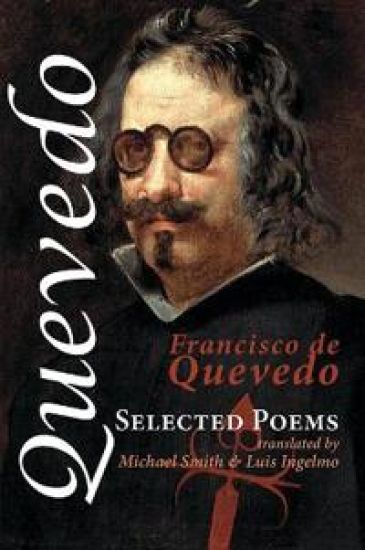
Francisco de Quevedo (1580-1645), one of the greatest poets of the Spanish Golden Age, was the master of the baroque style known as 'conceptismo', a complex form of expression fueled by elaborate conceits and constant wordplay as well as ethical and philosophical concerns. Although scattered translations of his works have appeared in English, there is currently no comprehensive collection available that samples each of the genres in which Quevedo excelled - metaphysical and moral poetry, grave elegies and moving epitaphs, amorous sonnets and melancholic psalms, playful romances and profane burlesques. In this book, Christopher Johnson gathers together a generous selection of forty-six poems - in a bilingual Spanish-English format on facing pages - that highlights the range of Quevedo's technical expertise and themes. Johnson's ingenious solutions to rendering the difficult seventeenth-century Spanish into poetic English will be invaluable to students and scholars of European history, literature, and translation, as well as poetry lovers wishing to reacquaint themselves with an old master.
Selected Poems

Selected Poems

Francisco de Quevedo

Shearsman Books
2026
nidottu
Francisco Gómez de Quevedo y Santibáñez Villegas (1580-1645), was a nobleman, whose parents were both at the royal court, and one of the most important poets of Spain's literary golden age, the siglo de oro. Quevedo was lame, had deformed feet, and was also overweight and shortsighted, but took refuge in books as a student in the Jesuit school in Madrid. In 1596 he went on to study at the University of Alcalá de Henares, after which he studied theology in Valladolid. He was already well-known as a poet by this time, and went on to establish a formidable reputation as both poet and novelist. He was a disputatious character, and engaged in many a public battle of words with his main poetic rival, Góngora, as well as with Alarcón and Pérez de Montalbán, all of whom were to feel the impact of Quevedo's bile. It must be admitted however, that Góngora, at least, repaid him with equal (verbal) measure. Quevedo was involved in a conspiracy in Venice in 1618, after which he was put under house arrest. In 1620, he was exiled, following the death of his patron, but he was pardoned when Philip IV came to the throne. Quevedo accompanied the young King on some of his journeys, but fell afoul of the Inquisition when some of his satiric verses were printed without permission. His private life seems to have been somewhat disordered, and Góngora accused him in a satire of being a drunk, referring to him as Francisco de Quebebó (i.e. Francis WhatamIdrinking). He was to be constantly involved in controversies, both political and literary, and incurred the wrath of the Count-Duke of Olivares, the most powerful nobleman in Spain, through his criticism of the government. This led to his imprisonment in León for four years from 1639. He died two years after his release. His oeuvre offers a bewildering range: theological works, literary and critical commentaries, satires, and novels. His poetry fills over a thousand pages in modern editions, and he is without doubt one of the great literary figures of his age.
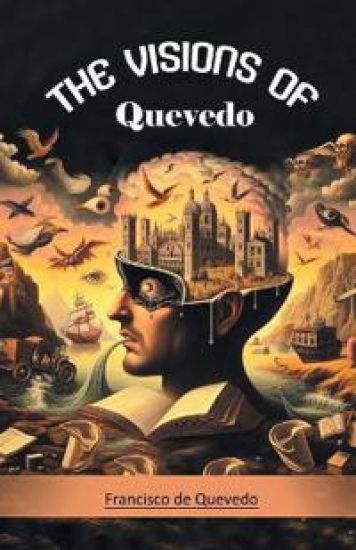
Los Sueños / The Visions of Quevedo

Los Sueños / The Visions of Quevedo

Francisco de Quevedo

Planeta Publishing
2025
nidottu
Los sue os constituye una de las obras fundamentales del Siglo de Oro espa ol.Los sue os es una obra de lectura imprescindible si se quiere tener una idea de los extremos a los que llega el arte literario de Quevedo y del Siglo de Oro espa ol. Es una pieza de s tira aguda en la que desfilan todos los estados y oficios del mundo, con sus tachas, abusos y enga os, descubiertos y condenados por la expresi n ingeniosa acerada y la burla m s feroz. Con la libertad que da la visi n on rica, Los sue os componen una galer a de caricaturas inigualadas y exploran todo tipo de juegos ling sticos en denuncias que van de la risa a la amargura m s violenta. Modelo de numerosas s tiras posteriores, esta obra queda en la historia de la literatura y cultura espa olas como una cima cuya dificultad es s lo un atractivo m s. ENGLISH DESCRIPTIONThe Visions constitutes one of the fundamental works of the Spanish Golden Age.The Visions is an essential read if you want to get an idea of the extremes to which Quevedo's literary art and the Spanish Golden Age go. It is a piece of sharp satire in which all the states and professions of the world parade, with their flaws, abuses, and deceptions, uncovered and condemned by sharp-witted expression and the fiercest mockery. With the freedom that the oneiric vision gives, The Visions compose an unparalleled gallery of caricatures and explore all kinds of linguistic games in denunciations that range from laughter to the most violent bitterness. A model for many later satires, this work remains in the history of Spanish literature and culture as a peak whose difficulty is just another attraction.