Kirjojen hintavertailu. Mukana 12 390 323 kirjaa ja 12 kauppaa.

Kirjailija

Frank J. Fabozzi

Kirjat ja teokset yhdessä paikassa: 78 kirjaa, julkaisuja vuosilta 1995-2026, suosituimpien joukossa Equipment Leasing. Vertaile teosten hintoja ja tarkista saatavuus suomalaisista kirjakaupoista.

Mukana myös kirjoitusasut: Frank J Fabozzi

78 kirjaa

Kirjojen julkaisuhaarukka 1995-2026.

Mortgage-Backed Securities

Mortgage-Backed Securities

Frank J. Fabozzi; Anand K. Bhattacharya; William S. Berliner

John Wiley Sons Inc
2011
sidottu
An up-to-date look at the latest innovations in mortgage-backed securities Since the last edition of Mortgage-Backed Securities was published over three years ago, much has changed in the structured credit market. Frank Fabozzi, Anand Bhattacharya, and William Berliner all have many years of experience working in the fixed-income securitization markets, and have witnessed many cycles of change in the mortgage and MBS sectors. And now, with the Second Edition of Mortgage-Backed Securities, they share their knowledge on many of the products and structuring innovations that have taken place since the financial crisis and fiscal reform. Written in a straightforward and accessible style, and containing numerous illustrations, this timely guide skillfully addresses the investment characteristics, creation, and analysis of mortgage-backed securities. Each chapter contains cutting-edge concepts that you'll need to understand in order to thrive within this arena. Discusses the dynamic interaction between the mortgage industry, home prices, and credit performanceAddresses revised valuation techniques in which all non-agency MBS must be treated as credit piecesExamines the shift in this marketplace since the crisis and the impact on industry and investors Filled with in-depth insights and expert advice, Mortgage-Backed Securities, Second Edition offers you a realistic assessment of this field and outlines the products, structures, and analytical techniques you need to know about in this evolving arena.
RobustNon-Robust Models in Statistics

RobustNon-Robust Models in Statistics

Lev B Klebanov; Svetlozar T Rachev; Frank J Fabozzi

Nova Science Publishers Inc
2010
sidottu
Considers the so-called ill-posed problems and stability in statistics. This book explains that ill-posed problems are not a mere curiosity in the field of contemporary probability. It aims to identify statistical problems of this type, find their stable variant, and propose alternative versions of numerous theorems in mathematical statistics.
Equipment Leasing

Equipment Leasing

Peter K. Nevitt; Frank J. Fabozzi

McGraw-Hill Inc.,US
2000
sidottu
Equipment Leasing is a practical reference for financial managers who need background information, and an understanding of how leasing can be utilized as a cost-effective means of equipment financing–especially under the new tax law in the United States. It explores various types of leases, including single investor leases, leveraged leases, tax requirements for true leases’ and lease-buy economic analysis. This invaluable resource includes the background and basics of equipment leasing, history of leasing, synthetic leases, financial reporting of lease transactions by lessees, operating a leasing company, and much more.
Collateralized Mortgage Obligations

Collateralized Mortgage Obligations

Frank J. Fabozzi; Chuck Ramsey

Frank J. Fabozzi Associates
1999
sidottu
Financial experts Chuck Ramsey and Frank Ramirez join Frank Fabozzi for the third edition of Collateralized Mortgage Obligations: Structure & Analysis. Because of the complexity and the risk associated with CMOs, portfolio managers need specific keys to understand and unlock the potential of these unique investment tools. Fabozzi and company provide this understanding with detailed explanations of all aspects of CMOs, including factors affecting prepayment behavior; whole loan CMO structures; and accounting for CMO investments. Filled with relevant examples and in-depth discussions, Collateralized Mortgage Obligations: Structure & Analysis sheds light on this somewhat controversial and highly technical subject–which is one of the fastest-growing sectors of the fixed-income securities market.
From Instruments To Strategies: How Derivatives Are Used In Practice
This book is an application-first, practice-grounded guide to derivatives. Its aim is to show how derivatives are used by asset management firms, corporations, and commercial and investment banks to solve real financial problems without turning the reader into a pricing specialist. It emphasizes application over abstraction while still covering valuation frameworks in their practical context.The book adopts a modular structure that lets readers engage with derivatives from multiple entry points. Part 1 examines why organizations adopt derivatives, establishing the conceptual foundations that govern their use and misuse. Part 2 surveys the major derivative instruments and market structures, including forwards, futures, swaps, options, and structured and credit products. Part 3 turns to derivative strategies, covering speculative and hedging applications, portfolio integration, and backtesting, and reframes earlier concepts in terms of implementation and real-world applications. Part 4 examines institutional practice across corporate treasury, commercial banking, and investment banking, showing how identical instruments serve different purposes across balance sheets and client settings. Part 5 develops no-arbitrage valuation for forwards and futures, the probabilistic foundations of option pricing, discrete-time lattice methods, the Black-Scholes-Merton framework, and swap valuation, emphasizing assumptions, limitations, and market realities.Pedagogically, From Instruments to Strategies builds intuition before formalism. Market structure essentials, such as clearing, daily mark-to-market, and margining for exchange-traded derivatives, are presented to link theory with trading mechanics. The objective is to demystify derivatives, not as villains or saviors, but as tools whose impact depends on how they are used.
The Armor-cap Playbook: Resilient Strategies For Institutional Investors
ARMOR (Allocation for Resilient Markets and Operational Readiness) is the first comprehensive framework that shows asset owners, managers, and policymakers how to quantify, score, and actively manage strategic fragility — going far beyond today's Environmental, Social and Governance (ESG) labels and enterprise-risk checklists.The global investment industry is waking up to a hard truth: efficiency-first capitalism has left portfolios brittle in the face of geopolitical rifts, supply-chain shocks, cyber disruption, climate extremes, and rapid regulatory realignment. Drawing on fifty years of research in portfolio theory, financial economics, operations management, and national-resilience strategy, this book:With its blend of rigorous analytics, practitioner interviews, and 'playbook' templates, ARMOR equips readers to transform fragility from a hidden liability into a measurable source of competitive advantage.
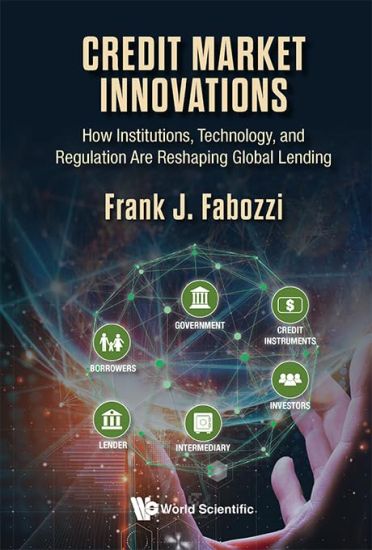
Credit Market Innovations: How Institutions, Technology, And Regulation Are Reshaping Global Lending
This book traces the evolution of credit markets from their historical roots to the complex, interconnected financial systems of today, examining the profound role of financial innovation in redefining the distribution of capital, expanding access to credit, and managing risk. Each chapter focuses on a specific category of innovation across eight key domains—from institutional transformation and market structure to financial technology, regulation, and risk management—while drawing connections to related developments, emphasizing the deeply interconnected nature of modern credit systems.Credit markets are the lifeblood of the global financial system—powering everything from consumer spending and business investment to infrastructure development and economic resilience. Whether through mortgages, corporate bonds, or sovereign lending, credit fuels economic growth and social advancement. Because these markets determine how capital is allocated, they shape opportunity, innovation, and stability across the world. From the rise of institutional investors and securitized products to the emergence of decentralized finance and AI-driven underwriting, the credit landscape has dramatically transformed over the past several decades. This book explores these innovations, examining how technological, structural, regulatory, and institutional developments have reshaped modern credit markets. Combining historical context with forward-looking, actionable insights, this book offers an invaluable resource for those wanting to truly understand the evolution of the credit market and its wider impacts.
Simulation, Optimization, and Machine Learning for Finance, second edition

Simulation, Optimization, and Machine Learning for Finance, second edition

Dessislava A. Pachamanova; Frank J. Fabozzi

MIT PRESS LTD
2025
sidottu
A comprehensive guide to simulation, optimization, and machine learning for finance, covering theoretical foundations, practical applications, and data-driven decision-making. Simulation, Optimization, and Machine Learning for Finance offers a comprehensive introduction to the quantitative tools essential for asset management and corporate finance. This extensively revised and expanded edition builds upon the foundation of the textbook Simulation and Optimization in Finance, integrating the latest advancements in quantitative tools. Designed for undergraduates, graduate students, and professionals seeking to enhance their analytical expertise in finance, the book bridges theory with practical application, making complex financial concepts more accessible. Beginning with a review of foundational finance principles, the text progresses to advanced topics in simulation, optimization, and machine learning, demonstrating their relevance in financial decision-making. Readers gain hands-on experience developing financial risk models using these techniques, fostering conceptual understanding and practical implementation. Provides a structured introduction to probability, inferential statistics, and data scienceExplores cutting-edge techniques in simulation modeling, optimization, and machine learningDemonstrates real-world asset allocation strategies, advanced portfolio risk measures, and fixed-income portfolio management using quantitative toolsCovers factor models and stochastic processes in asset pricingIntegrates capital budgeting and real options analysis, emphasizing the role of uncertainty and quantitative modeling in long-term financial decision-makingIs suitable for practitioners, students, and self-learners
Capital Markets, sixth edition

Capital Markets, sixth edition

Frank J. Fabozzi

MIT PRESS LTD
2025
sidottu
The comprehensively updated sixth edition of a leading textbook that examines the wide range of instruments available in financial markets, with new material on central banks, capital market technology, and financing markets for small businesses. Capital markets are an integral part of the financial system, and their evolution reflects a larger story of global financial change characterized by shifts in regulations, investor behavior, and technological advancements. Now in a comprehensively updated new edition, this widely used textbook examines the wide range of instruments for financing, investing, and controlling risk in today's financial markets. The book begins with an introduction to financial markets, followed by a detailed examination of risk, including financial risk identification, quantification, and management. It then covers market participants, including a new chapter on central banks; fundraising markets, with a new chapter on financing markets for small businesses; risk and return theories; equity, debt, and derivatives markets; and capital market technologies, in a dedicated new section. Sixth edition highlights: - Includes new chapters on central banks, capital market technologies, and financing markets for small businesses- Incorporates analysis of the role of technological innovation throughout- Offers broad coverage of all types of financial instruments, including cash and derivative instruments, as well as the risk management dilemmas confronted by major institutional investors - Features rich pedagogy and resources, including end-of-chapter discussion questions and integrated online appendices
The Economics of FinTech

The Economics of FinTech

Frank J. Fabozzi; Michael Imerman

MIT PRESS LTD
2025
sidottu
A groundbreaking, comprehensive exploration of how FinTech innovation is reshaping finance. Technological innovation has shaped the role of finance since the introduction of the ATM in the 1960s, but never more consequentially than by the massive digital revolution in the financial services industry known as FinTech. The Economics of FinTech is a comprehensive introduction to this rapidly evolving and increasingly important domain, and a groundbreaking exploration of how FinTech is reshaping finance. Michael Imerman and Frank Fabozzi distill the dynamic developments of this multidisciplinary field into a cohesive, accessible guide that covers the economic underpinnings of FinTech innovation, framed within the established principles of financial intermediation, management theory, and data science. Coverage includes in-depth analysis of emerging technologies and innovations across various sectors of financial services as well as the entrepreneurial finance of FinTech such as funding, valuation, and startup management. The first book to examine the economic principles of FinTech innovation Comprehensive coverage of financial technologies across various sectors in financial services Ideal for undergraduate and graduate students as well as entrepreneurs, investors, and finance professionalsInstructor resources include solutions, slides, and case studies
Network Models in Finance

Network Models in Finance

Gueorgui S. Konstantinov; Frank J. Fabozzi

JOHN WILEY SONS INC
2025
sidottu
Expansive overview of theory and practical implementation of networks in investment management Guided by graph theory, Network Models in Finance: Expanding the Tools for Portfolio and Risk Management provides a comprehensive overview of networks in investment management, delivering strong knowledge of various types of networks, important characteristics, estimation, and their implementation in portfolio and risk management. With insights into the complexities of financial markets with respect to how individual entities interact within the financial system, this book enables readers to construct diversified portfolios by understanding the link between price/return movements of different asset classes and factors, perform better risk management through understanding systematic, systemic risk and counterparty risk, and monitor changes in the financial system that indicate a potential financial crisis. With a practitioner-oriented approach, this book includes coverage of: Practical examples of broad financial data to show the vast possibilities to visualize, describe, and investigate markets in a completely new wayInteractions, Causal relationships and optimization within a network-based framework and direct applications of networks compared to traditional methods in financeVarious types of algorithms enhanced by programming language codes that readers can implement and use for their own data Network Models in Finance: Expanding the Tools for Portfolio and Risk Management is an essential read for asset managers and investors seeking to make use of networks in research, trading, and portfolio management.
Quantitative Global Bond Portfolio Management

Quantitative Global Bond Portfolio Management

Gueorgui S Konstantinov; Frank J Fabozzi; Joseph Simonian

WORLD SCIENTIFIC PUBLISHING CO PTE LTD
2023
sidottu
Quantitative Global Bond Portfolio Management offers a comprehensive discussion of quantitative modelling approaches to managing global bond and currency portfolios. Drawing on practitioner and academic research, as well as the extensive market experience of the authors, the book provides a timely overview of cutting-edge tools applied to the management of global bond portfolios, including in-depth discussions of factor models and optimization techniques. In addition to providing a solid theoretical foundation for global bond portfolio management, the authors focus on the practical implementation of yield curve and currency-driven approaches that can be successfully implemented in actual portfolios. As such, the book will be an indispensable resource to both new and seasoned investors looking to enhance their understanding of global bond markets and strategies.
Introduction To Finance: Financial Management And Investment Management

Introduction To Finance: Financial Management And Investment Management

Pamela Peterson Drake; Frank J Fabozzi; Francesco A Fabozzi

WORLD SCIENTIFIC PUBLISHING CO PTE LTD
2022
nidottu
This book covers the fundamentals of financial management and investment management without getting into the highly technical topics and mathematical rigor. It also provides a practitioner-oriented approach to financial and investment management.The field of finance covers several specialty areas. The two most important ones which set the foundations for the other specialty areas are financial management and investment management, and these are the two major topics covered in the book. After touching on the basics — the financial system and the players, financial statements, and mathematics of finance — the authors then cover financial management and investment management in greater depth. For financial management the authors focus on financial strategy and financial planning, dividend policy, corporate financing decisions, entrepreneurial finance, financial risk management, and capital budgeting decisions. The investment management coverage includes the different types of risks faced in investing, company analysis, valuing common stock, portfolio selection, asset pricing theory, and investing in common stocks and bonds. The last chapter of the book covers financial derivatives and how they are used in finance to control risk.
Introduction To Finance: Financial Management And Investment Management

Introduction To Finance: Financial Management And Investment Management

Pamela Peterson Drake; Frank J Fabozzi; Francesco A Fabozzi

World Scientific Publishing Co Pte Ltd
2022
sidottu
This book covers the fundamentals of financial management and investment management without getting into the highly technical topics and mathematical rigor. It also provides a practitioner-oriented approach to financial and investment management.The field of finance covers several specialty areas. The two most important ones which set the foundations for the other specialty areas are financial management and investment management, and these are the two major topics covered in the book. After touching on the basics — the financial system and the players, financial statements, and mathematics of finance — the authors then cover financial management and investment management in greater depth. For financial management the authors focus on financial strategy and financial planning, dividend policy, corporate financing decisions, entrepreneurial finance, financial risk management, and capital budgeting decisions. The investment management coverage includes the different types of risks faced in investing, company analysis, valuing common stock, portfolio selection, asset pricing theory, and investing in common stocks and bonds. The last chapter of the book covers financial derivatives and how they are used in finance to control risk.
Project Financing: Financial Instruments And Risk Management

Project Financing: Financial Instruments And Risk Management

Carmel De Nahlik; Frank J Fabozzi

World Scientific Publishing Co Pte Ltd
2021
sidottu
The book describes the different tools and techniques available to anyone who is engaged in providing funding or advice to a project. Project finance is ultimately about applying three basic principles to a funding situation and from these three, all the other ideas flow including contracts. First, there needs to be a cash flow coming from the project that is capable of being captured by finance providers. Second, there needs to be a group of assets that can be segregated and contained by making sure they cannot be taken away by other parties and thirdly there needs to be a risk envelope that is well understood and managed dynamically during the project's life. To do this, a network of contracts must exist to support the rights of the different stakeholders and their legal claims on the project. In this book the authors examine all of these aspects and provide some examples/mini-cases of project structures and approaches. The book begins and ends with a longer case study of two projects that were standalone examples of project financing and controversial for different reasons at the time of their fundraising.