Kirjojen hintavertailu. Mukana 12 152 606 kirjaa ja 12 kauppaa.

Kirjailija

Fred Dervin

Kirjat ja teokset yhdessä paikassa: 69 kirjaa, julkaisuja vuosilta 2013-2026, suosituimpien joukossa Interculturality Between East and West. Vertaile teosten hintoja ja tarkista saatavuus suomalaisista kirjakaupoista.

69 kirjaa

Kirjojen julkaisuhaarukka 2013-2026.

Interculturality Between East and West

Interculturality Between East and West

Fred Dervin; Mei Yuan; Ning Chen

SPRINGER VERLAG, SINGAPORE
2023
nidottu
This book urges readers to develop a radical capacity to unthink and rethink interculturality, through multiple, pluri-perspectival and honest dialogues between the authors, and their students. This book does not give interculturality a normative scaffolding but envisages it differently by identifying some of its polyphonic textures. China’s rich engagement with interculturality serves to support the importance of being curious about other ways of thinking about the notion beyond the ‘West’ only. As such, the issues of culture, identity, language, translation, intercultural competence and silent transformations (amongst others) are re-evaluated in a different light. This is a highly informative and carefully presented book, providing scientific insights for readers with an interest in interculturality.
Interculturality Between East and West

Interculturality Between East and West

Fred Dervin; Mei Yuan; Ning Chen

SPRINGER VERLAG, SINGAPORE
2022
sidottu
This book urges readers to develop a radical capacity to unthink and rethink interculturality, through multiple, pluri-perspectival and honest dialogues between the authors, and their students. This book does not give interculturality a normative scaffolding but envisages it differently by identifying some of its polyphonic textures. China’s rich engagement with interculturality serves to support the importance of being curious about other ways of thinking about the notion beyond the ‘West’ only. As such, the issues of culture, identity, language, translation, intercultural competence and silent transformations (amongst others) are re-evaluated in a different light. This is a highly informative and carefully presented book, providing scientific insights for readers with an interest in interculturality.
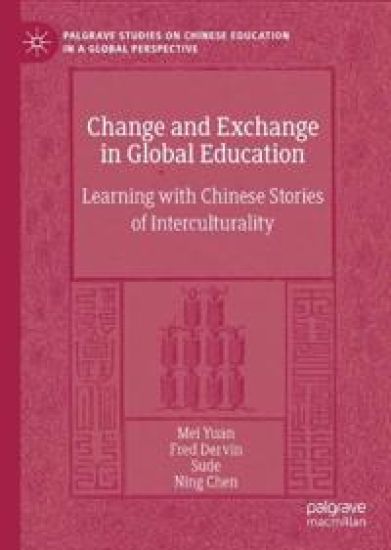
Change and Exchange in Global Education

Change and Exchange in Global Education

Mei Yuan; Fred Dervin; Ning Chen

Springer International Publishing AG
2023
nidottu
This unique book starts from the premise that students, scholars, and educators should be given access to a form of global education that is genuinely global. Using the notion of interculturality as change and exchange as a basis, the authors examine fifty discourse instruments (e.g. idioms, neologisms, slogans) related to what they call ‘Chinese stories of interculturality’. China, like other countries, has a rich and complex history of intercultural encounters and her engagement with the notion today, which shares similarities and differences with glocal discourses of interculturality, deserves to be unpacked and familiarized with. By so doing, digging into the intricacies of the Chinese and English languages, the reader is empowered to unthink, rethink and especially reflect on their own take on the important notion of interculturality.
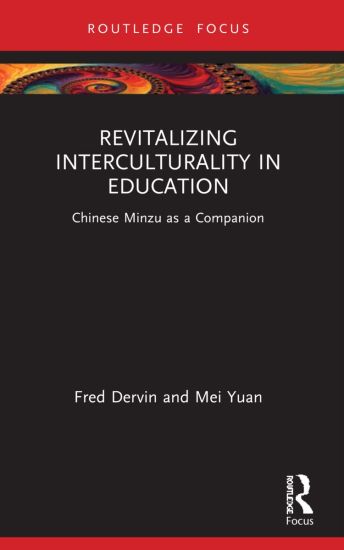
Revitalizing Interculturality in Education

Revitalizing Interculturality in Education

Fred Dervin; Mei Yuan

TAYLOR FRANCIS LTD
2023
nidottu
China is often seen as a monolith outside its borders. However, heterogeneity and interculturality have characterized the Middle Kingdom for centuries. Today, China’s take on diversity is too easily disparaged or perceived as ambiguous – as if China was not legitimate to take part in conversations about it. The authors wish to contribute to global discussions about interculturality in education, which have often been dominated by ‘Western’ voices, by problematizing a very specific Chinese perspective called Minzu (‘ethnic’) education. Minzu is presented as a potential companion to other forms of diversity education (multicultural, intercultural, transcultural, cross-cultural, global education). Without claiming that they have found a miraculous and one-size-fits all recipe, they argue that the lessons learnt from researching various aspects of Minzu in Chinese education can also help students, researchers, educators, and decision-makers unthink and rethink the central issue of interculturality. As such the book introduces the complexity, contradictions and benefits of Minzu while helping the reader consider how compatible and complementary it could be with discussions of interculturality in other parts of the world. The book also aims at making readers observe critically their own contexts. This book was written with an open mind and it should be read with the same.
Reflecting on and with the ‘More-than-Human’ in Education

Reflecting on and with the ‘More-than-Human’ in Education

Fred Dervin; Mei Yuan

SPRINGER VERLAG, SINGAPORE
2022
nidottu
This book examines today’s central and yet often misunderstood and misconstrued notion of interculturality. It specifically focuses on one aspect of intercultural awareness that has been ignored in research and education: the presence and influence of things on the way we experience, do, and reflect on interculturality. This book provides the readers with opportunities to engage with interculturality by reflecting on how our lives are full of things and entangled with them. It urges teachers, teacher educators, scholars, and students to open their eyes to the richness that the more-than-human, with which we can reflect, has to offer for intercultural communication education.
Change and Exchange in Global Education

Change and Exchange in Global Education

Mei Yuan; Fred Dervin; Ning Chen

Springer International Publishing AG
2022
sidottu
This unique book starts from the premise that students, scholars, and educators should be given access to a form of global education that is genuinely global. Using the notion of interculturality as change and exchange as a basis, the authors examine fifty discourse instruments (e.g. idioms, neologisms, slogans) related to what they call ‘Chinese stories of interculturality’. China, like other countries, has a rich and complex history of intercultural encounters and her engagement with the notion today, which shares similarities and differences with glocal discourses of interculturality, deserves to be unpacked and familiarized with. By so doing, digging into the intricacies of the Chinese and English languages, the reader is empowered to unthink, rethink and especially reflect on their own take on the important notion of interculturality.
Revitalizing Interculturality in Education

Revitalizing Interculturality in Education

Fred Dervin; Mei Yuan

Routledge
2021
sidottu
China is often seen as a monolith outside its borders. However, heterogeneity and interculturality have characterized the Middle Kingdom for centuries. Today, China’s take on diversity is too easily disparaged or perceived as ambiguous – as if China was not legitimate to take part in conversations about it. The authors wish to contribute to global discussions about interculturality in education, which have often been dominated by ‘Western’ voices, by problematizing a very specific Chinese perspective called Minzu (‘ethnic’) education. Minzu is presented as a potential companion to other forms of diversity education (multicultural, intercultural, transcultural, cross-cultural, global education). Without claiming that they have found a miraculous and one-size-fits all recipe, they argue that the lessons learnt from researching various aspects of Minzu in Chinese education can also help students, researchers, educators, and decision-makers unthink and rethink the central issue of interculturality. As such the book introduces the complexity, contradictions and benefits of Minzu while helping the reader consider how compatible and complementary it could be with discussions of interculturality in other parts of the world. The book also aims at making readers observe critically their own contexts. This book was written with an open mind and it should be read with the same.
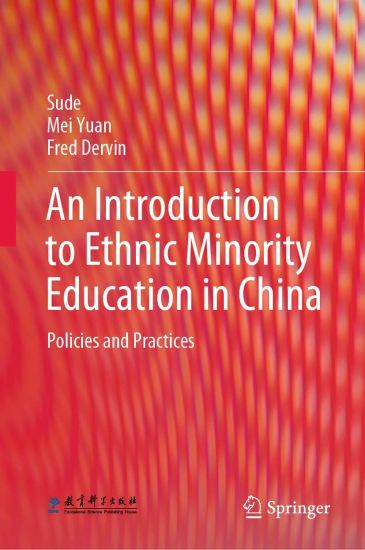
An Introduction to Ethnic Minority Education in China

An Introduction to Ethnic Minority Education in China

Sude; Mei Yuan; Fred Dervin

Springer-Verlag Berlin and Heidelberg GmbH Co. K
2020
sidottu
Chinese ethnic minority education is virtually unknown to readers outside China. Based on extensive qualitative and quantitative data, this book examines the basic education policies for ethnic minorities in China and describes policy implementation. It also discusses successful case studies, restrictive factors, existing gaps and challenges as well as the associated problems, highlighting teacher training and the role of policymakers. The authors propose recommendations to address the challenges faced by Chinese education, and to develop and implement culturally sensitive basic education for ethnic minorities in the country. Offering a rare glimpse inside minority schools in different parts of the country, the book appeals to educators, scholars, decision-makers and anyone interested in diversity education (intercultural, multicultural, global education).
Inclusive Exclusion

Inclusive Exclusion

Ning Chen; Fred Dervin

TAYLOR FRANCIS LTD
2026
nidottu
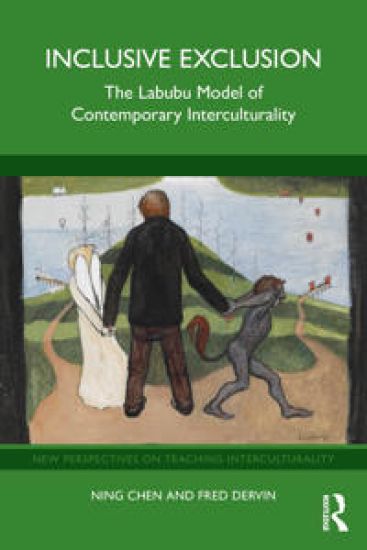
This book renews our understanding of contemporary interculturality and today’s intercultural world through an illuminating case study of the Labubu phenomenon. Why do we queue for hours, shake blind boxes, and refresh screens at 10 p.m. just for the privilege of buying something we did not even want yesterday? What does our hunger for a grinning monster reveal about how we connect, belong, and exclude in today’s divided world? Beneath these questions lies an ultimate search for the driving force behind the mania: What are we really chasing? The authors offer a surprising answer: ourselves. Drawing on critical interculturality, the sociology of consumption, media studies, and discourse analysis, this interdisciplinary work examines media coverage, social media conversations, and ethnographic fieldwork from countries such as China, Finland, and France. It unpacks the hyper-capitalist machinery of artificial scarcity, emotional commerce, and strategic emptiness, introducing the Labubu Model of Interculturality (LMI) – a framework for understanding how consumption has become the primary language of belonging in a glocalised world. Written for scholars, students, and curious readers alike, this book offers an intriguing and thought-provoking study for those drawn to the Labubu vogue, as well as researchers engaged in intercultural studies, business and marketing, and postmodern studies.
Inclusive Exclusion

Inclusive Exclusion

Ning Chen; Fred Dervin

TAYLOR FRANCIS LTD
2026
sidottu
This book renews our understanding of contemporary interculturality and today’s intercultural world through an illuminating case study of the Labubu phenomenon. Why do we queue for hours, shake blind boxes, and refresh screens at 10 p.m. just for the privilege of buying something we did not even want yesterday? What does our hunger for a grinning monster reveal about how we connect, belong, and exclude in today’s divided world? Beneath these questions lies an ultimate search for the driving force behind the mania: What are we really chasing? The authors offer a surprising answer: ourselves. Drawing on critical interculturality, the sociology of consumption, media studies, and discourse analysis, this interdisciplinary work examines media coverage, social media conversations, and ethnographic fieldwork from countries such as China, Finland, and France. It unpacks the hyper-capitalist machinery of artificial scarcity, emotional commerce, and strategic emptiness, introducing the Labubu Model of Interculturality (LMI) – a framework for understanding how consumption has become the primary language of belonging in a glocalised world. Written for scholars, students, and curious readers alike, this book offers an intriguing and thought-provoking study for those drawn to the Labubu vogue, as well as researchers engaged in intercultural studies, business and marketing, and postmodern studies.
40 Questions about Social Justice and Diversities for Teacher Education

40 Questions about Social Justice and Diversities for Teacher Education

Fred Dervin; Katariina Stenberg; Sonja Anttila; Jaana Pesonen; Anna-Leena Riitaoja

TAYLOR FRANCIS LTD
2026
nidottu
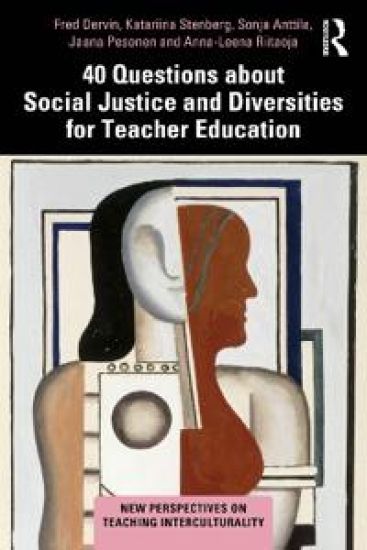
This book brings together forty genuine questions raised by student teachers in Finnish education, sparking reflection and insight into education and wider issues amid the complexity, diversity and uncertainty of today's classrooms and ever-changing world. What does it mean to teach social justice in today's complex and divided world? How can educators acknowledge and value the multiple diversities that students bring to the classroom, while also responding to conflicting expectations from curricula, colleagues and the wider community? This book offers no definitive answers. Instead, it invites readers to engage in a different kind of conversation revolving around gender, discomfort, interculturality, neutrality, intersectionality, and structural racism. Each chapter takes up ten of the forty questions, grounding the responses in real classroom situations and drawing on critical theories and decolonial perspectives. Written collectively by five experienced teacher educators and researchers, this book moves beyond prescriptive checklists and shallow understandings of social justice, diversity, and interculturality. The authors argue that meaningful change requires ongoing critical reflection, structural awareness and the courage to ask better questions. This inspiring book will attract a wide spectrum of readers, including experienced teachers, student teachers, teacher educators and scholars interested in teacher education, diversity, social justice education and intercultural studies.
40 Questions about Social Justice and Diversities for Teacher Education

40 Questions about Social Justice and Diversities for Teacher Education

Fred Dervin; Katariina Stenberg; Sonja Anttila; Jaana Pesonen; Anna-Leena Riitaoja

TAYLOR FRANCIS LTD
2026
sidottu
This book brings together forty genuine questions raised by student teachers in Finnish education, sparking reflection and insight into education and wider issues amid the complexity, diversity and uncertainty of today's classrooms and ever-changing world. What does it mean to teach social justice in today's complex and divided world? How can educators acknowledge and value the multiple diversities that students bring to the classroom, while also responding to conflicting expectations from curricula, colleagues and the wider community? This book offers no definitive answers. Instead, it invites readers to engage in a different kind of conversation revolving around gender, discomfort, interculturality, neutrality, intersectionality, and structural racism. Each chapter takes up ten of the forty questions, grounding the responses in real classroom situations and drawing on critical theories and decolonial perspectives. Written collectively by five experienced teacher educators and researchers, this book moves beyond prescriptive checklists and shallow understandings of social justice, diversity, and interculturality. The authors argue that meaningful change requires ongoing critical reflection, structural awareness and the courage to ask better questions. This inspiring book will attract a wide spectrum of readers, including experienced teachers, student teachers, teacher educators and scholars interested in teacher education, diversity, social justice education and intercultural studies.
Free Together

Free Together

Fred Dervin

TAYLOR FRANCIS LTD
2026
nidottu
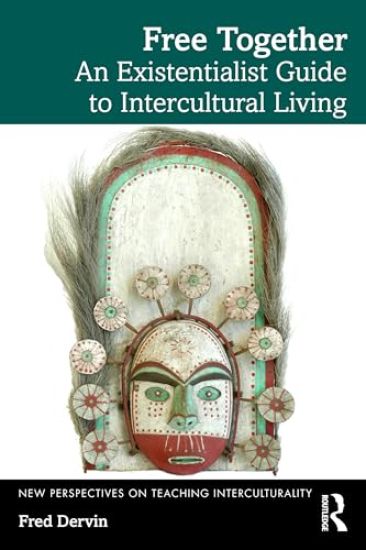
In Free Together: An Existentialist Guide to Intercultural Living, Fred Dervin offers another radical rethink of how we encounter others interculturally. Drawing on existentialist writings, the book argues that interculturality is not a problem of knowledge or competence, but rather an existential challenge: how can we meet others as free beings when no guarantee of understanding exists? Written in an accessible tone, the book combines theoretical reflection, personal narrative and reflexive exercises. It invites readers to recognise bad faith — pretending that one’s choices are forced by external circumstances — and to confront the gaze of others. Ultimately, it encourages readers to embrace the freedom and responsibility of intercultural encounters. The book's originality lies in its refusal of easy solutions, its assertion that uncertainty is not failure, but rather the foundation of connection and its timely call to reclaim our shared humanity in a polarised and divided world. Fundamentally, the book contributes to decolonial thinking by demonstrating how questions of freedom, anxiety and responsibility resonate globally and by engaging with voices that challenge assumptions about selfhood and encounters. Designed for students, educators, researchers and anyone who has ever struggled in conversation with a stranger, this book is an invaluable companion for intercultural living.
Free Together

Free Together

Fred Dervin

TAYLOR FRANCIS LTD
2026
sidottu
In Free Together: An Existentialist Guide to Intercultural Living, Fred Dervin offers another radical rethink of how we encounter others interculturally. Drawing on existentialist writings, the book argues that interculturality is not a problem of knowledge or competence, but rather an existential challenge: how can we meet others as free beings when no guarantee of understanding exists? Written in an accessible tone, the book combines theoretical reflection, personal narrative and reflexive exercises. It invites readers to recognise bad faith — pretending that one’s choices are forced by external circumstances — and to confront the gaze of others. Ultimately, it encourages readers to embrace the freedom and responsibility of intercultural encounters. The book's originality lies in its refusal of easy solutions, its assertion that uncertainty is not failure, but rather the foundation of connection and its timely call to reclaim our shared humanity in a polarised and divided world. Fundamentally, the book contributes to decolonial thinking by demonstrating how questions of freedom, anxiety and responsibility resonate globally and by engaging with voices that challenge assumptions about selfhood and encounters. Designed for students, educators, researchers and anyone who has ever struggled in conversation with a stranger, this book is an invaluable companion for intercultural living.
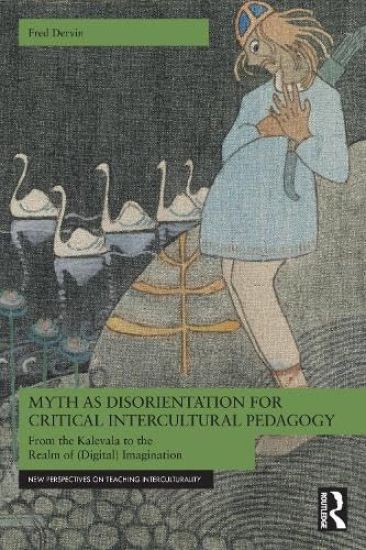
Myth as Disorientation for Critical Intercultural Pedagogy
This book presents a game-changing approach to critical intercultural pedagogy by reclaiming myth as a stimulating tool for deliberate and productive disorientation. Moving beyond archaic relics or simple deconstruction, the author argues that myths, from the Finnish Kalevala to student-created (digital) narratives, are dynamic forces for both epistemic resistance and renaissance today. Readers will discover how myths can disrupt reductive binaries, challenge neoliberal agendas and give space to marginalised epistemologies. Venturing from canonical texts to classroom experiments in co-creation, this book offers an original framework that aims to replace the search for ‘cultural truths’ or sterile and Western-centric debates between ‘essentialists’ and ‘non-essentialists’ with a practice of curious humility. Urgently relevant, Myth as Disorientation for Critical Intercultural Pedagogy is indispensable reading for students, educators and scholars seeking to transform intercultural perspectives through creative, reflexive and ethically grounded praxis.
Myth as Disorientation for Critical Intercultural Pedagogy
This book presents a game-changing approach to critical intercultural pedagogy by reclaiming myth as a stimulating tool for deliberate and productive disorientation. Moving beyond archaic relics or simple deconstruction, the author argues that myths, from the Finnish Kalevala to student-created (digital) narratives, are dynamic forces for both epistemic resistance and renaissance today. Readers will discover how myths can disrupt reductive binaries, challenge neoliberal agendas and give space to marginalised epistemologies. Venturing from canonical texts to classroom experiments in co-creation, this book offers an original framework that aims to replace the search for ‘cultural truths’ or sterile and Western-centric debates between ‘essentialists’ and ‘non-essentialists’ with a practice of curious humility. Urgently relevant, Myth as Disorientation for Critical Intercultural Pedagogy is indispensable reading for students, educators and scholars seeking to transform intercultural perspectives through creative, reflexive and ethically grounded praxis.
Interculturality in Flux

Interculturality in Flux

Fred Dervin

TAYLOR FRANCIS LTD
2025
nidottu
Interculturality in Flux is an audacious and self-reflexive interrogation of intercultural scholarship and education. Redefining intellectual retrospection as a process of fundamental critique, Fred Dervin turns his analytical lens inwards, exposing the contradictions, weaknesses and evolving tensions within his own work. At its core, this book addresses the tension between polished academic language and the uncomfortable truths beneath. The author reveals how power imbalances are often obscured by self-complacency, diplomacy and/or theoretical sophistication in intercultural research and education. Through its dynamic, non-linear structure, this book invites readers to engage not just with ideas, but also with the lived complexities behind their production and dissemination. Spanning a decade of scholarship, it revisits and scrutinises key themes such as Eurocentrism, neoliberal commodification and methodological rigidity. Rejecting static knowledge, the author frames interculturality instead as an ever-shifting terrain of ideological and linguistic negotiation. Rather than offering a mere retrospective, this work demands that scholars interrogate their own intellectual trajectories, confront the limitations of dominant paradigms and embrace the messy and often contradictory realities of intercultural communication, education and research. With its distinctive features of reflexivity, epistemic humility and willingness to challenge established norms, this book will appeal to educators, students and researchers alike.
Interculturality in Flux

Interculturality in Flux

Fred Dervin

TAYLOR FRANCIS LTD
2025
sidottu
Interculturality in Flux is an audacious and self-reflexive interrogation of intercultural scholarship and education. Redefining intellectual retrospection as a process of fundamental critique, Fred Dervin turns his analytical lens inwards, exposing the contradictions, weaknesses and evolving tensions within his own work. At its core, this book addresses the tension between polished academic language and the uncomfortable truths beneath. The author reveals how power imbalances are often obscured by self-complacency, diplomacy and/or theoretical sophistication in intercultural research and education. Through its dynamic, non-linear structure, this book invites readers to engage not just with ideas, but also with the lived complexities behind their production and dissemination. Spanning a decade of scholarship, it revisits and scrutinises key themes such as Eurocentrism, neoliberal commodification and methodological rigidity. Rejecting static knowledge, the author frames interculturality instead as an ever-shifting terrain of ideological and linguistic negotiation. Rather than offering a mere retrospective, this work demands that scholars interrogate their own intellectual trajectories, confront the limitations of dominant paradigms and embrace the messy and often contradictory realities of intercultural communication, education and research. With its distinctive features of reflexivity, epistemic humility and willingness to challenge established norms, this book will appeal to educators, students and researchers alike.
AI for Critical Interculturality

AI for Critical Interculturality

Fred Dervin

TAYLOR FRANCIS LTD
2025
nidottu
Provocative, interdisciplinary, and daringly critical, AI for Critical Interculturality doesn’t spoon-feed ready-made answers but rather inspires readers to think, question and interrogate interculturality alongside AI. In a world where AI is often feared as a threat to human intelligence and creativity, the book flips the script by positioning AI as a valuable partner in the study of interculturality as both a scientific and educational notion. How could AI help us dismantle biases, interrogate knowledge production/dissemination and foster deeper self-reflexivity in the broad field of Intercultural Communication Education and Research? What happens when we treat AI not as a passive tool but as an active interlocutor – one that mirrors our ideological blind spots and pushes us toward sharper criticality and reflexivity? Through rich theoretical and conceptual insights, real-world cases and interactive activities, this book equips readers to unmask ideologies in AI-generated knowledge about interculturality; leverage AI as a mirror to expose and confront personal and systemic biases; consider some language stratagems to disrupt linguistic norms in human-AI dialogue. More importantly, the author asks us to forge an ethical and non-utilitarian partnership with AI. This boundary-shattering work invites students, educators and researchers of interculturality to envision and co-create the future of intercultural studies.