Kirjailija
Frederic G. Reamer
Kirjat ja teokset yhdessä paikassa: 38 kirjaa, julkaisuja vuosilta 1989-2024, suosituimpien joukossa Ethics and Risk Management in Online and Distance Behavioral Health. Vertaile teosten hintoja ja tarkista saatavuus suomalaisista kirjakaupoista.
38 kirjaa
Kirjojen julkaisuhaarukka 1989-2024.
For decades, teachers and practitioners have turned to Frederic G. Reamer’s Social Work Values and Ethics as the leading introduction to ethical decision making, dilemmas, and professional conduct in practice. A case-driven, concise, and comprehensive textbook for undergraduate and graduate social work programs, this book surveys the most critical issues for social work practitioners.This sixth edition incorporates significant updates to the National Association of Social Workers Code of Ethics and discussion of challenging issues related to cultural competency, antiracism, moral injury, human rights, environmental justice, ethical humility, non-Western perspectives on ethics, and practitioner self-care. Reamer also focuses on how social workers should navigate the digital world through discussion of the ethical issues that arise from practitioner use of online services and social networking sites to deliver services, communicate with clients, and provide information to the public, and he examines the standards that protect confidential information transmitted electronically. He highlights potential conflicts between professional ethics and legal guidelines and expands discussions of informed consent, confidentiality and privileged communication, boundaries and dual relationships, documentation, conflicts of interest, and risk management. Conceptually rich and attuned to the complexities of ethical decision making, Social Work Values and Ethics is unique in striking the right balance among history, theory, and practical application.

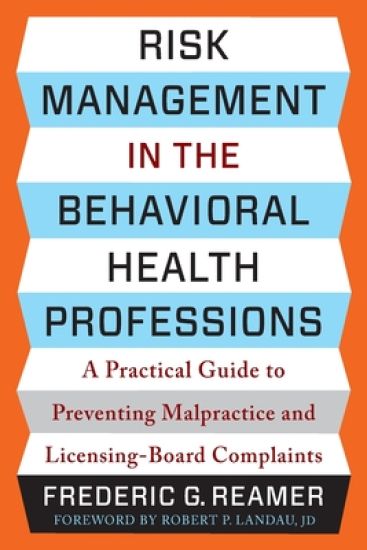
Risk Management in the Behavioral Health Professions
Frederic G. Reamer
Columbia University Press
2023
pokkari
Risk Management in the Behavioral Health Professions is a comprehensive handbook for mental health and social service providers on prevention of malpractice lawsuits and licensing-board complaints. Frederic G. Reamer draws on his extensive firsthand experience as an expert witness in litigation and licensing-board cases throughout the United States to give readers an insider’s view of practical risk-management strategies. He provides in-depth discussion of common risk areas and steps practitioners can take to protect clients and themselves.Key topics include confidentiality and privileged communication; service delivery, including informed consent, assessment, boundary issues, suicide risk management, and use of technology; impaired practitioners; supervision and consultation; documentation; deception and fraud; and interruption and termination of services. Reamer offers pragmatic advice about how to respond to a lawsuit or licensing-board complaint. He emphasizes the challenges and risks related to remote service provision, especially during public health crises and pandemics. The book includes sample risk-management forms and templates as well as extensive case examples that illustrate fundamental risk-management concepts.Designed for behavioral health professionals including social workers, psychologists, mental health counselors, marriage and family therapists, psychiatrists, and substance use disorder treatment counselors, this book is an indispensable resource on how to navigate challenging ethics and risk-management issues.
Risk Management in the Behavioral Health Professions
Frederic G. Reamer
Columbia University Press
2023
sidottu
Risk Management in the Behavioral Health Professions is a comprehensive handbook for mental health and social service providers on prevention of malpractice lawsuits and licensing-board complaints. Frederic G. Reamer draws on his extensive firsthand experience as an expert witness in litigation and licensing-board cases throughout the United States to give readers an insider’s view of practical risk-management strategies. He provides in-depth discussion of common risk areas and steps practitioners can take to protect clients and themselves.Key topics include confidentiality and privileged communication; service delivery, including informed consent, assessment, boundary issues, suicide risk management, and use of technology; impaired practitioners; supervision and consultation; documentation; deception and fraud; and interruption and termination of services. Reamer offers pragmatic advice about how to respond to a lawsuit or licensing-board complaint. He emphasizes the challenges and risks related to remote service provision, especially during public health crises and pandemics. The book includes sample risk-management forms and templates as well as extensive case examples that illustrate fundamental risk-management concepts.Designed for behavioral health professionals including social workers, psychologists, mental health counselors, marriage and family therapists, psychiatrists, and substance use disorder treatment counselors, this book is an indispensable resource on how to navigate challenging ethics and risk-management issues.
The Philosophical Foundations of Social Work
Frederic G. Reamer
Columbia University Press
2022
sidottu
Social work rests on complex philosophical assumptions that should be central to practice, education, and training. In this book, Frederic G. Reamer explores how these issues bear on the purpose, methods, and perspectives of social work and their far-reaching implications for practice and scholarship.Reamer examines major themes across the domains of moral and political philosophy, logic, epistemology, and aesthetics. He raises questions such as: How can ethical theories inform social workers’ moral judgments? In what ways are canons of inductive and deductive logic relevant to social workers’ thinking about their work? To what extent can scientific inquiry help social workers understand the nature and effect of their interventions? How can concepts related to aesthetics shed light on the nature of social work? Reamer’s nuanced inquiry never loses sight of the concrete applications of philosophy to social work practice with individuals, families, groups, organizations, and communities, or to broader goals of social change.This second edition of The Philosophical Foundations of Social Work is revised and updated throughout to address contemporary challenges. It focuses especially on newer thinking about the role of non-Western philosophical perspectives and the relevance of philosophy to social workers’ commitments to multiculturalism, feminism, and antiracism.
The Philosophical Foundations of Social Work
Frederic G. Reamer
Columbia University Press
2022
pokkari
Social work rests on complex philosophical assumptions that should be central to practice, education, and training. In this book, Frederic G. Reamer explores how these issues bear on the purpose, methods, and perspectives of social work and their far-reaching implications for practice and scholarship.Reamer examines major themes across the domains of moral and political philosophy, logic, epistemology, and aesthetics. He raises questions such as: How can ethical theories inform social workers’ moral judgments? In what ways are canons of inductive and deductive logic relevant to social workers’ thinking about their work? To what extent can scientific inquiry help social workers understand the nature and effect of their interventions? How can concepts related to aesthetics shed light on the nature of social work? Reamer’s nuanced inquiry never loses sight of the concrete applications of philosophy to social work practice with individuals, families, groups, organizations, and communities, or to broader goals of social change.This second edition of The Philosophical Foundations of Social Work is revised and updated throughout to address contemporary challenges. It focuses especially on newer thinking about the role of non-Western philosophical perspectives and the relevance of philosophy to social workers’ commitments to multiculturalism, feminism, and antiracism.
Rehabilitating Juvenile Justice
Charles H. Shireman; Frederic G. Reamer
Columbia University Press
2022
sidottu
Boundary Issues and Dual Relationships in the Human Services
Frederic G. Reamer
Columbia University Press
2020
sidottu
Should a therapist disclose personal information to a client, accept a client’s gift, or provide a former client with a job? Is it appropriate to exchange e-mail or text messages with clients or correspond with them on social networking websites? Some acts, such as initiating a sexual relationship with a client, are clearly prohibited, yet what about more subtle interactions, such as hugging or accepting invitations to a social event? Is maintaining a friendship with a former client or a client’s relative a conflict of interest?Frederic G. Reamer offers a frank analysis of a range of boundary issues that human-service practitioners may confront. He confronts the ethics of intimate relationships with clients and former clients, the healthy parameters of practitioners’ self-disclosure, the giving and receiving of gifts and favors, and the unavoidable and unanticipated circumstances of social encounters and geographical proximity. With case studies addressing challenges in the mental health field, school contexts, child welfare, addiction programs, home health care, elder services, and prison, rural, and military settings, Reamer offers effective, practical risk-management models that prevent problems and help balance dual relationships.Since the publication of the previous edition of Boundary Issues and Dual Relationships in the Human Services in 2012, digital technology has transformed how human-service professionals deliver services to clients. This third edition brings the book up to date, adding discussion of the ways in which practitioners’ online communications and technology-based relationships with clients can violate ethical standards and providing practical advice for how to resolve boundary issues.
Boundary Issues and Dual Relationships in the Human Services
Frederic G. Reamer
Columbia University Press
2020
pokkari
Should a therapist disclose personal information to a client, accept a client’s gift, or provide a former client with a job? Is it appropriate to exchange e-mail or text messages with clients or correspond with them on social networking websites? Some acts, such as initiating a sexual relationship with a client, are clearly prohibited, yet what about more subtle interactions, such as hugging or accepting invitations to a social event? Is maintaining a friendship with a former client or a client’s relative a conflict of interest?Frederic G. Reamer offers a frank analysis of a range of boundary issues that human-service practitioners may confront. He confronts the ethics of intimate relationships with clients and former clients, the healthy parameters of practitioners’ self-disclosure, the giving and receiving of gifts and favors, and the unavoidable and unanticipated circumstances of social encounters and geographical proximity. With case studies addressing challenges in the mental health field, school contexts, child welfare, addiction programs, home health care, elder services, and prison, rural, and military settings, Reamer offers effective, practical risk-management models that prevent problems and help balance dual relationships.Since the publication of the previous edition of Boundary Issues and Dual Relationships in the Human Services in 2012, digital technology has transformed how human-service professionals deliver services to clients. This third edition brings the book up to date, adding discussion of the ways in which practitioners’ online communications and technology-based relationships with clients can violate ethical standards and providing practical advice for how to resolve boundary issues.
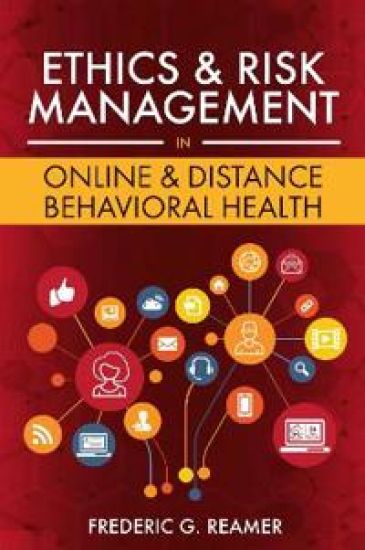
Ethics and Risk Management in Online and Distance Behavioral Health
Frederic G. Reamer
Cognella, Inc
2020
nidottu
Ethics and Risk Management in Online and Distance Behavioral Health identifies pertinent ethical challenges and ethically related risk-management issues that practitioners should consider when using digital technology to assist clients in need. The text illuminates how the use of technology is influenced by traditional ethics concepts, including informed consent, boundaries, conflicts of interest, electronic records, collegial relationships, and other issues.The text begins by discussing how practitioners today are leveraging technology to provide services to clients and the importance of continually considering the ethical issues involved in using such communication methods. It addresses the specific ethical issues involved in online counseling, telephone counseling, self-guided web-based interventions, smartphone apps, electronic social networks, and other forms of digital communication. Ethical, regulatory, and practice standards are covered, as well as challenges in integrated health and behavioral health educational settings. The final chapter is dedicated to preventing and managing ethical and legal risk.Ethics and Risk Management in Online and Distance Behavioral Health is an ideal textbook for use by students and practitioners in the counseling professions, including clinical social work, clinical psychology, mental health counseling, marriage and family therapy, and substance use disorders counseling.
Ethics and Risk Management in Online and Distance Behavioral Health
Frederic G. Reamer
Cognella Academic Publishing
2020
sidottu
Ethics and Risk Management in Online and Distance Behavioral Health identifies pertinent ethical challenges and ethically related risk-management issues that practitioners should consider when using digital technology to assist clients in need. The text illuminates how the use of technology is influenced by traditional ethics concepts, including informed consent, boundaries, conflicts of interest, electronic records, collegial relationships, and other issues. The text begins by discussing how practitioners today are leveraging technology to provide services to clients and the importance of continually considering the ethical issues involved in using such communication methods. It addresses the specific ethical issues involved in online counseling, telephone counseling, self-guided web-based interventions, smartphone apps, electronic social networks, and other forms of digital communication. Ethical, regulatory, and practice standards are covered, as well as challenges in integrated health and behavioral health educational settings. The final chapter is dedicated to preventing and managing ethical and legal risk. Ethics and Risk Management in Online and Distance Behavioral Health is an ideal textbook for use by students and practitioners in the counseling professions, including clinical social work, clinical psychology, mental health counseling, marriage and family therapy, and substance use disorders counseling.Frederic G. Reamer holds a Ph.D. from the University of Chicago. He is a professor in the graduate social work program at Rhode Island College, where he teaches courses in research and evaluation, professional ethics, and field instruction. A social worker with extensive experience in correctional settings, Dr. Reamer previously served as the director of the National Juvenile Justice Assessment Center, senior policy advisor to the Rhode Island Governor, Rhode Island Parole Board member, and editor-in-chief of Journal of Social Work Education. He is the author of more than 20 books on social work practice in correctional settings and ethics and risk management in social work.
Ethics and Risk Management in Online and Distance Social Work
Frederic G. Reamer
Cognella, Inc
2020
nidottu
Timely and essential, Ethics and Risk Management in Online and Distance Social Work identifies pertinent ethical challenges and ethically related risk-management issues that social workers should consider when using digital technology to assist people in need. The text illuminates how the use of technology is influenced by traditional ethics concepts, including consent, privacy, confidentiality, professional boundaries, documentation, and other issues.The text begins by discussing how social workers today are leveraging technology to provide services to clients and the importance of continually considering the ethical issues involved in using such communication methods. It addresses the specific ethical issues involved in video counseling, cybertherapy, text messaging, self-guided web-based interventions, smartphone apps, and other forms of digital communication. Ethical, regulatory, and practice standards are covered, as well as challenges in integrated health and social work educational settings. The final chapter is dedicated to preventing and managing ethical and legal risk.Ethics and Risk Management in Online and Distance Social Work is an ideal textbook for advanced courses in social work. It is also an excellent resource for social workers interested in incorporating online or distance communication in their practice.
Ethics and Risk Management in Online and Distance Social Work
Frederic G. Reamer
Cognella Academic Publishing
2020
sidottu
Timely and essential, Ethics and Risk Management in Online and Distance Social Work identifies pertinent ethical challenges and ethically related risk-management issues that social workers should consider when using digital technology to assist people in need. The text illuminates how the use of technology is influenced by traditional ethics concepts, including consent, privacy, confidentiality, professional boundaries, documentation, and other issues. The text begins by discussing how social workers today are leveraging technology to provide services to clients and the importance of continually considering the ethical issues involved in using such communication methods. It addresses the specific ethical issues involved in video counseling, cybertherapy, text messaging, self-guided web-based interventions, smartphone apps, and other forms of digital communication. Ethical, regulatory, and practice standards are covered, as well as challenges in integrated health and social work educational settings. The final chapter is dedicated to preventing and managing ethical and legal risk. Ethics and Risk Management in Online and Distance Social Work is an ideal textbook for advanced courses in social work. It is also an excellent resource for social workers interested in incorporating online or distance communication in their practice.Frederic G. Reamer holds a Ph.D. from the University of Chicago. He is a professor in the graduate social work program at Rhode Island College, where he teaches courses in research and evaluation, professional ethics, and field instruction. A social worker with extensive experience in correctional settings, Dr. Reamer previously served as the director of the National Juvenile Justice Assessment Center, senior policy advisor to the Rhode Island Governor, Rhode Island Parole Board member, and editor-in-chief of Journal of Social Work Education. He is the author of more than 20 books on social work practice in correctional settings and ethics and risk management in social work.
The Philosophical Foundations of Social Work
Frederic G. Reamer
Columbia University Press
2020
sidottu
For decades, teachers and practitioners have turned to Frederic G. Reamer’s Social Work Values and Ethics as the leading introduction to ethical decision making, dilemmas, and professional conduct in practice. A case-driven, concise, and comprehensive textbook for undergraduate and graduate social work programs, this book surveys the most critical issues for social work practitioners.The fifth edition incorporates significant updates to the National Association of Social Workers Code of Ethics and new practice and model regulatory standards used by social service and licensing agencies around the world. Reamer also focuses on how social workers should navigate the digital world through discussion of the ethical issues that arise from practitioner use of online services and social networking sites to deliver services, communicate with clients, and provide information to the public, and what standards will protect confidential information transmitted electronically. He highlights potential conflicts between professional ethics and legal guidelines and expands discussions of informed consent, confidentiality and privileged communication, boundaries and dual relationships, documentation, conflicts of interest, and risk management. Conceptually rich and attuned to the complexities of ethical decision making, Social Work Values and Ethics is unique in striking the right balance among history, theory, and practical application.

Few people experience life inside of prison. Even fewer are charged with the formidable responsibility of deciding whether inmates should be released. In his twenty-four years on the Rhode Island Parole Board, Frederic G. Reamer has judged the fates of thousands of inmates, deciding which are ready to reenter society and which are not. It is a complicated choice that balances injury to victims and their families against an offender's capacity for transformation. With rich retellings of criminal cases-some banal, some brutal-On the Parole Board is a singular book that explains from an insider's perspective how a variety of factors play into the board's decisions: the ongoing effect on victims and their loved ones, the life histories of offenders, the circumstances of the crimes, and the powerful and often extraordinary displays of forgiveness and remorse. Pulling back the curtain on a process largely shrouded in mystery, Reamer lays bare the thorny philosophical issues of crime and justice and their staggering consequences for inmates, victims, and the public at large. Reamer and his colleagues often hope, despite encountering behavior at its worst, that criminals who have made horrible mistakes have the capacity for redemption. Yet that hope must be tempered with a realistic appraisal of risk, given the potentially grave consequences of releasing an inmate who may commit a future crime. This book will appeal to anyone interested in the complexities of the criminal justice system, the need to correct its injustices, and the challenges of those who must decide when justice has been served.
This new text is based on Frederic G. Reamer's key reference for practitioners, Social Work Malpractice and Liability: Strategies for Prevention. Rooted in his own experiences as an expert witness in court and licensing board cases, the volume introduces the concepts of negligence, malpractice, and liability before turning to the subject of risk management. Reflecting on recent legal cases and research, Reamer identifies a variety of problems in the social work field relating to privacy and confidentiality, improper treatment and delivery of services, impaired practitioners, supervision, consultations and referrals, fraud and deception, and termination of service. He also explores the unprecedented ethical challenges created by new digital technologies-such as online counseling, video counseling, and practitioners' use of social networks and social media-and describes current issues relating to HIPAA compliance and access to electronic health records (EHR) and health information exchanges (HIE).He concludes with practical suggestions for social workers named as defendants in lawsuits and respondents in licensing board complaints.