Kirjailija
Fredric Jameson
Kirjat ja teokset yhdessä paikassa: 55 kirjaa, julkaisuja vuosilta 1974-2027, suosituimpien joukossa Raymond Chandler. Vertaile teosten hintoja ja tarkista saatavuus suomalaisista kirjakaupoista.
55 kirjaa
Kirjojen julkaisuhaarukka 1974-2027.
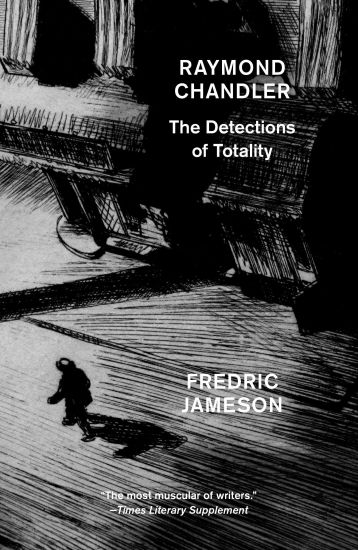
Raymond Chandler, a dazzling stylist and portrayer of American life, holds a unique place in literary history, straddling both pulp fiction and modernism. With The Big Sleep, published in 1939, he left an indelible imprint on the detective novel. Fredric Jameson offers an interpretation of Chandler's work that reconstructs both the context in which it was written and the social world or totality it projects. Chandler's invariable setting, Los Angeles, appears both as a microcosm of the United States and a prefiguration of its future: a megalopolis uniquely distributed by an unpromising nature into a variety of distinct neighborhoods and private worlds. But this essentially urban and spatial work seems also to be drawn towards a vacuum, an absence that is nothing other than death. With Chandler, the thriller genre becomes metaphysical.
A novel is an act, an intervention, which, most often, the naïve reader takes as a representation. The novel intervenes to modify or correct our conventional notions of a situation and, in the best and most intense cases, to propose a wholly new idea of what constitutes an event or of the very experience of living. The most interesting contemporary novels are those which try-and sometimes manage-to awaken our sense of a collectivity behind individual experience, revealing a relationship between the isolated subjectivity and a class or community. But even if this happens (which is rare), one must go on to find traces of collective praxis hidden away within the awakened feeling of inter-connection. And since it is in the sense of the nation and nationality that collectivity is most often expressed, there is an urgent need to disengage the possibilities of genuine action within these areas. This sweeping collection of essays ranges from the elusive politics of North American literature to the sometimes frozen narrative experiences of the eastern countries and the Soviet Union and beyond. This is a voyage traversing the globe, discovering a common kinship between each literary destination in late capitalism itself.
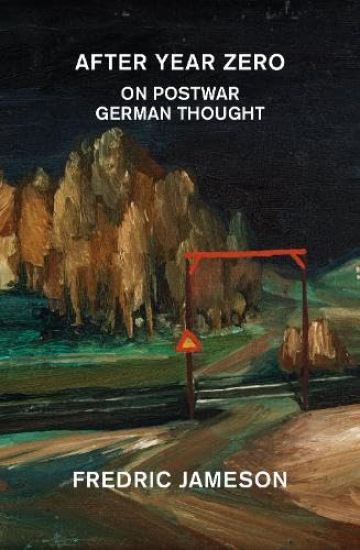
In this series of accessible lectures, Fredric Jameson explores German philosophy and critical theory as it developed in the wake of World War II. Focussing in on key thinkers such as Horkheimer, Adorno, Heidegger, Habermas, Marcuse, Beuys, Enzensberger, Kluge, Sloterdijk and RosaJameson weaves close readings of texts with anecdotes to craft a story about the uses of theory from the postwar division of Germany to its reunification at the end of the Cold War. Ranging from the legacy of Nazism to the formation of the EU, After Year Zero is an indispensable account of the German critical tradition's past and future, as seen by the "most significant Marxist thinker in American culture."
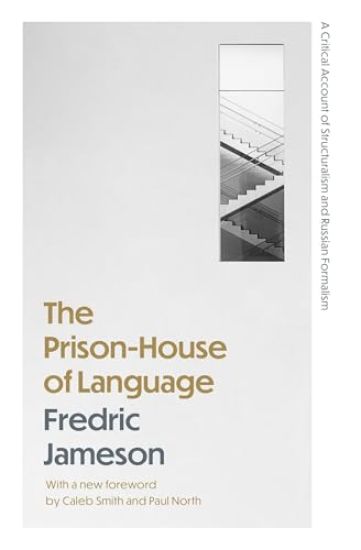
The Prison-House of Language
Fredric Jameson; Caleb Smith; Paul North
PRINCETON UNIVERSITY PRESS
2026
pokkari
A groundbreaking critical introduction to Structuralism and Russian Formalism by the acclaimed literary theorist In The Prison-House of Language, Fredric Jameson, one of the most important literary and cultural critics of the twentieth and twenty-first centuries, provides a thorough historical and philosophical introduction to Structuralism and Russian Formalism. Combining a survey of these influential critical movements and a critique of their methodology, Jameson lays bare their presuppositions, questioning whether the methods of Saussurean linguistics can adequately capture the concrete realities of time and history. The result is a unique and thought-provoking confrontation of two major strands of modern thought and a central work in the development of Jameson’s monumental critical project.
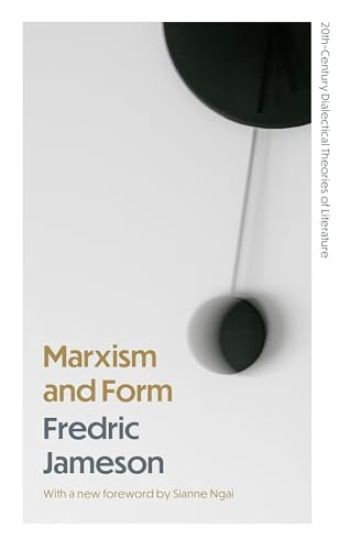
An influential introduction to Marxist cultural criticism by the acclaimed literary theorist In Marxism and Form, Fredric Jameson, one of the most important literary and cultural critics of the twentieth and twenty-first centuries, offers a pioneering look at major European Marxist and Frankfurt School thinkers—Adorno, Benjamin, Marcuse, Bloch, Lukács, and Sartre. Through penetrating readings, Jameson develops an influential mode of critical engagement that places art and culture at the heart of Marxist theory. The result lays the foundations for the entirety of Jameson’s monumental critical project—and remains a timely and vital work of aesthetic criticism for readers today.
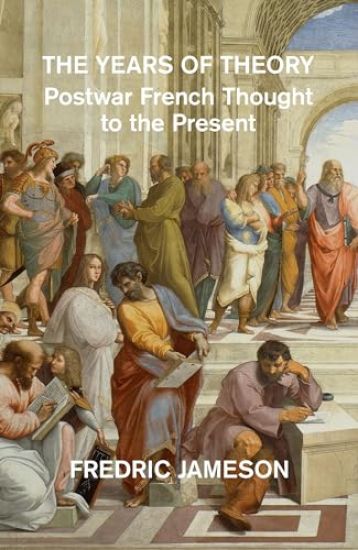
Fredric Jameson introduces here the major themes of French theory: existentialism, structuralism, poststructuralism, semiotics, feminism, psychoanalysis, and Marxism. In a series of accessible lectures, Jameson places this effervescent period of thought in the context of its most significant political conjunctures, including the Liberation of Paris, the Algerian War, the uprisings of May '68, and the creation of the EU.The philosophical debates of the period come to life through anecdotes and extended readings of work by the likes of Sartre, Beauvoir, Fanon, Barthes, Foucault, Althusser, Derrida, Deleuze, groups like Tel Quel and Cahiers du Cinéma, and contemporary thinkers such as Rancière and Badiou. Eclectic, insightful, and inspired, Jameson's seminars provide an essential account of an intellectual moment comparable in significance to the Golden Age of Athens, historically fascinating and of persistent relevance.
A novel is an act, an intervention, which, most often, the naïve reader takes as a representation. The novel intervenes to modify or correct our conventional notions of a situation and, in the best and most intense cases, to propose a wholly new idea of what constitutes an event or of the very experience of living. The most interesting contemporary novels are those which try-and sometimes manage-to awaken our sense of a collectivity behind individual experience, revealing a relationship between the isolated subjectivity and a class or community. But even if this happens (which is rare), one must go on to find traces of collective praxis hidden away within the awakened feeling of inter-connection. And since it is in the sense of the nation and nationality that collectivity is most often expressed, there is an urgent need to disengage the possibilities of genuine action within these areas.This sweeping collection of essays ranges from the elusive politics of North American literature to the sometimes frozen narrative experiences of the eastern countries and the Soviet Union and beyond. This is a voyage traversing the globe, discovering a common kinship between each literary destination in late capitalism itself.
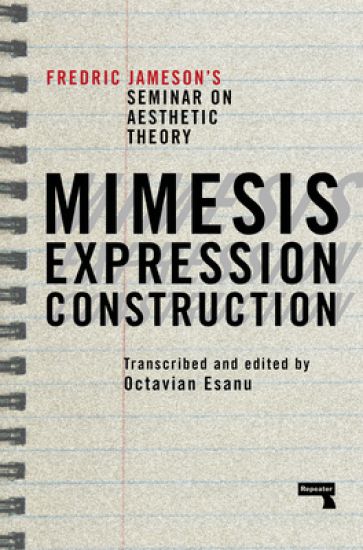
"Mind-blowing... What we get here is not the insight in some secret core of Jameson's thought lost in later gentrified published versions but, on the contrary, a flow of improvisations and mental experimentations where the detours through secondary topics are often more precious than the main line of argumentation." - Slavoj Zizek Mimesis, Expression, Construction brings Fredric Jameson's Duke University seminar on Adorno's Aesthetic Theory into print for the first time. Comprised of twenty-one seminar transcripts in which Jameson engages with his students as they explore Adorno's Aesthetic Theory, one of the most influential theories of modern art, this volume is also the first and only record of Jameson's teachings and pedagogic practice. Transcribed directly from audio recordings taken by the editor when the seminar was given in 2003, and presented like a play with closed captioning and stage directions, Mimesis, Expression, Construction is a new entry in the work of one of the greatest living philosophers.
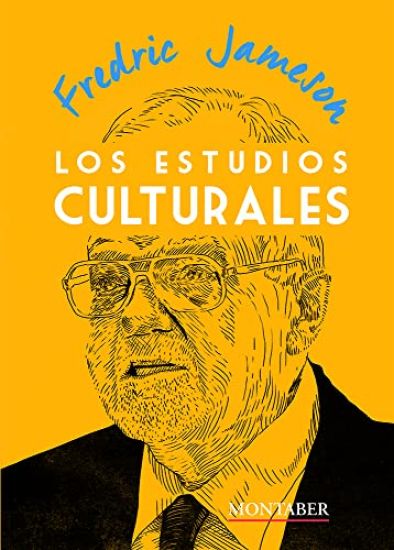
"La cultura es el halo que un grupo percibe cuando entra en contacto y observa a otro". No se puede entender la cultura sin el otro, igual que no es posible entenderse a uno mismo sin lo ajeno. Lo complicado es ser capaz de visibilizar lo ajeno, lo marginado, en un mundo que cambia m s r pido de lo que se narra; que genera desigualdades al vertiginoso ritmo del progreso.Fredric Jameson, una de las mejores plumas de nuestro tiempo, logra hacer confluir teor a pol tica y cr tica literaria. Conecta lo acad mico con lo cotidiano, enmarcando todo proceso simb lico en estructuras de poder que deben ser desnaturalizadas.Ning n estudioso de la literatura iguala la versatilidad, la erudici n enciclop dica, el br o imaginativo o la prodigiosa energ a intelectual de Jameson, emergiendo como alguien venido de un pasado cultural de mayor grandeza, un refugiado de la era de Shklovsky y Auerbach, Jakobson y Barthes, que sin embargo sigue siendo absolutamente contempor neo. Terry Eagleton(Cr tico literario y de la cultura brit nico)
The Benjamin Files offers a comprehensive new reading of all of Benjamin's major works and a great number of his shorter book reviews, notes and letters. Its premise is that Benjamin was an anti-philosophical, anti-systematic thinker whose conceptual interests also felt the gravitational pull of his vocation as a writer. What resulted was a coexistence or variety of language fields and thematic codes which overlapped and often seemed to contradict each other: a view which will allow us to clarify the much-debated tension in his works between the mystical or theological side of Benjamin and his political or historical inclination. The three-way tug of war over his heritage between adherents of his friends Scholem, Adorno and Brecht, can also be better grasped from this position, which gives the Brechtian standpoint more due than most influential academic studies. Benjamin's corpus is an anticipation of contemporary theory in the priority it gives language and representation over philosophical or conceptual unity; and its political motivations are clarified by attention to the omnipresence of History throughout his writing, from the shortest articles to the most ambitious projects. His explicit program - "to transfer the crisis into the heart of language" or, in other words, to detect class struggle at work in the most minute literary phenomena - requires the reader to translate the linguistic or representational literary issues that concerned him back into the omnipresent but often only implicitly political ones. But the latter are those of another era, to which we must gain access, to use one of Benjamin's favorite expressions.
Works do not have meanings, they soak up meanings: a work is a machine for libidinal investments (including the political kind). It is a process that sorts incommensurabilities and registers contradictions (which is not the same as solving them!) The inevitable and welcome conflict of interpretations - a discursive, ideological struggle - therefore needs to be supplemented by an account of this simultaneous processing of multiple meanings, rather than an abandonment to liberal pluralisms and tolerant (or intolerant) relativisms. This is not a book about "method", but it does propose a dialectic capable of holding together in one breath the heterogeneities that reflect our biological individualities, our submersion in collective history and class struggle, and our alienation to a disembodied new world of information and abstraction. Eschewing the arid secularities of philosophy, Walter Benjamin once recommended the alternative of the rich figurality of an older theology; in that spirit we here return to the antiquated Ptolemaic systems of ancient allegory and its multiple levels (a proposal first sketched out in The Political Unconscious); it is tested against the epic complexities of the overtly allegorical works of Dante, Spenser and the Goethe of Faust II, as well as symphonic form in music, and the structure of the novel, postmodern as well as Third-World: about which a notorious essay on National Allegory is here reprinted with a theoretical commentary; and an allegorical history of emotion is meanwhile rehearsed from its contemporary, geopolitical context.
The Benjamin Files offers a comprehensive new reading of all of Benjamin's major works and a great number of his shorter book reviews, notes and letters. Its premise is that Benjamin was an anti-philosophical, anti-systematic thinker whose conceptual interests also felt the gravitational pull of his vocation as a writer. What resulted was a coexistence or variety of language fields and thematic codes which overlapped and often seemed to contradict each other: a view which will allow us to clarify the much-debated tension in his works between the mystical or theological side of Benjamin and his political or historical inclination. The three-way tug of war over his heritage between adherents of his friends Scholem, Adorno and Brecht, can also be better grasped from this position, which gives the Brechtian standpoint more due than most influential academic studies. Benjamin's corpus is an anticipation of contemporary theory in the priority it gives language and representation over philosophical or conceptual unity; and its political motivations are clarified by attention to the omnipresence of History throughout his writing, from the shortest articles to the most ambitious projects. His explicit program - "to transfer the crisis into the heart of language" or, in other words, to detect class struggle at work in the most minute literary phenomena - requires the reader to translate the linguistic or representational literary issues that concerned him back into the omnipresent but often only implicitly political ones. But the latter are those of another era, to which we must gain access, to use one of Benjamin's favorite expressions.
Aesthetics and Politics
Fredric Jameson; Bertolt Brecht; Ernst Bloch; Georg Lukács; Theodor Adorno; Walter Benjamin
Verso Books
2020
nidottu
No other country and no other period has produced a tradition of major aesthetic debate to compare with that which unfolded in German culture from the 1930s to the 1950s. In Aesthetics and Politics the key texts of the great Marxist controversies over literature and art during these years are assembled in a single volume. They do not form a disparate collection but a continuous, interlinked debate between thinkers who have become giants of twentieth-century intellectual history.
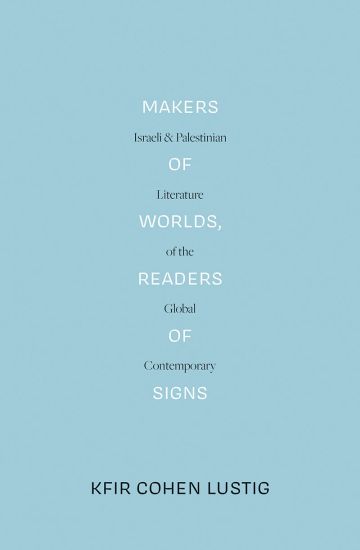
Makers of Worlds, Readers of Signs charts the aesthetic and political formation of neoliberalism and globalization in Israeli and Palestinian literature from the 1940s to the present. By tracking literature's move from making worlds to reading signs, Cohen Lustig proposes a new way to read theorize our global contemporary. Cohen Lustig argues that the period of Israeli statism and its counterpart of Palestinian statelessness produced works that sought to make and create whole worlds and social time - create the new state of Israel, preserve collective visions of Palestinian statehood. During the period of neoliberalism, the period after 1985 in Israel and the 1993 Oslo Accords in Palestine, literature became about the reading of signs, where politics and history are now rearticulated through the private lives of individual subjects. Here characters do not make social time but live within it and inquire after its missing origin. Cohen Lustig argues for new ways to track the subjectivities and aesthetics produced by larger shifts in production. In so doing, he proposes a new model to understand the historical development of Israeli and Palestinian literature as well as world literature in our contemporary moment. With a preface from Fredric Jameson.
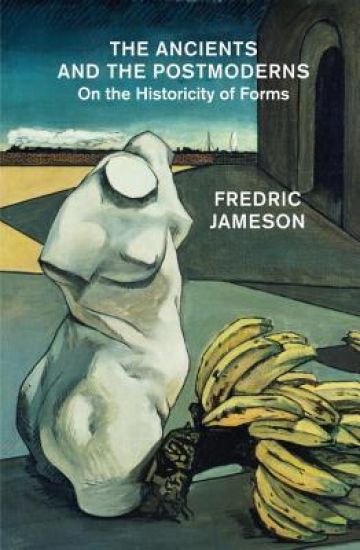
High modernism is now as far from us as antiquity was for the Renaissance. Such is the premise of Fredric Jameson's major new work in which modernist works, this time in painting (Rubens) and music (Wagner and Mahler), are pitted against late-modernist ones (in film) as well as a variety of postmodern experiments (from SF to The Wire, from "Eurotrash" in opera to Altman and East German literature): all of which attempt, in their different ways, to invent new forms to grasp a specific social totality. Throughout the historical periods, argues Jameson, the question of narrative persists through its multiple formal changes and metamorphoses.
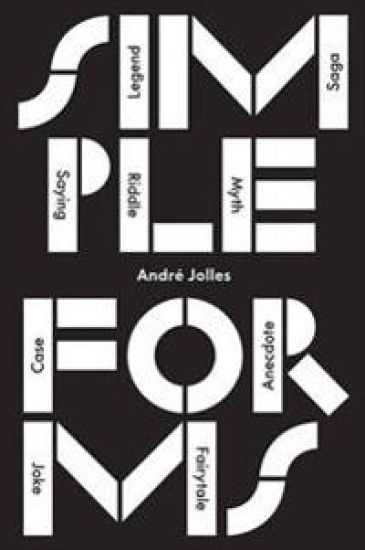
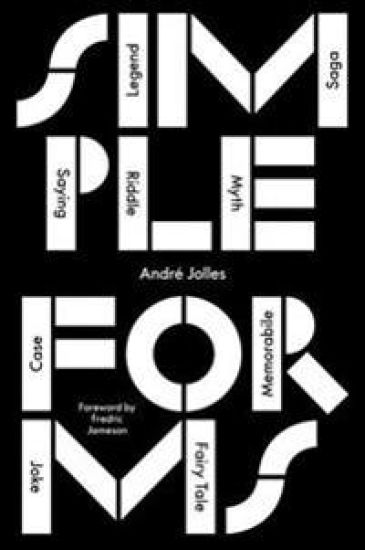
A seminal text in literary theory available in English for the first time Legend, saga, myth, riddle, saying, case, memorabile, fairy tale, joke: André Jolles understands each of these nine "simple forms" as the reflection in language of a distinct mode of human engagement with the world and thus as a basic structuring principle of literary narrative. Published in German in 1929 and long recognized as a classic of genre theory, Simple Forms is the first English translation of a significant precursor to structuralist and narratological approaches to literature. Like Vladimir Propp's Morphology of the Folktale, with which it is often compared, Jolles's work is not only foundational for the later development of genre theory but is of continuing relevance today. A major influence on literary genre studies since its publication, Simple Forms is finally available in English.
Legend, saga, myth, riddle, saying, case, memorabile, fairy tale, joke: André Jolles understands each of these nine "simple forms" as the reflection in language of a distinct mode of human engagement with the world and thus as a basic structuring principle of literary narrative. Published in German in 1929 and long recognized as a classic of genre theory, Simple Forms is the first English translation of a significant precursor to structuralist and narratological approaches to literature. Like Vladimir Propp's Morphology of the Folktale, with which it is often compared, Jolles's work is not only foundational for the later development of genre theory but is of continuing relevance today. A major influence on literary genre studies since its publication, Simple Forms is finally available in English.