Kirjojen hintavertailu. Mukana 12 390 323 kirjaa ja 12 kauppaa.
Kirjailija
Gaston Leroux
Kirjat ja teokset yhdessä paikassa: 661 kirjaa, julkaisuja vuosilta 1909-2026, suosituimpien joukossa The Monstrous Classics Collection (Boxed Set). Vertaile teosten hintoja ja tarkista saatavuus suomalaisista kirjakaupoista.
The Phantom of the Opera lives under a famous opera house. A mere chorus girl, Christine Daae, becomes, under his guidance, a well known singer with a beautiful voice. But her old child hood sweetheart, the Vicount Raoul de Changy, has also entered the picture. The past comes back to haunt her, the future ahead is uncertain, and the present is undecided. Who will win the heart of Christine?; the handsome, rich Raoul or the masked Angel of Music? A story of romance, murder, sacrifice and sadness, this riveting, seductive tale will keep your emotions high until the very last page of the shocking conclusion.
The Phantom of the Opera (French: Le Fant me de l'Op ra) is a novel by French writer Gaston Leroux. It was first published as a serialization in Le Gaulois from 23 September 1909, to 8 January 1910. It was published in volume form in late March 1910 by Pierre Lafitte. 1] The novel is partly inspired by historical events at the Paris Opera during the nineteenth century and an apocryphal tale concerning the use of a former ballet pupil's skeleton in Carl Maria von Weber's 1841 production of Der Freisch tz. It has been successfully adapted into various stage and film adaptations, most notable of which are the 1925 film depiction featuring Lon Chaney, and Andrew Lloyd Webber's 1986 musical. In Paris in the 1890s, the Palais Garnier opera house is believed to be haunted by an entity known as the Phantom of the Opera, or simply the Opera Ghost. A stagehand named Joseph Buquet is found hanged and the rope around his neck goes missing. At a gala performance for the retirement of the opera house's two managers, a young little-known Swedish soprano, Christine Daa , is called upon to sing in the place of the Opera's leading soprano, Carlotta, who is ill, and her performance is an astonishing success. The Vicomte Raoul de Chagny, who was present at the performance, recognises her as his childhood playmate, and recalls his love for her. He attempts to visit her backstage, where he hears a man complimenting her from inside her dressing room. He investigates the room once Christine leaves, only to find it empty. At Perros-Guirec, Christine meets with Raoul, who confronts her about the voice he heard in her room. Christine tells him she has been tutored by the Angel of Music, whom her father used to tell them about. When Raoul suggests that she might be the victim of a prank, she storms off. Christine visits her father's grave one night, where a mysterious figure appears and plays the violin for her. Raoul attempts to confront it but is attacked and knocked out in the process. Back at the Palais Garnier, the new managers receive a letter from the Phantom demanding that they allow Christine to perform the lead role of Marguerite in Faust, and that box 5 be left empty for his use, lest they perform in a house with a curse on it. The managers ignore his demands as a prank, resulting in disastrous consequences: Carlotta ends up croaking like a toad, and the chandelier suddenly drops into the audience, killing a spectator. The Phantom, having abducted Christine from her dressing room, reveals himself as a deformed man called Erik. Erik intends to keep her in his lair with him for a few days, but she causes him to change his plans when she unmasks him and, to the horror of both, beholds his noseless, lipless, sunken-eyed face, which resembles a skull dried up by the centuries, covered in yellowed dead flesh. Fearing that she will leave him, he decides to keep her with him forever, but when Christine requests release after two weeks, he agrees on condition that she wear his ring and be faithful to him. On the roof of the opera house, Christine tells Raoul about her abduction, and makes Raoul promise to take her away to a place where Erik can never find her, even if she resists. Raoul tells Christine he will act on his promise the next day, to which she agrees. However, Christine sympathises with Erik, and decides to sing for him one last time as a means of saying good-bye. Unbeknownst to Christine and Raoul, Erik has been watching them and overheard their whole conversation. The following night, the enraged and jealous Erik abducts Christine during a production of Faust, and tries to force her to marry him. Raoul is led by a mysterious opera regular known as "The Persian" into Erik's secret lair deep in the bowels of the opera house, but they end up trapped into a mirrored room by Erik, who threatens that unless Christine agrees to marry him, he will kill them and everyone in the Opera House by using explosives. Christine agrees to
The Phantom of the Opera (French: Le Fant me de l'Op ra) is a novel by French writer Gaston Leroux. It was first published as a serialisation in Le Gaulois from September 23, 1909 to January 8, 1910. It was published in volume form in April 1910 by Pierre Lafitte.The novel is partly inspired by historical events at the Paris Opera during the nineteenth century and an apocryphal tale concerning the use of a former ballet pupil's skeleton in one of the Paris Opera's productions. Nowadays, it is overshadowed by the success of its various stage and film adaptations. The most notable of these are the 1925 film depiction featuring Lon Chaney, Sr and Andrew Lloyd Webber's 1986 musical.
Gaston Leroux' immortal story about the Phantom of the Opera has fascinated the world for more than a century. "The magic envelope", a hitherto unknown chapter from the original serialization of the story in the newspaper le Gaulois is here translated into Swedish with comments, extra background material and fan fiction by Lena Eskilsson. This book will shortly also be published in English. Gaston Leroux od dliga ber ttelse om Fantomen p Operan har fascinerat v rlden i ver hundra r. Ett tidigare ok nt kapitel, "Det magiska kuvertet" fr n publiceringen som f ljetong i dagstidningen le Gaulois har h r versatts till svenska av Lena Eskilsson, som ven bidrar med kommentarer, bakgrundsmaterial och fan fiction. Denna bok kommer att ges ut p engelska inom kort.
The Phantom of the Opera (French: Le Fant me de l'Op ra) is a novel by French writer Gaston Leroux. It was first published as a serialisation in Le Gaulois from September 23, 1909 to January 8, 1910. It was published in volume form in April 1910 by Pierre Lafitte. The novel is partly inspired by historical events at the Paris Opera during the nineteenth century and an apocryphal tale concerning the use of a former ballet pupil's skeleton in one of the Paris Opera's productions.
On September 23, 1909, the Parisian daily newspaper, Le Gaulois, published its first installment of Gaston Leroux's Le Fant me de l'Op ra (The Phantom of the Opera). This type of serialized publication, in France called a "feuilleton," was common from the middle of the 19th century through the beginning of the 20th century. Many authors of the day published their novels section by section in newspapers to gain readership and to work out ideas before the publication of the first edition. Between the newspaper printing and the first edition, it was common for chapters to be added, rewritten, or removed as part of the editing process. In the feuilleton of Le Fant me de l'Op ra, Gaston Leroux wrote a chapter called "L'enveloppe magique" ("The Magic Envelope"). Leroux decided to omit this chapter from his first edition, and so it only appeared in Le Gaulois. Since the feuilleton has never been translated, few people apart from the most dedicated Phantom enthusiasts are familiar with this lost chapter. For the first time, the text of "The Magic Envelope" has been translated into English so that fans of The Phantom of the Opera can read this forgotten gem. This chapter provides explanations for several enigmas that have puzzled readers since Leroux's first edition, and it offers a fascinating glimpse into the writing process of one of France's literary icons.
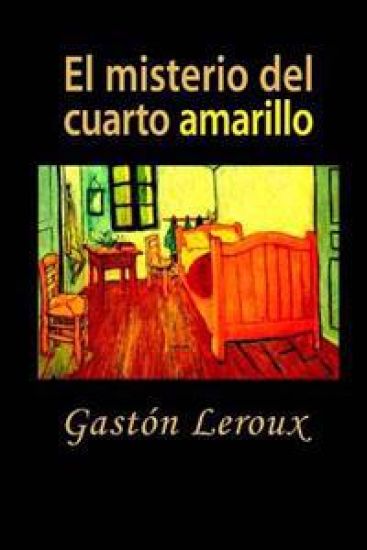
El misterio del cuarto amarillo, es una de las primeras novelas del tipo "misterio del cuarto cerrado", en la que el crimen tiene lugar en una habitaci n a la que es imposible entrar y de la que es imposible salir. Adem s, es la primera novela escrita por Gast n Leroux, puesto que antes escrib a cuentos. En esta novela, hace aparici n por primera vez el reportero Joseph "Rouletabille" Josephine (aunque, a medida que avanza la historia este act a mas como un detective), intentando resolver el misterio del intento de asesinato de la se ora Mathilde Stangerson, hija del cient fico Stangerson.
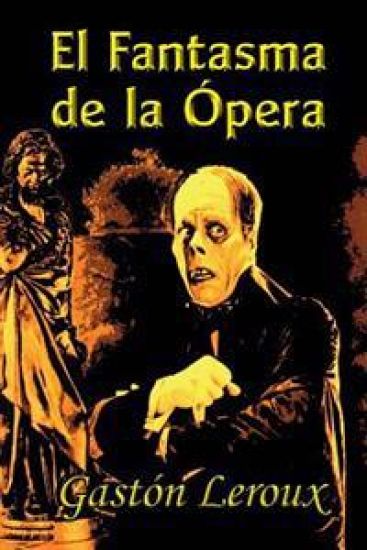
El fantasma de la pera es una novela que combina romance, terror, misterio y tragedia. Ha inspirado a cineastas y m sicos por todo un siglo. La historia trata de un hombre misterioso que aterroriza la pera de Par s para atraer la atenci n de una joven vocalista a la que ama. Inspirada en la tambi n novela Trilby de George du Maurier, que hab a sido publicada por entregas en la Harper's Magazine en 1894 y despu s en forma de libro en 1895, la novela de Leroux se public en entregas semanale
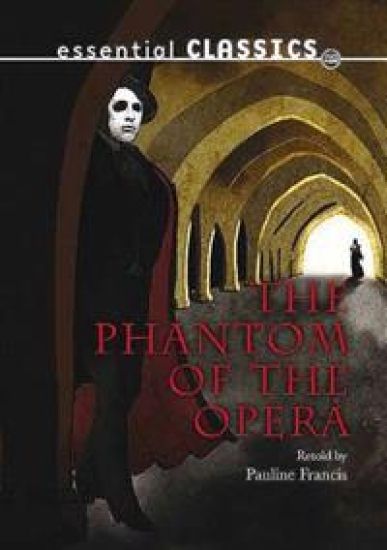
Retold for younger readers, Gaston Leroux's classic tale of horror follows a young opera singer, Christine Daae, who makes her triumphant debut at the Opera--and then disappears Written in 1909, "The Phantom of the Opera" is a spine chilling, dramatic story. What has happened to the vanished young opera singer, Christine--could the mysterious opera ghost be to blame? Christine's lover, Raoul de Chagny, spies a mysterious stranger shadowing her, and decides to follow. This retelling has been shortened and illustrated for younger readers.