Kirjojen hintavertailu. Mukana 12 166 952 kirjaa ja 12 kauppaa.

Kirjailija

Georges Didi-Huberman

Kirjat ja teokset yhdessä paikassa: 31 kirjaa, julkaisuja vuosilta 1999-2026, suosituimpien joukossa Gruvgas. Vertaile teosten hintoja ja tarkista saatavuus suomalaisista kirjakaupoista.

Mukana myös kirjoitusasut: Georges Didi–huberman, Georges Didi- Huberman

31 kirjaa

Kirjojen julkaisuhaarukka 1999-2026.

Gruvgas

Gruvgas

Georges Didi-Huberman

Bokförlaget Faethon
2026
sidottu
Konstnären är tidens uppfinnare. Denne formar och ger gestalt åt tidsperioder som hittills varit omöjliga eller otänkbara: aporier, krönikeliknande fabler. I den meningen kan man säga att konstnären »känner gruvgasen« i historien. Men hur förnimmer man den, denna färglösa och luktfria gas? Hur ser man tiden komma? Förr använde gruvarbetarna burfåglar som »siare« för gruvgas: det var ett dåligt omen när fjäderdräkten darrade. Skulle inte också bildernas darrande kunna fylla denna mystiska funktion? Det är vad Gruvgas försöker föreslå genom att vara en fri kommentar till några bilder »upphämtade från gruvans djup«, särskilt La rabbia, Pier Paolo Pasolinis beundransvärda politisk-poetiska arkivfilm. Georges Didi-Huberman är en fransk filosof och konsthistoriker. Johan Öberg har översatt boken till svenska.
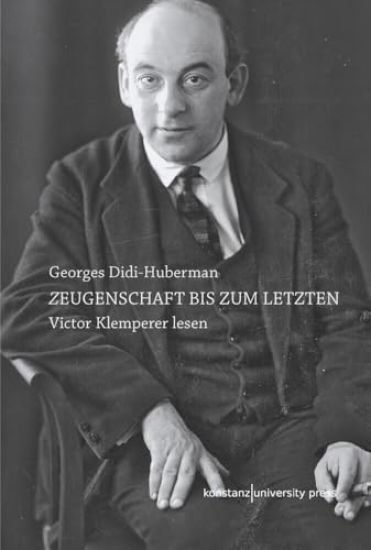
Vittne intill slutet : en läsning av Victor Klemperers dagbok

Vittne intill slutet : en läsning av Victor Klemperers dagbok

Georges Didi-Huberman

Bokförlaget Faethon
2024
sidottu
Att vara ett vittne: att vara sensibel. På vilket sätt bör det förstås? I en rättegång ber man endast ett vittne om att vara precis, för det är skeendenas fakta som ska återges. Men den som bestämt sig för att vittna mot historiens stormar och tidvatten, utan att någon krävt det, är i en annan situation: han erfar även det trängande behovet av det delade, den delade sensibiliteten. Underförstått utgår han från att det egna känslolivet frambär historiska fakta i sig, till och med politiska gester. Detta framstår tydligt i den dagbok som Victor Klemperer förde i hemlighet mellan 1933 och 1945 i Dresden där han, i egenskap av jude, kom att genomlida det nazistiska förtrycket. Det är ett extraordinärt vittnesmål, särskilt genom precisionen i de analyser som Klemperer som var filolog gör av det totalitära språkets funktion. Men även genom dess sensibilitet. Genom dess litterära öppenhet mot affekternas komplexitet, med det etiska ställningstagande för det delade som sensibiliteten förutsätter. Mellan det totalitära språket som alltid manar till särskiljande affekt och skriften i denna dagbok formas alltså två motsatta positioner i frågan om affektiva fakta. En politisk strid som kan läsas i varje vindel, varje vändning i Klemperers mästerliga skrift och vittnesmål. Georges Didi-Huberman är filosof. Översättning och efterord av Jakob Svedberg.
Förspridda : en resa i Warszawaghettots papper

Förspridda : en resa i Warszawaghettots papper

Georges Didi-Huberman

Bokförlaget Faethon
2024
sidottu
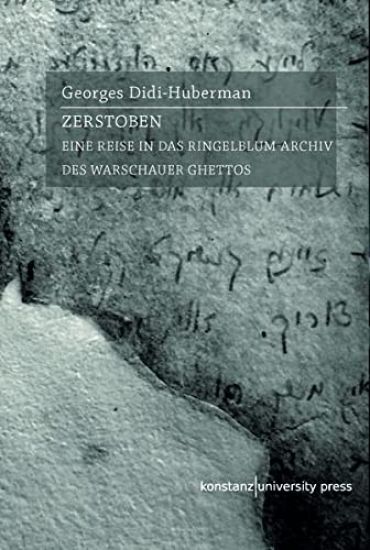
Detta är en enkel »fotoberättelse« om en resa i Warszawaghettots papper. Ett försök att för första gången betrakta de bilder som i hemlighet samlades in i ghettot av Emanuel Ringelblum och hans kamrater i Oyneg Shabes, mellan 1939 och 1943. Bilder som inte kan skiljas från sitt arkiv och dess trettiofem tusen sidor med berättelser, statistik, vittnesmål, dikter, folksånger, läxor från de underjordiska skolorna och brev som kastats från boskapsvagnar på väg mot Treblinka Ett arkiv över katastrofen, men likaväl för överlevnaden och en mycket särskild form av hopp på denna tillslutna plats där var och en stod med ryggen mot väggen och endast några få skulle lyckas undgå döden. Bilder ur det lilla. Förspridda liksom allt som grundar detta arkiv. Men det är bilder som måste betraktas, var och en för sig och alla tillsammans, som vittnesmål om det dagliga livet och döden i ghettot. Det är bilder som man fram till idag aldrig har betraktat på nära håll. Ur dem stiger dock frågan om vilket slags vetande, eller till och med om vilken stil som en historie­skrivning kan anta inför den förspridda naturen hos sådana dokument. En his­torieskrivning som är öppen mot bildernas otröstliga skörhet. Georges Didi-Huberman är filosof. Översättning och efterord av Jakob Svedberg.
Movements of Air – The Photographs from Étienne–Jules Marey's Wind Tunnels

Movements of Air – The Photographs from Étienne–Jules Marey's Wind Tunnels

Georges Didi–huberman; Laurent Mannoni; Florian Dombois; Christoph Oeschger; Aubrey Birch

Diaphanes AG
2023
nidottu
Two important essays on Étienne-Jules Marey published for the first time in English alongside his breathtaking images of moving air and smoke. Featuring more than one hundred and fifty photographs and images, Movements of Air reprints the breathtaking pictures of Étienne-Jules Marey—images captured between 1899 and 1901 during his scientific experiments with moving air and smoke—and complements them with essays by Georges Didi-Huberman and Laurent Mannoni. Mannoni begins by reflecting on Marey’s experimental approach. As the founder of the “graphic method,” Marey was also the developer of an aerodynamic wind tunnel. His experiments’ photographs of fluid motion introduced a whole world of movements and turbulences, and fluids, and influenced generations of scientists and artists alike. Didi-Huberman expands on the philosophical debates surrounding these aesthetically and technically instructive images. Even though Marey’s main interest was graphic information, Didi-Huberman shows us how the flow of all things drew this ingenious experimenter to a photographic practice that creates drags, streaks, expansions, and visual dances. Marey’s wind tunnel photographs were also themselves causes of turbulence in the history of images. The artists Dombois and Oeschger explore these “graphical” vortices of the last 120 years, providing at the end of the book a collage from historical and contemporary material interlaced with their own image-making in Dombois’s wind tunnel at the Zurich University of the Arts.
Ninfa moderna : essä över fallen drapering

Ninfa moderna : essä över fallen drapering

Georges Didi-Huberman

Bokförlaget Faethon
2023
nidottu
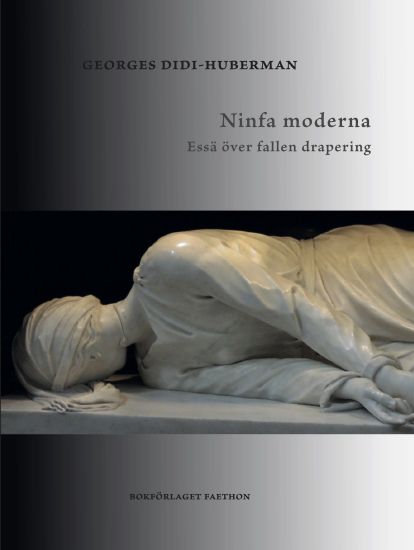
Bildernas historia lever inte bara enligt den manifesta rytmen av renässans och föråldring. Den tar även form med efterlivets mer latenta rytm. I sina undersökningar av den västerländska konsten, betraktad ur perspektivet av »antikens efterlevnader«, ägnade Aby Warburg en särskild uppmärksamhet åt den figur i rörelse och drapering som han kallade för ninfa ett slags personifiering eller halvgudinna av den antika formens eviga återkomster. Denna bok vill förlänga den warburgska jakten efter ninfa, in i vår tid: den frågar ut motivet av den feminina kroppen och draperingen, ända fram till deras samtida avatarer. Georges Didi-Huberman är filosof och konsthistoriker. Han har publicerat ett femtiotal verk om bildernas historia och teori inom ett väldigt studieområde som sträcker sig från renässansen fram till den samtida konsten.
Bark

Bark

Georges Didi-Huberman

ARENA, FORFATTERNES FORLAG
2021
sidottu
En søndag i juni 2011 besøger den franske filosof og kunsthistoriker Georges Didi-Huberman den tidligere udryddelseslejr Auschwitz-Birkenau, hvor hans egne bedsteforældre blev dræbt. Han tager en række fotografier med et engangskamera og river tre strimler bark af birketræerne i udkanten af lejren. Hjemme i Paris sætter han sig for at meditere over birkebarken og billederne.Barker en essayistisk foto-fortælling, en række intime og originale refleksioner over Holocaust, vidnesbyrd, sorg og erindring. I 19 tekster og 19 fotografier kredser Didi-Huberman om umuligheden af at repræsentere eller forestille sig lejrenes lidelse —men også om nødvendigheden af at blive ved at betragte de materielle levn og rester, blive ved at se på det, der ikke kan ses.
Povo em lágrimas, povo em armas

Povo em lágrimas, povo em armas

Georges Didi-Huberman

N-1 Edicoes
2021
nidottu
Este livro parte da an lise de uma nica situa o, por m exemplar: um homem morre de morte injusta e violenta; mulheres se juntam para chor -lo; logo mais um povo em l grimas que se re ne a elas. Ora, essa situa o que se v por toda parte foi esplendidamente retratada por Serguei Eisenstein em seu c lebre filme O encoura ado Potemkin. Mas como foi que Roland Barthes, uma das vozes mais influentes no dom nio do discurso contempor neo sobre as imagens, p de considerar tal constru o do pathos vulgar e lament vel? A melhor resposta cr tica barthesiana ser fornecida pelo pr prio Eisenstein na estrutura de sua sequ ncia de imagens, assim como no discurso - imenso, abundante, genial, t o importante quanto o dos maiores pensadores de seu tempo - que ele sustenta sobre a quest o das imagens pat ticas. Descobre-se uma emo o que sabe dizer n s, e n o s eu, um pathos que n o apenas passivo, mas se constitui em pr xis: quando as velhas carpideiras de Odessa, em volta do marinheiro morto, passam da lamenta o c lera, prestam queixa e exigem justi a, fazem nascer esse povo em armas da revolu o que vem.
Aesthetics of Standstill

Aesthetics of Standstill

Reinhold Görling; Barbara Gronau; Ludger Schwarte; Georges Didi–huberman; Adrian Heathfield

Sternberg Press
2019
nidottu
Essays consider the temporality and the aesthetics of "standstill.""Standstill" could be the name for the kind of experience that is the hiatus between social expectations and real possibilities of agency. Standstill may also be the name of an aesthetic strategy to instill a nonlinear time of resistance and experience into the political protocol of progress. Finally, standstill can be the name for the temporal fissure in the midst of the subject, for the lapse between the subject of the enunciation and the subject of a statement, the limit that is the border between the inside and the outside. It can be the name for the mode of potentiality, for the moment of gesture, or, with Walter Benjamin, the medium of the dialectical image. The essays of this book traverse these dimensions of standstill as an in-between of time.ContributorsGeorges Didi-Huberman, Reinhold G rling, Barbara Gronau, Adrian Heathfield, Erika Fischer-Lichte, Oliver Marchart, Rita McBride, Christoph Menke, Aernout Mik, Misha Kavka, David Lapoujade, Mirjam Lewandowsky, Via Lewandowsky, Peter Osborne, Christine Ross, Marcel Odenbach, Jacques Ranci re, Ludger Schwarte, Martin Seel
När bilderna tar ställning. Historiens öga, 1

När bilderna tar ställning. Historiens öga, 1

Georges Didi-Huberman

OEI Editör
2019
nidottu
” Glöm inte: många av era likar stred För att ni, och inte de, skulle ges en möjlighet Gräv nu inte ner er utan kämpa med Och lär er att lära och lär er aldrig av med det!” I Bertolt Brechts arbete var montaget en grundläggande kritisk praktik, oavsett om det handlade om att exponera ett teoretiskt argument i Arbeitsjournal eller om att komplexifiera läsningen av historien genom att ställa bilder mot vassa dikter och bildtexter i sin ”krigets ABC-bok”, Kriegsfibel. ”Sanningen är konkret”, skrev Brecht på en bjälke i sitt arbetsrum. Genom Georges Didi-Hubermans analyser av de konkreta procedurer och teoretiska val som är oskiljbara från Brechts reflektion över kriget under exilåren (1933–1948), i montage där historisk fordring och politiskt engagemang korsar poesi och fotografi, framträder en bildpraktik som i starkaste mening är kritisk; en kunskap genom montage vars horisont är en föreställningsförmågans politik – när bilderna tar ställning. Georges Didi-Huberman är filosof och konsthistoriker. Han undervisar vid École des hautes études en sciences sociales i Paris. Han har utkommit med ett sextiotal böcker och även curaterat en rad inflytelserika utställningar såsom L’Empreinte (1997) och Atlas: how to carry the world on one´s back? (2010). Jonas (J) Magnusson är författare, översättare, redaktör och konstnärlig forskare. Han har sedan 1998 översatt och skrivit om Didi-Huberman i tidskrifterna Ord&Bild, Paletten, Glänta, Kunstkritikk, SITE och OEI.
Walead Beshty

Walead Beshty

Giorgio Agamben; Ariella Azoulay; Roland Barthes; Georges Didi-Huberman; Harun Farocki; Morgan Fisher; Coco Fusco; Rosalind Krauss; Allan Sekula; Hito Steyerl

JRP Ringier
2018
sidottu
Proposing an alternative history of the optical image, Picture Industry explores the materiality of images and the technologies that govern their reception.Spanning from the late 19th century to the present with images produced for scientific and artistic contexts, Picture Industry includes the work of more than 70 artists and practitioners. But this is not a typical exhibition catalog; it goes beyond the exhibition, presenting an anthology of texts that reveal the range of methodological approaches to the world of images. Picture Industry brings together essays by, among others, Giorgio Agamben, Cory Arcangel, Ariella Azoulay, Roland Barthes, Georges Bataille, Jean Baudrillard, Ericka Beckman, Walter Benjamin, Georges Didi-Huberman, Thomas A. Edison, Harun Farocki, Morgan Fisher, Vilem Flusser, Coco Fusco, Tristan Garcia, Octavio Getino and Fernando Solanas, Sigfried Giedion, Mark Godfrey, Kenneth Goldsmith, Dan Graham, Friedrich A. Kittler, Boris Mikhailov, Craig Owens, Erwin Panofsky, Seth Price, Siegfried Kracauer, Rosalind Krauss, Bruno Latour, Etienne-Jules Marey, Martha Rosler, Allan Sekula, Hito Steyerl, William Henry Fox Talbot, Gilles de la Tourette and Alan Turing.
Survival of the Fireflies

Survival of the Fireflies

Georges Didi-Huberman

University of Minnesota Press
2018
nidottu
Seeking out the minor lights of friendship in a time of fascism Dante once spoke, in his Divine Comedy, of the miniscule lights, in the twenty-sixth canto of the Inferno, who, contrary to the great lights that shined bright within the sublime circles of Paradise, frailly wandered in the somber pockets of glimmering light within the darkness. Pliny the Elder was once preoccupied by a type of fly named pyrallis or pyrotocon, which was only able to fly within fire: “as long as it remains in the fire, it can fly; when its flight takes it out too far a distance, it dies.” Through his readings of Dante, Pasolini, Walter Benjamin, and others, Georges Didi-Huberman seeks again to understand this strange, minor light, the signals of small beings in search of love and friendship. Their flickering presence serves as a counterforce to the blinding sovereign power that Giorgio Agamben calls The Kingdom and the Glory, that artificial brilliance that once surrounded dictators and today emanates from every screen. In this timely reflection, much needed in our time of excessive light, Didi-Huberman’s Survival of the Fireflies offers a humble yet powerful image of individual hope and desire: the firefly-image.
Atlas, or the Anxious Gay Science

Atlas, or the Anxious Gay Science

Georges Didi-Huberman; Shane B. Lillis

University of Chicago Press
2018
sidottu
Aby Warburg's Mnemosyne Atlas (1925-1929) is a prescient work of mixed media assemblage, made up of hundreds of images culled from antiquity to the Renaissance and arranged into startling juxtapositions. Warburg's allusive atlas sought to illuminate the pains of his final years, after he had suffered a breakdown and been institutionalized. It continues to influence contemporary artists today, including Gerhard Richter and Mark Dion. In this illustrated exploration of Warburg and his great work, Georges Didi-Huberman leaps from Mnemosyne Atlas into a set of musings on the relation between suffering and knowledge in Western thought, and on the creative results of associative thinking. Deploying writing that delights in dramatic jump cuts reminiscent of Warburg's idiosyncratic juxtapositions, and drawing on a set of sources that ranges from ancient Babylon to Walter Benjamin, Atlas, or the Anxious Gay Science is rich in Didi-Huberman's trademark combination of elan and insight.
The Eye of History

The Eye of History

Georges Didi-Huberman

MIT Press
2018
sidottu
An exploration of the interaction of aesthetics and politics in Bertolt Brecht's "photoepigrams."From 1938 to 1955, Bertolt Brecht created montages of images and text, filling his working journal (Arbeitsjournal) and his idiosyncratic atlas of images, War Primer, with war photographs clipped from magazines and adding his own epigrammatic commentary. In this book, Georges Didi-Huberman explores the interaction of politics and aesthetics in these creations, explaining how they became the means for Brecht, a wandering poet in exile, to "take a position" about the Nazi war in Europe. Illustrated with pages from the Arbeitsjournal and War Primer and contextual images including Raoul Hausmann's poem-posters and Walter Benjamin's drawings, The Eye of History offers a new view of important but little-known works by Brecht.Didi-Huberman shows that Brecht took positions without taking sides; he used these montages to challenge the viewpoints of the press and propose other readings, to offer a stylistic and political response to the inescapable visibility of historical events enabled by the photographic medium. Brecht's montages disrupt and scrutinize this visibility by juxtaposing representations of war found in magazines with his own epigrams-a "documentary lyricism" that dismounts and remounts modern history. The montages created meaningful disorder, exposing the truth by disorganizing-a process Didi-Huberman calls a "dialectic of the monteur." These works are examples of "the eyes of history"-when seeing may simultaneously deepen and critique historical knowledge. The montages Didi-Huberman argues, are Brecht's most Benjaminian works.
The Surviving Image

The Surviving Image

Georges Didi-Huberman

Pennsylvania State University Press
2018
pokkari
The Surviving Image, originally published in French in 2002, is the result of Georges Didi-Huberman’s extensive research into the life and work of foundational art historian Aby Warburg. Warburg envisioned an art history that engaged with anthropology, psychoanalysis, and philosophy in order to understand the “life” of images. Drawing on a wide range of Warburg’s unpublished letters and diaries, Didi-Huberman demonstrates unequivocally the complexity and importance of Warburg’s ideas and the ways in which his legacy was both distorted and diffused as art history became a “humanistic” discipline. The Surviving Image takes Warburg as its main subject but also addresses broader questions regarding art historians’ conceptions of time, memory, and symbols and the relationship between art and the rational and irrational forces of the psyche.Faithfully and thoughtfully translated by Harvey Mendelsohn, this first English-language edition of Didi-Huberman’s masterful study of Warburg is a stirring and significant treatise on the philosophical nature of art history.
Bark

Bark

Georges Didi-Huberman

MIT Press
2017
sidottu
A noted French thinker's poignant reflections, in words and photographs, on his visit to Auschwitz-Birkenau.On a visit to Auschwitz-Birkenau, Georges Didi-Huberman tears three pieces of bark from birch trees on the edge of the site. Looking at these pieces after his return home, he sees them as letters, a flood, a path, time, memory, flesh. The bark serves as a springboard to Didi-Huberman's meditations on his visit, recorded in this spare, poetic, and powerful book. Bark is a personal account, drawing not on the theoretical apparatus of scholarship but on Didi-Huberman's own history, memory, and knowledge. The text proceeds as a series of reflections, accompanied by Didi-Huberman's photographs of the visit. The photographs are not meant to be art-Didi-Huberman confesses that he "photographed practically everything without looking"-but approach it nevertheless. Didi-Huberman tells us that his grandparents died at Auschwitz, but his account is more universal than biographical. As he walks from place to place, he observes that in German birches are birken; Birkenau designates the meadow where the birches grow. Didi-Huberman sees and photographs the "reconstructed" execution wall; the floors of the crematorium, forgotten witnesses to killing; and the birch trees, lovely but also resembling prison bars. Taking his own photographs, he thinks of the famous photographs taken in 1944 by a member of the Sonderkommando, the only photographic documentation of the camp before the Germans destroyed it, hoping to hide the evidence of their crimes. Didi-Huberman notices a "bizarre proliferation of white flowers on the exact spot of the cremation pits." The dead are not departed.
Näver

Näver

Georges Didi-Huberman

Bokförlaget Faethon
2017
nidottu
Den franske filosofen Georges Didi-Huberman har i flera studier underso?kt fotografiets betydelse som kunskapska?lla. Under senare a?r har han ofta a?terkommit till fotografiet som fo?rmedlare av historisk kunskap och sa?rskilt i relation till Fo?rintelsen. I Na?ver agerar han sja?lv fotograf och dokumenterar sin vandring genom fo?rintelsela?gret Auschwitz-Birkenau. I analysen av de egna fotografierna fra?gar han sig inte bara vad fotografier faktiskt kan fo?rmedla utan ocksa? hur vi ska va?rda minnet av Fo?rintelsens platser och offer. Boken a?r samtidigt en filosofisk analys och en personlig skildring. Den svenska utga?van a?r fo?rsedd med ett efterord av o?versa?ttaren Daniel Pedersen.
The Man Who Walked in Color

The Man Who Walked in Color

Georges Didi-Huberman

Univocal Publishing LLC
2017
nidottu
For Georges Didi-Huberman, artist James Turrell is an inventor of impossible spaces and unthinkable sites, of aporias, of fables. Creator of some of the most fascinating works of the late twentieth and early twenty-first century, Turrell uses as his medium the most elemental material of sight and art: light. One crucial aspect of his work is the fabulation of place and vision with its foundation deep in history. Didi-Huberman takes the reader on a journey between the impossible limit of the horizon and the arrival into a site of reverie and light, from the story of Exodus to the Pala d’Oro of San Marco’s Basilica in Venice, through art history and the origins of religious worship, finally plunging into Turrell’s cadmium dust and light, into the Painted Desert of his installation Roden Crater. For the esteemed art historian, Turrell’s artistic practice becomes the equivalent of walking along endless pathways in the desert, in “minuscule cathedrals where man discovers himself walking in color.”