Kirjojen hintavertailu. Mukana 12 595 353 kirjaa ja 12 kauppaa.

Kirjailija

Gianni Vattimo

Kirjat ja teokset yhdessä paikassa: 45 kirjaa, julkaisuja vuosilta 1991-2026, suosituimpien joukossa Plant-Thinking. Vertaile teosten hintoja ja tarkista saatavuus suomalaisista kirjakaupoista.

45 kirjaa

Kirjojen julkaisuhaarukka 1991-2026.

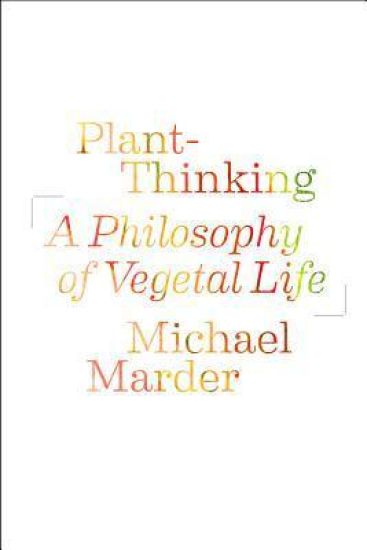
Plant-Thinking

Plant-Thinking

Michael Marder; Gianni Vattimo; Santiago Zabala

Columbia University Press
2013
pokkari
The margins of philosophy are populated by non-human, non-animal living beings, including plants. While contemporary philosophers tend to refrain from raising ontological and ethical concerns with vegetal life, Michael Marder puts this life at the forefront of the current deconstruction of metaphysics. He identifies the existential features of plant behavior and the vegetal heritage of human thought so as to affirm the potential of vegetation to resist the logic of totalization and to exceed the narrow confines of instrumentality. Reconstructing the life of plants "after metaphysics," Marder focuses on their unique temporality, freedom, and material knowledge or wisdom. In his formulation, "plant-thinking" is the non-cognitive, non-ideational, and non-imagistic mode of thinking proper to plants, as much as the process of bringing human thought itself back to its roots and rendering it plantlike.
Plant-Thinking

Plant-Thinking

Michael Marder; Gianni Vattimo; Santiago Zabala

Columbia University Press
2013
sidottu
The margins of philosophy are populated by non-human, non-animal living beings, including plants. While contemporary philosophers tend to refrain from raising ontological and ethical concerns with vegetal life, Michael Marder puts this life at the forefront of the current deconstruction of metaphysics. He identifies the existential features of plant behavior and the vegetal heritage of human thought so as to affirm the potential of vegetation to resist the logic of totalization and to exceed the narrow confines of instrumentality. Reconstructing the life of plants "after metaphysics," Marder focuses on their unique temporality, freedom, and material knowledge or wisdom. In his formulation, "plant-thinking" is the non-cognitive, non-ideational, and non-imagistic mode of thinking proper to plants, as much as the process of bringing human thought itself back to its roots and rendering it plantlike.
After Christianity

After Christianity

Gianni Vattimo

Columbia University Press
2026
pokkari
What has been the fate of Christianity since Nietzsche's famous announcement of the "death of God"? What is the possibility of religion, specifically Christianity, thriving in our postmodern era? In this provocative new book, Gianni Vattimo, leading Italian philosopher, politician, and framer of the European constitution, addresses these critical questions. When Vattimo was asked by a former teacher if he still believed in God, his reply was, "Well, I believe that I believe." This paradoxical declaration of faith serves as the foundation for a brilliant exposition on Christianity in the new millennium—an age characterized by a deep uncertainty of opinion—and a personal account of how Vattimo himself recovered his faith through Nietzsche and Heidegger. He first argues that secularization is in fact the fulfillment of the central Christian message, and prepares us for a new mode of Christianity. He then explains that Nietzsche's thesis concerns only the "moral god" and leaves room for the emergence of "new gods." Third, Vattimo claims that the postmodern condition of fragmentation, anti-Eurocentrism, and postcolonialism can be usefully understood in light of Joachim of Fiore's thesis concerning the "Spiritual Age" of history. Finally, Vattimo argues for the idea of "weak thought." Because philosophy in the postmetaphysical age can only acknowledge that "all is interpretation," that the "real" is always relative and not the hard and fast "truth" we once thought it to be, contemporary thought must recognize itself and its claims as "weak" as opposed to "strong" foundationalist claims of the metaphysical past. Vattimo concludes that these factors make it possible for religion and God to become a serious topic for philosophy again, and that philosophy should now formally engage religion.
Being and Its Surroundings

Being and Its Surroundings

Gianni Vattimo

McGill-Queen's University Press
2021
sidottu
Gianni Vattimo, one of Europe's foremost contemporary philosophers and most famously associated with the concept of weak thought, explores theoretical and practical issues flowing from his fundamental rejection of the traditional Western understanding of Being as an absolute, unchanging, and transcendent reality. The essays in this book move within the surroundings of Being without constructing a systematic, definitive analysis of the topic. In Being and Its Surroundings, Vattimo continues his career-long exploration of the philosophy of Martin Heidegger, in particular his repudiation of metaphysics with its presupposition of the existence of permanent, universal truth, and that of Friedrich Nietzsche, with its promotion of nihilism. One consequence of problematizing the idea of an attainable truth is the relativization of values and cultures. In the face of the death of God – or the absence of a transcendent guarantor of the validity of human judgments – we have the postmodern tendency to see all value systems and assertions of truth as purely subjective, and to suggest that "anything goes," which Nietzsche called passive nihilism. Vattimo advocates a more active response as he challenges all forms of authoritarianism in the world today. He brings his intellectual acumen to bear on such urgent issues as globalization, the clash of civilizations and terrorism, the crisis of democracy, and the relevance of orthodox religion. Rather than endorse dogmatism or indifference and detachment from social engagement in the name of relativism, Vattimo opts for the path of meaningful dialogue and a search for a mediated consensus based on reason, with all its limitations.
Beyond the Subject

Beyond the Subject

Gianni Vattimo

State University of New York Press
2020
pokkari
An original reading of Nietzsche and Heidegger that paved the way for Vattimo's conception of weak thought.In Beyond the Subject Gianni Vattimo offers a reading of Nietzsche and Heidegger that shows how the premises to overcome the metaphysical Subject were already embedded in their thought. Vattimo makes a case for a Nietzsche who is not concerned with the structure and glorification of the Overman, but rather with its opposite, by showing how it is the single individual who must see and accept his/her potential and then excel and develop an inner strength and ethic. He reads Heidegger as concerned with the inevitable distortion present in every interpretation, which, when confronted and accepted, humbles us to deal with a less overarching telos or Grund, and makes us more attuned to contingency and interpersonal communication-what Vattimo calls a "weakened" notion of being. These original readings of Nietzsche and Heidegger pave the way for Vattimo's concept of weak thought and open up to a future social ethic that is less agonistic and more community oriented. This edition includes two supplementary essays from 1986 and 1988 that expand on the same themes, providing a deeper look at an important decade in the development of Vattimo's thought.
Of Reality

Of Reality

Gianni Vattimo

Columbia University Press
2017
pokkari
We think it is wise to accept reality, rather than fight for something that does not exist or might never be. But in Of Reality, Gianni Vattimo condemns this complacency, with its implicit support of the status quo. Instead he urges us to never stop questioning, contrasting, or overcoming reality, which is not natural, inevitable, or objective. Reality is a construct, reflecting, among other things, our greed, biases, and tendencies toward violence. It is no accident, Vattimo argues, that the call to embrace reality has emerged at a time when the inequalities of liberal capitalism are at their most extreme. Developed from his popular Gifford Lectures, this book advances a critical approach that recovers our interpretive powers and native skepticism toward normative claims. Though he recognizes his ideas invite charges of relativism, the philosopher counters with a discussion of truth, highlighting its longstanding ties to history and social circumstance. Truth is always contingent and provisional, and reason and reasonableness are bound to historical context. Truth is therefore never objective, and resistance to reality is our best hope to defeat the indifference that threatens the scope of freedom and democracy.
Of Reality

Of Reality

Gianni Vattimo

Columbia University Press
2016
sidottu
We think it is wise to accept reality, rather than fight for something that does not exist or might never be. But in Of Reality, Gianni Vattimo condemns this complacency, with its implicit support of the status quo. Instead he urges us to never stop questioning, contrasting, or overcoming reality, which is not natural, inevitable, or objective. Reality is a construct, reflecting, among other things, our greed, biases, and tendencies toward violence. It is no accident, Vattimo argues, that the call to embrace reality has emerged at a time when the inequalities of liberal capitalism are at their most extreme. Developed from his popular Gifford Lectures, this book advances a critical approach that recovers our interpretive powers and native skepticism toward normative claims. Though he recognizes his ideas invite charges of relativism, the philosopher counters with a discussion of truth, highlighting its longstanding ties to history and social circumstance. Truth is always contingent and provisional, and reason and reasonableness are bound to historical context. Truth is therefore never objective, and resistance to reality is our best hope to defeat the indifference that threatens the scope of freedom and democracy.
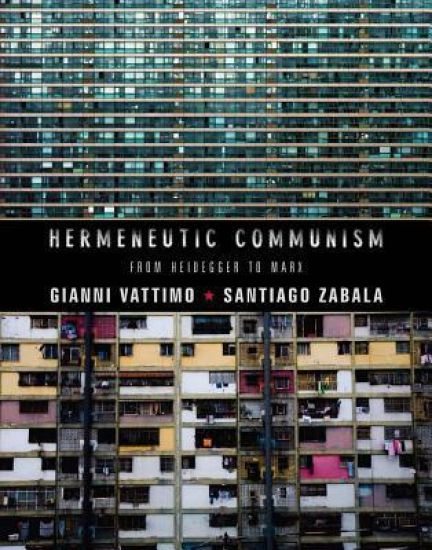
Hermeneutic Communism

Hermeneutic Communism

Gianni Vattimo; Santiago Zabala

Columbia University Press
2014
pokkari
Having lost much of its political clout and theoretical power, communism no longer represents an appealing alternative to capitalism. In its original Marxist formulation, communism promised an ideal of development, but only through a logic of war, and while a number of reformist governments still promote this ideology, their legitimacy has steadily declined since the fall of the Berlin wall. Separating communism from its metaphysical foundations, which include an abiding faith in the immutable laws of history and an almost holy conception of the proletariat, Gianni Vattimo and Santiago Zabala recast Marx's theories at a time when capitalism's metaphysical moorings-in technology, empire, and industrialization-are buckling. While Michael Hardt and Antonio Negri call for a return of the revolutionary left, Vattimo and Zabala fear this would lead only to more violence and failed political policy. Instead, they adopt an antifoundationalist stance drawn from the hermeneutic thought of Martin Heidegger, Jacques Derrida, and Richard Rorty. Hermeneutic communism leaves aside the ideal of development and the general call for revolution; it relies on interpretation rather than truth and proves more flexible in different contexts. Hermeneutic communism motivates a resistance to capitalism's inequalities yet intervenes against violence and authoritarianism by emphasizing the interpretative nature of truth. Paralleling Vattimo and Zabala's well-known work on the weakening of religion, Hermeneutic Communism realizes the fully transformational, politically effective potential of Marxist thought.
Truth and Interpretation

Truth and Interpretation

Luigi Pareyson; Gianni Vattimo

State University of New York Press
2014
pokkari
A resolute defense of philosophy and hermeneutics against the threats of dogmatism and relativism.Luigi Pareyson (1918–1991) was one of the most important Italian philosophers to emerge after World War II and stands shoulder to shoulder with fellow hermeneutic thinkers Hans-Georg Gadamer and Paul Ricoeur. The product of a well-developed theory of interpretation that stretches back to the late 1940s, his 1971 masterpiece Truth and Interpretation provides the historical impetus and theoretical framework for the questions of existence, art, and politics that would motivate his most famous students, Umberto Eco and Gianni Vattimo. In a time when the meaning of truth as an interpretation is challenged by the chaotic din of media on the one side and the violent force of absolute claims from science, religion, and political economy on the other, Pareyson's meditation on the value of thinking that is shaped by the traditions of philosophy and yet responds to contemporary demands remains timely and pressing more than forty years after its initial publication.
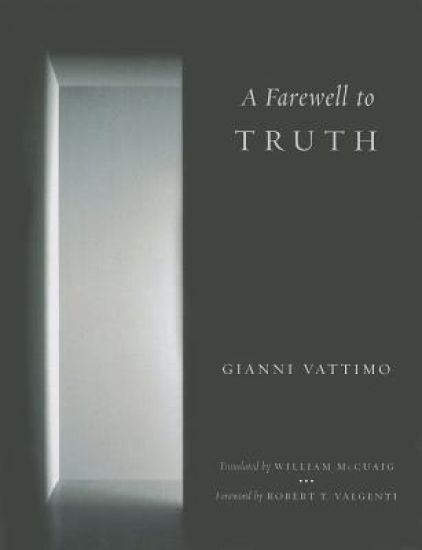
A Farewell to Truth

A Farewell to Truth

Gianni Vattimo; Robert T. Valgenti

Columbia University Press
2014
pokkari
With Western cultures becoming more pluralistic, the question of "truth" in politics has become a game of interpretations. Today, we face the demise of the very idea of truth as an objective description of facts, though many have yet to acknowledge that this is changing. Gianni Vattimo explicitly engages with the important consequences for democracy of our changing conception of politics and truth, such as a growing reluctance to ground politics in science, economics, and technology. Yet in Vattimo's conception, a farewell to truth can benefit democracy, exposing the unspoken issues that underlie all objective claims. The end of absolute truth challenges the legitimacy of policies based on perceived objective necessities--protecting the free market, for example, even if it devastates certain groups or classes. Vattimo calls for a truth that is constructed with consensus and a respect for the liberty of all. By taking into account the cultural paradigms of others, a more "truthful" society--freer and more democratic--becomes possible. In this book, Vattimo continues his reinterpretation of Christianity as a religion of charity and hope, freeing society from authoritarian, metaphysical dogmatism. He also extends Nietzsche's "death of God" to the death of an authoritarian God, ushering in a new, postreligious Christianity. He connects the thought of Martin Heidegger, Karl Marx, and Karl Popper with surprising results and accommodates modern science more than in his previous work, reconciling its validity with an insistence that knowledge is interpretive. Vattimo's philosophy justifies Western nihilism in its capacity to dispense with absolute truths. Ranging over politics, ethics, religion, and the history of philosophy, his reflections contribute deeply to a modern reconception of God, metaphysics, and the purpose of reality.
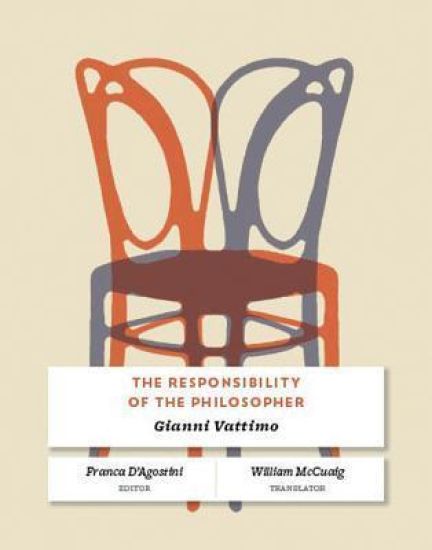
The Responsibility of the Philosopher

The Responsibility of the Philosopher

Gianni Vattimo

Columbia University Press
2012
pokkari
Over the course of his career, Gianni Vattimo has assumed a number of public and private identities and has pursued multiple intellectual paths. He seems to embody several contradictions, at once defending and questioning religion and critiquing and serving the state. Yet the diversity of his life and thought form the very essence of, as he sees it, the vocation and responsibility of the philosopher. In a world that desires quantifiable results and ideological expediency, the philosopher becomes the vital interpreter of the endlessly complex. As he outlines his ideas about the philosopher's role, Vattimo builds an important companion to his life's work. He confronts questions of science, religion, logic, literature, and truth, and passionately defends the power of hermeneutics to engage with life's conundrums. Vattimo conjures a clear vision of philosophy as something separate from the sciences and the humanities but also intimately connected to their processes, and he explicates a conception of truth that emphasizes fidelity and participation through dialogue.
Hermeneutic Communism

Hermeneutic Communism

Gianni Vattimo; Santiago Zabala

Columbia University Press
2011
sidottu
Having lost much of its political clout and theoretical power, communism no longer represents an appealing alternative to capitalism. In its original Marxist formulation, communism promised an ideal of development, but only through a logic of war, and while a number of reformist governments still promote this ideology, their legitimacy has steadily declined since the fall of the Berlin wall. Separating communism from its metaphysical foundations, which include an abiding faith in the immutable laws of history and an almost holy conception of the proletariat, Gianni Vattimo and Santiago Zabala recast Marx's theories at a time when capitalism's metaphysical moorings-in technology, empire, and industrialization-are buckling. While Michael Hardt and Antonio Negri call for a return of the revolutionary left, Vattimo and Zabala fear this would lead only to more violence and failed political policy. Instead, they adopt an antifoundationalist stance drawn from the hermeneutic thought of Martin Heidegger, Jacques Derrida, and Richard Rorty. Hermeneutic communism leaves aside the ideal of development and the general call for revolution; it relies on interpretation rather than truth and proves more flexible in different contexts. Hermeneutic communism motivates a resistance to capitalism's inequalities yet intervenes against violence and authoritarianism by emphasizing the interpretative nature of truth. Paralleling Vattimo and Zabala's well-known work on the weakening of religion, Hermeneutic Communism realizes the fully transformational, politically effective potential of Marxist thought.
A Farewell to Truth

A Farewell to Truth

Gianni Vattimo; Robert T. Valgenti

Columbia University Press
2011
sidottu
With Western cultures becoming more pluralistic, the question of "truth" in politics has become a game of interpretations. Today, we face the demise of the very idea of truth as an objective description of facts, though many have yet to acknowledge that this is changing. Gianni Vattimo explicitly engages with the important consequences for democracy of our changing conception of politics and truth, such as a growing reluctance to ground politics in science, economics, and technology. Yet in Vattimo's conception, a farewell to truth can benefit democracy, exposing the unspoken issues that underlie all objective claims. The end of absolute truth challenges the legitimacy of policies based on perceived objective necessities--protecting the free market, for example, even if it devastates certain groups or classes. Vattimo calls for a truth that is constructed with consensus and a respect for the liberty of all. By taking into account the cultural paradigms of others, a more "truthful" society--freer and more democratic--becomes possible. In this book, Vattimo continues his reinterpretation of Christianity as a religion of charity and hope, freeing society from authoritarian, metaphysical dogmatism. He also extends Nietzsche's "death of God" to the death of an authoritarian God, ushering in a new, postreligious Christianity. He connects the thought of Martin Heidegger, Karl Marx, and Karl Popper with surprising results and accommodates modern science more than in his previous work, reconciling its validity with an insistence that knowledge is interpretive. Vattimo's philosophy justifies Western nihilism in its capacity to dispense with absolute truths. Ranging over politics, ethics, religion, and the history of philosophy, his reflections contribute deeply to a modern reconception of God, metaphysics, and the purpose of reality.
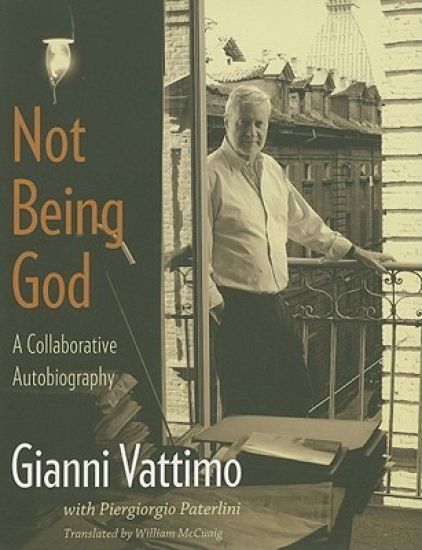
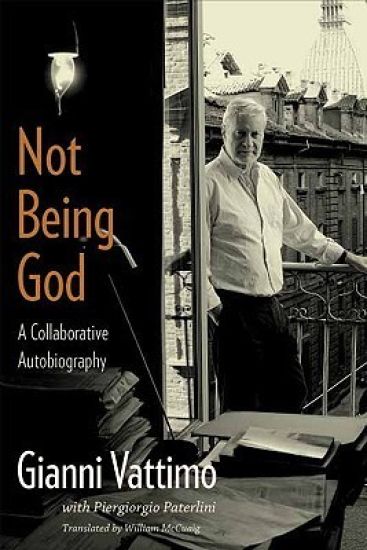
Not Being God

Not Being God

Gianni Vattimo

Columbia University Press
2010
pokkari
Gianni Vattimo, a leading philosopher of the continental school, has always resisted autobiography. But in this intimate memoir, the voice of Vattimo as thinker, political activist, and human being finds its expression on the page. With Piergiorgio Paterlini, a noted Italian writer and journalist, Vattimo reflects on a lifetime of politics, sexual radicalism, and philosophical exuberance in postwar Italy. Turin, the city where he was born and one of the intellectual capitals of Europe (also the city in which Nietzsche went mad), forms the core of his reminiscences, enhanced by fascinating vignettes of studying under Hans Georg Gadamer, teaching in the United States, serving as a public intellectual and interlocutor of Habermas and Derrida, and working within the European Parliament to unite Europe. Vattimo's status as a left-wing faculty president paradoxically made him a target of the Red Brigades in the 1970s, causing him to flee Turin for his life. Left-wing terrorism did not deter the philosopher from his quest for social progress, however, and in the 1980s, he introduced a daring formulation called "weak thought," which stripped metaphysics, science, religion, and all other absolute systems of their authority. Vattimo then became notorious both for his renewed commitment to the core values of Christianity (he was trained as a Catholic intellectual) and for the Vatican's denunciation of his views. Paterlini weaves his interviews with Vattimo into an utterly candid first-person portrait, creating a riveting text that is destined to become one of the most compelling accounts of homosexuality, history, politics, and philosophical invention in the twentieth century.
The Responsibility of the Philosopher

The Responsibility of the Philosopher

Gianni Vattimo

Columbia University Press
2010
sidottu
Over the course of his career, Gianni Vattimo has assumed a number of public and private identities and has pursued multiple intellectual paths. He seems to embody several contradictions, at once defending and questioning religion and critiquing and serving the state. Yet the diversity of his life and thought form the very essence of, as he sees it, the vocation and responsibility of the philosopher. In a world that desires quantifiable results and ideological expediency, the philosopher becomes the vital interpreter of the endlessly complex. As he outlines his ideas about the philosopher's role, Vattimo builds an important companion to his life's work. He confronts questions of science, religion, logic, literature, and truth, and passionately defends the power of hermeneutics to engage with life's conundrums. Vattimo conjures a clear vision of philosophy as something separate from the sciences and the humanities but also intimately connected to their processes, and he explicates a conception of truth that emphasizes fidelity and participation through dialogue.
Art’s Claim to Truth

Art’s Claim to Truth

Gianni Vattimo

Columbia University Press
2010
pokkari
First collected in Italy in 1985, Art's Claim to Truth is considered by many philosophers to be one of Gianni Vattimo's most important works. Newly revised for English readers, the book begins with a challenge to Plato, Aristotle, Kant, and Hegel, who viewed art as a metaphysical aspect of reality rather than a futuristic anticipation of it. Following Martin Heidegger's interpretation of the history of philosophy, Vattimo outlines the existential ontological conditions of aesthetics, paying particular attention to the works of Kandinsky, which reaffirm the ontological implications of art. Vattimo then builds on Hans-Georg Gadamer's theory of aesthetics and provides an alternative to a rationalistic-positivistic criticism of art. This is the heart of Vattimo's argument, and with it he demonstrates how hermeneutical philosophy reaffirms art's ontological status and makes clear the importance of hermeneutics for aesthetic studies. In the book's final section, Vattimo articulates the consequences of reclaiming the ontological status of aesthetics without its metaphysical implications, holding Aristotle's concept of beauty responsible for the dissolution of metaphysics itself. In its direct engagement with the works of Gadamer, Heidegger, and Luigi Pareyson, Art's Claim to Truth offers a better understanding of the work of Vattimo and a deeper knowledge of ontology, hermeneutics, and the philosophical examination of truth.
Christianity, Truth, and Weakening Faith

Christianity, Truth, and Weakening Faith

Gianni Vattimo; Rene Girard

Columbia University Press
2010
sidottu
The debate over the place of religion in secular, democratic societies dominates philosophical and intellectual discourse. These arguments often polarize around simplistic reductions, making efforts at reconciliation impossible. Yet more rational stances do exist, positions that broker a peace between relativism and religion in people's public, private, and ethical lives. Christianity, Truth, and Weakening Faith advances just such a dialogue, featuring the collaboration of two major philosophers known for their progressive approach to this issue. Seeking unity over difference, Gianni Vattimo and Rene Girard turn to Max Weber, Eric Auerbach, and Marcel Gauchet, among others, in their exploration of truth and liberty, relativism and faith, and the tensions of a world filled with new forms of religiously inspired violence. Vattimo and Girard ultimately conclude that secularism and the involvement (or lack thereof) of religion in governance are, in essence, produced by Christianity. In other words, Christianity is "the religion of the exit from religion," and democracy, civil rights, the free market, and individual freedoms are all facilitated by Christian culture. Through an exchange that is both intimate and enlightening, Vattimo and Girard share their unparalleled insight into the relationships among religion, modernity, and the role of Christianity, especially as it exists in our multicultural world.
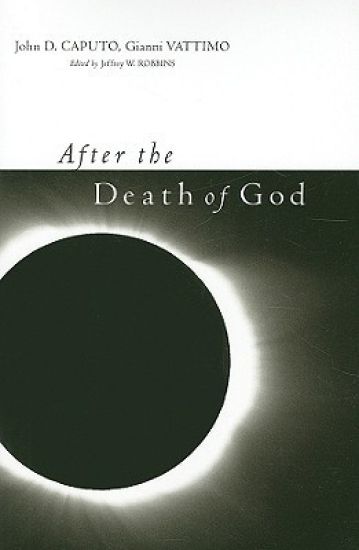
After the Death of God

After the Death of God

John D. Caputo; Gianni Vattimo

Columbia University Press
2009
pokkari
It has long been assumed that the more modern we become, the less religious we will be. Yet a recent resurrection in faith has challenged the certainty of this belief. In these original essays and interviews, leading hermeneutical philosophers and postmodern theorists John D. Caputo and Gianni Vattimo engage with each other's past and present work on the subject and reflect on our transition from secularism to postsecularism. As two of the figures who have contributed the most to the theoretical reflections on the contemporary philosophical turn to religion, Caputo and Vattimo explore the changes, distortions, and reforms that are a part of our postmodern faith and the forces shaping the religious imagination today. Incisively and imaginatively connecting their argument to issues ranging from terrorism to fanaticism and from politics to media and culture, these thinkers continue to reinvent the field of hermeneutic philosophy with wit, grace, and passion.
Not Being God

Not Being God

Gianni Vattimo

Columbia University Press
2009
sidottu
Gianni Vattimo, a leading philosopher of the continental school, has always resisted autobiography. But in this intimate memoir, the voice of Vattimo as thinker, political activist, and human being finds its expression on the page. With Piergiorgio Paterlini, a noted Italian writer and journalist, Vattimo reflects on a lifetime of politics, sexual radicalism, and philosophical exuberance in postwar Italy. Turin, the city where he was born and one of the intellectual capitals of Europe (also the city in which Nietzsche went mad), forms the core of his reminiscences, enhanced by fascinating vignettes of studying under Hans Georg Gadamer, teaching in the United States, serving as a public intellectual and interlocutor of Habermas and Derrida, and working within the European Parliament to unite Europe. Vattimo's status as a left-wing faculty president paradoxically made him a target of the Red Brigades in the 1970s, causing him to flee Turin for his life. Left-wing terrorism did not deter the philosopher from his quest for social progress, however, and in the 1980s, he introduced a daring formulation called "weak thought," which stripped metaphysics, science, religion, and all other absolute systems of their authority. Vattimo then became notorious both for his renewed commitment to the core values of Christianity (he was trained as a Catholic intellectual) and for the Vatican's denunciation of his views. Paterlini weaves his interviews with Vattimo into an utterly candid first-person portrait, creating a riveting text that is destined to become one of the most compelling accounts of homosexuality, history, politics, and philosophical invention in the twentieth century.