Kirjojen hintavertailu. Mukana 12 182 705 kirjaa ja 12 kauppaa.

Kirjailija

Giorgio Agamben

Kirjat ja teokset yhdessä paikassa: 139 kirjaa, julkaisuja vuosilta 1993-2027, suosituimpien joukossa The Body of Europe. Vertaile teosten hintoja ja tarkista saatavuus suomalaisista kirjakaupoista.

139 kirjaa

Kirjojen julkaisuhaarukka 1993-2027.

The Time of Thinking: The Le Thor Seminars with Heidegger (1966 and 1968)
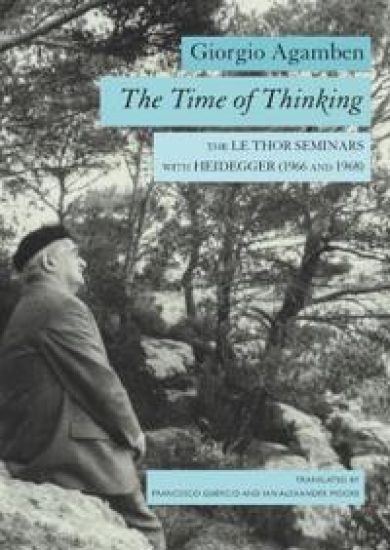
A glimpse into philosopher Giorgio Agamben's formative encounter with Martin Heidegger, told through his notes from the Le Thor seminars. What does it mean for thought to have a time of its own? In The Time of Thinking, Italian philosopher Giorgio Agamben presents the notes he took during two seminars with Martin Heidegger at Le Thor, Provence, preserving the compressed, working rhythm of a notebook while clarifying only what might otherwise be opaque. Throughout these pages, vignettes from Agamben's time in Le Thor--walking among pines to a precipitous viewpoint once painted by Paul C zanne, sitting in quiet recollection--open onto reflections on memory, youth, and the shape of a life not yet "filled in." Illustrated with archival materials, the book offers a small, carefully composed record of philosophical attention: not a retrospective monument, but a living trace of thought as it happens in time and place.
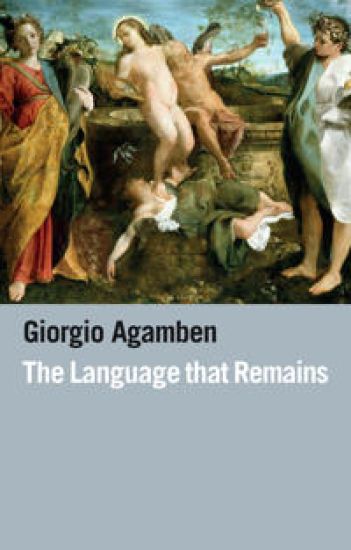
The Language That Remains

The Language That Remains

Giorgio Agamben

Polity Press
2026
nidottu
Time, language, and history: in this book Giorgio Agamben examines how, in Western culture, these three fundamental concepts have become tangled up in a knot that we can no longer unravel. From this perspective, the book considers the critical importance of chronology, which is not a neutral convention but the breach through which theology penetrates into history; the nexus between history and eschatology in the doctrine of the Antichrist and the dizzying recapitulation of the dying as they see their entire lives parade before their eyes; the mundus, which in Roman cities was the name of the threshold that connected the past and the present, the world of the living and the one of the dead; and the difference between Chronos, time that devours its children, and kairos, the moment when an opportunity is seized. And, in Hannah Arendt’s words, when everything seems to have lost its meaning, if what remains and what we bring with us is language, what is the language that remains?
The Spirit and the Letter

The Spirit and the Letter

Giorgio Agamben

SEAGULL BOOKS LONDON LTD
2026
sidottu
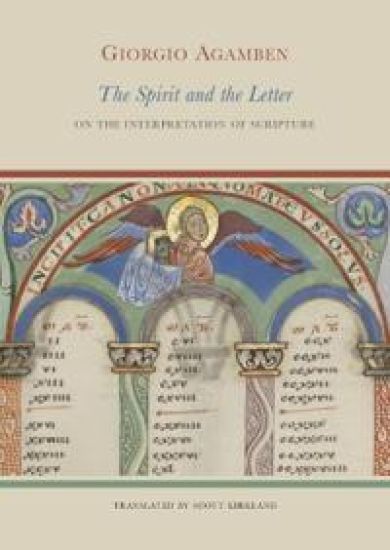
Distinguished philosopher Giorgio Agamben offers an archaeological inquiry into the problem of scriptural interpretation. The problem of interpreting Scripture—above all, sacred scripture, but ultimately any form of writing—coincides with the very history of Western culture. It is no surprise, then, that an archaeological inquiry such as the one proposed here—on the problem of interpretation from Origen to Auerbach, from the Talmud to Benjamin—might hold unexpected revelations. Essential reading for scholars of theology, religious studies, and hermeneutics interested in the history of scriptural interpretation, The Spirit and the Letter highlights how the interpretation of Scripture reveals itself as inseparable from ethics and politics.
The Spirit and the Letter: On the Interpretation of Scripture
Distinguished philosopher Giorgio Agamben offers an archaeological inquiry into the problem of scriptural interpretation. The problem of interpreting Scripture--above all, sacred scripture, but ultimately any form of writing--coincides with the very history of Western culture. It is no surprise, then, that an archaeological inquiry such as the one proposed here--on the problem of interpretation from Origen to Auerbach, from the Talmud to Benjamin--might hold unexpected revelations. Essential reading for scholars of theology, religious studies, and hermeneutics interested in the history of scriptural interpretation, The Spirit and the Letter highlights how the interpretation of Scripture reveals itself as inseparable from ethics and politics.
The Human Voice

The Human Voice

Giorgio Agamben

SEAGULL BOOKS LONDON LTD
2025
sidottu
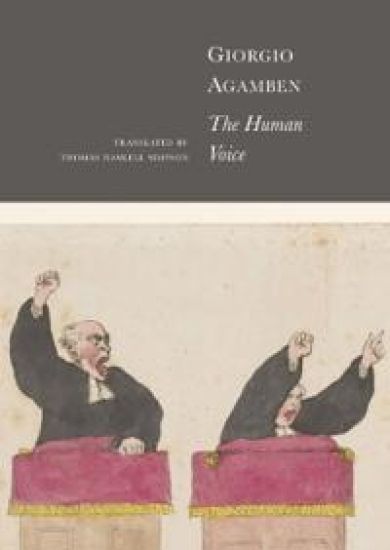
An inquiry into the origins of language and articulation, exploring how the transformation of the human voice shaped history, politics, and thought. What does it mean to have a voice—and how does it shape what it means to be human? In The Human Voice, Giorgio Agamben embarks on a profound exploration of how the human voice transforms from mere sound into meaningful articulation, setting humans apart from the animal world. Tracing this transformation through ancient grammar and the history of writing, he unpacks the intricate relationship between voice and language, and the living being and the speaking subject. Through a meticulous philosophical inquiry, Agamben reconstructs the mechanisms by which articulation turns expression into knowledge, revealing how the voice is the way we define humanity. This study reaches beyond linguistics, touching on politics and history, as it interrogates the enduring question of what—and who—is considered fully human.
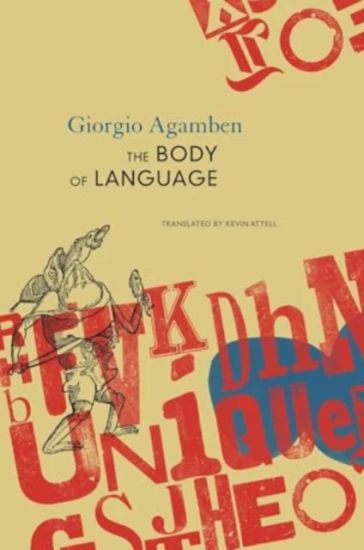
The Body of Language

The Body of Language

Giorgio Agamben

SEAGULL BOOKS LONDON LTD
2025
sidottu
An erudite exploration of transgressive language from the Renaissance by one of Europe’s greatest living philosophers. This book explores how early modern authors broke linguistic boundaries, creating new words and languages that challenged traditional grammar and lexicon, providing historical insight into today’s debates on the politics of language. Through a scholarly analysis by Giorgio Agamben, the text delves into the boundary-shifting language of the Renaissance, exemplified by giants like Pantagruel and Gargantua, whose outsized bodies mirror the vastness of their speech. The macaronic language invented by Teofilo Folengo, blending Latin and vernacular, embodies a linguistic rebellion that transforms language into a tangible, unruly force. Featuring illustrations from the Songes drolatiques de Pantagruel and Folengo’s Baldo, this volume offers a vivid portrayal of language as a physical, dynamic entity that defies grammatical norms.
Bezumie Gjolderlina. Zhizn, podelennaja nadvoe
Izvestnyj italjanskij filosof Dzhordzho Agamben analiziruet zhizn i tvorchestvo odnogo iz velichajshikh poetov Evropy - Fridrikha Gjolderlina.V etoj neobychnoj khronike Agamben obraschaetsja k poslednim desjatiletijam zhizni poeta, kotorye tot v sostojanii bezumija provel v bashne na beregu Nekkara. No dejstvitelno li eto bylo bezumie - ili forma soprotivlenija? Avtor issleduet, kak "obitajuschaja zhizn" poeta - mezhdu publichnym i chastnym, mezhdu rechju i molchaniem - stanovitsja modelju suschestvovanija vne normalnosti i vne vremeni.Cherez pisma, fragmenty stikhov, svidetelstva sovremennikov i sobstvennye filosofskie razmyshlenija Agamben pokazyvaet: izoljatsija Gjolderlina - eto ne prosto bolezn, a obraz bytija, politicheskoe i poeticheskoe vyskazyvanie o nevozmozhnosti byt ponjatym v svoem vremeni. Eta kniga ne o diagnoze, a o sudbe, v kotoroj poezija stanovitsja poslednej formoj svobody.
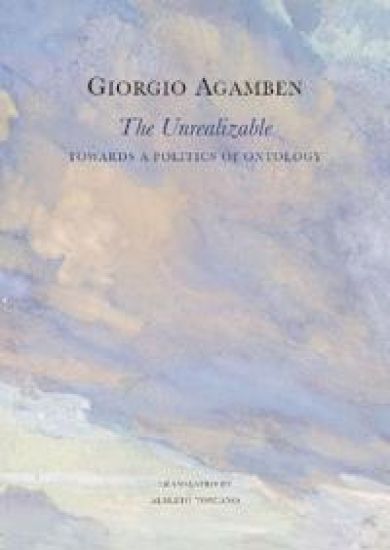
The Unrealizable

The Unrealizable

Giorgio Agamben

SEAGULL BOOKS LONDON LTD
2025
sidottu
A patient, genealogical investigation of the dichotomies that are foundational to the Western philosophical tradition. We are so used to distinguishing between the possible and the real, between essence and existence that we do not realize that these distinctions, which seem so obvious to us, are the result of a long and laborious process that has led to the splitting of being—the “matter” of thought—into two fragments that are both conflicting and intimately intertwined. This book argues that the ontological-political machine of the West is based on the splitting of this “matter,” without which neither science nor politics would be possible. Without the partition of reality into essence and existence and into possibility and actuality, neither scientific knowledge nor the ability to control human action—which characterizes the historical power of the West—would have been possible. If we could not suspend the exclusive concentration of our attention on what immediately exists (as animals seem to do), to think and define its essence, Western science and technology would not have experienced the advances that characterize them. And if the dimension of possibility disappeared entirely, neither plans nor projects would be thinkable, and human actions could be neither directed nor controlled. The incomparable power of the West has one of its essential presuppositions in this ontological machine.
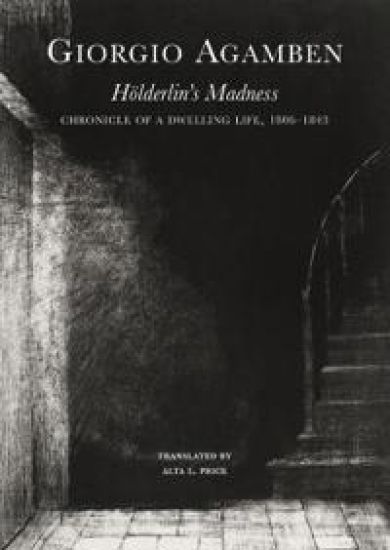
Hölderlin’s Madness

Hölderlin’s Madness

Giorgio Agamben

SEAGULL BOOKS LONDON LTD
2024
nidottu
One of Europe’s greatest living philosophers, Giorgio Agamben, analyzes the life and work of one of Europe’s greatest poets, Friedrich Hölderlin. What does it mean to inhabit a place or a self? What is a habit? And, for human beings, doesn’t living mean—first and foremost—inhabiting? Pairing a detailed chronology of German poet Friedrich Hölderlin’s years of purported madness with a new examination of texts often considered unreadable, Giorgio Agamben's new book aims to describe and comprehend a life that the poet himself called habitual and inhabited. Hölderlin’s life was split neatly in two: his first 36 years, from 1770 to 1806; and the 36 years from 1807 to 1843, which he spent as a madman holed up in the home of Ernst Zimmer, a carpenter. The poet lived the first half of his existence out and about in the broader world, relatively engaged with current events, only to then spend the second half entirely cut off from the outside world. Despite occasional visitors, it was as if a wall separated him from all external events and relationships. For reasons that may well eventually become clear, Hölderlin chose to expunge all character—historical, social, or otherwise—from the actions and gestures of his daily life. According to his earliest biographer, he often stubbornly repeated, “nothing happens to me.” Such a life can only be the subject of a chronology—not a biography, much less a clinical or psychological analysis. Nevertheless, this book suggests that this is precisely how Hölderlin offers humanity an entirely other notion of what it means to live. Although we have yet to grasp the political significance of his unprecedented way of life, it now clearly speaks directly to our own.
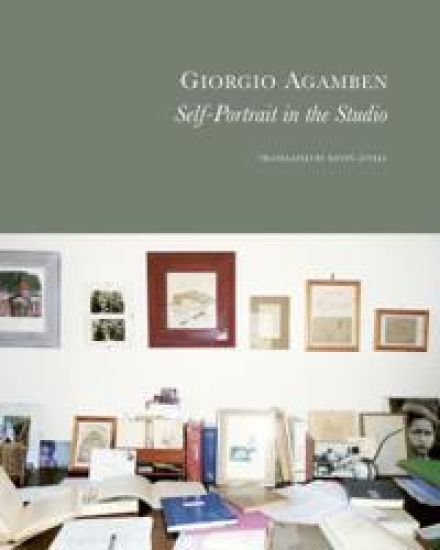
Self-Portrait in the Studio

Self-Portrait in the Studio

Giorgio Agamben

SEAGULL BOOKS LONDON LTD
2024
sidottu
A rare autobiographical glimpse into the life and influences of one of Europe's greatest living philosophers. This book’s title, Self-Portrait in the Studio—a familiar iconographic subject in the history of painting—is intended to be taken literally: the book is a self-portrait, but one that comes into view for the reader only by way of patient scrutiny of the images, photographs, objects, and paintings present in the studios where the writer has worked and still works. That is to say, Giorgio Agamben’s wager is to speak of himself solely and uniquely by speaking of others: the poets, philosophers, painters, musicians, friends, passions—in short, the meetings and encounters that have shaped his life, thought, and writing, from Martin Heidegger to Elsa Morante, from Herman Melville to Walter Benjamin, from Giorgio Caproni to Giovanni Urbani. For this reason, images are an integral part of the book, images that—like those in a rebus that together form another, larger image—ultimately combine with the written text in one of the most unusual self-portraits that any writer has left of himself: not an autobiography, but a faithful and timeless auto-heterography.
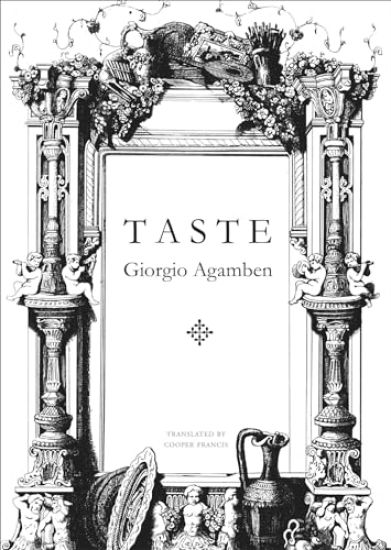
Taste

Taste

Giorgio Agamben

SEAGULL BOOKS LONDON LTD
2024
nidottu
Italian philosopher Giorgio Agamben takes a close look at why the sense of taste has not historically been appreciated as a means to know and experience pleasure or why it has always been considered inferior to actual theoretical knowledge. Taste, Agamben argues, is a category that has much to reveal to the contemporary world. Taking a step into the history of philosophy and reaching to the very origins of aesthetics, Agamben critically recovers the roots of one of Western culture’s cardinal concepts. Agamben is the rare writer whose ideas and works have a broad appeal across many fields, and with Taste he turns his critical eye to the realm of Western art and aesthetic practice. This volume will not only engage the author’s devoted fans in philosophy, sociology, and literary criticism but also his growing audience among art theorists and historians.
Nymphs

Nymphs

Giorgio Agamben

SEAGULL BOOKS LONDON LTD
2024
nidottu
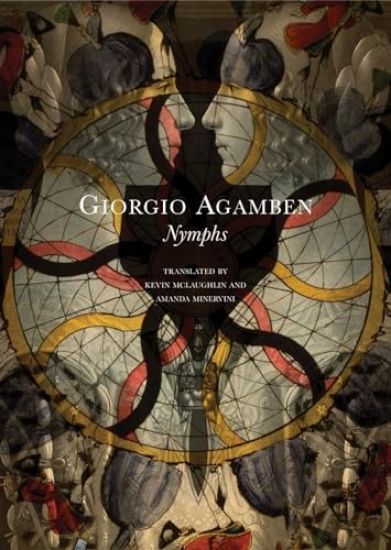
Agamben is the rare writer whose ideas and works have a broad appeal across many fields, and Nymphs will engage not only the author’s devoted fans in philosophy, legal theory, sociology, and literary criticism but also his growing audience among art theorists and historians as well. In 1900, art historians André Jolles and Aby Warburg constructed an experimental dialogue in which Jolles supposed he had fallen in love with the figure of a young woman in a painting: “A fantastic figure—shall I call her a servant girl, or rather a classical nymph?…what is the meaning of it all?…Who is the nymph? Where does she come from?” Warburg’s response: “in essence she is an elemental spirit, a pagan goddess in exile,” serves as the touchstone for this wide-ranging and theoretical exploration of female representation in iconography. In Nymphs, the newest translation of Italian philosopher Giorgio Agamben’s work, the author notes that academic research has lingered on the “pagan goddess,” while the concept of “elemental spirit,” ignored by scholars, is vital to the history of iconography. Tracing the genealogy of this idea, Agamben goes on to examine subjects as diverse as the aesthetic theories of choreographer Domineco da Piacenza, Friedrich Theodor Vischer’s essay on the “symbol,” Walter Benjamin’s concept of the dialectic image, and the bizarre discoveries of photographer Nathan Lerner in 1972. From these investigations, there emerges a startlingly original exploration of the ideas of time and the image.
First Philosophy Last Philosophy

First Philosophy Last Philosophy

Giorgio Agamben

JOHN WILEY AND SONS LTD
2024
sidottu
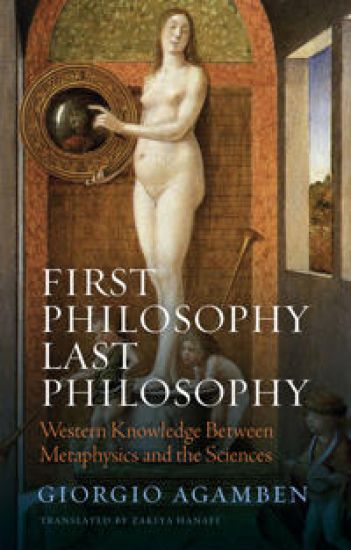
What is at stake in that form of inquiry that the western philosophical tradition has called “first philosophy” or “metaphysics”? Is it an abstract, now outmoded branch of philosophy, or does it address a problem that is still of great interest – namely the unity of western knowledge? In fact, metaphysics is “first” only in relation to the other two sciences that Aristotle called “theoretical”: the study of nature (phusike) and mathematics. It is the strategic sense of this “primacy” that needs to be examined, because what is at issue here is nothing less than the relationship – of domination or subservience, conflict or harmony – between philosophy and science. The hypothesis of this book is that philosophy’s attempt to use metaphysics as a way of securing primacy among the sciences has resulted instead in its subservience: philosophy, once handmaiden to theology (ancilla theologiae), has now become more or less consciously handmaiden to the sciences (ancilla scientiarum). So it is all the more urgent to explore the nature and limits of this primacy and subservience, which is what the present book does through an archaeological investigation of metaphysics. This important rereading of the western philosophical tradition by a leading thinker will be of interest to students and scholars in philosophy, critical theory and the humanities more generally, and to anyone interested in contemporary philosophy and European thought.
First Philosophy Last Philosophy

First Philosophy Last Philosophy

Giorgio Agamben

JOHN WILEY AND SONS LTD
2024
nidottu
What is at stake in that form of inquiry that the western philosophical tradition has called “first philosophy” or “metaphysics”? Is it an abstract, now outmoded branch of philosophy, or does it address a problem that is still of great interest – namely the unity of western knowledge? In fact, metaphysics is “first” only in relation to the other two sciences that Aristotle called “theoretical”: the study of nature (phusike) and mathematics. It is the strategic sense of this “primacy” that needs to be examined, because what is at issue here is nothing less than the relationship – of domination or subservience, conflict or harmony – between philosophy and science. The hypothesis of this book is that philosophy’s attempt to use metaphysics as a way of securing primacy among the sciences has resulted instead in its subservience: philosophy, once handmaiden to theology (ancilla theologiae), has now become more or less consciously handmaiden to the sciences (ancilla scientiarum). So it is all the more urgent to explore the nature and limits of this primacy and subservience, which is what the present book does through an archaeological investigation of metaphysics. This important rereading of the western philosophical tradition by a leading thinker will be of interest to students and scholars in philosophy, critical theory and the humanities more generally, and to anyone interested in contemporary philosophy and European thought.