Kirjojen hintavertailu. Mukana 12 390 323 kirjaa ja 12 kauppaa.

Kirjailija

Gordon L. Rottman

Kirjat ja teokset yhdessä paikassa: 101 kirjaa, julkaisuja vuosilta 1985-2024, suosituimpien joukossa Peleliu 1944. Vertaile teosten hintoja ja tarkista saatavuus suomalaisista kirjakaupoista.

Mukana myös kirjoitusasut: Gordon L Rottman

101 kirjaa

Kirjojen julkaisuhaarukka 1985-2024.

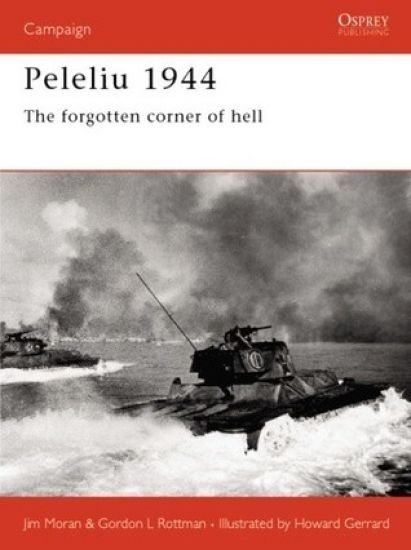
Peleliu 1944

Peleliu 1944

Jim Moran; Gordon L. Rottman

Osprey Publishing
2002
nidottu
A highly-illustrated examination of the controversial battle for Peleliu.Equalling Tarawa, Iwo Jima and Okinawa in scale and ferocity, Peleliu has long been regarded as the Pacific War’s “forgotten battle”, and perhaps one that should never have been fought. A massive carrier-based attack some weeks before the invasion destroyed all aircraft and shipping in the area and virtually isolated the Japanese garrison. 1st Marine Division commander, General Rupertus, made extravagant claims that the capture of Peleliu would “only take three days – maybe two.” But the Japanese fought a bloody battle of attrition from prepared positions and, in a struggle of unprecedented savagery, a whole Marine Division was bled white.

Hunters Island

Hunters Island

Gordon L Rottman

Casemate Publishers
2024
nidottu
Private Henrik Hahnemann is an eighteen-year-old Missouri farm boy growing up in the hard scrabble times of the Great Depression. Known for his hunting skills, his close-knit family often depend on him to bring home dinner. Shaken and bitter by the attack on Pearl Harbor, he is fixated on revenge and chooses the Marine Corps as the means for his personal retribution. Granted an early high school graduation, "Handyman" Henrik struggled with the change from a peaceful famer's son, but his platoon come to recognize his shooting and hunting skills. When the chips were down he summons the determination necessary to survive against hopeless odds. Superior Private Obatia Yoshiro is an average twenty-year-old student expected to eventually take over his father's glassworks. To most an unassuming economics student, he has another side – a side shaped by long hours crewing an uncle's fishing boat where he is exposed to the physical and mental demands of the elements. His school plans suddenly undermined by a draft notice, he makes the best of a dismal and brutal life of absolute obligation and unquestioning obedience. Both will end up on a rugged and brutal South Pacific island called Guadalcanal, where, two determined nations pit all they could spare; committing every airplane, ship, and soldier they could funnel into the cauldron. Values and beliefs, discipline and obedience, massed firepower or skill at arms – what will prevail in this nightmare?
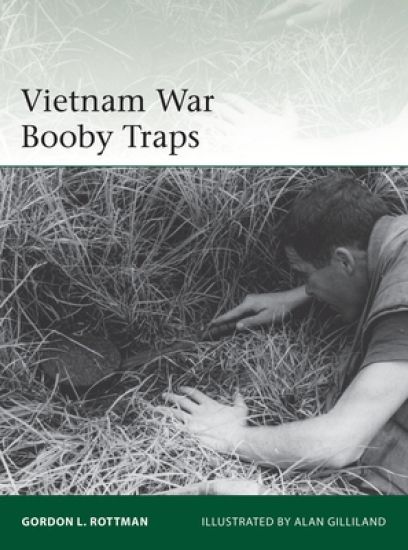
Vietnam War Booby Traps

Vietnam War Booby Traps

Gordon L. Rottman

Osprey Publishing
2020
nidottu
During the Vietnam War, the Viet Cong were frequently unable to hold their own in stand-up fights against US and allied forces who were superior in strength, firepower, mobility, and logistics. They relied instead on traditional guerrilla warfare tactics including small-scale hit- and-run attacks, ambushes, terrorist actions, and precision attacks against bases. These included one of the oldest of guerrilla weapons – the boobytrap.Booby traps could be made in large numbers in village workshops and jungle camps using locally available materials as well as modern munitions. The VC were adept at making booby traps ‘invisible’ in the varied terrain of Vietnam, often emplacing them in locations and surroundings totally unexpected by their enemies. Booby traps could be incredibly simple or startlingly complex and ingenious, ranging from pointed sticks to command-detonated submerged floating river mines. Besides a wide variety of booby traps, they also used land and water mines, both contact/pressure-detonated and command-detonated. Between January 1965 and June 1970 11 percent of US troop deaths in action and 17 percent of injuries were by caused booby traps and mines.This fascinating title explores not only the wide variety of booby traps employed by the Viet Cong, but also their various uses in halting, stalling, or locating an enemy, and the many evolutions these traps underwent in order to retain the element of surprise. Written by a Vietnam veteran with first-hand experience of such traps, this is an engaging look at one of the most frightening aspects of guerrilla warfare.
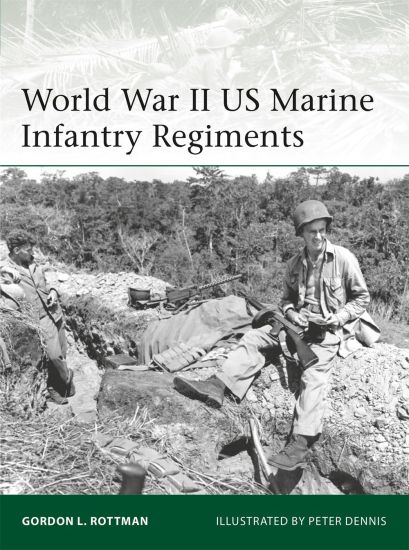
World War II US Marine Infantry Regiments

World War II US Marine Infantry Regiments

Gordon L. Rottman

Osprey Publishing
2018
nidottu
From Guadalcanal to Okinawa, US Marines formed the tip of the spear as Allied forces sought to push the Japanese back to their Home Islands.The United States Marine Corps came into its own in the Pacific Islands campaign against Japan in World War II. This fascinating study tracks the deployments of the various Marine divisions throughout the war and explains their composition, but also goes deeper, to detail the individual regiments – the focus of the marines' identity and pride. It explains the organization of the Marine infantry regiment and its equipment, and how they evolved during the war.The marine infantryman's evolving uniforms, field equipment and weapons are illustrated throughout using specially commissioned artwork and detailed descriptions to produce a fitting portrait of the US military’s elite fighting force in the Pacific.
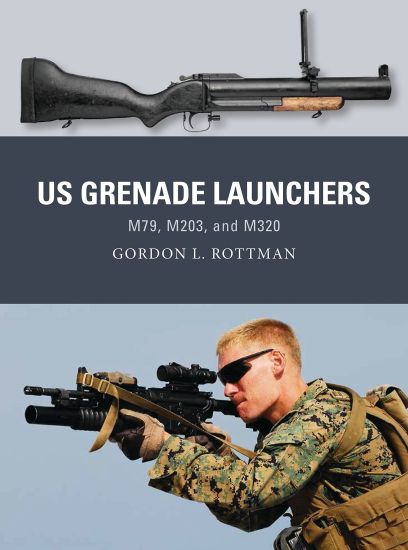
US Grenade Launchers

US Grenade Launchers

Gordon L. Rottman

Osprey Publishing
2017
nidottu
In an effort to provide the US infantryman with more firepower to cover the range gap between the hand grenade and the light mortar, the 40mm M79 grenade launcher – a shoulder-fired, single-shot weapon – entered service with US forces in 1961.Reliable, easy to use, and lethally effective, the M79 soon became an iconic symbol of the Vietnam War and had a profound influence on small-unit tactics. As the Vietnam conflict continued, it was joined on the front line by experimental models such as the magazine-fed T148E1, as well as two launchers intended to be fitted under the barrel of the new M16 assault rifle: Colt’s XM148 and AAI Corporation’s M203. The M203 remains in US Army service today, while the US Marine Corps now also fields the M32 multiple grenade launcher – like the M79, a standalone weapon. Featuring full-colour artwork, this is the story of the rugged and formidable grenade launchers that equipped the United States and its allies in Vietnam and beyond from the 1960s to the present day.
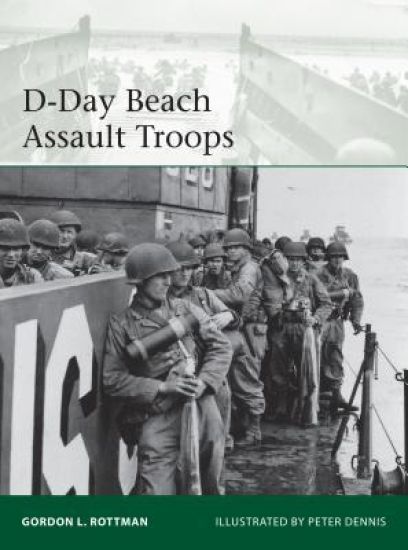
D-Day Beach Assault Troops

D-Day Beach Assault Troops

Gordon L. Rottman

Osprey Publishing
2017
nidottu
In the early hours of June 6, 1944, the first of over 150,000 Allied soldiers stormed five beaches in Normandy against fierce German resistance. They were specially trained and task-organized in a range of different landing teams depending on their means of transport, their tasks, and the resistance they anticipated. The first assault infantry were accompanied by tankers, combat engineers, and other specialist personnel, to breach German obstacles, knock out defensive positions, and to defend and prepare the beaches for the follow-on waves. On some beaches the plans worked, on others they were disrupted by bad weather, faulty timing, or enemy fire, with consequences that varied from survivable confusion to absolute carnage. This is an in-depth study of the uniforms, equipment, weapons, passage, landings, and tactics of US, British and Canadian assault units during the period from before H-Hour on June 6 to dawn on June 7.
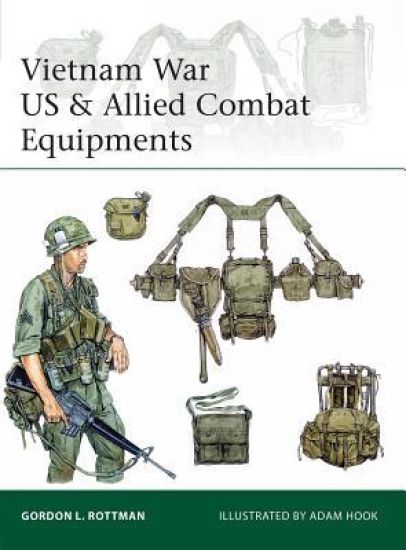
Vietnam War US & Allied Combat Equipments

Vietnam War US & Allied Combat Equipments

Gordon L. Rottman

Osprey Publishing
2017
nidottu
A complete illustrated guide to everything that Vietnam-era American GIs and their allies carried into battle including all the belts, pouches and packs.Over the eight years of the Vietnam War, US forces used three major types of equipment sets, with numerous modifications for particular circumstances. Different equipments were also used by Special Forces, the South Vietnamese, and other allied ground troops. Written by a Special Forces veteran of the conflict, Vietnam War US & Allied Combat Equipments offers a comprehensive examination of the gear that US and allied soldiers had strapped around their bodies, what they contained, and what those items were used for.Fully illustrated with photographs and artwork detailing how each piece of equipment was used, this book will fascinate enthusiasts of military equipment and is an ideal reference guide for re-enactors, modellers and collectors of Vietnam War memorabilia.
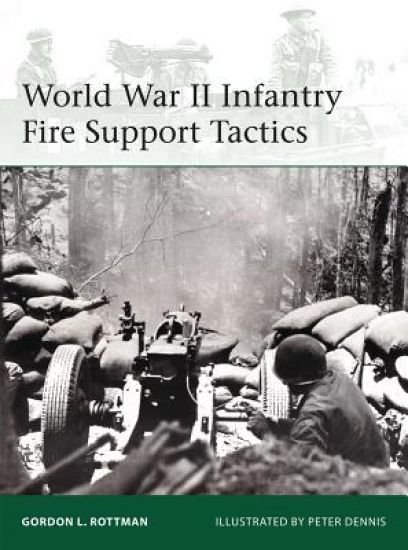
World War II Infantry Fire Support Tactics

World War II Infantry Fire Support Tactics

Gordon L. Rottman

Osprey Publishing
2016
nidottu
As infantry units advanced across Europe the only support they could rely on from day to day was that provided by the heavy weapons of their own units.While thundering tanks struck fear into the hearts of their enemies it was the machine guns, mortars and light cannon that proved to be most important, causing the majority of casualties suffered during World War II. Common principles were shared across units but the wide variety of weapons available to the different armies altered the way they were used in battle.Focusing on the US, British, German and Soviet troops, this title offers a comprehensive guide to infantry fire support tactics used through World War II. Combat reports are complemented by specially commissioned artwork to show the way in which tactics varied, and highlight how developments obliged opposing armies to review their own methods.
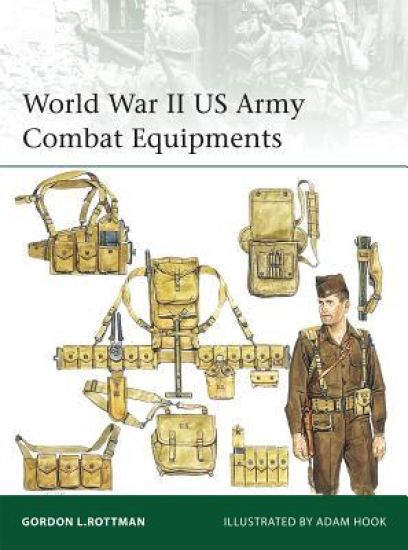
World War II US Army Combat Equipments

World War II US Army Combat Equipments

Gordon L. Rottman

Osprey Publishing
2016
nidottu
Belts, ammo pouches and bags, weapons holsters and cases, canteens, mess and first aid kit, packs, tools and bivouac equipment - a comprehensive illustrated guide to exactly what the World War II GI carried on the battlefield.A soldier’s “web gear” is as important to his ability to live and fight on the battlefield as are his clothing and weapons. In World War II the US Army issued equipment items that had originated in 1910, though modified and augmented in the 1920s and 1930s, and again during the war itself as a result of combat experience.This book describes and illustrates the great majority of the personal equipment provided for infantry riflemen, GIs armed with other weapons and their ammunition-bearers, officers, and medics. In addition to the web gear itself it covers canteens, mess kit, and first aid items; weapons-related and other specialist items; the long struggle to produce a practical backpack; bivouac and shelter gear, and the most commonly carried tools. The text also explains the basics of materials, colors, markings, nomenclature, and weights for the guidance of collectors.It is illustrated with wartime photos and color close-ups, and the wide-ranging color plates specially prepared for this book offer more than 130 images.
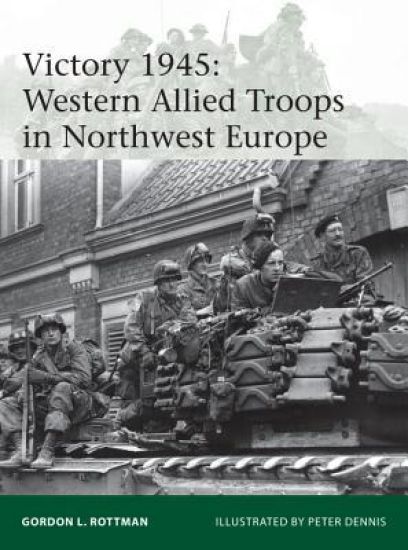
Victory 1945

Victory 1945

Gordon L. Rottman

Osprey Publishing
2015
nidottu
Even when Western Allied troops gained a foothold in Normandy, World War II in Europe was far from over. The route to Germany’s interior and the Nazis final surrender was long, arduous and blood-stained.The Wehrmacht’s stubborn resistance and the shocking losses suffered by US, British, Canadian and ‘Free European’ troops meant that the Allies had to adapt and refine small-unit tactics, battle-drills, and their use of weapons and munitions. The troops who finally met up with the Red Army in Germany were a very different fighting force to the one that struggled up the beaches of northern France. This book offers a comprehensive guide to the late-war Allied troops, exploring their uniforms, equipment, organization and tactics.With emphasis on lessons learned since D-Day, detailed description and accurate colour pictures illustrate the means by which the Allied troops on the ground evolved to the point of winning the war on the Western Front.
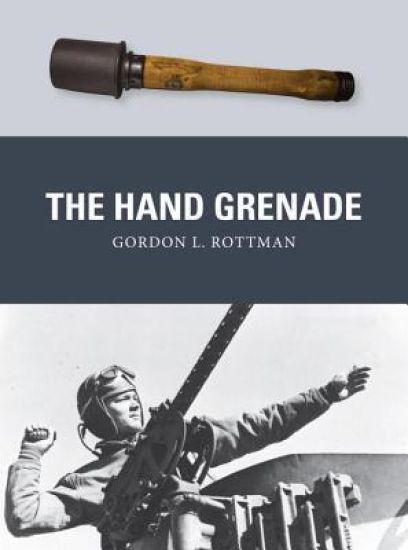
The Hand Grenade

The Hand Grenade

Gordon L. Rottman

Osprey Publishing
2015
nidottu
Allowing the user to inflict damage on his opponent within throwing range without leaving cover, the portable, lethally efficient hand grenade is a ubiquitous weapon of modern warfare, and has now found its way into law-enforcement arsenals too. Featuring specially commissioned full-colour artwork and an array of revealing photographs of grenades in use and in close-up, this engaging study explores and assesses the origins, development, combat use, and lasting legacy of the formidable military hand grenade.
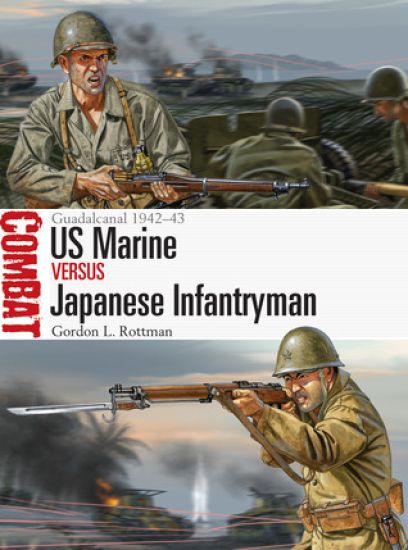
US Marine vs Japanese Infantryman

US Marine vs Japanese Infantryman

Gordon L. Rottman

Osprey Publishing
2014
nidottu
The brutal fighting between US Marines and Japanese infantry on the island of Guadalcanal in many ways came to typify the island-hopping war in the Pacific.This book not only explores the differing tactics and equipment used by the two combatants but also shows how the challenges of fighting in inhospitable tropical jungles impacted on soldiers on the ground, as combatants had to deal not only with their determined opponents but also the twin issues of disease and stretched supply lines.Written by a former special forces veteran with extensive knowledge of jungle warfare, this fully illustrated book lifts the veil on one of the most pivotal and ferocious close combat duels of World War II.
Panzerfaust and Panzerschreck

Panzerfaust and Panzerschreck

Gordon L. Rottman

Osprey Publishing
2014
nidottu
Two of World War II’s most distinctive weapons, the Panzerfaust and Panzerschreck offered German and other infantrymen the ability to destroy enemy tanks singlehandedly at close ranges. While the Panzerschreck owed its origins largely to the US bazooka, the Panzerfaust was a revolutionary design that was unlike any previous weapon, and went on to influence anti-tank technology and tactics for decades after World War II. Allied troops, notably Soviet forces, made widespread use of captured Panzerfäuste, and they were also supplied to German allies such as Finland, Hungary and Bulgaria. Written by an expert on anti-tank warfare, this book reveals the fascinating development history of these two feared weapons and assesses the tactics that were employed by the soldiers using them.
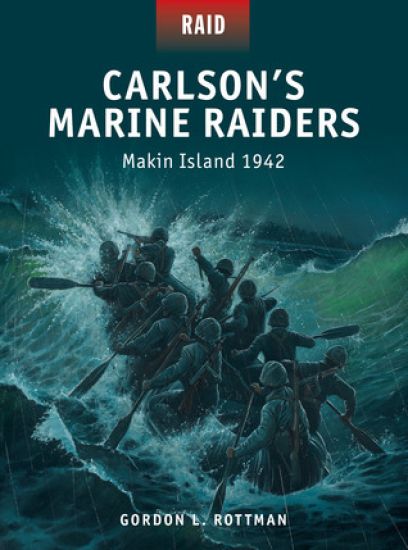
Carlson’s Marine Raiders

Carlson’s Marine Raiders

Gordon L. Rottman

Osprey Publishing
2014
nidottu
On August 17–18, 1942, 211 men of the US Marine Corps’ 2nd Raider Battalion conducted a daring amphibious raid on the Japanese-occupied Makin Island in the South Pacific. This ambitious but flawed operation was intended to divert Japanese reinforcements bound for Guadalcanal, over 1,000 miles to the southwest, in the wake of the US landings there ten days earlier; the Raiders were to destroy the seaplane base and radio station, take prisoners, and collect intelligence. Although yielding limited results, it was to be an invaluable test of the innovative training and tactics employed by the Raiders, and a crucial boost to national morale at this difficult stage in the war. Featuring specially commissioned full-colour artwork and expert analysis, this gripping account of the fateful Makin Raid tells the whole story, from the plan’s conception to its troubled execution and aftermath.
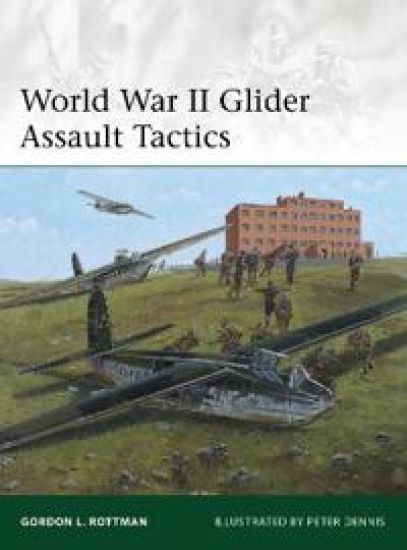
World War II Glider Assault Tactics

World War II Glider Assault Tactics

Gordon L. Rottman

Osprey Publishing
2014
nidottu
Featuring specially commissioned full-color artwork, the story of the perilous glider assaults carried out by the men who sometimes led and sometimes followed World War II paratroopers onto their objectives.Military gliders came of age in World War II, when glider assault infantry were the forerunners of today’s helicopter-delivered airmobile troops. From the light pre-war sports and training machines, several nations developed troop-carrying gliders capable of getting a whole squad or more of infantry, with heavy weapons, onto the ground quickly, with the equipment that paratroopers simply could not carry. They made up at least one-third of the strength of US, British, and German airborne divisions in major battles, and they also carried out several daring coup de main raids and spearhead operations. However, the dangers were extreme, the techniques were difficult, the losses were heavy (particularly during night operations), and the day of the glider assault was relatively brief.This book explains the development and organization of glider troops, their mounts, and the air squadrons formed to tow them, the steep and costly learning-curve and the tactics that such troops learned to employ once they arrived on the battlefield.
Browning .30-caliber Machine Guns

Browning .30-caliber Machine Guns

Gordon L. Rottman

Osprey Publishing
2014
nidottu
First adopted in 1917, the rugged and reliable Browning .30-caliber machine gun remained in US service into the Vietnam era, and is still occasionally found in use elsewhere even today. Produced in both water-cooled and air-cooled versions, it has been employed in every imaginable role for a machine gun – antipersonnel, antiaircraft, mounted on aircraft as both defensive and offensive armament, defensive armament aboard vehicles (armored and soft-skin), mounted on watercraft, and others. Employing gripping first-hand testimony and featuring specially commissioned illustrations and detailed photographs, many in color, this lively study of the Browning .30-caliber machine gun reveals the origins, combat history and legacy of this versatile and dependable weapon.
US World War II Parachute Infantry Regiments

US World War II Parachute Infantry Regiments

Gordon L. Rottman

Osprey Publishing
2014
nidottu
The parachute infantry regiments were among the most highly decorated US Army units of World War II, and between them they saw action right across the world.The elite nature of these units led to them being committed to action not only in the way that had been intended; their quality tempted commanders to keep them in the line longer than their light armament justified, and they were tested to the limit. This engaging study traces the story of each of the 17 regiments, from their creation and training in the USA, through their deployments overseas, to their combat jumps and all their battles.The book is illustrated with wartime photographs, many previously unpublished, and eight full-colour plates detailing the specifics of their uniforms, insignia, and equipment practices, which often differed from unit to unit.
World War II River Assault Tactics

World War II River Assault Tactics

Gordon L. Rottman

Osprey Publishing
2013
nidottu
On the major European and Russian fronts throughout World War II, the challenge of crossing rivers under fire was absolutely central to any advance.The Panzers that crossed the Meuse at Sedan in May 1940 cut the French Army in two. The Wehrmacht’s ability to cross the great rivers of the western USSR was vital to the lightning advances of Operation Barbarossa in 1941, and in 1943–45 the Red Army had to drive the Germans back from a succession of river lines during their advance to the Reich, culminating in the Vistula and Oder lines.With World War II armies dependent on heavy mechanized equipment, the function which rivers played became essential for soldiers in all sides of the war. World War II River Assault Tactics details the methods, means and analysis of specific successes and failures.Featuring a wealth of wartime photos, particularly from German sources, and full-colour plates illustrating tactical scenarios, the subject is brought to life.
US 10th Mountain Division in World War II

US 10th Mountain Division in World War II

Gordon L. Rottman

Osprey Publishing
2012
nidottu
The 10th was the only US mountain division to be raised in World War II, and still has a high profile, having been involved in operations from Iraq to Somalia and from Haiti to Afghanistan.It did not arrive in Europe until winter 1944/45, but then fought hard in the harsh mountainous terrain of Northern Italy. The division was special in a number of ways. Its personnel were selected for physical fitness and experience in winter sports, mountaineering, and hunting, unlike the rest of the infantry. It was highly trained in mountain and winter warfare, including the use of skis and snowshoes, while its organization, field clothing, and some personal equipment also differed from that of the usual infantry division. The division made extensive use of pack-mules, and its reconnaissance unit was horse-mounted, conducting the last horse-mounted charge in US history in April 1945.Featuring full-color artwork and rare photographs, this is the gripping story of the US Army's only mountain division in action during the closing months of World War II.
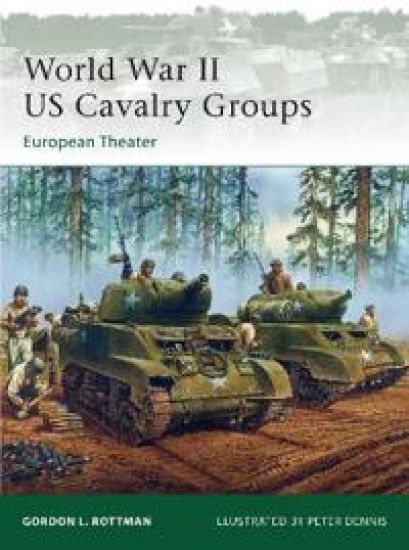
World War II US Cavalry Groups

World War II US Cavalry Groups

Gordon L. Rottman

Osprey Publishing
2012
nidottu
An introduction to the US Cavalry units equipped with light armor and their role in the European Theater during World War II.The cavalry regiments of the US Army were in the process of being transformed into a mechanized force when the USA entered World War II. While those cavalry regiments deployed to the Pacific to fight the Japanese were turned into infantry units, those sent to Europe were employed as light armor in the cavalry's traditional spearhead roles – reconnaissance, the screening of advances and flanks, and the pursuit of beaten enemy forces.Equipped with M8 Greyhound armored cars, M5 Stuart and M24 Chaffee light tanks, and halftracks, these units were designated cavalry groups (mechanized), each c. 1,700 strong and divided into two heavily armed squadrons. They were seldom attached to divisions, but to higher-level corps commands, meaning they could be shifted around quickly and independently and be formed at need into flexible battle groups with armored, infantry, and other units, depending on the mission.Featuring specially drawn full-color illustrations depicting uniforms, insignia, armored vehicles, and tactical scenarios, this is the story of the US cavalry units that led the advance to victory in Europe during World War II.