Kirjojen hintavertailu. Mukana 12 595 353 kirjaa ja 12 kauppaa.

Kirjailija

Gordon L. Rottman

Kirjat ja teokset yhdessä paikassa: 101 kirjaa, julkaisuja vuosilta 1985-2024, suosituimpien joukossa Peleliu 1944. Vertaile teosten hintoja ja tarkista saatavuus suomalaisista kirjakaupoista.

Mukana myös kirjoitusasut: Gordon L Rottman

101 kirjaa

Kirjojen julkaisuhaarukka 1985-2024.

US Marine Corps Pacific Theater of Operations 1943–44
The year 1944 saw a great deal of Marine Corps activity. The early defeats suffered by America in the Pacific were past; the pivotal naval battle for Midway had been won, and the Solomon Islands had fallen once again to the Allies. As 1944 dawned, a new Marine Corps - organised, trained and armed for the coming battles - prepared to launch itself into the outer defenses of a still defiant Japan. In this book, the 1944 re-organisation of Marine units is studied in detail, including the implementation and history behind the "fire team" concept that is still a key factor in Marine organisation and tactics today.
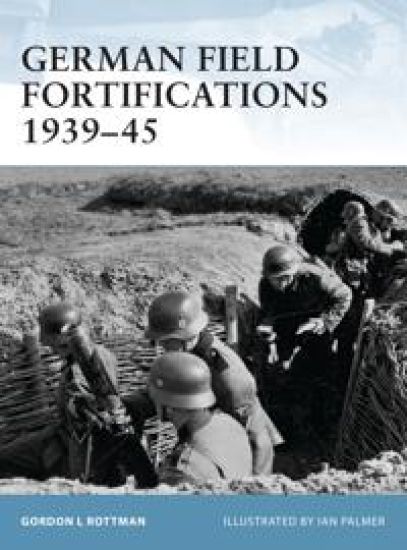
German Field Fortifications 1939–45

German Field Fortifications 1939–45

Gordon L. Rottman

Osprey Publishing
2004
nidottu
The German Army of World War II was a highly mobile force. The experience of trench warfare in World War I had done much to shape Germany's blitzkrieg doctrine and concepts of field fortification, and the mobile warfare ethos of World War 2 was designed to avoid the previous war's stalemate. This title addresses field fortifications built from local materials by infantrymen, and includes rifle platoon positions, trenches, crew-served weapon positions, bunkers, dugouts, shelters, observation posts and more. It also covers anti-tank and anti-personnel obstacles incorporated into these field defences; field camouflage methods, and the construction tools available to infantrymen. The integration of field defences into permanent complexes and systems is also discussed.
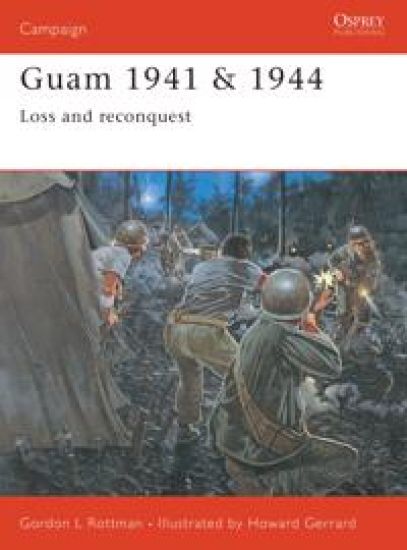
Guam 1941 & 1944

Guam 1941 & 1944

Gordon L. Rottman

Osprey Publishing
2004
nidottu
Gordon Rottman details the bitter 26-day struggle for this key Pacific island during World War II.The island of Guam was the first Allied territory lost to the Japanese onslaught in 1941. On 10 December 5,000 Japanese troops landed on Guam, defended by less than 500 US and Guamanian troops, the outcome was beyond doubt. On 21 July 1944 America returned.In a risky operation, the two US landing forces came ashore seven miles apart and it was a week before the beachheads linked up. Only the battles for Iwo Jima and Okinawa would cost the Americans more men than the landings on Guam and Saipan, which immediately preceded the Guam operation.
Saipan & Tinian 1944

Saipan & Tinian 1944

Gordon L. Rottman

Osprey Publishing
2004
nidottu
An in-depth examination of the United States' invasion of two Pacific islands, featuring a variety of illustrations throughout.The 1944 invasion of Saipan was the first two-division amphibious assault conducted by US forces in World War II. Saipan and Tinian had been under Japanese control since 1914 and, heavily colonized, they were considered virtually part of the Empire.The struggle for Saipan and Tinian was characterized by the same bitter fighting that typified the entire Central Pacific campaign. Fighting side-by-side, Army and Marine units witnessed the largest tank battle of the Pacific War, massed Japanese banzai charges, and the horror of hundreds of Japanese civilians committing suicide to avoid capture.In this book, Gordon Rottman details the capture of these vital islands that led to the collapse of Prime Minister Tojo’s government.
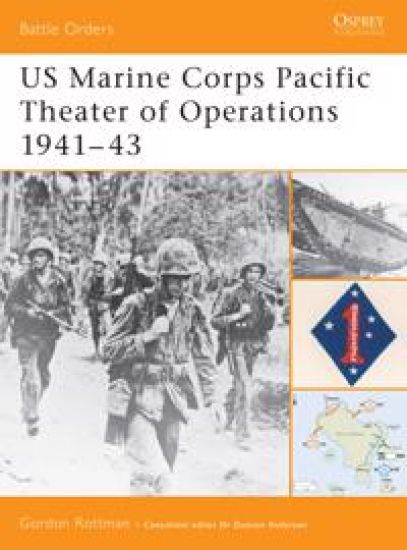
US Marine Corps Pacific Theater of Operations 1941–43
The early days of the Pacific War found the United States facing an enemy who had occupied a series of islands in the South Pacific. The enemy's goal in this region was to provide an outer defensive zone to protect bases from which future conquests would be launched. The enemy was Japan. This highly detailed study reveals how, despite being often poorly equipped and sometimes fighting with little external support against a resolute enemy, the Marines evolved into a well-equipped and ideally organized amphibious assault force that eventually aided in the defeat of an empire.
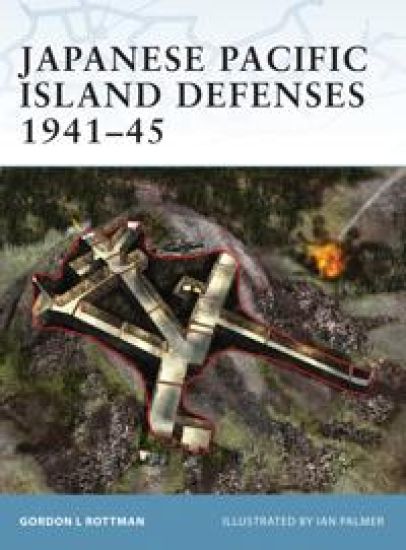
Japanese Pacific Island Defenses 1941–45

Japanese Pacific Island Defenses 1941–45

Gordon L. Rottman

Osprey Publishing
2003
nidottu
This is the first title in a series that takes a detailed look at fortifications and defensive systems throughout history. The prolonged and bloody fighting for control of the Japanese occupied Pacific islands in World War II is a key point in the history of 20th century warfare. No two islands were alike in the systems and nature of the defensive emplacements - this title examines specific islands, as well as taking a close look at a "generic" island defense model. Also covered are island reinforcement plans as well as air and naval support, which seldom materialized. Such aspects as communication and ventilation systems, external obstacles and defenses are also dealt with.
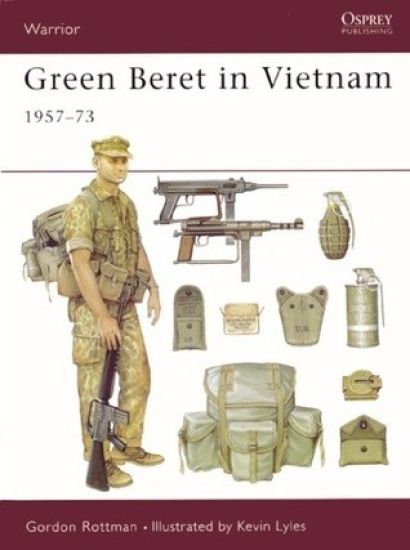
Green Beret in Vietnam

Green Beret in Vietnam

Gordon L. Rottman

Osprey Publishing
2002
nidottu
Vietnam was the US Special Forces most complex and controversial mission, one that began in 1957 and ended in 1973. Camp strike forces, mobile strike forces, mobile guerrilla forces, special reconnaissance projects, training missions and headquarters duty provided vastly differing experiences and circumstances for SF soldiers. Other fluctuating factors were the terrain, the weather and the shifting course of the war itself. Gordon Rottman examines the training, life, weapons and combat experiences of the Special Forces soldier in this challenging environment.
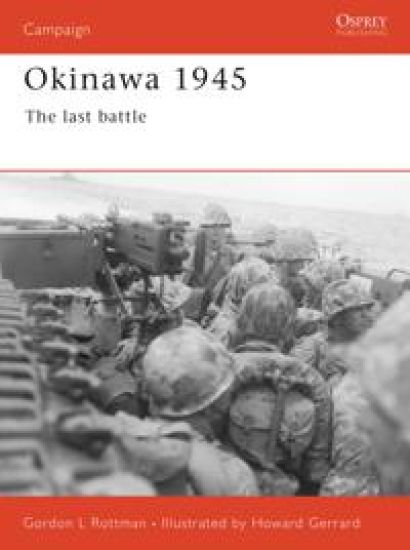
Okinawa 1945

Okinawa 1945

Gordon L. Rottman

Osprey Publishing
2002
nidottu
A concise, thoroughly illustrated guide into the island battle that would end World War IIBy the spring of 1945 the Allies were sweeping all before them in the Pacific War against Japan, and a series of victories had reclaimed many of the islands and territories seized by the Imperial Japanese forces in the early months of the war. The dark days of humiliating defeat were far behind; the unstoppable Allied juggernaut victory was now assured. The question was where the last battle would be fought. That place was the island of Okinawa.With black and white as well as colour illustrations throughout, this book details the struggle for the island as US Marines and Army units battled determined Japanese defenders in the final moments of the war.
US Marine Corps 1941–45

US Marine Corps 1941–45

Gordon L. Rottman

Osprey Publishing
1995
nidottu
While the US Marine Corps was one of the smallest of American armed services in World War II, its contribution to the final victory cannot be overstated.The US Marine Corps may have only comprised 5 percent of America's armed forces, but it suffered 10 percent of all World War II combat casualties. Above all, he amphibious nature of the war in the Pacific imposed on the Marine Corps greater tasks than any it had ever before been called upon to perform. This title details the organization, weapons and equipment of the US Marines of World War II.
US Army Air Force (2)

US Army Air Force (2)

Gordon L. Rottman

Osprey Publishing
1994
nidottu
While the most conspicuous components of the US Army Air Forces in World War II were the air units, there were also hundreds of ground units and organisations.Besides assigned military personnel the AAF also employed thousands of civilians. Many unique outfits were designed to meet the AAF's special needs. Uniformed civilians also possessed a variety of unique uniforms and insignia.These general issue and specific uniforms are the subject of this volume by one of Osprey's most experienced authors, Gordon L. Rottman, whose detailed text is backed by plenty of contemporary photographs and 12 full page colour plates by Francis Chin.
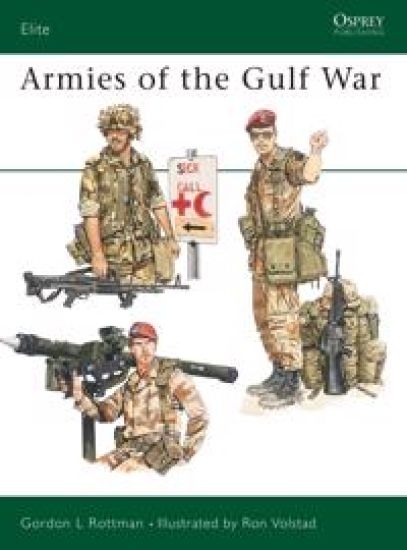
Armies of the Gulf War

Armies of the Gulf War

Gordon L. Rottman

Osprey Publishing
1993
nidottu
Besides continuing a long history of world-wide peacekeeping, the commitment of US troops to the Gulf reunified the country and restored a national pride lost in the aftermath of Vietnam. It also proved that the US armed forces were again the most capable military force in the world. This volume by veteran Osprey author Gordon L. Rottman focuses on the structure, equipment, effectiveness, and employment of the 680,000 coalition troops which fought in the Gulf War, covering not only the US forces, but also those of Britain, France, the Arab League and Iraq.
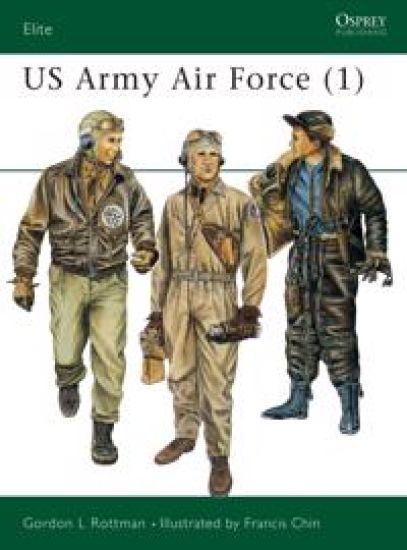
US Army Air Force (1)

US Army Air Force (1)

Gordon L. Rottman

Osprey Publishing
1993
nidottu
In June 1941 the US Army's air organisations were consolidated under a single command, the Army Air Forces or AAF.Its expansion was rapid and massive, and its contribution to the war effort was substantial. Books abound describing the AAF's impressive combat record, but little has been published to record what the men inside the machines wore to stay alive and effective in the air and on the ground, or, as often as not, in the water.Gordon L. Rottman's detailed treatment discusses the flying clothes, accessories and equipment worn and used by individual airmen fighting their often desperate battles in the sky.
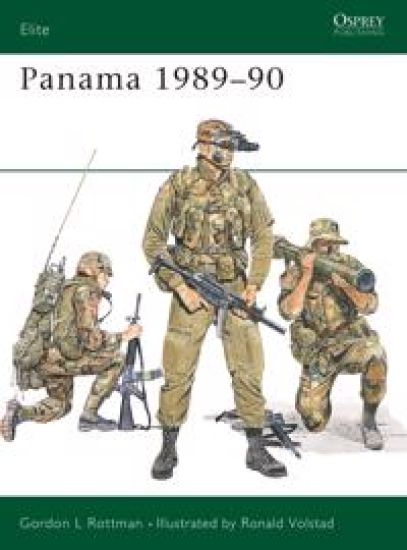
Panama 1989–90

Panama 1989–90

Gordon L. Rottman

Osprey Publishing
1991
nidottu
In December 1989 US Army forces, supported by the US Air Force and US Navy, participated in Operation 'Just Cause'--the invasion of Panama.A combination of airborne, helicopter and ground assaults quickly secured key objectives and eliminated organized resistance. Beginning with a brief history of US-Panama relations and the development of the Panamanian Defense Forces, this book focuses principally on the military aspects of Operation 'Just Cause', and ends with a summary of the conflict's aftermath.Numerous photographs, and detailed color plates depict the actions of the armed forces units that executed this difficult, and controversial, operation.
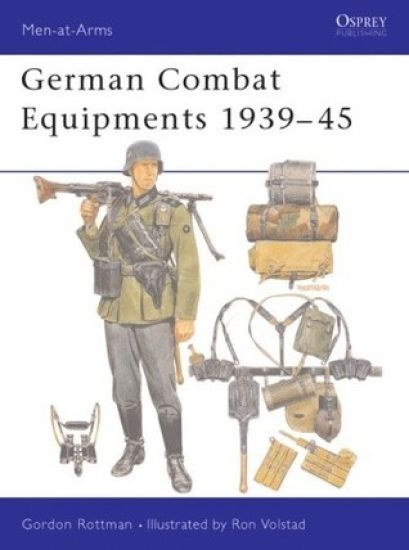
German Combat Equipments 1939–45

German Combat Equipments 1939–45

Gordon L. Rottman

Osprey Publishing
1991
nidottu
The field equipment of the German Army in World War II was closely related to that used throughout World War I and earlier.It was of relatively light weight, ruggedly constructed, well designed, functional, and generally of a high quality, though this deteriorated in the later war years. A high degree of design standardisation was maintained in most categories of equipment, though materials and their colours often varied widely. There were also many different specialisations for the various arms of service as well as theatres of combat, such as the Afrikakorps in the Western Desert.This thorough and illustrated guide investigates all manner of German combat equipments throughout World War II, from belt buckles to magazine pouches.
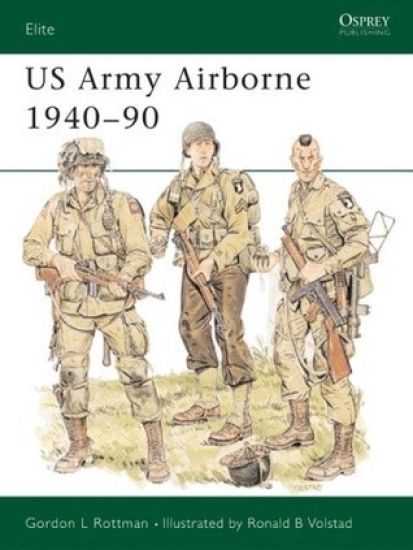
US Army Airborne 1940–90

US Army Airborne 1940–90

Gordon L. Rottman

Osprey Publishing
1990
nidottu
The first 50 years of the US Army airborne arm is a story of continuing battles with the nation's enemies, of battles within the Army's hierarchy, of change, and of adaptation.This comprehensive, illustrated volume tracks this history, highlighting the airborne soldier's uncanny ability to adapt and be flexible over the years. Focusing on the motivation and ésprit de corps this attitude fostered within these units, this is an engaging survey of how the airborne army changed in the years between 1940 and 1990.The first class pairing of Gordon L. Rottman and Ron Volstad bring to life the history of these remarkable troops.
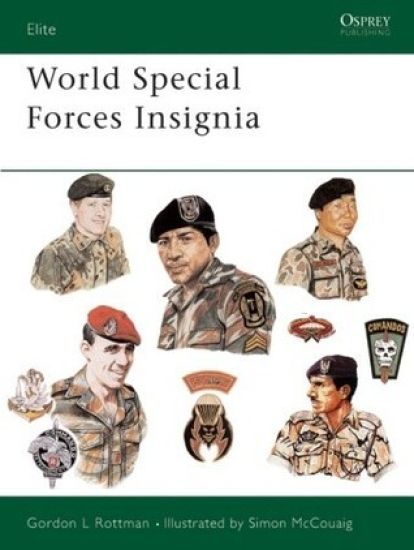
World Special Forces Insignia

World Special Forces Insignia

Gordon L. Rottman

Osprey Publishing
1989
nidottu
There exists among the world's armies a proliferation of special forces groups.Today's smaller armies, especially those of developing nations, demand maximum efficiency in force structure and employment. Mountain, jungle, arctic and desert areas require special purpose units trained, conditioned, and equipped to master these environments.This volume by ex-weapons specialist in the US 7th Special Forces Group, Gordon L. Rottman, details the insignia of a myriad of special forces groups from all parts of the globe, from Portugal's Commando Regiment to the North Yemen 'Al Mithalaat' Brigade. A wealth of illustrations and photographs accompany the text, including 12 full page colour plates by Simon McCouaig.
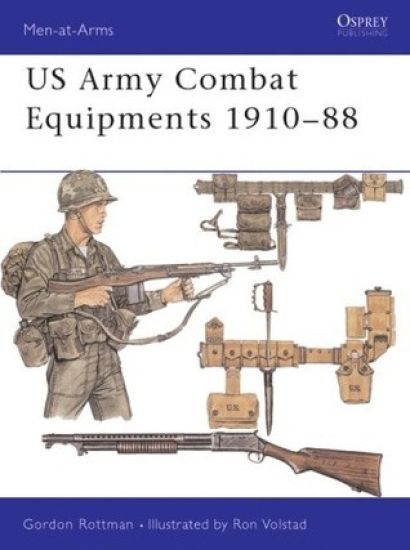
US Army Combat Equipments 1910–88

US Army Combat Equipments 1910–88

Gordon L. Rottman

Osprey Publishing
1989
nidottu
Whether referred to as web gear, TE-21, TA50, LBE or LCE, the American soldier's individual combat equipment was seldom praised – except by its developers.Nevertheless, it has always been, and will continue to be an essential part of the fighting man's burden. With the aid of plenty of contemporary photographs, diagrams, and eight full page colour plates by Osprey veteran Ron Volstad, Gordon Rottman's text unearths a wealth of information on the changing nature of US combat equipments from 1910-1988.
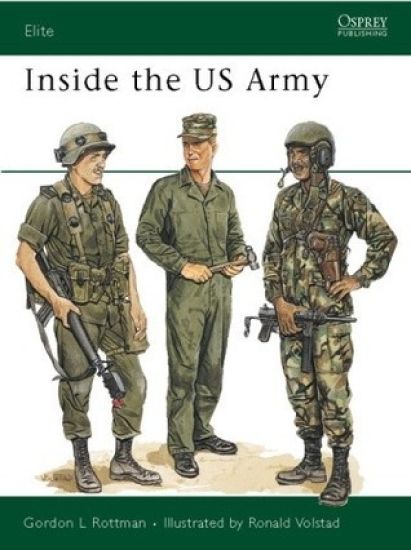
Inside the US Army

Inside the US Army

Gordon L. Rottman

Osprey Publishing
1988
nidottu
When conscription was eliminated in the early 1970s, the US Army found itself with a very different kind of soldier.While the personality of the Army remained the same, the organization of its higher levels of command and combat formations, and the internal structure of its units underwent major changes under the 'Army of Excellence' program of the 1980s.This book explores the US Army of the late 80s, including the training methods, weapon systems, Reserve Components, organization and uniforms of one of the world's most potent fighting forces. The text is illustrated with numerous photographs and eight colour plates.
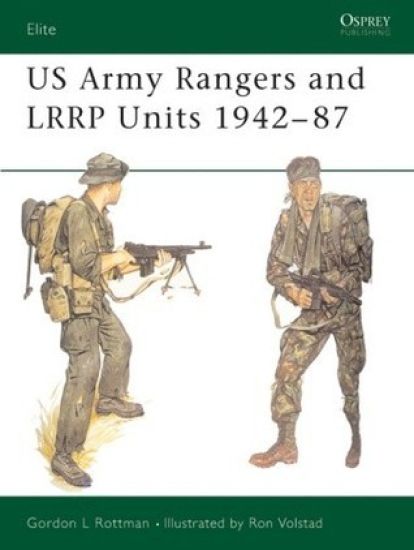
US Army Rangers & LRRP Units 1942–87

US Army Rangers & LRRP Units 1942–87

Gordon L. Rottman

Osprey Publishing
1987
nidottu
Ranger - the very word conjures up visions of small, highly trained units executing lightning-fast raids on an unexpecting enemy. It is also synonymous with high esprit de corps and excellence at arms.The US Army Rangers provide units of well-disciplined soldiers who possess the knowledge and courage to operate on their own, deep behind enemy lines. Gordon L. Rottman explores the history of these unique troops, starting with the original 'Rogers' Rangers' company of 1756, whose daring operations and deep penetrations of enemy-held country laid down the pattern for all subsequent Ranger units to follow.
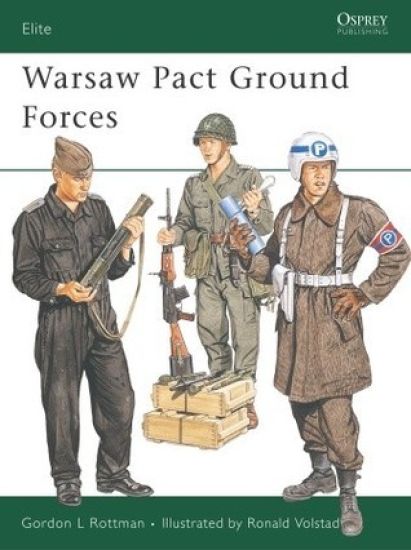
Warsaw Pact Ground Forces

Warsaw Pact Ground Forces

Gordon L. Rottman

Osprey Publishing
1987
nidottu
While much has been published on the armed forces of the USSR during the 1980s, surprisingly little is available on the forces supplied by the other member nations of the Warsaw Pact.Rivalling the size of the United States Army, the combined ground forces of the six non-Soviet Warsaw Pact countries totalled over 775,000 active troops, with almost two million ground forces reserves. This book examines the history, organization and uniforms of the often overlooked DDR, Czechoslovak, Polish, Bulgarian, Hungarian and Romanian forces at the end of the Cold War.