Kirjojen hintavertailu. Mukana 12 559 001 kirjaa ja 12 kauppaa.

Kirjailija

Gordon L. Rottman

Kirjat ja teokset yhdessä paikassa: 101 kirjaa, julkaisuja vuosilta 1985-2024, suosituimpien joukossa Peleliu 1944. Vertaile teosten hintoja ja tarkista saatavuus suomalaisista kirjakaupoista.

Mukana myös kirjoitusasut: Gordon L Rottman

101 kirjaa

Kirjojen julkaisuhaarukka 1985-2024.

US Airborne Units in the Mediterranean Theater 1942–44
This book is the first of three to examine the genesis, organization and operational deployment of the US airborne divisions in World War II. This volume discusses pre-war and early-war airborne units, detailing how the first ones were formed and the tactical reasons for this. Task organization for combat and details of attached units are also dealt with, together with the unit's command relationship with higher headquarters. The units discussed include the 82d Airborne Division, 1st Special Service Force, 1st Airborne Task Force (1ATF), 509th Parachute Infantry Battalion, 325th Glider Infantry Regiment, 504th Parachute Infantry Regiment, 517th Parachute Infantry Regiment, 1st Battalion, 551st Parachute Infantry Regiment, and the 550th Airborne Infantry Battalion.

US World War II Amphibious Tactics

US World War II Amphibious Tactics

Gordon L. Rottman

Osprey Publishing
2006
nidottu
The US armed forces were responsible for many tactical innovations during the years 1941-45, but in no field was US mastery more complete than amphibious warfare. The US armed forces pioneered amphibious warfare in the Pacific and later in the Mediterranean but it was against Fortress Europe that the most famous and the most successful amphibious assault took place. On D-Day the Western Allies invaded German-held Normandy in a pre-dawn amphibious assault by American, British and Canadian forces. The Allies had perfected the special equipment and tactics for this extraordinarily difficult and risky form of warfare and despite large casualties during the beach assaults they were ultimately successful. This book explains, in accessible terms, the many complex problems associated with amphibious warfare and how they were overcome, and is illustrated with photos, diagrams, and colour plates that bring the whole process to life for the reader.
Viet Cong and NVA Tunnels and Fortifications of the Vietnam War
During the Vietnam War, the Viet Cong (VC) main forces and North Vietnamese Army (NVA) were forced to hide weapons and supplies underground and to dig protective shelters to counter massive US firepower. Their field works defended villages, hidden base camps, and fortified complexes, and took the form of trench systems, individual fighting positions, crew-served weapon positions, bunkers, caches, and extensive tunnel complexes. Camouflage and deceptive measures, and the employment of obstacles and booby traps, went hand-in-hand with such works. This title takes a detailed look at the VC/NVA tunnel systems, field fortifications, base camps and camouflage and concealment measures employed during the Vietnam conflict.
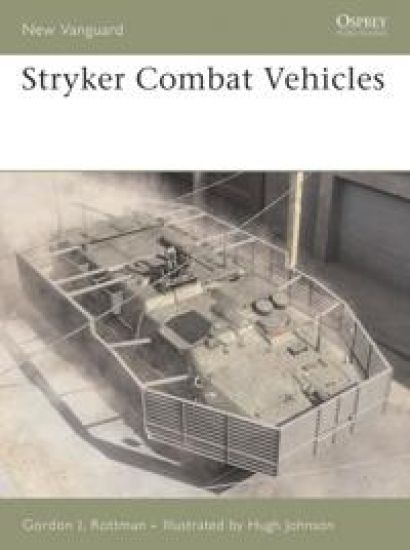
Stryker Combat Vehicles

Stryker Combat Vehicles

Gordon L. Rottman

Osprey Publishing
2006
nidottu
The eight-wheeled (8x8) Stryker combat light armored vehicle was adopted by the US Army in 2002 to provide a comparatively rapidly deployable contingency force with armor protection, tactical mobility and heavy firepower, as well as advanced command, control communications, computer, intelligence, surveillance, and reconnaissance (C4ISR) capabilities. Covering the first new US Army release since the M1 Abrams MBT, this book details the conception, ongoing development and deployment of one of the most highly anticipated new AFVs in recent years, including its service in Iraq and the ensuing controversy surrounding the Stryker's varying successes.
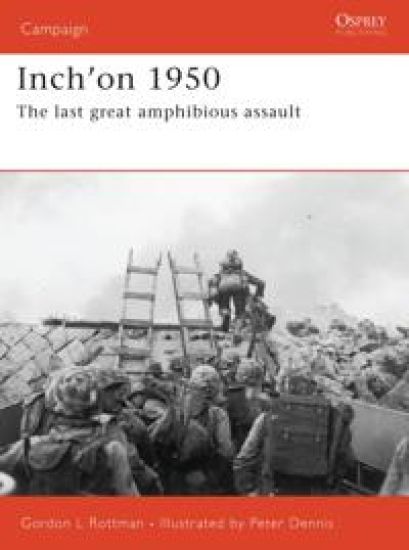
Inch'on 1950

Inch'on 1950

Gordon L. Rottman

Osprey Publishing
2006
nidottu
Inch'on was probably the most significant campaign in the Korean theater, as well as being the last major amphibious assault of division-size conducted in the history of warfare.The odds were stacked against the US troops, with virtually no time for training and many of the divisions unprepared for the conflict. The success of the Inch'on campaign is a testament to the sheer initiative of the officers and NCOs conducted it.This book details the strategy and tactics that led to the operation's success, as well as narrating the experience of the battle in fascinating detail.
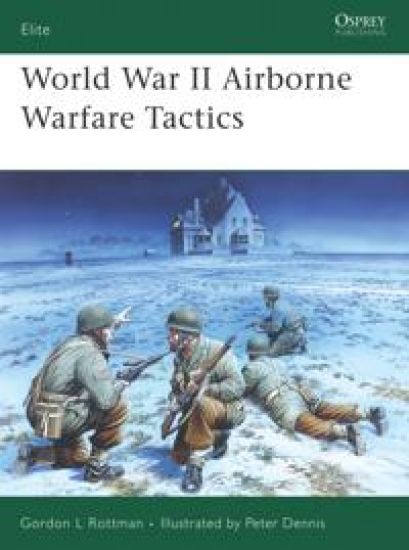
World War II Airborne Warfare Tactics

World War II Airborne Warfare Tactics

Gordon L. Rottman

Osprey Publishing
2006
nidottu
Airborne warfare - the deployment of large numbers of troops by parachute and glider - reached its zenith during World War II - the only war in which its potential prizes ever justified its great costs, material and human. It required wholly new equipment and tactics; offered a new capability - to insert whole divisions behind enemy lines by surprise at great risks. This book will explain and compare the differences in doctrine, organization, equipment and employment of US, British, German and Soviet airborne forces as they developed during the war; and will examine one major operation by each.
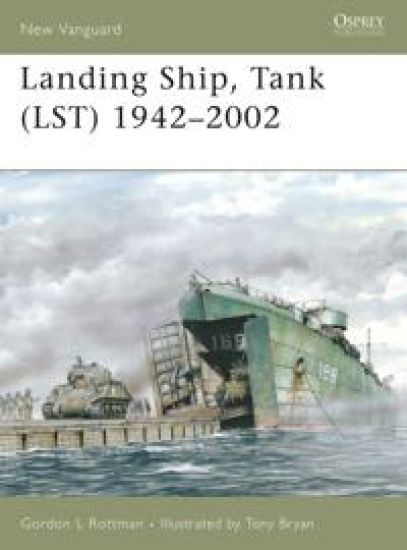
Landing Ship, Tank (LST) 1942–2002

Landing Ship, Tank (LST) 1942–2002

Gordon L. Rottman

Osprey Publishing
2005
nidottu
The Landing Ship Tank (LST) is one of the most famous of the many World War II amphibious warfare ships.Capable of discharging its cargo directly on to shore and extracting itself, the LST provided the backbone of all Allied landings between 1943 and 1945, notably during the D-Day invasion. Through its history, the LST saw service from late 1942 until late 2002, when the US Navy decommissioned the USS Frederick (LST-1184), the last ship of its type.This book reveals the development and use of the LST, including its excellence beyond its initial design expectations.
Japanese Army in World War II

Japanese Army in World War II

Gordon L. Rottman

Osprey Publishing
2005
nidottu
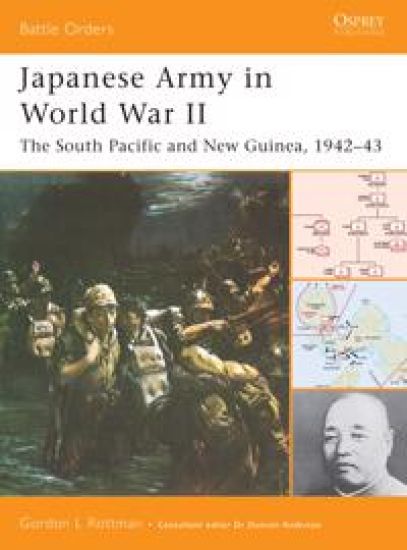
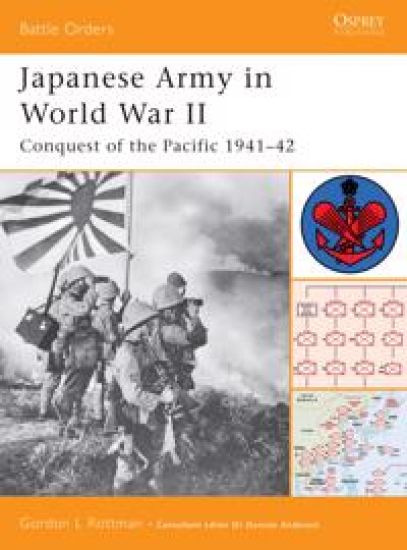
The 1941 Japanese Pacific onslaught saw the defeat of Allied forces on all fronts, with the Philippines, Netherlands East Indies, and Commonwealth possessions falling under their control. During 1942-43, the Japanese consolidated their gains and redeployed forces in an attempt to break the Southern Lifeline between America and Australia. These plans were affected by the defeat at Midway, which forced the Japanese onto the defensive. This book examines Japanese forces employed in the follow-on conquests of 1942-43, and describes how unit organization, weaponry, and equipment were found lacking in the harsh environment of the Solomon Islands and on New Guinea.
Japanese Paratroop Forces of World War II

Japanese Paratroop Forces of World War II

Gordon L. Rottman; Akira Takizawa

Osprey Publishing
2005
nidottu
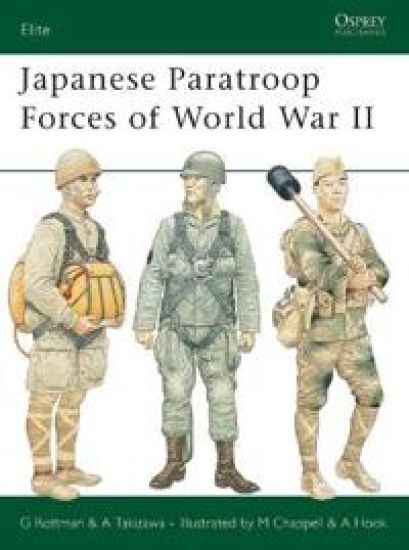
While not as numerous as other nations' airborne forces, Japan's separate Army and Navy paratroop units reached a strength of approximately 18,000 men. They carried out several pioneering operations in Sumatra and Burma during the invasions of 1942 and in Leyte and Okinawa during the defensive fighting of 1944-45. Nothing authoritative has been published on this subject since a reprint, in 1973, of a US Military Intelligence booklet of 1945. This title corrects and expands on that information, covering formation, training, organization, doctrine, tactics, aircraft, uniforms, weapons and equipment, as well as the actual operations that were fought by these elite forces.
Japanese Infantryman 1937–45

Japanese Infantryman 1937–45

Gordon L. Rottman

Osprey Publishing
2005
nidottu
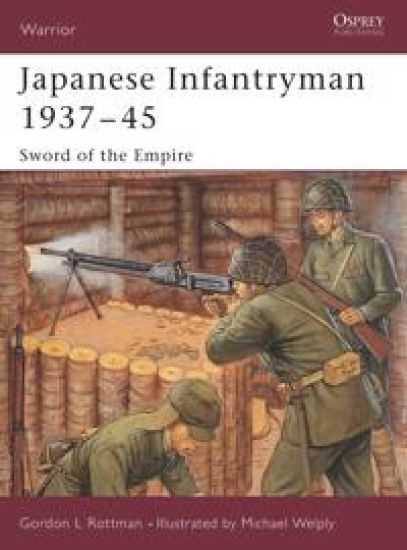
This book examines in detail the Japanese Infantryman who, despite comparisons with the notorious German Waffen SS, was an enigma to Westerners. Brutal in its treatment of prisoners as well as the inhabitants of the areas that it conquered, the Imperial Japanese Army also had exacting standards for its own men - strict codes of honor compelled Japanese soldiers to fight to the death against the more technologically advanced Allies. Identifying the ways in which the Japanese soldier differed from his Western counterparts, the author explores concepts such as Bushido, Seppuku, Shiki and Hakko Ichi-u in order to understand what motivated Japanese warriors.
Special Forces Camps in Vietnam 1961–70

Special Forces Camps in Vietnam 1961–70

Gordon L. Rottman

Osprey Publishing
2005
nidottu
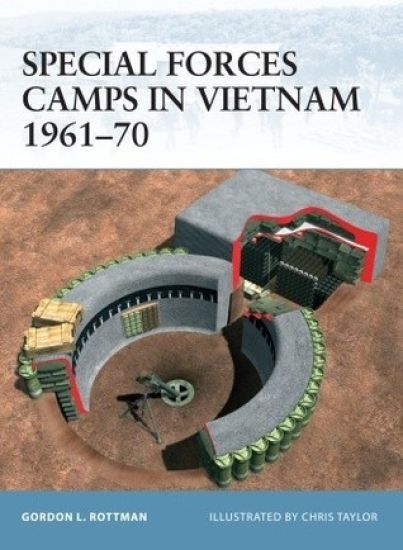
In 1961 US special forces units began etering remote areas of Vietnam dominated by the Viet Cong. Their task was to organise local defence and strike forces aimed at stopping the enemy from gaining further control of such areas. The Green Berets set up fortified camps akin to forts of the old American Frontier, but adapted to modern warfare, from which indigenous troops defended local villages and attacked and harassed the enemy. How these camps were constructed, developed and defended is documented here for the first time. This book also covers the weapons, barriers and obstacles used in these camps, providing spesific examples of camp design and details how they withstood the test of battle against a determined and resourceful enemy.
US Army Infantryman in Vietnam 1965–73

US Army Infantryman in Vietnam 1965–73

Gordon L. Rottman

Osprey Publishing
2005
nidottu
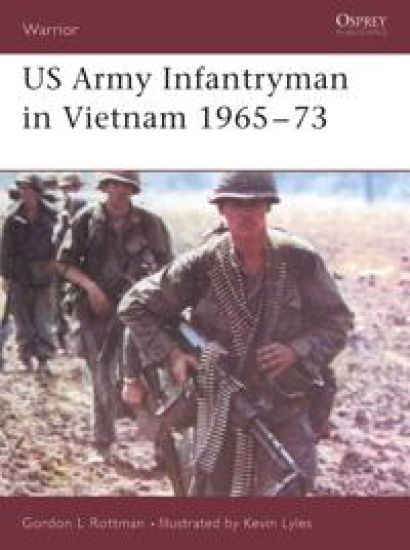
This study of the US Army infantryman in Vietnam takes the reader through the stages of the soldier's training and acceptance, including his experiences at the Armed Forces Induction Center and his initial introduction to Vietnam's varied conditions of service, whilst detailing developments in weaponry, clothing and equipment. Using first-hand accounts, it examines the harsh and brutal service in Vietnam, from day-to-day routine in the field such as search and destroy missions, night ambush, rocket attacks and airbome engagements through to the gruelling work of building bunkers, along with delving into the culture of service in Vietnam and the struggles faced by the average infantryman on his return to a somewhat hostile homeland.
Khe Sanh 1967–68

Khe Sanh 1967–68

Gordon L. Rottman

Osprey Publishing
2005
nidottu
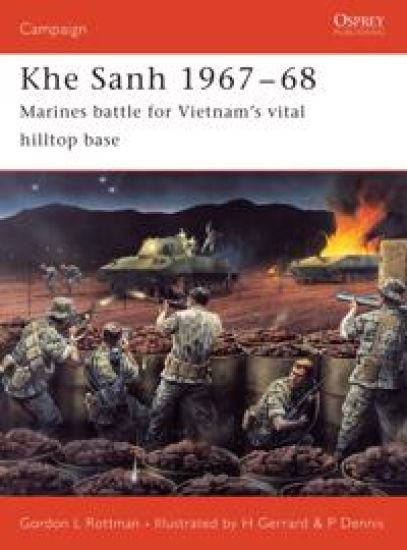
A concise, focused volume on the NVA's fight for a strategically important military base.Khe Sanh was a small village in northwest South Vietnam that sat astride key North Vietnamese infiltration routes. In September 1966 a Marine battalion deployed into the area. Action gradually increased as the NVA attempted to destroy Free World Forces bases, and the siege of Khe Sanh proper began in October 1967. The bitter fight lasted into July 1968 when, with the changing strategic and tactical situation, the base was finally closed.This book details the siege and explains how, although the NVA successfully overran a Special Forces camp nearby, it was unable to drive US forces from Khe Sanh.
US World War II and Korean War Field Fortifications 1941–53
Gordon L Rottman explores the design development and combat history of the US Army's field fortifications during these two major wars, alongside illustrations and diagrams throughout.The US Army and Marine Corps in World War II considered themselves highly mobile, offensive forces. Their mobile-warfare doctrine envisioned field fortifications and obstacles as temporary in nature. As a result, their design was simple and made use of local materials, and they could be constructed comparatively quickly, whilst still providing adequate protection. By the time of the Korean War, only minor changes had been made to field fortification construction and layout, and to small-unit organization, weapons, and tactics.This illustrated guide addresses field fortifications built by US infantrymen during World War II and in Korea, and covers rifle-platoon positions, trenches, crew-served weapon positions, bunkers, dugouts, shelters, observation posts and anti-tank obstacles.
US Special Warfare Units in the Pacific Theater 1941–45
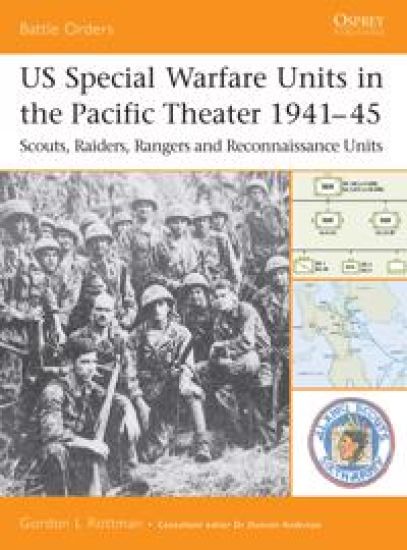
The bitter fighting in the Pacific Theater required new forms of warfare, and the gathering of detailed intelligence information on the remote and varied islands and their determined defenders.As a result, new scout, raider and reconnaissance units were formed the pioneers of today's special forces. Some units were small, while others comprised thousands of men. All contributed significantly to the war effort.This book examines a wide range of PTO special-warfare units, including the Alaskan and Alamo scouts, 5217th/1st Recon Battalion, Marine Amphibious Recon and Raider units, Amphibious Scouts, and 6th Ranger Battalion.
World War II Infantry Anti-Tank Tactics

World War II Infantry Anti-Tank Tactics

Gordon L. Rottman

Osprey Publishing
2005
nidottu
The massed use of tanks was one of the defining characteristics of World War II, and the armoured units that spearheaded the German 'Blitzkrieg' of 1940-41 appeared to be invincible. This book explains the development and use of the weapons issued to infantrymen to protect themselves against enemy tanks. Facing tanks at short range with light weapons demanded great skill and courage, and successful soldiers were often highly decorated for their valor. By the last year of World War II, anti-tank tactics had developed to such an extent that advancing tanks became highly vulnerable, when unsupported by their own infantry who could fight off enemy tank-hunter teams.
Japanese Army in World War II

Japanese Army in World War II

Gordon L. Rottman

Osprey Publishing
2005
nidottu
The Japanese conquest of the Pacific comprised of a complex series of widely scattered operations intended to neutralize American, Commonwealth, and Dutch forces, seize regions rich in economic resources, and secure an outer defense line for the "Greater Southeast Asia Co-prosperity Sphere." Albeit victorious, the forces deployed from Japan and China were not always ideally trained and equipped for the challenging conditions they encountered. This book, the first of several covering the Imperial Japanese Army in World War II, examines the forces in existence at the beginning of the war, and task organization for the conquest of the Philippines, New Guinea, the South Seas area, and the Dutch East Indies, from December 1941 to the Battle of Midway in June 1942.
US World War II Amphibious Tactics

US World War II Amphibious Tactics

Gordon L. Rottman

Osprey Publishing
2004
nidottu
The US armed forces were responsible for many tactical innovations during the years 1941–45, but in no field was US mastery more complete than amphibious warfare. In the vast, almost empty battlefield of the Pacific the US Navy and Marine Corps were obliged to develop every aspect of the amphibious assault landing in painstaking detail, from the design of many new types of vessel, down to the tactics of the rifle platoon hitting the beach, and the logistic system without which they could not have fought their way inland. This fascinating study offers a clear, succinct explanation of every phase of these operations as they evolved during the war years, illustrated with detailed color plates and photographs.
US Marine Corps Pacific Theater of Operations 1944–45
The year 1945 saw the execution of three of the Marine Corps' largest and most vicious battles - Peleliu, Okinawa and Iwo Jima - and the Marines' performance in these arenas reflected the massive changes that had taken place in the Corps over the preceeding four years. These battles, the recent re-organisations, new units and weapons systems were intended to prepare the Marines for the planned invasion of Japan in November 1945. In this companion volume to Order of Battle volumes 1 and 7, Gordon Rottman studies this re-organisation in detail, discussing new assault units, provisional combat support groups, and service units.
The Marshall Islands 1944

The Marshall Islands 1944

Gordon L. Rottman

Osprey Publishing
2004
nidottu
A highly illustrated account of the Pacific operation that was, at the time, the longest shore-to-shore amphibious assault in history.Following the capture of Tarawa in November 1943, American eyes turned to the Marshall Islands. These were the next vital stepping-stone across the Pacific towards Japan, and would bring the islands of Guam and Saipan within the reach of US forces. In their first amphibious attack, the new 4th Marine Division landed on Roi and Namur islands on 1 February 1944, while US 7th Division landed on Kwajalein.In this compact, detailed volume, Gordon L Rottman demonstrates that the lessons of the bloody fighting on Tarawa had been well learned and the successful attack on the Marshalls set the pattern for future amphibious operations in the Pacific War.