Kirjojen hintavertailu. Mukana 12 152 606 kirjaa ja 12 kauppaa.

Kirjailija

Hal Brands

Kirjat ja teokset yhdessä paikassa: 26 kirjaa, julkaisuja vuosilta 2008-2026, suosituimpien joukossa Affording Defense. Vertaile teosten hintoja ja tarkista saatavuus suomalaisista kirjakaupoista.

26 kirjaa

Kirjojen julkaisuhaarukka 2008-2026.

Affording Defense

Affording Defense

Kyle Balzer; Dan Blumenthal; Hal Brands; James C Capretta; Zack Cooper; Giselle Donnelly; John G Ferrari; Rebecca Grant; Todd Harrison; Frederick W Kagan; James Mattis; Elaine McCusker; Kori Schake; Michael R Strain; Dustin Walker

AEI PRESS
2025
pokkari
In this edited volume, Mackenzie Eaglen brings together top foreign and defense policy voices in Washington to address the ever-growing resource-strategic mismatch evident in US defense policy. This project is designed to provide the administration with immediate and realistic solutions to bolster America's military and restore its flagging strategic and conventional deterrents.

Frihet : evolutionen av en idé

Frihet : evolutionen av en idé

Kemi Badenoch; John Bew; Adrian Bradshaw; Hal Brands; Richard Chartres; Christopher Coker; Marie Kawthar Daouda; Peter Frankopan; Jessica Frazier; Francis Gavin; Matthew Goodwin; Katja Hoyer; Jeremy Jennings; Robert Johnson; Alexander Lee; Margaret MacMillan; Janne Haaland Matláry; Richard Miles; Fraser Nelson; Jesse Norman; Iuliia Osmolovska; Charly Salonius-Pasternak; Agnès C. Poirier; Alina Polyakova; Sergey Radchenko; Juliet Samuel; Mary Sarotte; Kori Schake; Mark J. Schiefsky; Brendan Simms; Alexander McCall Smith

Bokförlaget Stolpe
2024
sidottu
Hur har idén om frihet utvecklats och förändrats under århundradena? Vad betyder frihet idag och vad behöver vi göra för att behålla de friheter som generationer män och kvinnor har kämpat, och till och med dött, för? Frihet är en grundförutsättning för att ett samhälle ska frodas och utvecklas. Dess historia är brokig: mänsklighetens eviga kamp mot ödet, våra förfäder som outtröttligt stred för att upprätta tanke- och religionsfrihet, demokratiska friheter i samhället i stort och kampen mot auktoritära regimer och tyranner världen över. I denna essäsamling utforskar ledande akademiker, författare och historiker vad frihet har betytt genom tiderna. De reflekterar över detta ständigt pågående drama och varför vi så villigt offrar oss för friheten när den hotas.
Geopolitics of AI

Geopolitics of AI

Hal Brands

Johns Hopkins University Press
2026
pokkari
Artificial intelligence in an age of rivalry, risk, and power. Artificial intelligence (AI) is emerging and evolving amid intense global competition. Geopolitics of AI examines how breakthroughs in AI intersect with great-power rivalry, military competition, economic statecraft, and competing models of governance—and how those dynamics will shape the development and use of AI itself. Edited by Hal Brands, this volume brings together leading scholars and policy analysts to address AI's strategic implications. Contributors examine how AI may alter military operations, economic productivity, alliance structures, and deterrence, while also creating new challenges of instability, escalation, and misuse. The book also considers how geopolitical competition will influence technological innovation in the years ahead. Rivalries among major powers will shape research priorities, regulatory approaches, and international norms and will determine whether AI becomes a source of cooperation, coercion, or conflict. These pressures raise urgent questions about governance, control, and the balance between innovation and restraint. Geopolitics of AI offers a timely, wide-angle perspective on one of the defining challenges of contemporary international politics. It will be of interest to scholars and students of international relations and security studies, as well as policymakers, analysts, and readers seeking to understand how emerging technologies are reshaping global order.
The Eurasian Century

The Eurasian Century

Hal Brands

WW NORTON CO
2026
nidottu
We often think of the modern era as the age of American power. In reality, we’re living in a long, violent Eurasian century. Eurasia is a strategic prize without equal—which is why the world has been roiled, reshaped and nearly destroyed by clashes over the supercontinent. Since the early twentieth century, autocratic powers—from Germany to the Soviet Union—have aspired for dominance by seizing commanding positions in the world’s strategic heartland. Offshore sea powers, namely the United Kingdom and America, have sought to make the world safe for democracy by keeping Eurasia in balance. America’s rivalries with China, Russia and Iran are the next round in this geopolitical game. Hal Brands argues that a better understanding of Eurasia’s strategic geography can illuminate the contours of rivalry and conflict in today’s world. The Eurasian Century explains how revolutions in technology and warfare and the rise of toxic ideologies of conquest made Eurasia the centre of twentieth-century geopolitics—with pressing implications for the struggles that will define the twenty-first.
The Eurasian Century

The Eurasian Century

Hal Brands

WW NORTON CO
2025
sidottu
We often think of the modern era as the age of American power. In reality, we’re living in a long, violent Eurasian century. That giant, resource-rich landmass possesses the bulk of the global population, industrial might and potential military power; it touches all four of the great oceans. Eurasia is a strategic prize without equal—which is why the world has been roiled, reshaped and nearly destroyed by clashes over the supercontinent. Since the early twentieth century, autocratic powers—from Germany under Kaiser Wilhelm II to the Soviet Union—have aspired for dominance by seizing commanding positions in the world’s strategic heartland. Offshore sea powers, namely the United Kingdom and America, have sought to make the world safe for democracy by keeping Eurasia in balance. America’s rivalries with China, Russia and Iran are the next round in this geopolitical game. If this new authoritarian axis succeeds in enacting a radically revised international order, America and other democracies will be vulnerable and insecure. Hal Brands, a renowned expert on global affairs, argues that a better understanding of Eurasia’s strategic geography can illuminate the contours of rivalry and conflict in today’s world. The Eurasian Century explains how revolutions in technology and warfare and the rise of toxic ideologies of conquest, made Eurasia the centre of twentieth-century geopolitics—with pressing implications for the struggles that will define the twenty-first.
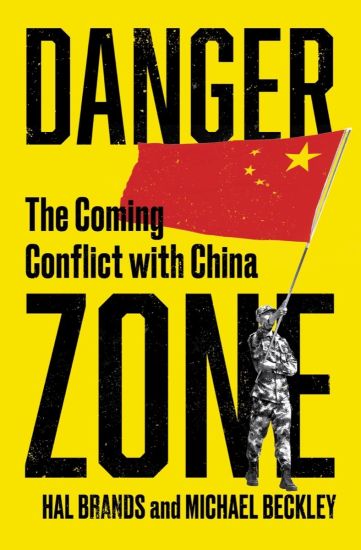
Danger Zone

Danger Zone

Michael Beckley; Hal Brands

WW NORTON CO
2023
nidottu
It has become conventional wisdom that America and China are running a “superpower marathon” that may last a century. Yet Hal Brands and Michael Beckley pose a counterintuitive question: What if the sharpest phase of that competition is more like a decade-long sprint? The Sino-American contest is driven by clashing geopolitical interests and a stark ideological dispute over whether authoritarianism or democracy will dominate the 21st century. But both history and China’s current trajectory suggest that this rivalry will reach its moment of maximum danger in the 2020s. China is at a perilous moment: strong enough to violently challenge the existing order, yet losing confidence that time is on its side. Numerous examples from antiquity to the present show that rising powers become most aggressive when their fortunes fade, their difficulties multiply, and they realise they must achieve their ambitions now or miss the chance to do so forever. China has already started down this path. Witness its aggression toward Taiwan, its record-breaking military buildup and its efforts to dominate the critical technologies that will shape the world’s future. Over the long run, the Chinese challenge will most likely prove more manageable than many pessimists currently believe—but during the 2020s, the pace of Sino-American conflict will accelerate, and the prospect of war will be frighteningly real. America, Brands and Beckley argue, will still need a sustainable approach to winning a protracted global competition. But first, it needs a near-term strategy for navigating the danger zone ahead.
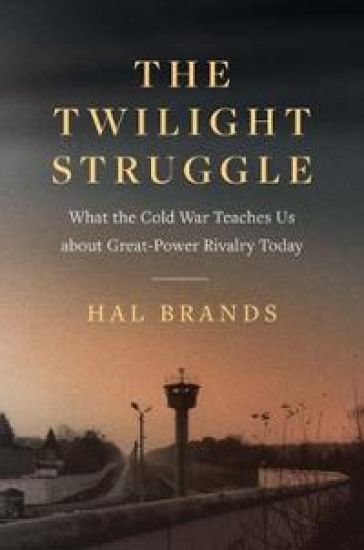
The Twilight Struggle

The Twilight Struggle

Hal Brands

YALE UNIVERSITY PRESS
2022
pokkari
A leading historian’s guide to great-power competition, as told through America’s successes and failures in the Cold War “There is an undeniable ease and fluidity to Mr. Brands’s narrative, and his use of Cold War archives is impressive.”—A. Wess Mitchell, Wall Street Journal“If you want to know how America can win today's rivalries with Russia and China, read this book about how it triumphed in another twilight struggle: the Cold War.”—Stephen J. Hadley, national security adviser to President George W. Bush America is entering an era of long-term great power competition with China and Russia. In this innovative and illuminating book, Hal Brands, a leading historian and former Pentagon adviser, argues that America should look to the history of the Cold War for lessons on how to succeed in great-power rivalry today.
Danger Zone

Danger Zone

Michael Beckley; Hal Brands

WW NORTON CO
2022
sidottu
It has become conventional wisdom that America and China are running a “superpower marathon” that may last a century. Yet Hal Brands and Michael Beckley pose a counterintuitive question: What if the sharpest phase of that competition is more like a decade-long sprint? The Sino-American contest is driven by clashing geopolitical interests and a stark ideological dispute over whether authoritarianism or democracy will dominate the 21st century. But both history and China’s current trajectory suggest that this rivalry will reach its moment of maximum danger in the 2020s. China is at a perilous moment: strong enough to violently challenge the existing order, yet losing confidence that time is on its side. Numerous examples from antiquity to the present show that rising powers become most aggressive when their fortunes fade, their difficulties multiply and they realise they must achieve their ambitions now or miss the chance to do so forever. China has already started down this path. Witness its aggression toward Taiwan, its record-breaking military buildup and its efforts to dominate the critical technologies that will shape the world’s future. Over the long run, the Chinese challenge will most likely prove more manageable than many pessimists currently believe—but during the 2020s, the pace of Sino-American conflict will accelerate, and the prospect of war will be frighteningly real. America, Brands and Beckley argue, will still need a sustainable approach to winning a protracted global competition. But first, it needs a near-term strategy for navigating the danger zone ahead.
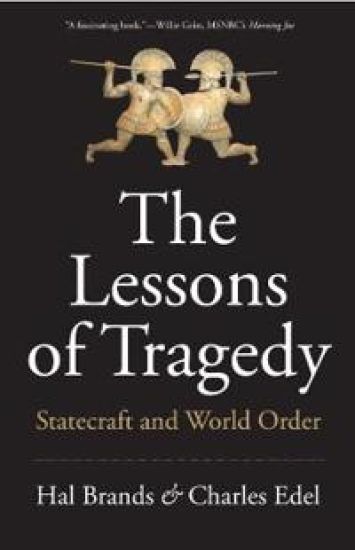
The Lessons of Tragedy

The Lessons of Tragedy

Hal Brands; Charles Edel

Yale University Press
2020
pokkari
An eloquent call to draw on the lessons of the past to address current threats to international order The ancient Greeks hard-wired a tragic sensibility into their culture. By looking disaster squarely in the face, by understanding just how badly things could spiral out of control, they sought to create a communal sense of responsibility and courage—to spur citizens and their leaders to take the difficult actions necessary to avert such a fate. Today, after more than seventy years of great-power peace and a quarter-century of unrivaled global leadership, Americans have lost their sense of tragedy. They have forgotten that the descent into violence and war has been all too common throughout human history. This amnesia has become most pronounced just as Americans and the global order they created are coming under graver threat than at any time in decades. In a forceful argument that brims with historical sensibility and policy insights, two distinguished historians argue that a tragic sensibility is necessary if America and its allies are to address the dangers that menace the international order today. Tragedy may be commonplace, Brands and Edel argue, but it is not inevitable—so long as we regain an appreciation of the world’s tragic nature before it is too late.
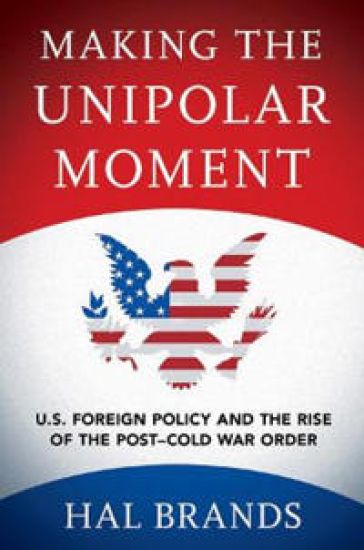
Making the Unipolar Moment

Making the Unipolar Moment

Hal Brands

Cornell University Press
2019
pokkari
In the late 1970s, the United States often seemed to be a superpower in decline. Battered by crises and setbacks around the globe, its post–World War II international leadership appeared to be draining steadily away. Yet just over a decade later, by the early 1990s, America's global primacy had been reasserted in dramatic fashion. The Cold War had ended with Washington and its allies triumphant; democracy and free markets were spreading like never before. The United States was now enjoying its "unipolar moment"—an era in which Washington faced no near-term rivals for global power and influence, and one in which the defining feature of international politics was American dominance. How did this remarkable turnaround occur, and what role did U.S. foreign policy play in causing it? In this important book, Hal Brands uses recently declassified archival materials to tell the story of American resurgence. Brands weaves together the key threads of global change and U.S. policy from the late 1970s through the early 1990s, examining the Cold War struggle with Moscow, the rise of a more integrated and globalized world economy, the rapid advance of human rights and democracy, and the emergence of new global challenges like Islamic extremism and international terrorism. Brands reveals how deep structural changes in the international system interacted with strategies pursued by Jimmy Carter, Ronald Reagan, and George H. W. Bush to usher in an era of reinvigorated and in many ways unprecedented American primacy. Making the Unipolar Moment provides an indispensable account of how the post–Cold War order that we still inhabit came to be.
American Grand Strategy in the Age of Trump

American Grand Strategy in the Age of Trump

Hal Brands

Brookings Institution
2018
nidottu
"Looking beyond the headlines to address the enduring grand strategic questions facing the United States todayAmerican foreign policy is in a state of upheaval. The rise of Donald Trump and his "America First" platform have created more uncertainty about America's role in the world than at any time in recent decades. From the South China Sea, to the Middle East, to the Baltics and Eastern Europe, the geopolitical challenges to U.S. power and influence seem increasingly severe—and America's responses to those challenges seem increasingly unsure. Questions that once had widely accepted answers are now up for debate. What role should the United States play in the world? Can, and should, America continue to pursue an engaged an assertive strategy in global affairs?In this book, a leading scholar of grand strategy helps to make sense of the headlines and the upheaval by providing sharp yet nuanced assessments of the most critical issues in American grand strategy today. Hal Brands asks, and answers, such questions as: Has America really blundered aimlessly in the world since the end of the Cold War, or has its grand strategy actually been mostly sensible and effective? Is America in terminal decline, or can it maintain its edge in a harsher and more competitive environment? Did the Obama administration pursue a policy of disastrous retrenchment, or did it execute a shrewd grand strategy focused on maximizing U.S. power for the long term? Does Donald Trump's presidency mean that American internationalism is dead? What type of grand strategy might America pursue in the age of Trump and after? What would happen if the United States radically pulled back from the world, as many leading academics—and, at certain moments, the current president—have advocated? How much military power does America need in the current international environment?Grappling with these kinds of issues is essential to understanding the state of America's foreign relations today and what path the country might take in the years ahead. At a time when American grand strategy often seems consumed by crisis, this collection of essays provides an invaluable guide to thinking about both the recent past and the future of America's role in the world."
Survival 59.3

Survival 59.3

Hal Brands

Routledge
2017
nidottu
Survival, the bi-monthly publication from The International Institute for Strategic Studies, is a leading forum for analysis and debate of international and strategic affairs. With a diverse range of authors, thoughtful reviews and review essays, Survival is scholarly in depth while vivid, well-written and policy-relevant in approach. Shaped by its editors to be both timely and forward-thinking, the publication encourages writers to challenge conventional wisdom and bring fresh, often controversial, perspectives to bear on the strategic issues of the moment.
Making the Unipolar Moment

Making the Unipolar Moment

Hal Brands

Cornell University Press
2016
sidottu
In the late 1970s, the United States often seemed to be a superpower in decline. Battered by crises and setbacks around the globe, its post–World War II international leadership appeared to be draining steadily away. Yet just over a decade later, by the early 1990s, America's global primacy had been reasserted in dramatic fashion. The Cold War had ended with Washington and its allies triumphant; democracy and free markets were spreading like never before. The United States was now enjoying its "unipolar moment"—an era in which Washington faced no near-term rivals for global power and influence, and one in which the defining feature of international politics was American dominance. How did this remarkable turnaround occur, and what role did U.S. foreign policy play in causing it? In this important book, Hal Brands uses recently declassified archival materials to tell the story of American resurgence. Brands weaves together the key threads of global change and U.S. policy from the late 1970s through the early 1990s, examining the Cold War struggle with Moscow, the rise of a more integrated and globalized world economy, the rapid advance of human rights and democracy, and the emergence of new global challenges like Islamic extremism and international terrorism. Brands reveals how deep structural changes in the international system interacted with strategies pursued by Jimmy Carter, Ronald Reagan, and George H. W. Bush to usher in an era of reinvigorated and in many ways unprecedented American primacy. Making the Unipolar Moment provides an indispensable account of how the post–Cold War order that we still inhabit came to be.
The Limits of Offshore Balancing

The Limits of Offshore Balancing

Hal Brands; Strategic Studies Institute; U.S. Army War College

Lulu.com
2015
nidottu
The United States is likely to face crucial grand strategic decisions in the coming years. This being the case, it is essential to have a rigorous, well-informed debate not simply about the nation's current grand strategy and policies, but about the most salient grand strategic options and alternatives open to the United States as well. In this monograph, Professor Hal Brands contributes to that debate through a probing analysis of one particular grand strategic alternative that has become increasingly prominent in recent years-the concept of "offshore balancing." Offshore balancing entails a large-scale strategic retrenchment of America's current presence overseas, and it has often been touted by its supporters as a sort of grand strategic panacea-an option that will allow the United States to improve its overall geopolitical position while simultaneously slashing the costs of its global posture.
What Good Is Grand Strategy?

What Good Is Grand Strategy?

Hal Brands

Cornell University Press
2014
pokkari
This is a solid piece of scholarship that should be of great value in modern American history classes, foreign policy surveys, and course work in international relations.— Brooks Flippen â•H-Net Reviews Grand strategy is one of the most widely used and abused concepts in the foreign policy lexicon. In this important book, Hal Brands explains why grand strategy is a concept that is so alluring-and so elusive-to those who make American statecraft. He explores what grand strategy is, why it is so essential, and why it is so hard to get right amid the turbulence of global affairs and the chaos of domestic politics. At a time when "grand strategy" is very much in vogue, Brands critically appraises just how feasible that endeavor really is. Brands takes a historical approach to this subject, examining how four presidential administrations, from that of Harry S. Truman to that of George W. Bush, sought to "do" grand strategy at key inflection points in the history of modern U.S. foreign policy. As examples ranging from the early Cold War to the Reagan years to the War on Terror demonstrate, grand strategy can be an immensely rewarding undertaking-but also one that is full of potential pitfalls on the long road between conception and implementation. Brands concludes by offering valuable suggestions for how American leaders might approach the challenges of grand strategy in the years to come.