Kirjojen hintavertailu. Mukana 12 390 323 kirjaa ja 12 kauppaa.

Kirjailija

Hans Blumenberg

Kirjat ja teokset yhdessä paikassa: 49 kirjaa, julkaisuja vuosilta 1981-2023, suosituimpien joukossa Lions. Vertaile teosten hintoja ja tarkista saatavuus suomalaisista kirjakaupoista.

49 kirjaa

Kirjojen julkaisuhaarukka 1981-2023.

Skeppsbrott med åskådare

Skeppsbrott med åskådare

Hans Blumenberg

Bokförlaget Faethon
2023
sidottu
Hans Blumenberg (19201996) var professor i filosofi vid ett flertal tyska universitet, slutligen i Münster. Hans filosofi rörde sig ofta kring historiska fenomen eller det språkbruk som formar vår förståelse av dessa. Hans betydelse som filosof har vuxit enormt sedan hans död, och ett stort tantal postuma skrifter har utkommit. Han är idag en av de mest lästa tyska filosoferna. Med Skeppsbrott med åskådare (1979) presenteras han för första gången i bokform på svenska. I boken analyserar han skeppsbrottet som metafor och dess betydelse alltsedan antiken. För översättningen svarar Jim Jakobsson, en av Sveriges främsta översättare av filosofi.
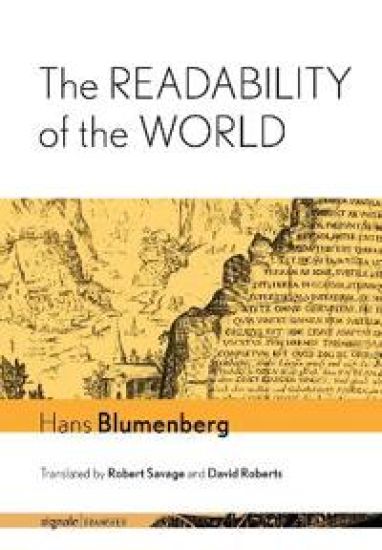
The Readability of the World

The Readability of the World

Hans Blumenberg

CORNELL UNIVERSITY PRESS
2022
sidottu
The Readability of the World represents Hans Blumenberg's first extended demonstration of the metaphorological method he pioneered in Paradigms for a Metaphorology. For Blumenberg, metaphors are symptomatic of patterns of thought and feeling that escape conceptual formulation but are nonetheless indispensable, because they allow humans to orient themselves in an otherwise overwhelming world. The Readability of the World applies this method to the idea that the world presents itself as a book. The metaphor of the book of nature has been central to Western interpretations of reality, and Blumenberg traces the evolution of this metaphor from ancient Greek cosmology to the model of the genetic code to access the different expectations of reality that it articulates, reflects, and projects. Writing with equal authority on literature and science, theology and philosophy, ancient metaphysics and twentieth-century biochemistry, Blumenberg advances rich and original interpretations of the thinking of a range of canonical figures, including Berkeley, Vico, Goethe, Spinoza, Leibniz, Bacon, Flaubert, and Freud. Through his interdisciplinary, anthropologically sharpened gaze, Blumenberg uncovers a wealth of new insights into the continuities and discontinuities across human history of the longing to contain all of nature, history, and reality in a book, from the Bible, the Talmud, and the Qur'an to Diderot's Encyclopedia and Humboldt's Cosmos to the ACGT of the DNA code.
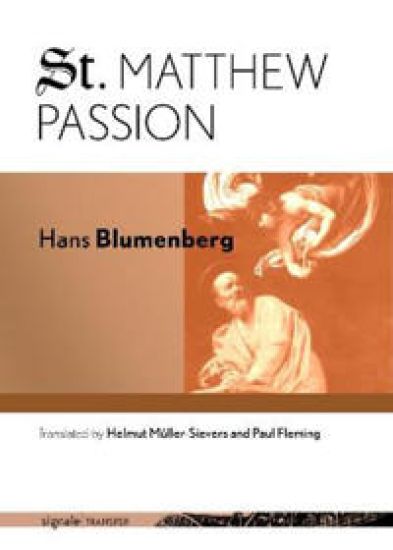
St. Matthew Passion

St. Matthew Passion

Hans Blumenberg

Cornell University Press
2021
sidottu
St. Matthew Passion is Hans Blumenberg's sustained and devastating meditation on Jesus's anguished cry on the cross, "My God, my God, why have you forsaken me?" Why did this abandonment happen, what does it mean within the logic of the Gospels, how have believers and nonbelievers understood it, and how does it live on in art? With rare philological acuity and vast historical learning, Blumenberg unfolds context upon context in which this cry has reverberated, from early Christian apologetics and heretics to twentieth-century literature and philosophy. Blumenberg's guide through this unending story of divine abandonment is Johann Sebastian Bach's monumental Matthäuspassion, the parabolic mirror that bundled eighteen hundred years of reflection on the fate of the crucified and the only available medium that allows us post-Christian listeners to feel the anguish of those who witnessed the events of the Passion. With interspersed references to writers such as Goethe, Rilke, Kafka, Freud, and Benjamin, Blumenberg gathers evidence to raise the singular question that, in his view, Christian theology has not been able to answer: How can an omnipotent God be so offended by his creatures that he must sacrifice and abandon his own Son?
Lions

Lions

Hans Blumenberg

Seagull Books London Ltd
2021
nidottu
For distinguished philosopher Hans Blumenberg, lions were a life-long obsession. Lions, translated by Kári Driscoll, collects thirty-two of Blumenberg’s philosophical vignettes to reveal that the figure of the lion unites two of his other great preoccupations: metaphors and anecdotes as non-philosophical forms of knowledge. Each of these short texts, sparkling with erudition and humor, is devoted to a peculiar leonine presence—or, in many cases, absence—in literature, art, philosophy, religion, and politics. From Ecclesiastes to the New Testament Apocrypha, Dürer to Henri Rousseau, Aesop and La Fontaine to Rilke and Thomas Mann, the extraordinary breadth of Blumenberg’s knowledge and intellectual curiosity is on full display. Lions has much to offer readers, both those already familiar with Blumenberg’s oeuvre and newcomers looking for an introduction to the thought of one of Germany’s most important postwar philosophers.
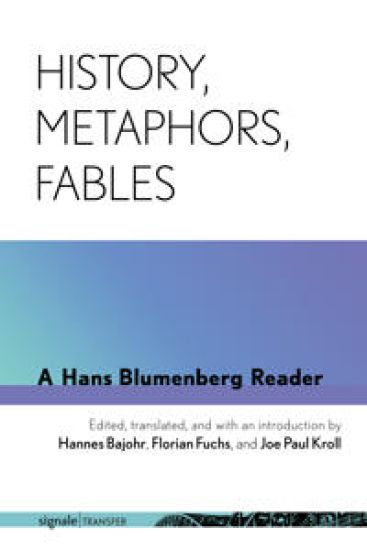
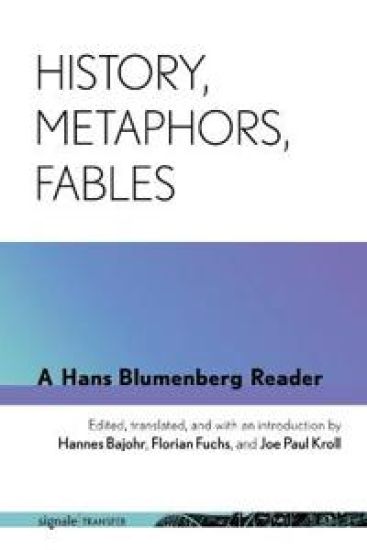
History, Metaphors, Fables

History, Metaphors, Fables

Hans Blumenberg

Cornell University Press and Cornell University Library
2020
sidottu
History, Metaphors, Fables collects the central writings by Hans Blumenberg and covers topics such as on the philosophy of language, metaphor theory, non-conceptuality, aesthetics, politics, and literary studies. This landmark volume demonstrates Blumenberg's intellectual breadth and gives an overview of his thematic and stylistic range over four decades. Blumenberg's early philosophy of technology becomes tangible, as does his critique of linguistic perfectibility and conceptual thought, his theory of history as successive concepts of reality", his anthropology, or his studies of literature. History, Metaphors, Fables allows readers to discover a master thinker whose role in the German intellectual post-war scene can hardly be overestimated.
History, Metaphors, Fables

History, Metaphors, Fables

Hans Blumenberg

Cornell University Press and Cornell University Library
2020
pokkari
History, Metaphors, Fables collects the central writings by Hans Blumenberg and covers topics such as on the philosophy of language, metaphor theory, non-conceptuality, aesthetics, politics, and literary studies. This landmark volume demonstrates Blumenberg's intellectual breadth and gives an overview of his thematic and stylistic range over four decades. Blumenberg's early philosophy of technology becomes tangible, as does his critique of linguistic perfectibility and conceptual thought, his theory of history as successive concepts of reality", his anthropology, or his studies of literature. History, Metaphors, Fables allows readers to discover a master thinker whose role in the German intellectual post-war scene can hardly be overestimated.
Lions

Lions

Hans Blumenberg

Seagull Books London Ltd
2018
sidottu
For distinguished philosopher Hans Blumenberg, lions were a life-long obsession. Lions, translated by Kari Driscoll, collects thirty-two of Blumenberg's philosophical vignettes to reveal that the figure of the lion unites two of his other great preoccupations: metaphors and anecdotes as non-philosophical forms of knowledge. Each of these short texts, sparkling with erudition and humor, is devoted to a peculiar leonine presence or, in many cases, absence in literature, art, philosophy, religion, and politics. From Ecclesiastes to the New Testament Apocrypha, Durer to Henri Rousseau, Aesop and La Fontaine to Rilke and Thomas Mann, the extraordinary breadth of Blumenberg's knowledge and intellectual curiosity is on full display. Lions has much to offer readers, both those already familiar with Blumenberg's oeuvre and newcomers looking for an introduction to the thought of one of Germany's most important postwar philosophers.
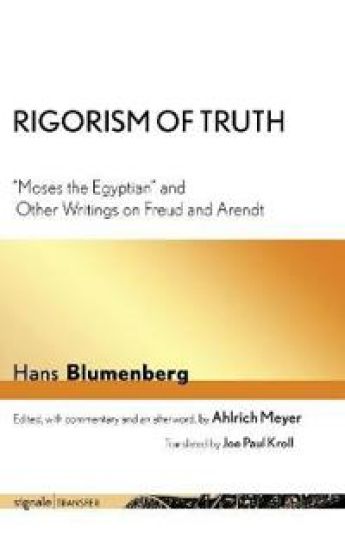
Rigorism of Truth

Rigorism of Truth

Hans Blumenberg

Cornell University Press
2018
sidottu
In "Moses the Egyptian"—the centerpiece of Rigorism of Truth, the German philosopher Hans Blumenberg addresses two defining figures in the intellectual history of the twentieth century: Sigmund Freud and Hannah Arendt. Unpublished during his lifetime, this essay analyzes Freud's Moses and Monotheism (1939) and Arendt's Eichmann in Jerusalem (1963), and discovers in both a principled rigidity that turns into recklessness because it is blind to the politics of the unknown. Offering striking insights into the importance of myth in politics and the extent to which truth can be tolerated in adversity, the essay also provides one of the few instances where Blumenberg reveals his thinking about Judaism and Zionism. Rigorism of Truth also includes commentaries by Ahlrich Meyer that give a fuller understanding of the philosopher's engagement with Freud, Arendt, and the Eichmann trial, as well as situating these reflections in the broader context of Blumenberg's life and thought.
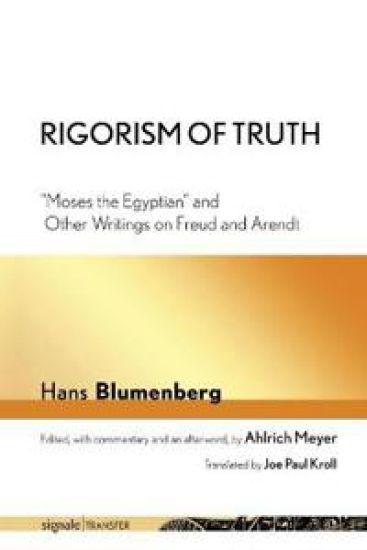
Rigorism of Truth

Rigorism of Truth

Hans Blumenberg

Cornell University Press
2018
pokkari
In "Moses the Egyptian"—the centerpiece of Rigorism of Truth, the German philosopher Hans Blumenberg addresses two defining figures in the intellectual history of the twentieth century: Sigmund Freud and Hannah Arendt. Unpublished during his lifetime, this essay analyzes Freud's Moses and Monotheism (1939) and Arendt's Eichmann in Jerusalem (1963), and discovers in both a principled rigidity that turns into recklessness because it is blind to the politics of the unknown. Offering striking insights into the importance of myth in politics and the extent to which truth can be tolerated in adversity, the essay also provides one of the few instances where Blumenberg reveals his thinking about Judaism and Zionism. Rigorism of Truth also includes commentaries by Ahlrich Meyer that give a fuller understanding of the philosopher's engagement with Freud, Arendt, and the Eichmann trial, as well as situating these reflections in the broader context of Blumenberg's life and thought.
Paradigms for a Metaphorology

Paradigms for a Metaphorology

Hans Blumenberg

Cornell University Press
2016
pokkari
What role do metaphors play in philosophical language? Are they impediments to clear thinking and clear expression, rhetorical flourishes that may well help to make philosophy more accessible to a lay audience, but that ought ideally to be eradicated in the interests of terminological exactness? Or can the images used by philosophers tell us more about the hopes and cares, attitudes and indifferences that regulate an epoch than their carefully elaborated systems of thought? In Paradigms for a Metaphorology, originally published in 1960 and here made available for the first time in English translation, Hans Blumenberg (1920-1996) approaches these questions by examining the relationship between metaphors and concepts. Blumenberg argues for the existence of "absolute metaphors" that cannot be translated back into conceptual language. "Absolute metaphors" answer the supposedly naïve, theoretically unanswerable questions whose relevance lies quite simply in the fact that they cannot be brushed aside, since we do not pose them ourselves but find them already posed in the ground of our existence. They leap into a void that concepts are unable to fill. An afterword by the translator, Robert Savage, positions the book in the intellectual context of its time and explains its continuing importance for work in the history of ideas.
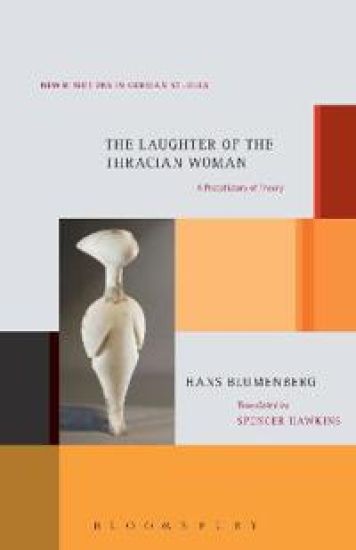
The Laughter of the Thracian Woman

The Laughter of the Thracian Woman

Hans Blumenberg

Bloomsbury Academic USA
2015
sidottu
An important work by 20-century philosopher Hans Blumenberg, here translated into English for the first time, The Laughter of the Thracian Woman describes the reception history of an anecdote best known from Plato’s Theaetetus dialogue: while focused on observing the stars, the early astronomer and proto-philosopher Thales of Miletus fails to see a well directly in his path and tumbles down. A Thracian servant girl laughs, amused that he sought to understand what was above him when he was not mindful of what was right in front of him. Blumenberg sees the story as a highly sought substitute for our missing knowledge of the earliest historical events that would fit the label “theory.” By retelling the anecdote, philosophers reveal their distinctive values regarding absorption in curiosity, philosophy’s past, and the demand that theorists abide by sanctioned methods and procedures. In this work and others, Blumenberg demonstrates that philosophers’ most beloved images and anecdotes have become indispensable to philosophy as metaphors; that is, as representations whose meanings remain indefinite and invite frequent reinterpretation.