Kirjojen hintavertailu. Mukana 12 459 402 kirjaa ja 12 kauppaa.

Kirjailija

Hans-Georg Gadamer

Kirjat ja teokset yhdessä paikassa: 67 kirjaa, julkaisuja vuosilta 1971-2026, suosituimpien joukossa Mirror Image and Therapy. Vertaile teosten hintoja ja tarkista saatavuus suomalaisista kirjakaupoista.

Mukana myös kirjoitusasut: Hans Georg Gadamer

67 kirjaa

Kirjojen julkaisuhaarukka 1971-2026.

Plato's Dialectical Ethics

Plato's Dialectical Ethics

Hans-Georg Gadamer

Yale University Press
2010
pokkari
Plato's Dialectical Ethics, Gadamer's earliest work, has now been translated into English for the first time. This classic book, published in 1931 and reprinted in 1967 and 1982, is still important today. It is one of the most extensive and imaginative interpretations of Plato's Philebus and an ideal introduction to Gadamer's thinking. It shows how his influential hermeneutics emerged from the application of his teacher Martin Heidegger's phenomenological method to classical texts and problems.The work consists of two chapters. The first, which puts Socratic/Platonic dialectics and ethics in the context of Gadamer's thinking about how we come to shared understanding through conversation, helps to clarify the intentions and trajectory of all Gadamer's subsequent work.The second chapter, on the Philebus, will interest everyone who is concerned with the connection between Plato's discussions of ethics and those of Aristotle, and with the substantive issues of the relation between pleasure and reason that Plato explores and Gadamer interprets. This edition includes a new and useful introduction by the translator, Robert M. Wallace.
Gesammelte Werke

Gesammelte Werke

Hans-Georg Gadamer

Mohr Siebeck
2010
nidottu
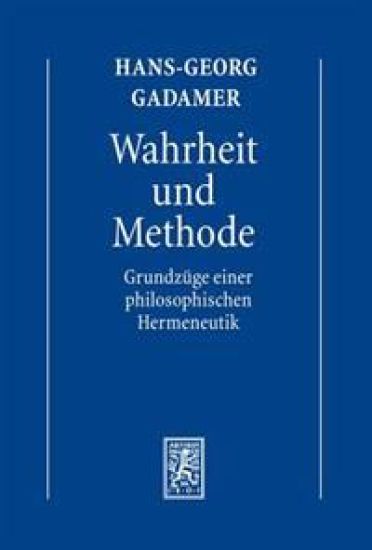
"Wir sagen, daß wir ein Gespräch führen, aber je eigentlicher ein Gespräch ist, desto weniger liegt die Führung desselben in dem Willen des einen oder anderen Partners. (...) Was bei einem Gespräch herauskommt, weiß keiner vorher."(Gadamer, "Wahrheit und Methode" I, S. 387)Das Hauptwerk "Wahrheit und Methode" erscheint 2010, genau 50 Jahre nach der Erstausgabe, in durchgesehener und korrigierter Form als preiswerte Studienausgabe. Dieses Buch, das sein Autor erst im Alter von 60 Jahren schrieb, wurde zu einem Überraschungserfolg der philosophischen Literatur. Als eines der wenigen weltweit anerkannten Standardwerke der deutschen Nachkriegsphilosophie wurde es in viele Sprachen übersetzt.Die große Resonanz könnte aus vielerlei Gründen erstaunen, unter anderem weil hier nur in Andeutungen eine große neue Theorie mit eigenem begrifflichen Instrumentarium vorgestellt wird; der Autor umkreist vorsichtig uralte Themen des philosophischen Weltzugangs. Vor allem geht es um die Frage: Was geschieht eigentlich, wenn wir verstehen? Er stellt die geschichtliche Dimension des Verstehens in den Mittelpunkt, auch durch seine berühmte Rehabilitierung des "Vorurteils". Die systematischen Exkurse werden ergänzt durch eine Geistesgeschichte der Hermeneutik, die in ihrer virtuosen Behandlung so unterschiedlicher Anreger wie Hegel, Dilthey, Husserl und Heidegger überzeugt. Die Freundlichkeit und Sachlichkeit, mit der Gadamer seinen Leser ins Gespräch einlädt, machen den Rang dieses vorbildlichen Lehrbuchs aus.
Gesammelte Werke

Gesammelte Werke

Hans-Georg Gadamer

Mohr Siebeck
2010
sidottu
"Wir sagen, daß wir ein Gespräch führen, aber je eigentlicher ein Gespräch ist, desto weniger liegt die Führung desselben in dem Willen des einen oder anderen Partners. (...) Was bei einem Gespräch herauskommt, weiß keiner vorher."(Gadamer, "Wahrheit und Methode" I, S. 387)Das Hauptwerk "Wahrheit und Methode" erscheint 2010, genau 50 Jahre nach der Erstausgabe, in durchgesehener und korrigierter Form als preiswerte Studienausgabe. Dieses Buch, das sein Autor erst im Alter von 60 Jahren schrieb, wurde zu einem Überraschungserfolg der philosophischen Literatur. Als eines der wenigen weltweit anerkannten Standardwerke der deutschen Nachkriegsphilosophie wurde es in viele Sprachen übersetzt.Die große Resonanz könnte aus vielerlei Gründen erstaunen, unter anderem weil hier nur in Andeutungen eine große neue Theorie mit eigenem begrifflichen Instrumentarium vorgestellt wird; der Autor umkreist vorsichtig uralte Themen des philosophischen Weltzugangs. Vor allem geht es um die Frage: Was geschieht eigentlich, wenn wir verstehen? Er stellt die geschichtliche Dimension des Verstehens in den Mittelpunkt, auch durch seine berühmte Rehabilitierung des "Vorurteils". Die systematischen Exkurse werden ergänzt durch eine Geistesgeschichte der Hermeneutik, die in ihrer virtuosen Behandlung so unterschiedlicher Anreger wie Hegel, Dilthey, Husserl und Heidegger überzeugt. Die Freundlichkeit und Sachlichkeit, mit der Gadamer seinen Leser ins Gespräch einlädt, machen den Rang dieses vorbildlichen Lehrbuchs aus.
Philosophical Hermeneutics, 30th Anniversary Edition

Philosophical Hermeneutics, 30th Anniversary Edition

Hans-Georg Gadamer

University of California Press
2008
pokkari
This excellent collection contains 13 essays from Gadamer's "Kleine Schriften", dealing with hermeneutical reflection, phenomenology, existential philosophy, and philosophical hermeneutics. Gadamer applies hermeneutical analysis to Heidegger and Husserl's phenomenology, an approach that proves critical and instructive.
The Gadamer Reader

The Gadamer Reader

Hans-Georg Gadamer

Northwestern University Press
2007
nidottu
The German volume ""Gadamer Lesebuch"" [A Gadamer Reader] (1997), selected and edited by Jean Grondin in consultation with Hans-Georg Gadamer himself, contains a set of essays that present a cross section of writings by one of the twentieth century's greatest philosophers. The volume begins with an autobiographical sketch and culminates in a conversation with Jean Grondin that looks back over a lifetime of productive philosophical work. The essays not already available in English have here been translated by Richard E. Palmer, a respected translator of Gadamer's writings. The sixteen essays contained in the Lesebuch are augmented here by three other essays: Gadamer's last essay on Derrida, ""Hermeneutics Tracking the Trace"" (1994) and two essays on practical philosophy. ""The Gadamer Reader: A Bouquet of the Later Writings"" richly conveys the scope and depth of Gadamer's thought, covering the range of his work in hermeneutics, aesthetics, practical philosophy, and essays on Plato, Hegel, and Heidegger. In addition, Palmer offers introductory remarks before each essay that explain its importance in the context of Gadamer's writings and define its key terms. Throughout, in both his translation and commentary, his aim is to make this critically important philosopher as clear and accessible as possible to an English-speaking audience.
The Gadamer Reader

The Gadamer Reader

Hans-Georg Gadamer

Northwestern University Press
2007
sidottu
The German volume ""Gadamer Lesebuch"" [A Gadamer Reader] (1997), selected and edited by Jean Grondin in consultation with Hans-Georg Gadamer himself, contains a set of essays that present a cross section of writings by one of the twentieth century's greatest philosophers. The volume begins with an autobiographical sketch and culminates in a conversation with Jean Grondin that looks back over a lifetime of productive philosophical work. The essays not already available in English have here been translated by Richard E. Palmer, a respected translator of Gadamer's writings. The sixteen essays contained in the Lesebuch are augmented here by three other essays: Gadamer's last essay on Derrida, ""Hermeneutics Tracking the Trace"" (1994) and two essays on practical philosophy. ""The Gadamer Reader: A Bouquet of the Later Writings"" richly conveys the scope and depth of Gadamer's thought, covering the range of his work in hermeneutics, aesthetics, practical philosophy, and essays on Plato, Hegel, and Heidegger. In addition, Palmer offers introductory remarks before each essay that explain its importance in the context of Gadamer's writings and define its key terms. Throughout, in both his translation and commentary, his aim is to make this critically important philosopher as clear and accessible as possible to an English-speaking audience.
Sandhed og metode

Sandhed og metode

Hans-Georg Gadamer

Gyldendal
2007
nidottu
Hans-Georg Gadamers (1900-2002) Wahrheit und Methode, der udkom første gang i 1960, er ikke blot en moderne klassiker inden for hermeneutikken og fortolkningsteorien, men har også en central placering i den aktuelle filosofiske debat. Gadamers vigtigste inspirationskilde er Martin Heideggers analyse af den menneskelige væremåde, som han overfører på sproget, kunsterfaringen og den humanvidenskabelige erkendelse. Grundtanken er, at forståelse ikke primært er noget, som subjektet - metodisk og erkendelsesteoretisk - yder og tager i besiddelse. "Spørgsmålet er ikke hvad vi gør, ikke hvad vi skal gøre, men derimod hvad der sker med os ud over det, vi bevidst vil og gør". Forståelse er en "sandhedshændelse": at en sag eller problemstilling pludseligt ses i et nyt lys, hvilket samtidig giver os en ny forståelse af os selv. Denne proces foregår ifølge Gadamer som en "dialog", en bestandig vekslen mellem spørgsmål og svar. Gadamer er selv hele tiden i dialog med den filosofiske tradition, hvilket resulterer i nogle originale nyfortolkninger af bl.a. Platon, Aristoteles, Kant og Hegel. Sandhed og metode er oversat fra den sidste reviderede udgave (1986) af Arne Jørgensen, der også har skrevet en introduktion til værket.
Forståelsens filosofi

Forståelsens filosofi

Hans-Georg Gadamer

Cappelen Damm akademisk
2007
nidottu
Er det viktig å forstå eller holder det å kunne telle? Spørsmålet er like aktuelt i samfunnslivet som i vitenskapen. Midt i forrige århundre grunnla den tyske filosofen og Heidegger-eleven Hans-Georg Gadamer (1900-2002) hermeneutikken som en forståelsens filosofi. Med sitt hovedverk Sannhet og metode fra 1960 skapte han en av vår tids største filosofiske klassikere. Forståelsens filosof samler et utvalg der Gadamer skritt for skritt utvikler sin teori om den hermeneutiske forståelse. Første del introduserer en rekke filosofiske grunntanker, om sannhet, språk og historie, mens annen del tar for seg hermeneutikken i dens brytning med andre perspektiver og teorier, innenfor naturvitenskap, samfunnsvitenskap, teologi, retorikk og politikk. Målet med utvalget er å gi en best mulig introduksjon til hermeneutikken som tenkemåte og samtidig å vise dens aktualitet for samtidige debatter og problemstillinger hvor det faktisk er stor forskjell på å forstå og å bruke kuleramme. Utvalg, oversettelse og etterord er ved Helge Jordheim. Hva vil det si å fortolke? Hvilken stilling kan og bør sannhetsbegrepet ha i humaniora? Hva er det filosofiske grunnlaget for det 20.ende århundre? Hvilke områder innen vitenskap og tenkning er berørt av fortokningsproblemer? Vi presenterer her noen essay av Hans-Georg Gadamers som gir innblikk i hans almene fortolkningsfilosofi og som søker å gi svar på spørsmålene over. Utvalget er fra Wahrheit und Metode II (1993) og Philosophische Hermeneutik (1976). Innledning, oversettelse og utvalg ved Helge Jordheim. Nr. 45 i Cappelens upopulære skrifter.
A Century of Philosophy

A Century of Philosophy

Hans-Georg Gadamer

Continuum Publishing Corporation
2006
nidottu
A philosophical and historical testament to the twentieth century, this volume consists of a wide-ranging series of interviews conducted in 1999/2000 between the then centenarian and his former assistant and associate of over thirty years, Riccardo Dottori.These ten dialogues distill and situate Gadamer's philosophy in the context of what has arguably been the bloodiest century in human history. In the course of the interviews, Gadamer addresses-often critically-the work of a wide variety of philosophers, including Heidegger, Nietzsche, Jaspers, Popper, Vico, Habermas, Rorty, and Derrida. He also elaborates on German philosophy during the Nazi period; and, in one of the more fascinating conversations, we are treated to a glimpse of Gadamer's personal perspective on the question of Heidegger's Nazism, including a discussion of the political influence that great philosopher's wife, Elfirde, had on him that tends to contradict most other published accounts. With the possible exception of his autobiography 1985, A Century of Philosophy is perhaps the most accessible expression of Gadamer's life and work in English today.
Esquisses Hermeneutiques: Essais Et Conferences

Esquisses Hermeneutiques: Essais Et Conferences

Hans Georg Gadamer

Librarie Philosophique J. Vrin
2004
nidottu
Dans cet ouvrage, Gadamer (1900-2002) nous confie un veritable testament philosophique. Abordant des questions centrales de la pensee contemporaine, le maitre de l'hermeneutique livre ici ses dernieres reflexions sur des themes qui lui tiennent a coeur: l'art et la poesie, la reconnaissance et l'humanisme, l'amitie et l'ecoute. L'hermeneutique, selon Gadamer, est la theorie selon laquelle nous devons apprendre a ecouter.
The Beginning of Knowledge

The Beginning of Knowledge

Hans-Georg Gadamer

Continuum International Publishing Group Ltd.
2003
nidottu
This book brings together nearly all of GadamerAEs previously published but never translated essays on the Presocratics. Beginning with a hermeneutical and philological investigation of the Heraclitus fragments (1974 and 1990), he then moves on to a discussion of the Greek Atomists (1935) and the Presocratic cosmologists (1964). In the last two essays (1978 and 1994/95), Gadamer elaborates on the profound debt that modern scientific thinking owes to the Greek philosophical tradition.
Les Chemins de Heidegger

Les Chemins de Heidegger

Hans Georg Gadamer

Librarie Philosophique J. Vrin
2002
nidottu
Ce livre offre une formidable introduction a la pensee de Marti Heidegger, comme il y en a peu et comme il n'y en aura plus. Temoin de la premiere heure, eleve et ami personnel de Heidegger, grand philosophe et hermeneute, Hans-Georg Gadamer a suivi de pres le parcours de son maitre a travers tous les detours de son chemin de pensee et les vicissitudes de son siecle. Present au debut de l'enseignement de Heidegger a Fribourg en 1923, donc avant que la parution de Etre et temps en 1927 ne lui confere une notoriete mondiale, Gadamer etait encore la quand son chemin s'est termine en 1976 pour nous dire ce qui s'etait passe au juste, ce que signifiait ce langage prodigieux, mais difficile, qu'avait invente Heidegger et ce qu'il recherchait quand il mettait en question, et depuis le debut de son itineraire, tout l'heritage de la philosophie occidentale.
The Beginning of Knowledge

The Beginning of Knowledge

Hans-Georg Gadamer

Continuum International Publishing Group Ltd.
2001
sidottu
In this work Gadamer reminds us that philosophy for the Greeks was not just a question of metaphysics and epistemology but encompassed cosmology, physics, mathematics, medicine and the entire reach of theoretical curiosity and intellectual mastery. Whereas Gadamer's book "The Beginning of Philosophy" dealt with the inception of philosophical inquiry, this book brings together nearly all of his previously published but never translated essays on the Presocratics. Beginning with a hermeneutical and philological investigation of the Heraclitus fragments (1974 and 1990), he then moves on to a discussion of the Greek Atomists (1935) and the Presocratic cosmologists (1964). In the last two essays (1978 and 1994/95), Gadamer elaborates on the profound debt that modern scientific thinking owes to the Greek philosophical tradition.
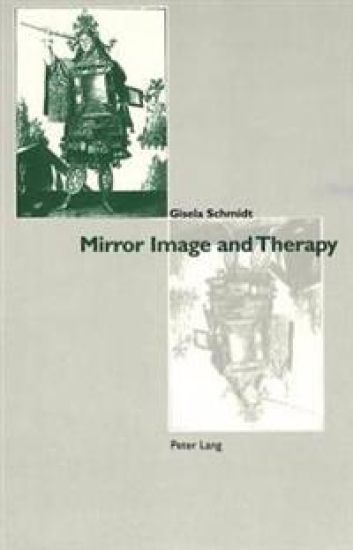
Mirror Image and Therapy

Mirror Image and Therapy

Gisela Schmidt; Hans-Georg Gadamer

Verlag Peter Lang
2001
nidottu
This study presents a wide-ranging thesis on the basis of Gadamer's hermeneutic philosophy. It is unusually multidisciplinary in approach and content including the domains of philosophy, art history and analytic psychotherapy. Its central thesis that mirrors and mirroring in the Western tradition of painting might be analogical to the varieties of 'mirroring' in the conversations between therapist and patient is interpreted as Gadamerian 'fusion of horizons' with an increase in understanding of both the pictures with mirrors and an analogical mirroring in a patient's 'text' or "tableau." Chapters devoted to the analogical scheme of interpretation, hermeneutic psychotherapy as 'reflective participation', mirroring in psychotherapy, mirrors and mirroring and their ontological value, hermeneutics of art and its particular hermeneutic conversation, and finally to mirrors in paintings culminate in a presentation of eight 'double interpretations'. There the author takes the reader through clinical vignettes drawn from real published case-studies juxtaposed with paintings in which mirrors play an analogical role. The 'double interpretations' of various forms of Narcissistic Mirroring, Convex Mirroring, Anamorphic Mirroring, Medusan, Janusian and Athenean Mirroring are both empirically sound and strikingly original. The book is a creative example of object hermeneutics within the domain of Gadamerian philosophical hermeneutics.
Gesammelte Werke

Gesammelte Werke

Hans-Georg Gadamer

Mohr Siebeck
2001
sidottu
"Die vorliegende Sammlung meiner Arbeiten will ein weit zerstreutes wissenschaftliches Schrifttum sachlich und zeitlich geordnet zugänglich machen. Sie möchte als eine Ausgabe letzter Hand gelten, in die Verbesserungen und Hinzufügungen vom Autor selber eingearbeitet sind."Die Texte vorheriger Ausgaben sind für die entsprechenden Bände der Gesammelten Werke von Gadamer neu durchgesehen worden. Der Text blieb, von geringfügigen Glättungen abgesehen, unverändert, soweit nicht anders vermerkt. Die Seitenzahlen alter Ausgaben werden am Rand wiederholt. Anmerkungen, die auf den Fortgang der Forschung hinweisen, wurden beträchtlich vermehrt oder erweitert.Alle Ergänzungen, sowie alle Erweiterungen und Hinzufügungen von Anmerkungen sind durch eckige Klammern kenntlich gemacht.Wo es Gadamer sinnvoll erschien, hat er Namens- und Sachregister, auch gemeinsame für zueinander gehörige Bände, angehängt.Am Schluß des zehnten Bandes steht das Gesamtinhaltsverzeichnis aller Bände mit alphabetischen Registern der Titel, auch für die englischen, französischen und italienischen Übersetzung.
Das Problem des historischen Bewußtseins

Das Problem des historischen Bewußtseins

Hans-Georg Gadamer

JCB Mohr (Paul Siebeck)
2001
nidottu
Hans-Georg Gadamer zeichnet in diesem Text die Entstehung des historischen Bewußtseins in den modernen Geisteswissenschaften nach, um darauf aufbauend seine eigene Hermeneutik in grober Skizze zu entwickeln. Seine historische Rekonstruktion führt ihn dabei von der deutschen Romantik und dem deutschen Idealismus - vor allem Schleiermacher und Hegel - über Droysens 'Historik' und Diltheys lebensphilosophisch inspirierte Hermeneutik bis zu Heideggers 'Hermeneutik der Faktizität'. Hans-Georg Gadamer setzt sich vor allem mit der in dieser Rekonstruktion aufkommenden Vorstellung von 'Geschichte' und 'Geschichtlichkeit' und mit deren Bedeutung für die Hermeneutik auseinander. Er entwickelt in Anlehnung an zentrale Ideen der aristotelischen Philosophie seinen Ansatz einer nicht nur Geschichte thematisierenden, sondern sich selbst sui generis geschichtlich verstehenden und prozedierenden Hermeneutik, die die eigene Traditionsgebundenheit nicht als Manko, sondern als Aufgabe begreift.Die Logik der Argumentation folgt dabei der in seinem Hauptwerk Wahrheit und Methode entworfenen Linie, nur eben in knapper gehaltener und daher prägnanter formulierter Form.Entstanden 1958 kurz nach der Fertigstellung von Wahrheit und Methode und vorgetragen als eine erste Präsentation seines Neuansatzes vor einem französischen Publikum, läßt sich dieser Text als eine Einführung in Gadamers Denken und zugleich als eine Kurzversion seines Hauptwerkes verstehen.
Beginning of Philosophy

Beginning of Philosophy

Hans-Georg Gadamer

Continuum International Publishing Group Ltd.
2000
nidottu
Hans-Georg Gadamer is considered to have made the most important contribution to hermeneutics of this century through his major work, Truth and Method. Born in Marburg on February 11, 1900, he earned his doctorate under Paul Natorp, the Plato scholar, in 1922 and completed his habilitation thesis on Plato's dialectical ethics under Martin Heidegger in 1928. He spent the major portion of his teaching career at the University of Heidelberg, becoming emeritus professor in 1968. In retirement he became widely known in the United States through his regular fall courses at Boston college and his numerous lectures at major universities throughout the century.
Hermeneutische Entwürfe

Hermeneutische Entwürfe

Hans-Georg Gadamer

Mohr Siebeck
2000
nidottu
Als eine Art Nachlese zu seinen 'Gesammelten Werken' legt der Verfasser hier Aufsätze und für den Druck überarbeitete Vorträge aus letzter Zeit vor, in denen er seine früheren Arbeiten ergänzt und fortführt.Den Abschluß des Bandes bietet eine kleine Gruppe von Texten, die nicht eigentlich zum Arbeitsgebiet des Verfassers gehören, aber umso mehr zum Bereich seiner Neigungen.