Kirjojen hintavertailu. Mukana 12 325 927 kirjaa ja 12 kauppaa.

Kirjailija

Harald Haarmann

Kirjat ja teokset yhdessä paikassa: 33 kirjaa, julkaisuja vuosilta 1986-2025, suosituimpien joukossa Tonavan mysteeri. Vertaile teosten hintoja ja tarkista saatavuus suomalaisista kirjakaupoista.

33 kirjaa

Kirjojen julkaisuhaarukka 1986-2025.

Tonavan mysteeri

Tonavan mysteeri

Harald Haarmann

Basam Books
2025
nidottu
Arkeologisten löytöjen valossa maailman kenties vanhin sivilisaatio on vallinnut Euroopassa. Jopa muinaisen Sumerin, Egyptin ja Indusjoen laakson kulttuureja vanhempi Tonavan sivilisaatio kukoisti Kaakkois-Euroopan ja nykyisen Ukrainan alueella kuudennen ja neljännen vuosituhannen välillä ennen ajanlaskun alkua. Vilkkaan ja laajan kaupankäynnin luoma vauraus näkyi mm. taidokkaana keramiikkana ja metalliesineistönä. Kirjoitusmerkit viittaavat kirjoitustaitoon kauan ennen Mesopotamian nuolenpäitä.Yhteiskunta oli tasa-arvoinen ja naisilla oli todennäköisesti arvostettu asema, ehkä merkittävämpi kuin miehillä. Suuri osa säilyneistä patsaista kuvaa naisia ja naispuolisia jumalattaria, joiden asema oli hallitseva uskonnollisessa elämässä.Teos kuvaa Vanhan Euroopan kauppareittejä, rakennuksia, taidetta, käsityötä ja mytologiaa ja tutkii sen vaikutusta antiikin Kreikkaan ja Lähi-itään.Saksalaisen kielitieteilijän ja kulttuurihistorioitsijan Harald Haarmannin teoksia on käännetty kymmenille kielille.Harald Haarmann on saksalainen lingvisti. Lingvististen teosten ohella hän on kirjoittanut myös kulttuuria, historiaa ja arkeologiaa käsitteleviä kirjoja, joista kymmenet on käännetty useille eri kielille.

Highlighting European Values

Highlighting European Values

Harald Haarmann

Springer International Publishing AG
2025
sidottu
This book sheds light on the achievements of the Old European civilization, also known as the Danube civilization, which flourished between 6000 and 3000 BCE. Contrary to popular belief, many elements attributed to Greek origins stem from this pre-Greek culture. Modern research reveals that ancient civilizations developed along two distinct paths: communitarian administration without social hierarchy, as seen in the Danube and Indus civilizations, and state models with hierarchical structures, exemplified by Sumerian and Egyptian cultures. This book highlights how the values and innovations of Old Europe laid the foundation for Greek civilization and, subsequently, Western civilization. By exploring these roots, the study provides modern Europeans with a deeper understanding of their heritage and the diverse origins of their cultural values. The book will appeal to scholars, researchers, and students of political science, history, cultural studies, and anthropology, as well as to everyone interested in a better understanding of European heritage, its values, and the Danube civilization.
Sprache, Schrift, Bild

Sprache, Schrift, Bild

Harald Haarmann

PETER LANG AG
2022
nidottu
Die l ngste Zeit w hrend der Kulturgeschichte haben Menschen Vorstellungen von Parallelwelten gepflegt - von einer diesseitigen Sph re und von einer jenseitigen Sph re, die von bersinnlichen Gestalten bev lkert ist. Seit jeher waren die Menschen darum bem ht, die Intentionen der Instanzen in der jenseitigen Sph re zu ergr nden, um deren Wohlwollen f r sich zu erlangen. Die Sph re des bersinnlichen erschlie t sich ber die Religion. Das Gemeinsame in allen Religionen ist deren weitgehend hnlich strukturiertes Fundament. Und der Baustoff dieses Fundaments ist Spiritualit t. Sprache, Schrift und Bilder, diese wichtigen Komponenten zum Aufbau von Kultur, werden f r die religi se Kommunikation eingesetzt und in Riten und Ritualen aktiviert. In dieser Studie werden die Umrisse f r eine Urgeschichte der Transzendenz skizziert, respektive f r eine anthropologische Konstante in allen Kulturen.
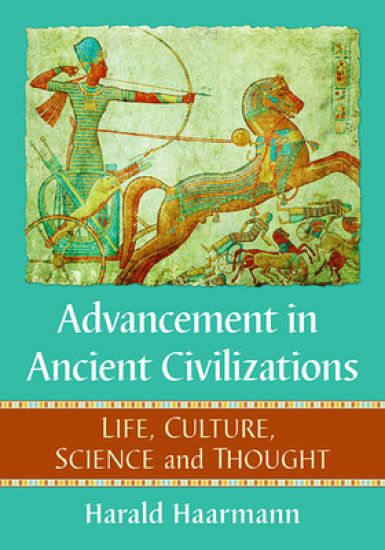
Advancement in Ancient Civilizations

Advancement in Ancient Civilizations

Harald Haarmann

McFarland Co Inc
2020
pokkari
Traditional scholarship on how ancient civilizations emerged is outmoded and new insights call for revision. According to the well-established paradigm, Mesopotamia is considered the cradle of civilization. Following the cliche of ex oriente lux ("light from the East") all major achievements of humankind spread from the Middle East. Modern archaeology, cultural science and historical linguistics indicate civilizations did not originate from a single prototype. Several models produced divergent patterns of advanced culture, developing both hierarchical and egalitarian societies. This study outlines a panorama of ancient civilizations, including the still little-known Danube civilization, now identified as the oldest advanced culture in Europe. In a comparative view, a new paradigm of research and a new cultural chronology of civilizations in the Old and New Worlds emerges, with climate change shown to be a continual influence on human lifeways.
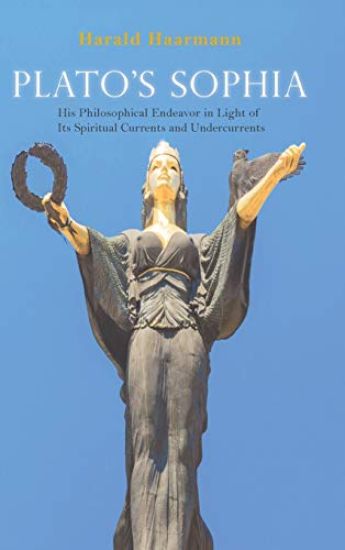
Plato's Sophia

Plato's Sophia

Harald Haarmann

Cambria Press
2019
sidottu
There is no other philosopher in antiquity whose work is as comprehensive as Plato's. However. Plato's writings have often been misinterpreted, and one reason is that during the course of the eighteenth century, philosophy detached itself from the spiritual sphere, as a consequence of the doctrine of the Enlightenment whose representatives established the cult of reason and discarded spirituality. There are manifold spiritual currents and undercurrents in Plato's philosophy. Since Plato's philosophy is oriented to the wholeness of human life, the symbiotic interaction of the philosophical and the spiritual, so obvious in his works, is to be expected. What is surprising is that this symbiosis seems to have been overlooked or intentionally avoided in the mainstream history of philosophy. When we maintain this modern separation of the philosophical from the spiritual and neglect the spiritual currents, our comprehension of Plato's intentions as manifested in his philosophical discourse remains greatly obscured. This study aims at achieving a balance. In Plato's "love for wisdom" (philo-sophia), we may discern the soundings of an intellectual heritage that dates to pre-Greek times, that is to the era of Old Europe (the Danube civilization, respectively), where the wholeness of life was practised for more than 3000 years. In light of the strands of this heritage that left their mark in Plato's work, it is not surprising to learn that, in Indo-European languages, no cognate expression corresponding to the Greek stem soph- can be found. As modern insights from historical linguistics tell us, the isolation of this expression (Sophia) in Greek and its sound structure point to a pre-Greek origin of the term. In other words, the early Greeks embraced an older tradition of reasoning which they considered useful. Plato's Sophiawill be of vital interest for philosophers, cultural scientists, and students of Greek antiquity, as well as for those who take interest in the world of Old Europe and its afterglow.
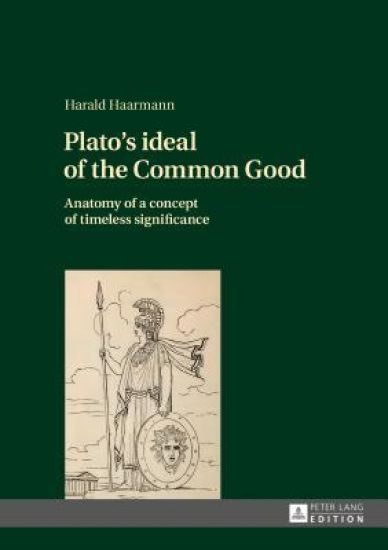
Plato's ideal of the Common Good

Plato's ideal of the Common Good

Harald Haarmann

Peter Lang AG
2017
sidottu
This study documents various historical instances in the development of the concept «Common Good». The author reflects about Plato's theory of Forms, which is infused with the idea of good, as the first principle of being. Plato was not the first philosopher to address the theme of the Common Good although he was the first to construct a political theory around it. This theme has remained a central agenda for philosophers throughout the ages
Modern Finland

Modern Finland

Harald Haarmann

McFarland Co Inc
2016
pokkari
Providing a multifaceted view of modern Finland, this book describes its history, culture, language, geography, natural history and the mythology of early peoples. Topics include Fenno-Scandia inhabitants and their environment, traditional naturalism and modern environmentalism, and the salient features of "Finnishness," including an analysis of the Finnish educational system and gender equality. Finland's art, architecture and music are highlighted, along with its peace-keeping missions worldwide. The country's several ethnic groups and their languages are discussed--the Saami, Finns, Finland-Swedes, Russian-speaking peoples, Jews and Gypsies. The author examines Finland's late but rapid development in commerce and industry, with a focus on the history of Nokia Corporation, which grew from a 19th-century manufacturer of pulpwood and rubber boots to a 21st-century international digital communications company.