Kirjojen hintavertailu. Mukana 12 559 782 kirjaa ja 12 kauppaa.

Kirjailija

Hélène Cixous

Kirjat ja teokset yhdessä paikassa: 98 kirjaa, julkaisuja vuosilta 1986-2026, suosituimpien joukossa Manhattan. Vertaile teosten hintoja ja tarkista saatavuus suomalaisista kirjakaupoista.

Mukana myös kirjoitusasut: Helene Cixous

98 kirjaa

Kirjojen julkaisuhaarukka 1986-2026.

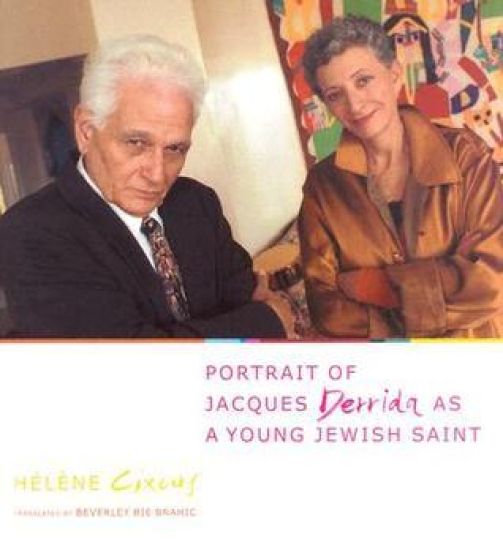
Portrait of Jacques Derrida as a Young Jewish Saint

Portrait of Jacques Derrida as a Young Jewish Saint

Hélène Cixous

Columbia University Press
2004
sidottu
Who can say "I am Jewish?" What does "Jew" mean? What especially does it mean for Jacques Derrida, founder of deconstruction, scoffer at boundaries and fixed identities, explorer of the indeterminate and undecidable? In Portrait of Jacques Derrida as a Young Jewish Saint, French feminist philosopher Helene Cixous follows the intertwined threads of Jewishness and non-Jewishness that play through the life and works of one of the greatest living philosophers. Cixous is a lifelong friend of Derrida. They both grew up as French Jews in Algeria and share a "belonging constituted of exclusion and nonbelonging"-not Algerian, rejected by France, their Jewishness concealed or acculturated. In Derrida's family "one never said 'circumcision'but 'baptism,'not 'Bar Mitzvah'but 'communion.'" Judaism cloaked in Catholicism is one example of the undecidability of identity that influenced the thinker whom Cixous calls a "Jewish Saint." An intellectual contemporary of Derrida, Cixous's ideas on writing have an affinity with his philosophy of deconstruction, which sought to overturn binary oppositions-such as man/woman, or Jew/non-Jew-and blur boundaries of exclusion inherent in Western thought. In portraying Derrida, Cixous uses metonymy, alliteration, rhyme, neologisms, and puns to keep the text in constant motion, freeing language from any rigidity of meaning. In this way she writes a portrait of "Derrida in flight," slipping from one appearance to the next, unable to be fixed in one spot, yet encompassing each point he passes. From the circumcision act to family relationships, through Derrida's works to those of Celan, Rousseau, and Beaumarchais, Cixous effortlessly merges biography and textual commentary in this playful portrait of the man, his works, and being (or not being) Jewish.
The Selected Plays of Hélène Cixous

The Selected Plays of Hélène Cixous

Hélène Cixous

Routledge
2003
nidottu
Cixous' work as a playwright - working mainly with Theatre du Soleil and their director Ariane Mnouchkine - establishes her as a participant in some of the most adventurous European theatre making of the last 40 years. This collection brings together for the first time, four translations into English of Helene Cixous' plays. It is a unique and extraordinary resource for scholars, students and theatre-makers. The collection includes: *The Perjured City, translated by Bernadette Fort *Black Sail, White Sail, translated by Donald Watson *Portrait of Dora, translated by Ann Liddle *Drums on the Dam, translated by Judith G. Miller and Brian J. Mallet This exciting new anthology will disseminate her work to a wide and receptive English-speaking audience.
The Selected Plays of Hélène Cixous

The Selected Plays of Hélène Cixous

Hélène Cixous

Routledge
2003
sidottu
Cixous' work as a playwright - working mainly with Theatre du Soleil and their director Ariane Mnouchkine - establishes her as a participant in some of the most adventurous European theatre making of the last 40 years. This collection brings together for the first time, four translations into English of Helene Cixous' plays. It is a unique and extraordinary resource for scholars, students and theatre-makers. The collection includes: *The Perjured City, translated by Bernadette Fort *Black Sail, White Sail, translated by Donald Watson *Portrait of Dora, translated by Ann Liddle *Drums on the Dam, translated by Judith G. Miller and Brian J. Mallet This exciting new anthology will disseminate her work to a wide and receptive English-speaking audience.
Moral Tales and Meditations

Moral Tales and Meditations

Michael Joyce; Helene Cixous

State University of New York Press
2002
pokkari
Provocative essays and short tales that explore the effect of technology and new media on our everyday lives. Novelist, cyber-theorist, and widely acclaimed hypertext fiction writer Michael Joyce weaves an evocative and provocative set of brief essays and short parable-like fictions into a compelling collection of meditations on how technology and new media affect our culture and everyday lives. Taken together, these pieces present a writer's reflections on a life of sudden changes at the edge of an uncertain future. They continue Joyce's effort to construct what in previous collections he has called "theoretical narratives." Here, however, Joyce turns from reflections to what he terms "refractions," alluding to the turning or bending a wave undergoes when it passes from one medium into another of different density. Through these refractions, he formulates an understanding of the wave of change we face as human beings in a multimediated age.
The Third Body

The Third Body

Helene Cixous

Northwestern University Press
1999
sidottu
In The Third Body, the poet, novelist, feminist critic, and theorist Helene Cixous interweaves a loose narrative line with anecdotes, autobiography, lyricism, myth, dream, fantasy, philosophical insights, and intertextual citations of and conversations with other authors and thinkers. Cixous evokes the relationship of the female narrator and her over, a relationship of alternating presences and absences, separations and rejoinings. This relationship assumes protean forms within a complex web of writing, creating a third body out of the entwined bodies of the narrator and her lover.
Stigmata

Stigmata

Hélène Cixous

Routledge
1998
sidottu
Hèléne Cixous -- author, playwright and French feminist theorist -- is a key figure in twentieth-century literary theory. Stigmata brings together her most recent essays for the first time.Acclaimed for her intricate and challenging writing style, Cixous presents a collection of texts that get away -- escaping the reader, the writers, the book. Cixous's writing pursues authors such as Stendhal, Joyce, Derrida, and Rembrandt, da Vinci, Picasso -- works that share an elusive movement in spite of striking differences. Along the way these essays explore a broad range of poetico-philosophical questions that have become characteristic of Cixous' work:* love's labours lost and found* feminine hours* autobiographies of writing* the prehistory of the work of artStigmata goes beyond theory, becoming an extraordinary writer's testimony to our lives and times.
First Days Of The Year

First Days Of The Year

Helene Cixous

University of Minnesota Press
1998
nidottu
A searching meditation on "authorship" by an eminent theorist.An inner journey across space and time linking the "author" to other poets, this lyrical essay-poem continues Helene Cixous's exhilarating rewriting of notions of boundary, self, other, and author. The renowned source of the notion of ecriture feminine, Cixous here interrogates the status of the author, connecting distant instances of herself with other writers who traverse genders, generations, and national boundaries. In doing so, she pursues the rhythms of a mind thinking, tentatively following each thought from its enigmatic inception through all its twists and turns into the next thought's mysterious beginnings. Here, then, is the "flux full of silent words flowing from one community to the other, from one life to the other, the strange legend, inaudible except to the heart of one or the other, the narrative weaving itself on high". By turns thrilling and chimerical, hypnotic and startling, this first-person meditation -- or, in Freud's term for a dream-text, theorie-fiction -- does not aspire to reflect reality so much as transform the ways in which we perceive it, creating new terms for subjectivity and the "real". Above all, First Days of the Year (published originally in French as Jours de l'an) is a celebration of beginnings and future possibilities, based on necessity and hope, constantly mediating writing and living, life and death. Like all of Cixous's profoundly original works, it seductively leads the reader into a new way of thinking by disrupting fixed ideas of psychic identity, subjectivity, and language.
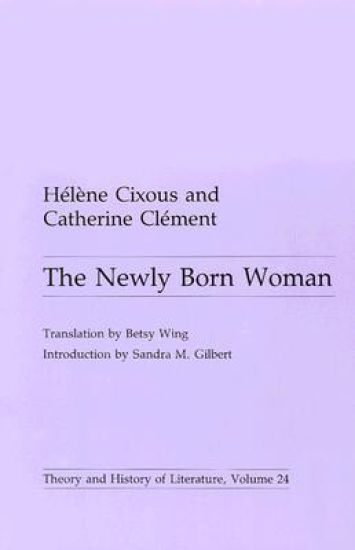
The Newly Born Woman

The Newly Born Woman

Helene Cixous; Catherine Clement; Sandra M. Gilbert

I.B. Tauris
1997
nidottu
This work seeks to uncover the veiled structures of language and society that have situated women in an "imaginary zone", a zone of exclusion. It is an exploration and a dialogue between its two authors, and an exposition of Cixous's influential strategy of "ecriture feminine". Through their readings of historical, literary, psychoanalytical texts, presenting the sorceress, the hysteric, the Tarantella, Penthesileia and Cleopatra among many others, Cixous and Clement explore what is hidden and repressed in culture.
Hélène Cixous, Rootprints

Hélène Cixous, Rootprints

Mireille Calle-Gruber; Hélène Cixous

Routledge
1997
nidottu
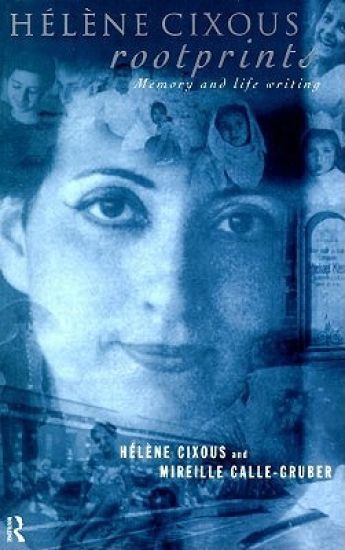
Helene Cixous is undoubtedly one of the most brilliant and innovative contemporary thinkers. Published here in English for the first time Helene Cixous, Rootprints is an ideal introduction to Cixous's theory and her fiction, tracing her development as a writer and intellectual whose remarkable prespicacity and electrifying poetic force are known world-wide.Unprecedented in its form and content this collection breaks new ground in the theory and practice of auto/biography. Cixous's creative reflections on the past provide occasion for scintillating forays into the future.The text includes:* an extended interview between Cixous and Calle-Gruber, exploring Cixous's creative and intellectual processes* a revealing collection of photographs taken from Cixous's family album, set against a poetic reflection by the author * selections from Cixous's private notebooks* a contribution by Jacques Derrida* original 'thing-pieces' by Calle-Gruber.
Hélène Cixous, Rootprints

Hélène Cixous, Rootprints

Mireille Calle-Gruber; Hélène Cixous

Routledge
1997
sidottu
Helene Cixous is undoubtedly one of the most brilliant and innovative contemporary thinkers. Published here in English for the first time Helene Cixous, Rootprints is an ideal introduction to Cixous's theory and her fiction, tracing her development as a writer and intellectual whose remarkable prespicacity and electrifying poetic force are known world-wide.Unprecedented in its form and content this collection breaks new ground in the theory and practice of auto/biography. Cixous's creative reflections on the past provide occasion for scintillating forays into the future.The text includes:* an extended interview between Cixous and Calle-Gruber, exploring Cixous's creative and intellectual processes* a revealing collection of photographs taken from Cixous's family album, set against a poetic reflection by the author * selections from Cixous's private notebooks* a contribution by Jacques Derrida* original 'thing-pieces' by Calle-Gruber.
Three Steps on the Ladder of Writing

Three Steps on the Ladder of Writing

Hélène Cixous

Columbia University Press
1994
pokkari
Three Steps on the Ladder of Writing is a poetic, insightful, and ultimately moving exploration of 'the strange science of writing.' In a magnetic, irresistible narrative, Cixous reflects on the writing process and explores three distinct areas essential for 'great' writing: The School of the Dead-the notion that something or someone must die in order for good writing to be born; The School of Dreams-the crucial role dreams play in literary inspiration and output; and The School of Roots-the importance of depth in the 'nether realms' in all aspects of writing. Cixous's love of language and passion for the written word is evident on every page. Her emotive style draws heavily on the writers she most admires: the Brazilian novelist Clarice Lispector, the Russian poet Marina Tsvetaeva, the Austrian novelists Ingeborg Bachmann and Thomas Bernhard, Dostoyevsky and, most of all, Kafka.
The Terrible but Unfinished Story of Norodom Sihanouk, King of Cambodia
No contemporary French feminist has made a bigger impact in America than Hélène Cixous. Brilliant, bold, and combative, author of numerous novels and a gargantuan study of James Joyce, and sponsor of a series of notorious seminars at the University of Paris about women's writing, she has exploited the roles of femme fatale and maitresse d'education in a career that has been spectacularly defiant and productive.Sihanouk is one of Cixous's most ambitious projects: the dramatic portrayal of the conflicts between old and new, East and West, North and South, religion and politics. At its center is the figure of Norodom Sihanouk. Vain when a prince, as king Sihanouk discovered his responsibility to his country and came to embody Cambodia. He used every means to keep his country growing, healthy, and out of the wars of Southeast Asia that consumed Laos and Vietnam.Cixous recognized in Sihanouk a historical figure as fascinating as a tragic king in Shakespeare: a man of uncommon intelligence on whom his country's history pivoted, a man placed by fate into a world of bad choices and surrounded by powerful and relentless antagonists. But Sihanouk gave Cixous something more: a king who is indisputably modern, who has read and loved Shakespeare, and whose story continues.First published in 1985, the play begins with Sihanouk's abdication in 1955 and ends with his arrest by the Khmer Rouge two decades later. The destiny of an entire country unfolds through the fifty characters who appear on stage.
“Coming to Writing” and Other Essays

“Coming to Writing” and Other Essays

Hélène Cixous

Harvard University Press
1992
nidottu
This collection presents six essays by one of France’s most remarkable contemporary authors. A notoriously playful stylist, here Hélène Cixous explores how the problematics of the sexes—viewed as a paradigm for all difference, which is the organizing principle behind identity and meaning—manifest themselves, write themselves, in texts. These superb translations do full justice to Cixous’s prose, to its songlike flow and allusive brilliance.
Readings

Readings

Helene Cixous

University of Minnesota Press
1991
nidottu
Readings: The Poetics of Blanchot, Joyce, Kafka, Kleist, Lispector, and Tsvetayeva offers striking and novel textual studies of major literary figures and emergent authors. Selected from Cixous’s seminars taught between 1980 and 1986 at the Universite de Paris VII (Saint-Denis) and at the College International de Philosophie, the texts chronicle the French intellectual scene with its shifting tastes over the decade following May 1986.In their simple and accessible language, the texts can be read as inspiration for Cixous’s fictional and critical practices. They not only introduce readers to emergent texts from Brazil and Russia, such as Clarice Lispector’s “Foreign Legion” and Marina Tsvetayeva’s “Mother and Music,” but also give new, incisive insights into Joyce’s Portrait of the Artist and Kafka’s “Before the Law.” Drawing from philosophy and psychoanalysis, Readings: The Poetics of Blanchot, Joyce, Kafka, Kleist, Lispector, and Tsvetayeva can be read side-by-side with Reading with Clarice Lispector, as an ongoing meditation on ethics and poetics.Also from MinnesotaReading with Clarice LispectorHelene CixousEdited, translated, and introduced by Verena Andermatt ConleyFor Cixous, Lispector’s work represents one of the finest examples of ecriture feminine in that she practices, in writing, what Cixous is searching for in her theoretical practice: the giving, spending, and inscribing of pleasure; an apprenticeship in the lessons of life.Theory and History of Literature, volume 73
The Book of Promethea

The Book of Promethea

Helene Cixous

University of Nebraska Press
1991
pokkari
In writing Le Livre de Promethea Hélène Cixous set for herself the task of bridging the immeasurable distance between love and language. She describes a love between two women in its totality, experienced as both a physical presence and a sense of infinity. The result is a stunning example of Pecriture feminine that won kudos when published in France in 1983. Its translation into English by Betsy Wing will extend the influence of a writer already famous for her novels and contributions to feminist theory. In her introduction Betsy Wing notes the contemporary emphasis on "fictions of presence." Cixous, in The Book of Promethea, works to "repair the separation between fiction and presence, trying to chronicle a very-present love without destroying it in the writing."
Reading With Clarice Lispector

Reading With Clarice Lispector

Helene Cixous

University of Minnesota Press
1990
nidottu
The texts that comprise this volume were selected from Helene Cixous's seminars on the work of Clarice Lispector. They reflect Cixous's own meditations on problems of reading and writing, and on related themes such as exchange and the gift, love and passion, as well as trace the influence of Lispector's work on her own development. Reading the Brazilian writer from the vantage point of modern theory, Cixous aims to draw her into the mainstream of current debates which question the concept of the so-called rational "Cartesian" individual and which note the increasing power of the social and applied sciences that seek to establish control over the individual. The book includes extracts of Clarice Lispector's prose writing, such as "The Apple in the Dark - The Temptations of Understanding" and "The Hour of the Star:How Does One Desire Wealth or Poverty?".
Newly Born Woman

Newly Born Woman

Helene Cixous

University of Minnesota Press
1986
nidottu
Published in France as La jeune née in 1975, and found here in its first English translation, The Newly Born Woman is a landmark text of the modern feminist movement. In it, Hélène Cixous and Catherine Clément put forward the concept of écriture feminine, exploring the ways women’s sexuality and unconscious shape their imaginary, their language, and their writing. Through their readings of historical, literary, and psychoanalytic accounts, Cixous and Clément explore what is hidden and repressed in culture, revealing the unconscious of history.